
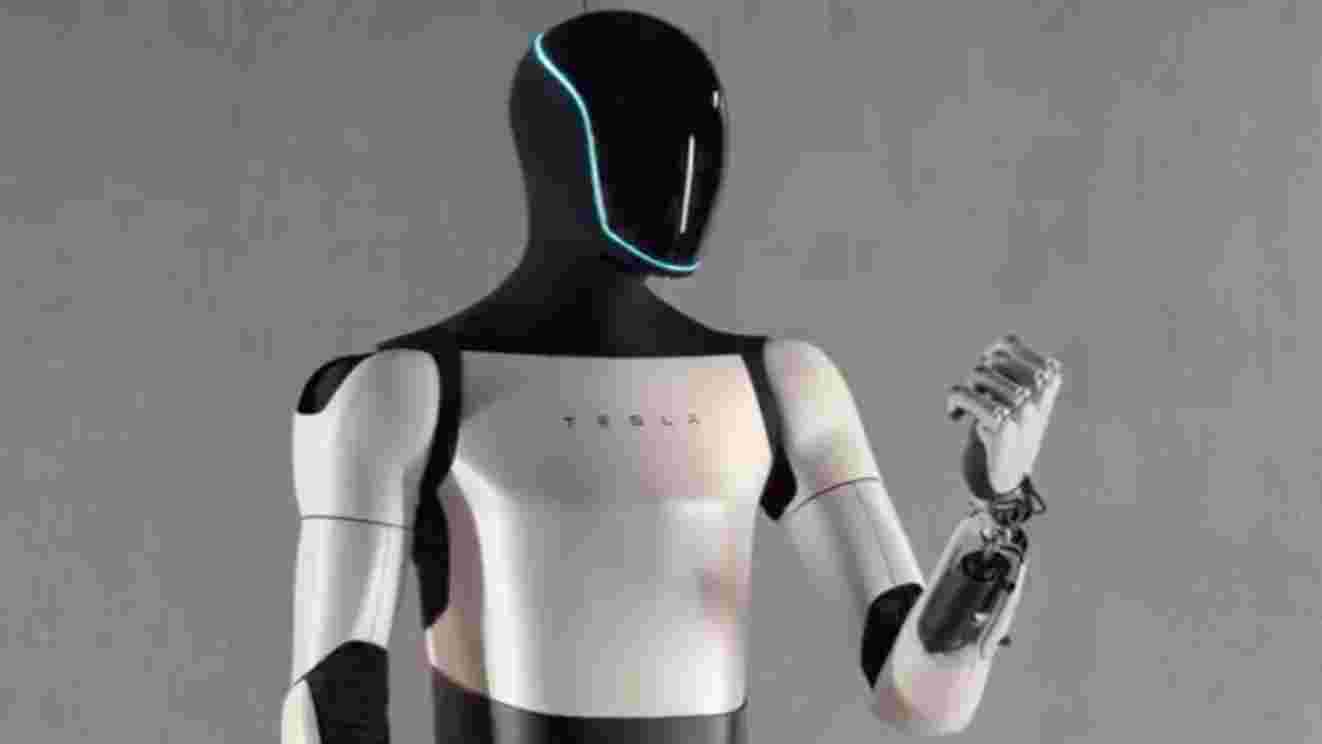
Tesla has just sent shockwaves across the global tech community. In a surprise reveal, Tesla released a raw, unedited video of Optimus Gen 3 running at 5.2 mph—faster than Elon Musk previously stated was safe. Even more astonishing, the robot demonstrated a true running gait, lifting both feet off the ground in a moment of full flight—an achievement only a handful of advanced humanoid robots worldwide have managed.
But that was just the beginning.
Tesla then stunned audiences once again by showcasing a new robotic hand featuring 22–24 degrees of freedom, supported by a cutting-edge neural simulation system capable of generating hyper-realistic virtual environments for robot training. And now, Elon Musk has confirmed this is the final demo of Tesla Bot Gen 3 before the commercialization phase begins next year.
In this in-depth 2,000-word blog post, we’ll explore:
- The five biggest updates coming to Optimus Gen 3
- Why Musk says Optimus will become more valuable than Tesla’s EV business
- How Tesla is preparing for mass production
- What makes the Gen 3 robot so advanced
- When Optimus will officially launch, ship, and cost
- And whether humanoid robots are safe enough for home use
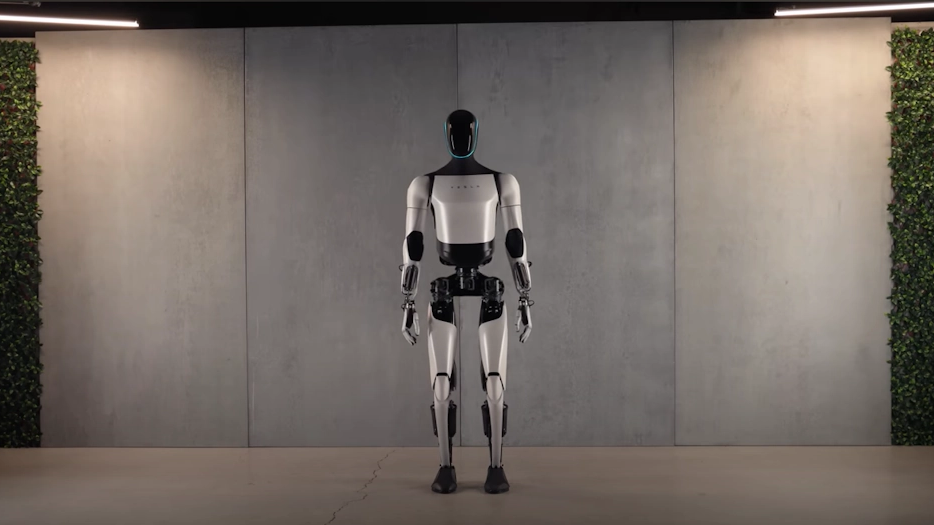
1. The Breakthrough Running Demo — Optimus Gen 3 Hits 5.2 mph
One of the most jaw-dropping moments in Tesla’s latest reveal was Optimus Gen 3 achieving 2.34 m/s (5.2 mph)—a speed far beyond earlier expectations.
A True Running Gait With Flight Phase
Unlike most bipedal robots, which awkwardly speed-walk or shuffle, Optimus demonstrated:
- A genuine running gait
- A brief flight phase, where both feet leave the ground
- Stable high-speed locomotion indoors
This is incredibly rare. Only a tiny handful of robots, such as Boston Dynamics’ Atlas, have achieved this level of dynamic motion—and even fewer in stable, controlled environments.
Why Robot Running Actually Matters
While most factory or household tasks don’t require sprinting, speed enables:
- Quicker delivery of parts inside factories
- Efficient warehouse navigation
- Seamless movement around humans and obstacles
- Increased productivity in time-sensitive operations
Earlier Optimus versions walked at 1–1.2 mph—slower than the average human. Now the robot comfortably surpasses normal walking pace, unlocking far broader job capability.
Foot Design Improvements Coming in Gen 3
Experts like Dr. Scott Walter observed the toe section flexing, likely due to a split-sole design.
This will probably be enclosed and reinforced in Gen 3 for durability and debris resistance.
2. The Most Advanced Robotic Hand Tesla Has Ever Built
Tesla also unveiled its highly detailed Gen 2.5 robotic hand, an engineering marvel with:
- 22–24 degrees of freedom
- 17 linear actuators
- A tendon-driven system similar to a human hand
- A flexible glove that follows natural wrinkle lines
- Micro-movements that mimic true human dexterity
Human-Like Mobility and Grip
The hand features:
- Opposable thumb with independent rotation
- Individually controlled pinky metacarpal
- Precision tendon routing with color-coded groups
- Artificial ligaments for smooth, natural motion
This isn’t just a gripper—it’s a biomechanical replica of a human hand.
Why Hand Dexterity Is the Hardest Robotics Problem
Running is impressive.
But dexterity is what makes a robot truly useful.
Most jobs Optimus will perform require:
- Folding laundry
- Operating tools
- Cooking
- Cleaning
- Picking up items
- Manipulating switches, knobs, and machinery
The Gen 3 hand pushes Tesla closer than ever to a robot that can work in any environment designed for humans.
3. Tesla’s Neural Simulation AI — The Virtual World Where Optimus Trains
Perhaps the most futuristic upgrade is Tesla’s AI-powered neural simulation environment.
This is not a video game engine.
It’s a fully neural-rendered world trained on billions of Tesla vehicle images, producing:
- Realistic lighting
- Accurate physics
- Dynamic environments
- Real-time rendering without traditional game software
Why This Simulation Changes Everything
Tesla will be able to:
- Train Optimus on millions of tasks
- Simulate dangerous or rare situations
- Reduce hardware wear and tear
- Improve the robot’s judgment and motor control
This is exactly how Tesla accelerated its Full Self-Driving program—and now, humanoid robots benefit from the same neural infrastructure.
4. Tesla Is Quietly Preparing for Mass Production
While Tesla has not yet opened pre-orders, behind the scenes major steps toward mass manufacture are underway.
Global Factory Activity Signals Ramp-Up
Reports show:
- Giga Texas preparing Optimus assembly facilities
- Fremont planning lines capable of 1 million robots/year
- Quality inspections scheduled across multiple factories
This aligns perfectly with Musk’s timeline:
Optimus Gen 3 will be revealed publicly in early 2025, possibly March.
Why Tesla Must Start Building Factories Now
Humanoid robots require:
- Sophisticated actuators
- Precision parts
- A stable global supply chain
- New assembly tooling
If Optimus is launching in 2026, the groundwork must begin today.
5. Tesla’s Internal Deployment — Over 1,000 Robots Working by 2025
Elon Musk has confirmed:
- 50+ Optimus units are already working inside Tesla factories
- By next year, Tesla expects 1,000–several thousand internal robots
- External sales begin 2026
Why Tesla Uses Its Factories as a Test Bed
Before selling a humanoid robot to the public, Tesla must ensure:
- Safety under real conditions
- Mechanical reliability
- AI accuracy
- Cost-effective production
Tesla’s own factories are the ultimate proving ground—highly dynamic and full of unpredictable variables.
Why Elon Musk Says Optimus Will Eclipse Tesla’s Car Business
Elon Musk now claims Optimus could become Tesla’s most valuable product ever, potentially worth $25 trillion.
Here’s why:
Labor Shortages Are Skyrocketing Globally
The U.S. alone faces:
- 300,000 manufacturing vacancies
- 600,000–700,000 logistics and warehouse unfilled roles
Robots aren’t optional anymore—they’re necessary.
Tens of Billions of Robots Could Be Needed Worldwide
Musk believes:
- The world could need 10–20 billion humanoid robots
- Optimus demand will quickly exceed Tesla vehicle demand
- Robot scalability will dwarf car manufacturing volume
Once mass production scales, Musk predicts Optimus cost could drop to $10,000 per unit.
Will Optimus Replace Human Jobs — or Make Life Easier?
Musk envisions a world where:
- Robots perform dangerous, repetitive, or boring tasks
- Humans focus on creativity and leadership
- Every home eventually has a humanoid assistant
Optimus could one day:
- Cook meals
- Clean homes
- Teach children
- Care for the elderly
- Shop, mow lawns, walk dogs
- Provide companionship
But before that future arrives, safety must be addressed.
Is Optimus Safe Enough for Homes?
This is the biggest public concern.
Can a Robot Be Trusted Around Kids or Seniors?
Tesla is developing safeguards:
- Real-time environmental scanning
- Human-intent recognition
- Gesture interpretation
- Hard limits on speed and force
- Emergency manual override
- Cloud-based safety supervision
Cleanliness and Hygiene Challenges
Tasks like:
- Taking out trash
- Then preparing food
…require strict hygiene protocols.
Tesla’s tendon-driven hand is:
- Water resistant
- Easy to sanitize
- Built from anti-microbial materials
So yes—these challenges are solvable.
Optimus Pricing, Rental Program & Launch Timeline
Musk confirmed key details:
Price
- Early consumer units: $20,000–$30,000
- Long-term cost target: $10,000
- Early years likely closer to $100,000 for premium models
Rental Program Begins First
Before public sales, Tesla will offer:
- $200/month rental plans
- Controlled rollout for real-world testing
- Data collection to improve AI and safety
This mirrors how Tesla rolled out Full Self-Driving.
Official Release Timeline
- 2025: Tesla uses 1,000+ robots internally
- Early 2026: First commercial Gen 3 units go on sale
- 2027–2030: Mass production and falling prices
Tesla’s Biggest Advantage — Vertical Integration
Unlike competitors relying on suppliers, Tesla designs:
- Motors
- Actuators
- Batteries
- Electronics
- AI chips
- Hands
- Software
- Neural simulators
This makes Tesla faster, cheaper, and more scalable than any other robotics company on Earth.
The Future — A Planet Shared by Humans and Robots
Optimus is improving every quarter.
Gen 3 launches in months.
Gen 4 and Gen 5 will follow rapidly.
The shift has already begun.
Factories today.
Homes tomorrow.
Entire cities within a decade.
Humanoid robots are becoming mainstream—and Tesla is leading the charge.
Final Thoughts — Should Robots Like Optimus Be Released to the Public?
This is the question only society can answer.
Optimus is powerful.
Autonomous.
Highly capable.
Potentially life-changing.
But with power comes responsibility.
Should highly autonomous robots live in our homes?
Are the safety risks acceptable?
Is humanity ready?
Share your thoughts in the comments—we want to hear from you.
FAQs
1. What is Tesla Optimus Gen 3?
Tesla Optimus Gen 3 is the latest humanoid robot from Tesla, featuring advanced AI, improved locomotion, and a highly dexterous robotic hand designed for both industrial and household tasks.
2. How fast can Optimus Gen 3 run?
Optimus Gen 3 can run at approximately 5.2 mph (2.34 m/s), surpassing earlier Tesla predictions and demonstrating a true running gait with a brief flight phase.
3. What makes Optimus Gen 3’s hand unique?
The Gen 3 hand has 22–24 degrees of freedom, 17 linear actuators, tendon-driven systems, and a flexible glove, allowing near-human dexterity for tool handling and household tasks.
4. How does Tesla train Optimus Gen 3?
Optimus is trained using a neural simulation environment, which recreates real-world scenarios using AI-generated virtual environments to teach tasks safely and efficiently.
5. When will Optimus Gen 3 be released?
The commercial release of Optimus Gen 3 is planned for early 2026, with internal factory deployment starting in 2025.
6. How many Optimus robots will Tesla produce?
Tesla aims for up to 1 million robots per year at Fremont and has already prepared Giga Texas for production lines, with thousands expected internally by 2025.
7. What tasks can Optimus perform?
Optimus can perform household chores, factory work, logistics, carrying items, watering plants, folding laundry, and even interacting safely with humans.
8. How much will Optimus cost?
Early consumer units are expected to be $20,000–$30,000, with initial premium models potentially costing closer to $100,000. Production costs may drop to $10,000 per unit long-term.
9. Will Tesla offer a rental program for Optimus?
Yes, Tesla plans to offer a rental program around $200/month before full public sales to test real-world deployment and collect AI performance data.
10. Is Optimus safe for homes with children or the elderly?
Tesla has implemented safety protocols, gesture recognition, human-intent detection, and hygiene-focused hand design, making Optimus safe for supervised household use.
11. How does Optimus recognize human actions?
Optimus uses AI-powered imitation learning, understanding gestures, pointing cues, and human movements to replicate tasks intuitively without pre-programming every motion.
12. What industries will benefit from Optimus robots?
Factories, logistics, warehousing, healthcare, and households will benefit, especially in regions experiencing labor shortages and high automation demand.
13. How does Tesla’s AI give Optimus an advantage?
Tesla leverages real-world AI experience from autonomous driving, allowing Optimus to navigate environments, manipulate objects, and adapt behaviors autonomously.
14. Can Optimus perform multiple tasks safely?
Yes, Tesla designed tendon-driven hands with hygienic materials, and the AI ensures safe transitions between tasks such as cleaning, cooking, and handling objects.
15. What are the key upgrades in Gen 3 compared to previous versions?
Upgrades include faster locomotion, advanced robotic hands, improved AI, realistic simulation training, and a more manufacturable design for industrial and home use.
16. Will Optimus replace human workers?
Optimus is designed to assist, not replace humans entirely, taking over repetitive, dangerous, or time-consuming tasks while enhancing productivity.
17. How can I get early access to Optimus Gen 3?
Tesla plans a controlled rental program and internal factory deployment in 2025, with public sales expected to begin in early 2026.
Read More:
- Tesla adds 15th automaker to Supercharger access in 2025
- SpaceX IPO is coming, CEO Elon Musk confirms
- Tesla FSD’s newest model is coming, and it sounds like ‘the last big piece of the puzzle’
- Tesla Model Y gets hefty discounts and more in final sales push
- Tesla gets new insurance program from firm that offered ‘almost free’ FSD rates
I’m interested in getting an Optimus robot asap for my retail Ace Hardware Store. Probably rental.