
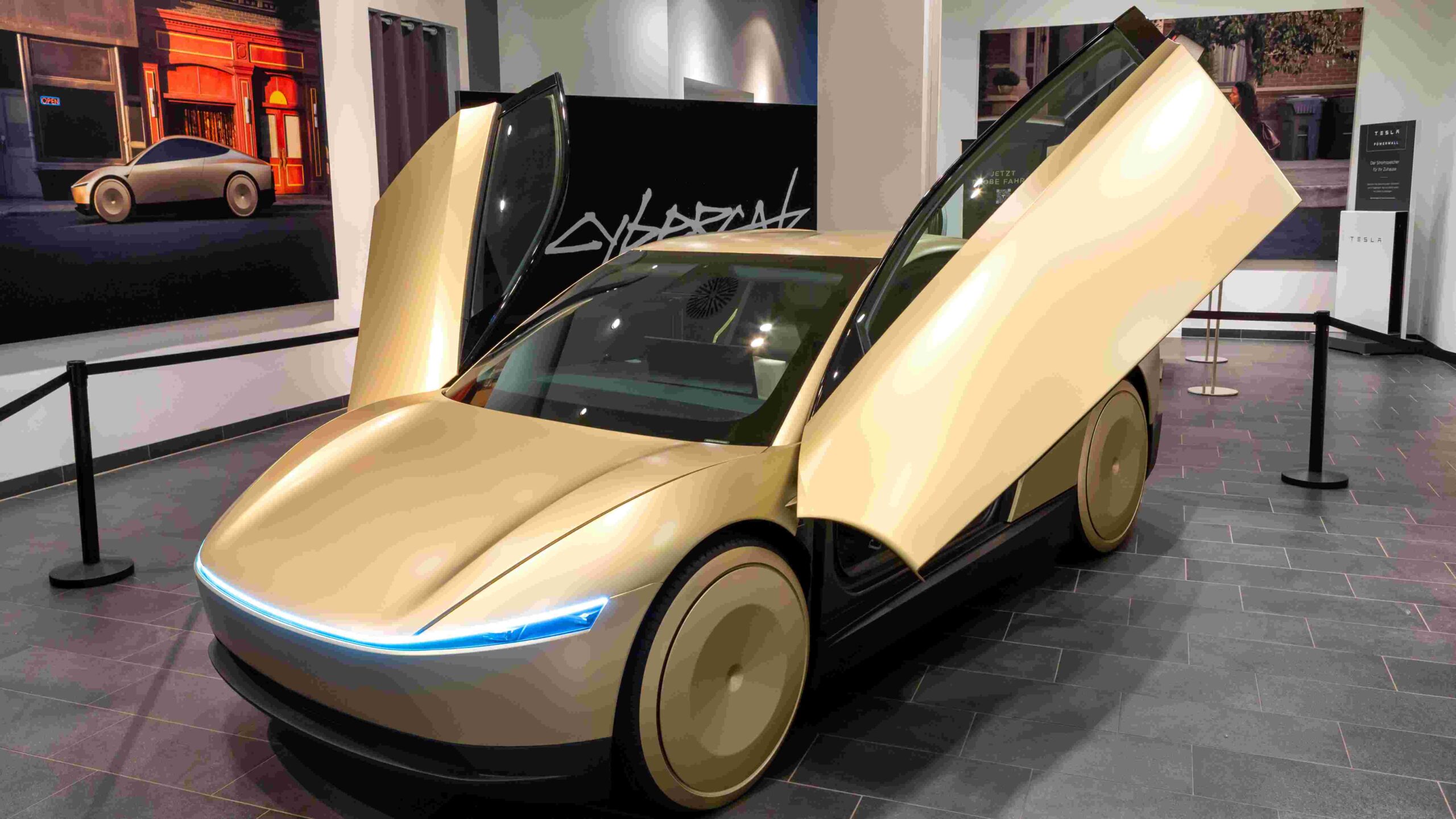
As the April 2026 production start date draws closer, Tesla’s long-awaited Robotaxi Cybercab is no longer just a futuristic promise—it’s actively rolling across real roads in the United States. Sightings in Texas, California, and other testing hubs confirm that Tesla has moved far beyond concept art and glossy stage demos. The Cybercab is now deep in real-world testing, interacting with live traffic, charging infrastructure, and urban environments.
Yet with these real-world appearances has come a surprising revelation: a hidden physical charging port. This single design change—reportedly influenced directly by Elon Musk—has ignited intense debate across the Tesla community, EV industry, and autonomous vehicle ecosystem.
Is Tesla walking back its bold promise of a fully cable-free autonomous future? Or is this move the key to ensuring the Cybercab actually launches on time and operates reliably at scale?
Let’s break it all down.
Tesla’s Cybercab Moves From Vision to Reality
Tesla has quietly but aggressively expanded Cybercab testing across multiple states. Unlike earlier prototypes confined to closed facilities, these vehicles are now operating on public roads, navigating:
- Live traffic patterns
- Existing charging networks
- Urban pickup and drop-off zones
- Real-world edge cases
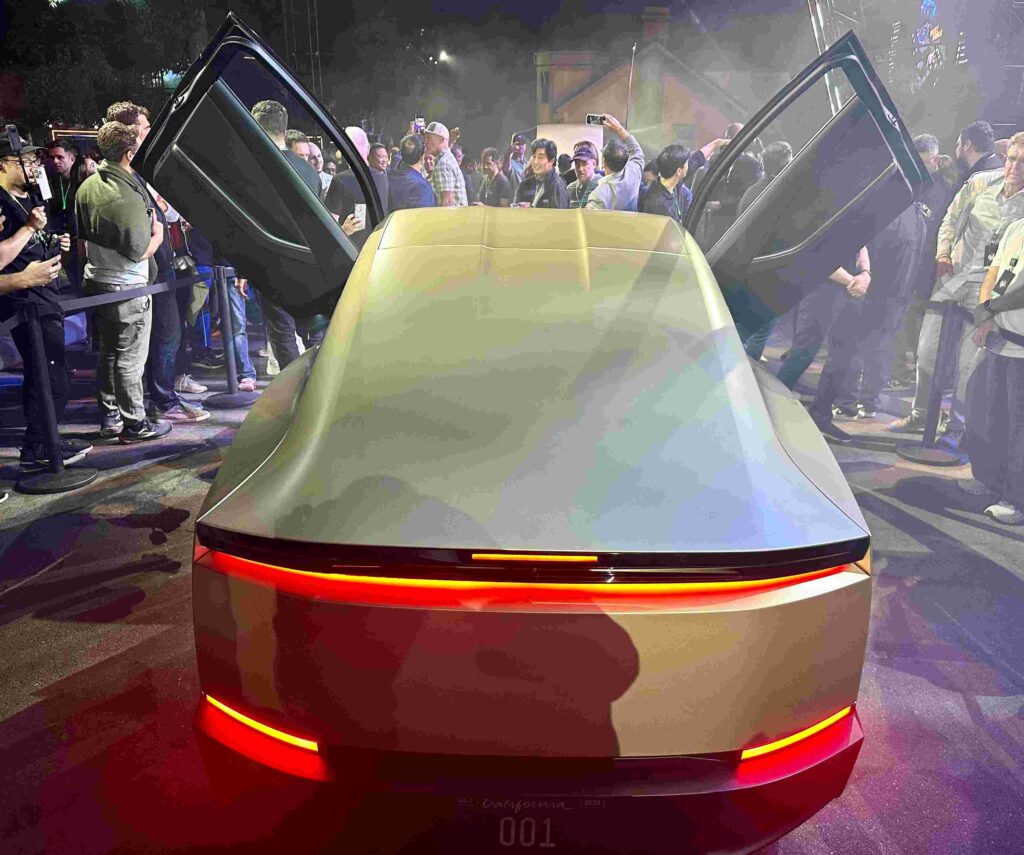
These are no longer theoretical vehicles. They are functional autonomous prototypes, designed to validate Tesla’s Robotaxi vision under everyday conditions.
With increased exposure, subtle but important design details have emerged—none more controversial than the addition of a concealed wired charging port.
The Design Change That Sparked a Firestorm
When leaked videos began circulating on Reddit, X (formerly Twitter), and EV forums, viewers noticed something unexpected. A Cybercab prototype was seen:
- Opening a rear body panel near the taillight strip
- Revealing a conventional physical charging port
- Plugging directly into a Tesla V4 Supercharger
This discovery contradicted one of Tesla’s most ambitious claims: that the Cybercab would rely entirely on wireless inductive charging.
Critics immediately asked tough questions:
- Did Tesla overpromise?
- Was wireless charging never ready?
- Is this another example of Elon Musk’s timelines being too optimistic?
To understand why this change matters, we need to rewind to the Cybercab’s dramatic debut.
Revisiting the Cybercab’s Big Reveal
October 20, 2024 – Warner Bros. Discovery Studios
At Tesla’s Robotaxi unveiling, Elon Musk presented a bold and almost cinematic vision of the future. The Cybercab was showcased as:
- A fully autonomous vehicle
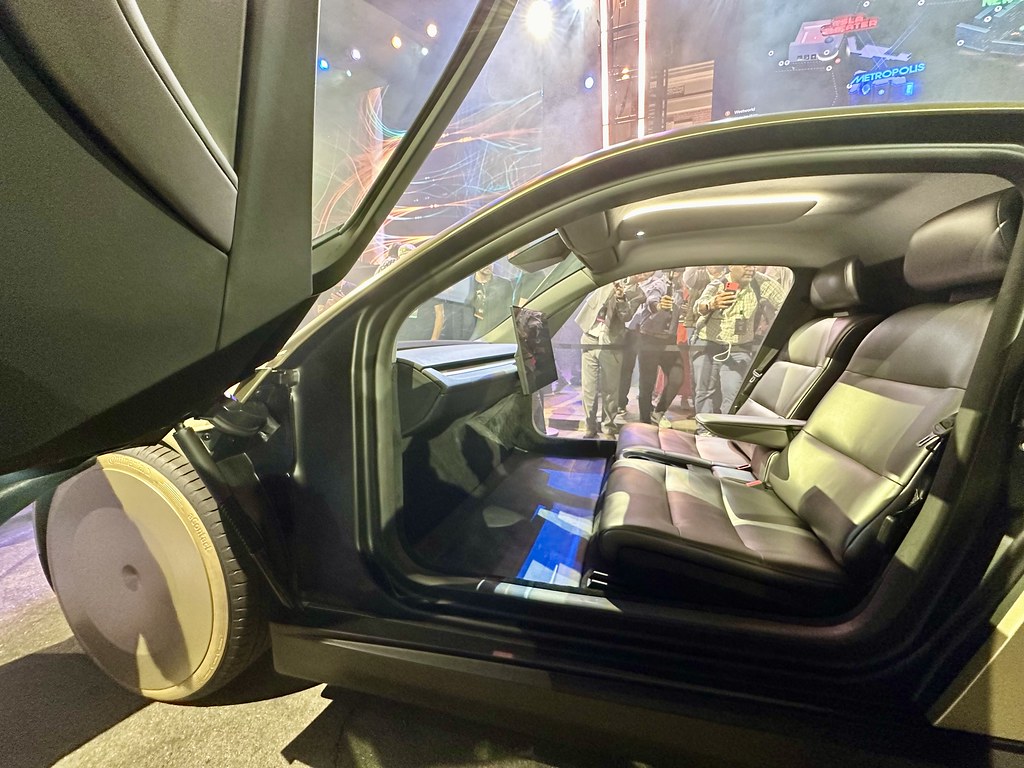
- No steering wheel
- No pedals
- No visible charging port
Musk confidently explained that the vehicle would use wireless inductive charging exclusively. The Cybercab would simply back into position, park over a charging pad, and automatically replenish its battery—no cables, no humans, no friction.
This moment helped solidify public belief that Tesla was on the verge of eliminating one of the last physical interactions humans have with vehicles.
But real-world engineering often tells a different story.
Why Wireless Charging Is Harder Than It Looks
While the wireless charging demo was visually stunning, electrical engineers have long warned that high-power wireless charging presents serious technical challenges—especially at the scale required for Robotaxis.
Key Technical Challenges
- Energy loss: Transferring power via magnetic fields inherently wastes energy
- Heat generation: Lost energy converts into heat, stressing components
- Thermal management: Fast wireless charging can overwhelm cooling systems
- Efficiency limits: Scaling inductive charging to match wired fast-charging speeds is extraordinarily difficult
For a vehicle expected to operate nearly 24 hours a day, inefficiency is not just inconvenient—it’s economically dangerous.
The V4 Supercharger Port: A Strategic Safety Net
The presence of a hidden AV4 Supercharger port suggests Tesla faced a critical decision:
- Accept slow recharge times with wireless charging only
- Or retain fast, reliable wired charging to ensure fleet uptime
With Cybercab production targeted for April 2026, Tesla clearly chose flexibility.
Rather than a bait-and-switch, this appears to be a calculated engineering decision designed to prevent production delays, operational failures, or compromised fleet economics.
In other words, the physical charging port isn’t a retreat—it’s insurance.
Hybrid Charging: The Best of Both Worlds
Tesla’s approach isn’t abandoning wireless charging—it’s redefining its role.
How Tesla Likely Plans to Use Wireless Charging
- Short stops between rides
- Autonomous top-ups without human involvement
- Maintaining autonomy during low-energy idle periods
When Wired Charging Takes Over
- After extended service hours
- When the battery drops significantly (e.g., 10%–80% recharge)
- When speed, efficiency, and thermal stability are critical
Currently, wireless charging simply can’t compete with the speed and efficiency of Tesla’s V4 Superchargers for deep recharges.
By hiding the port behind a motorized panel, Tesla preserves the clean, futuristic aesthetic while retaining operational flexibility.
Why This Matters for the Robotaxi Business Model
Elon Musk has repeatedly stated that Cybercab fares could eventually be cheaper than a bus ticket. That pricing promise depends on one thing above all else:
Maximum Uptime
Every minute a Cybercab spends charging is a minute it isn’t generating revenue. To hit ultra-low fares, Tesla needs:
- Fast turnaround times
- Minimal downtime
- Predictable energy costs
- Scalable infrastructure
A hybrid charging strategy ensures Cybercabs stay on the road longer, which directly impacts profitability and scalability.
Autonomy Isn’t One-Size-Fits-All
Tesla’s pragmatic mindset extends beyond charging—it also shapes the Cybercab’s physical design.
Why the Cybercab Is a Two-Seater
Tesla data shows that over 90% of trips involve two passengers or fewer. Instead of overbuilding one vehicle to handle every scenario, Tesla is deploying a diversified autonomous fleet.
Tesla’s Autonomous Lineup
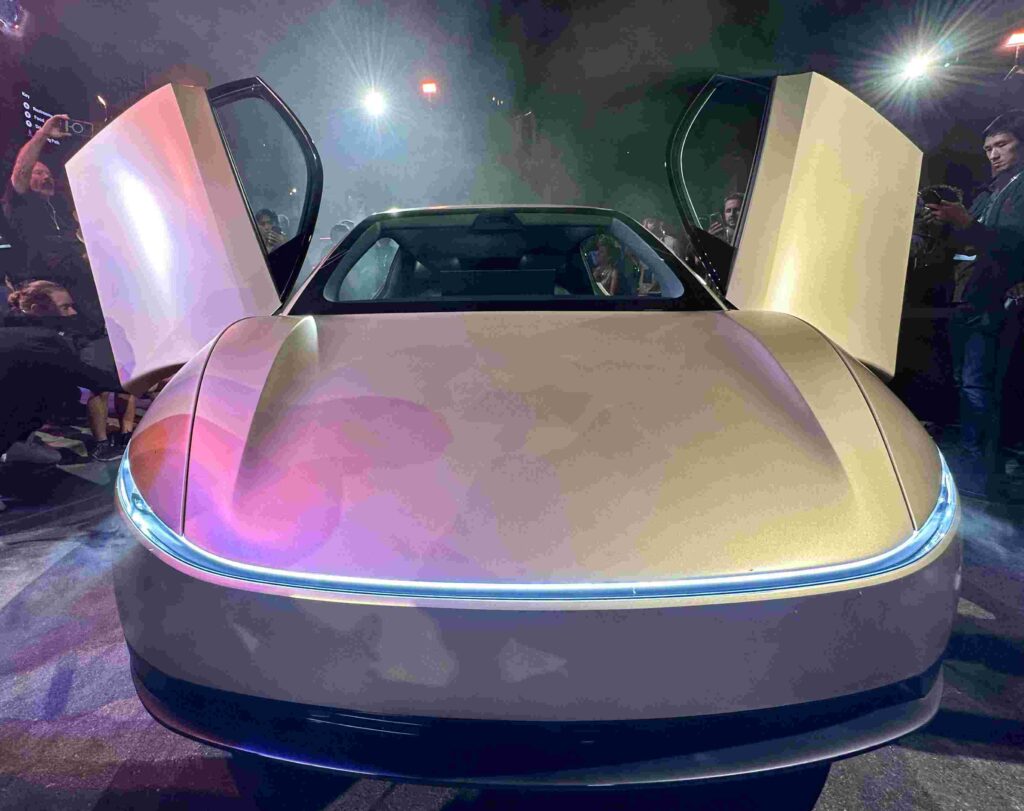
- Cybercab: Compact, two-seat vehicle for short urban trips
- Model Y Robotaxi: Larger groups, including an extended wheelbase version for 5–6 passengers
- Robovan: New autonomous van for 10+ passengers and commercial use
This mirrors how transportation already works today—different vehicles for different needs—all unified by Tesla’s self-driving software stack and centralized fleet management.
Revolutionizing Manufacturing With the Unboxed Process
On the production side, Elon Musk has openly acknowledged that early Cybercab manufacturing will be slow. The reason? Everything about this vehicle is new.
Unboxed Manufacturing Explained
Unlike traditional assembly lines with 150–200 stations, Tesla’s unboxed process involves:
- Building large modules in parallel
- Front and rear mega-castings
- Structural battery pack
- Fully assembled interior
- Pre-painted exterior panels
These modules are then joined together in a final assembly zone with roughly 25 stations.
Musk has even claimed that Tesla could eventually build a Cybercab in under 10 seconds at Giga Texas.
Battery Breakthroughs Powering the Cybercab
Supporting this ambitious manufacturing strategy is Tesla’s progress with 4680 battery cells.
Why Dry Electrode Technology Matters
Tesla has successfully completed the dry electrode process for both:
- Anodes
- Cathodes
This is a massive achievement. Dry cathodes have long been considered one of the hardest problems in battery manufacturing due to risks like:
- Particle cracking
- Reduced energy density
- Increased production costs
Elon Musk has described this breakthrough as incredibly difficult and absolutely critical to scaling production.
The implication is clear: Tesla’s battery roadmap for the Cybercab remains on track.
Regulatory Momentum and Market Expansion
During Tesla’s Q4 earnings call, Musk projected that fully autonomous vehicles could serve 25% to 50% of the U.S. population by the end of 2026, pending regulatory approvals.
Planned Robotaxi Launch Cities
- Dallas
- Houston
- Phoenix
- Miami
- Orlando
- Tampa
- Las Vegas
These cities offer a mix of favorable regulations, urban density, and climate conditions ideal for early Robotaxi deployment.
Is the Charging Port a Step Back—or a Step Forward?
When viewed in isolation, the appearance of a physical charging port may seem like a contradiction. But in context, it tells a different story.
What This Change Really Represents
- A bridge between current technological limits and future ambitions
- A safeguard against production delays
- A commitment to operational reliability
- A focus on real-world economics, not just aesthetics
Tesla isn’t abandoning its vision of a fully wireless autonomous ecosystem. It’s simply acknowledging that the fastest path forward sometimes requires pragmatic compromises.
Final Thoughts: Pragmatism Over Perfection
The Cybercab’s hidden charging port is not a betrayal of Tesla’s vision—it’s evidence that the project has entered its most important phase: execution.
As Tesla pushes toward mass production, regulatory approval, and real-world deployment, flexibility matters more than purity. The goal isn’t to look futuristic on stage—it’s to work flawlessly on city streets.
In that sense, this “controversial” design change may be the very decision that ensures the Cybercab doesn’t remain a concept—but becomes the backbone of Tesla’s autonomous future.
And if history is any guide, Tesla will quietly remove that port the moment technology makes it truly unnecessary.
FAQs
1. What is Tesla’s Robotaxi Cybercab?
The Tesla Robotaxi Cybercab is a fully autonomous electric vehicle designed specifically for ride-hailing. It features a compact two-seat layout, no steering wheel or pedals, and is built to operate without human drivers as part of Tesla’s autonomous fleet.
2. When will Tesla start producing the Cybercab?
Tesla is targeting April 2026 as the initial production start date for the Cybercab, with early manufacturing expected to scale gradually as new production methods are refined.
3. Where is Tesla testing the Cybercab right now?
Cybercab prototypes are currently being tested on public roads in multiple U.S. states, including Texas (Austin) and California (Bay Area), signaling that the project has moved into advanced real-world testing.
4. Does the Cybercab really have a physical charging port?
Yes. Recent videos and sightings show that Cybercab prototypes include a hidden physical charging port, concealed behind a motorized rear panel near the taillight strip.
5. Why did Tesla add a wired charging port to the Cybercab?
Tesla added a wired charging option to ensure fast, reliable charging and minimize downtime, especially when batteries are deeply depleted. This acts as a safety net while wireless charging technology continues to mature.
6. Did Elon Musk promise the Cybercab would only use wireless charging?
At the October 2024 Robotaxi unveiling, Elon Musk stated that the Cybercab would rely entirely on wireless inductive charging, creating the expectation of a cable-free autonomous future.
7. Is Tesla abandoning wireless charging for Robotaxis?
No. Tesla appears to be adopting a hybrid charging strategy, where wireless charging supports short autonomous top-ups and wired charging handles fast, high-power recharging when needed.
8. Why is high-power wireless charging difficult to scale?
High-power wireless charging suffers from energy losses, heat generation, and efficiency limitations, making it challenging to deliver fast charging without stressing vehicle cooling systems.
9. What type of charger does the Cybercab use for wired charging?
Cybercab prototypes have been seen using Tesla V4 Superchargers, which provide high-speed DC fast charging for rapid battery replenishment.
10. How does charging affect the Robotaxi business model?
To achieve ultra-low fares—potentially cheaper than bus tickets—Cybercabs must maximize uptime. Fast wired charging reduces downtime, improving fleet efficiency and profitability.
11. Why does the Cybercab only have two seats?
Tesla data shows that over 90% of trips involve two passengers or fewer, making a compact two-seat design more efficient, cheaper to produce, and better suited for urban Robotaxi use.
12. Will Tesla offer larger autonomous vehicles?
Yes. Tesla plans a diversified autonomous fleet, including:
- Model Y Robotaxi for 5–6 passengers
- Robovan for 10+ passengers and commercial applications
13. How is Tesla manufacturing the Cybercab differently?
Tesla is using its unboxed manufacturing process, where large vehicle modules are built in parallel and assembled in roughly 25 stations, instead of traditional 150–200 station assembly lines.
14. What batteries will the Cybercab use?
The Cybercab will use Tesla’s 4680 battery cells, supported by breakthroughs in dry electrode technology for both anodes and cathodes.
15. Why is dry electrode technology important for Tesla?
Dry electrode manufacturing reduces costs, simplifies production, and enables faster scaling—making it critical for producing Cybercabs at the volume required for a global Robotaxi network.
16. When will Tesla Robotaxis be available to the public?
Elon Musk has projected that fully autonomous vehicles could serve 25% to 50% of the U.S. population by the end of 2026, depending on regulatory approvals.
17. Is the hidden charging port a setback for Tesla’s autonomy vision?
No. The hidden charging port is widely seen as a pragmatic bridge between today’s technological limits and Tesla’s long-term goal of a fully wireless, autonomous transportation ecosystem.
Read More:
- Disaster! NASA Artemis II New Launch Date will be Longer than what NASA saidSpaceX blocks unauthorized Starlink terminals used by Russian troops
- Elon Musk’s xAI plants flag in Bellevue AI hotspot
- Tesla accuses IG Metall member of secretly recording Giga Berlin meeting
- SpaceX secures win as US labor board drops oversight case
- Tesla stock gets latest synopsis from Jim Cramer: ‘It’s actually a robotics company’