
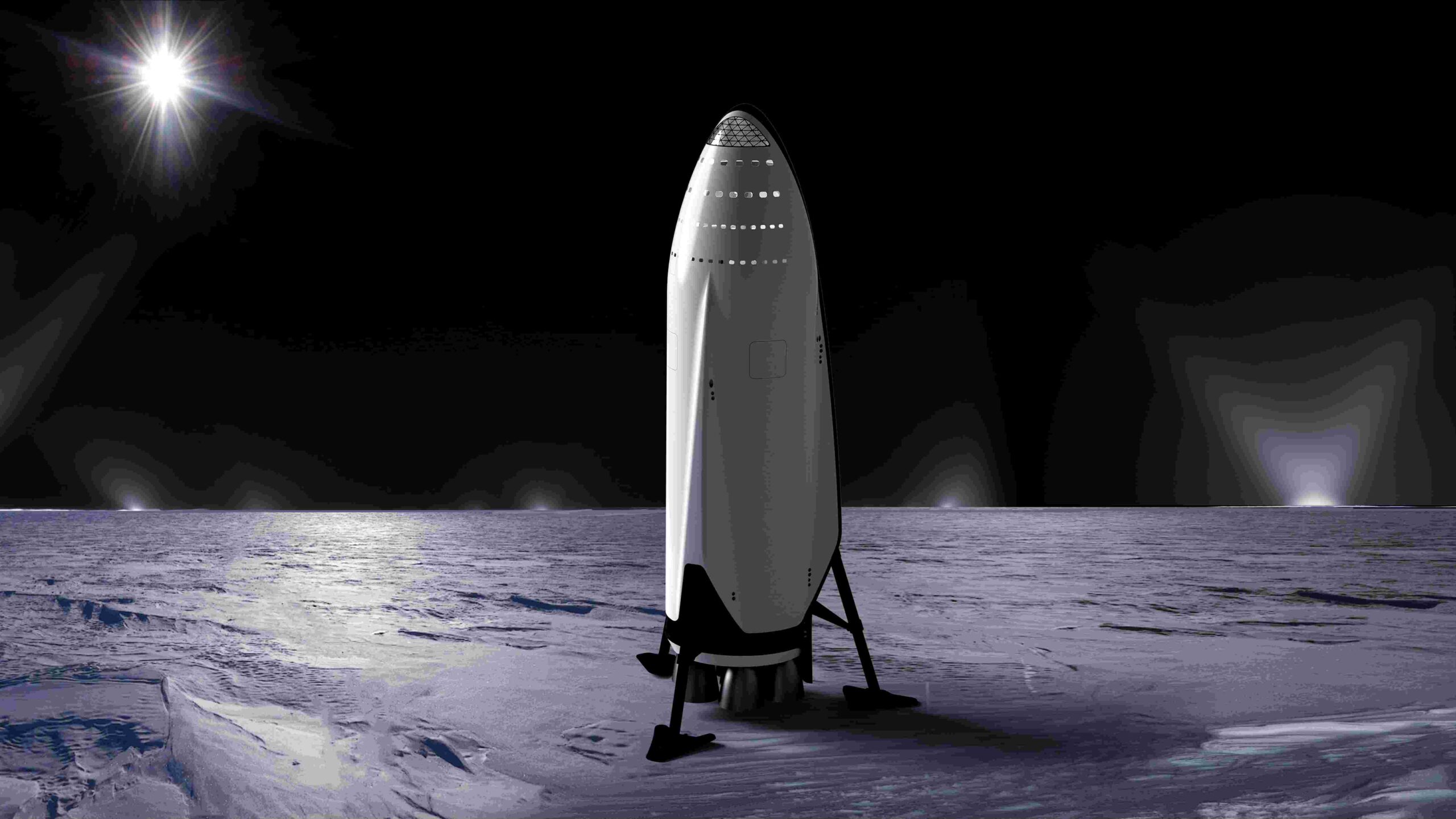
Elon Musk’s Genius Solution to Beat China to the Moon Simplified Starship, No Reuse: The global space race is entering its most decisive and high-stakes chapter since the Apollo era. This time, however, the competition is not just about prestige—it’s about long-term dominance, lunar resources, and strategic power. At the center of this race stands SpaceX, a company built on radical ideas, relentless iteration, and one core philosophy: full reusability.
But what if winning the race to the Moon requires SpaceX to temporarily abandon its own doctrine?
As the United States accelerates the Artemis program and China aggressively targets a 2030 lunar landing, SpaceX may be forced to deploy a bold countermeasure: a simplified, expendable version of Starship designed solely to land on the Moon—fast.
This article breaks down why a simplified Starship could be the key to beating China, how it reshapes lunar missions, and why it may quietly become one of Elon Musk’s smartest strategic pivots yet.
The Political Shift That Changed Everything
December 18th, 2025 marked a turning point for American spaceflight. After weeks of political debate and public scrutiny, Jared Isaacman was officially sworn in as NASA’s 15th Administrator.
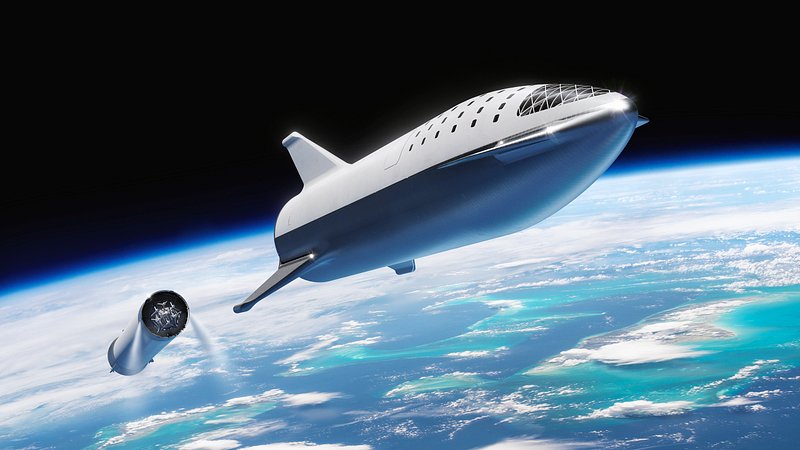
Unlike traditional administrators, Isaacman brings:
- Firsthand SpaceX flight experience
- Deep understanding of commercial spaceflight
- A strong commitment to human exploration
On the very same day, the U.S. President signed a sweeping executive order titled “Ensuring American Space Superiority.” The directive made one thing clear:
👉 Americans must return to the Moon by 2028.
This single document transformed Artemis from a flexible exploration program into a hard geopolitical deadline.
Artemis 2 Is Ready — But Artemis 3 Is the Real Challenge
NASA’s immediate priority is Artemis 2, scheduled for April 2026. The mission will send astronauts around the Moon, pushing humans farther into deep space than ever before.
But the real pressure lies with Artemis 3:
- First crewed lunar landing since Apollo
- Entirely dependent on SpaceX’s Starship Human Landing System (HLS)
- Must happen by 2028
That leaves SpaceX with just over two years to:
- Finish Starship HLS
- Master orbital refueling
- Perform a successful uncrewed lunar landing test
This is an extraordinarily tight timeline—and it’s why SpaceX may need to rethink everything.
Why Reusability Might Be Slowing SpaceX Down
SpaceX’s vision of a fully reusable Starship is revolutionary—but also incredibly complex.
To be reusable, Starship requires:
- 18,000+ heat shield tiles
- Massive stainless-steel flaps
- Advanced avionics
- Precision atmospheric reentry control
Each of these systems adds:
- Cost
- Weight
- Manufacturing time
- Failure points
While SpaceX continues to push boundaries, flight tests have been dominated by landing attempts, heat shield issues, and flap control, delaying the simpler goal of routine orbital missions.
And that’s where the idea of a simplified Starship comes in.
What Is the Simplified Starship?
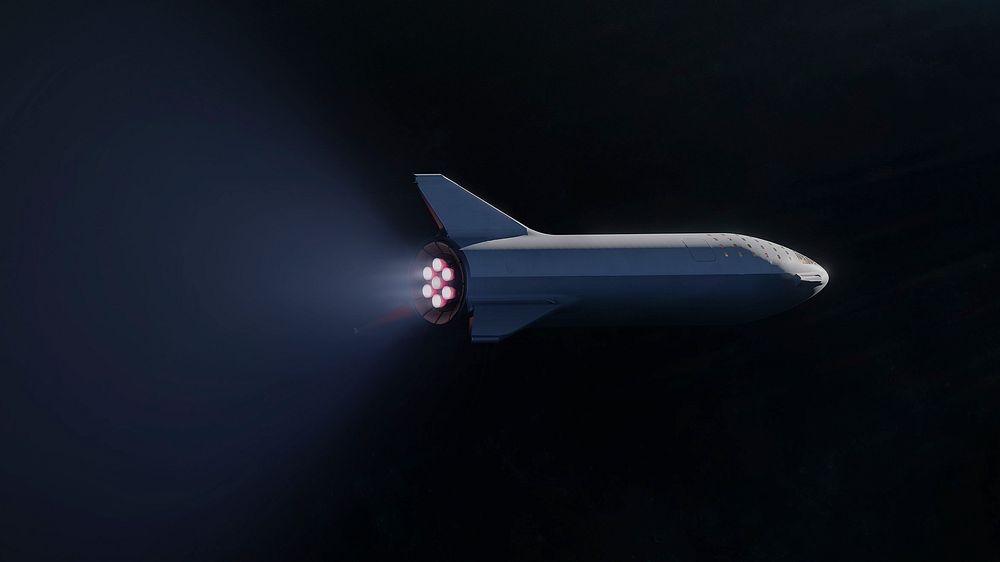
The simplified Starship is a stripped-down lunar vehicle designed to do one thing extremely well:
Deliver payloads to the Moon and stay there.
What It Removes
- ❌ No heat shield
- ❌ No aerodynamic flaps
- ❌ No Earth reentry systems
- ❌ No solar arrays
- ❌ Simplified avionics
- ❌ Reduced structural reinforcement
What Remains
- ✅ Six Raptor 3 engines
- ✅ Reaction control systems
- ✅ Massive propellant tanks
- ✅ Lunar landing capability
The result is a lighter, faster, cheaper, and purpose-built Moon vehicle.
Why Expendable Doesn’t Mean Wasteful
At first glance, abandoning reusability sounds expensive. But in reality, the simplified Starship is anything but wasteful.
Key Cost Advantages
- Heat shield + flaps alone are estimated at $5+ million
- Fully featured Starship takes ~2 months to build
- Simplified version could be built in 1 month
- Estimated cost: $20–30 million
For comparison:
- NASA’s Space Launch System (SLS) costs $2.2 billion per launch
- SLS is fully expendable
Against that benchmark, a $30 million lunar Starship is almost insignificant.
A Perfect Test Vehicle for Artemis 3
NASA needs confidence before putting astronauts on the Moon.
A simplified Starship allows SpaceX to:
- Perform real lunar landing tests
- Gather high-fidelity landing data
- Validate guidance, propulsion, and descent profiles
- Create accurate 3D landing simulations
Instead of risking a full HLS prototype, SpaceX gains a dedicated lunar test platform.
And after landing?
It stays on the Moon—ready to be repurposed.
China’s Lunar Ambitions Are Very Real
In May 2023, China officially confirmed its plan to land astronauts on the Moon by 2030.
Since then:
- Multiple lunar lander tests completed
- No major schedule slips
- Hardware development continues quietly and steadily
This mirrors China’s approach to its space station. Many doubted it in 2010. Today, Tiangong orbits Earth permanently.
The lesson is clear:
👉 When China announces a space goal, it usually delivers.
Why the Moon Matters More Than You Think
The Moon is not just symbolic—it’s strategic.
While the Outer Space Treaty bans territorial claims, it does not prohibit:
- Resource extraction
- Commercial sale of lunar materials
Lunar Regolith Is Extremely Valuable
- Contains rare isotopes
- Essential for in-situ resource utilization
- Highly prized by researchers and collectors
- Does not naturally exist on Earth
If one nation controls lunar material supply, it gains:
- Economic leverage
- Technological dominance
- Long-term geopolitical power
This is why being first matters.
How Simplified Starship Helps Beat China
The simplified Starship enables:
- Faster uncrewed lunar missions
- Higher landing success rates
- Rapid iteration and learning
- Accelerated Artemis 3 readiness
It allows the U.S. to move quickly and decisively, rather than waiting for perfect reusability.
Solving the Hardest Problem: Orbital Refueling
To reach the Moon, Starship must refuel in orbit.
This requires:
- Multiple tanker launches (8–16 estimated)
- Transfer of cryogenic propellants
- Handling liquids at -160°C to -183°C
- Managing boil-off in microgravity
- Precise docking at 17,000 mph
No one has ever done this before.
A simplified Starship used in a live orbital refueling demo—possibly as early as June 2026—could finally provide:
- Real-world data
- Accurate mission planning
- Reduced uncertainty
Without this step, Moon missions simply don’t happen.
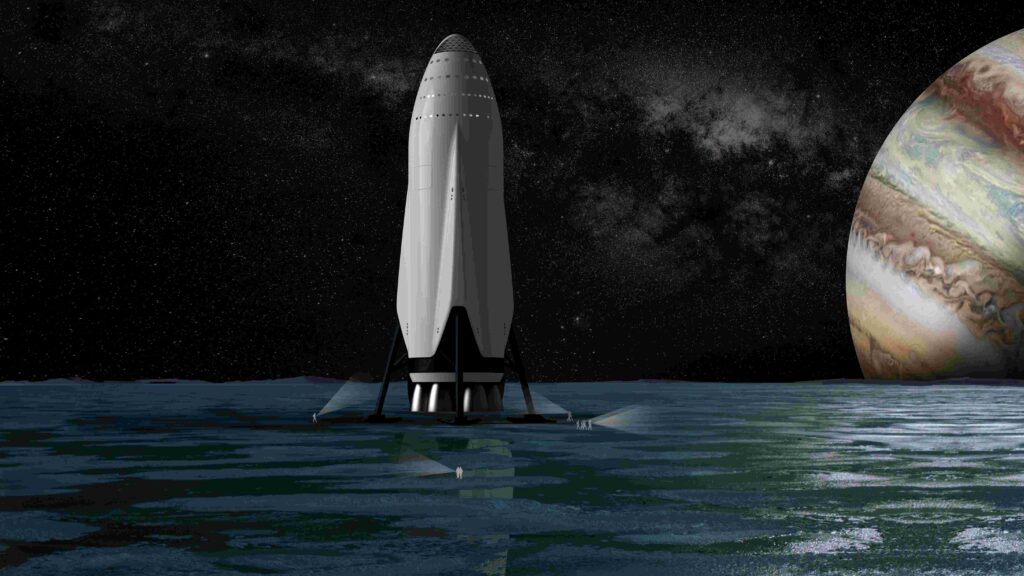
The Role of Simplified Starship in Moon Base Alpha
NASA’s long-term goal is not flags and footprints. It’s Moon Base Alpha.
Planned near the lunar south pole, the base requires:
- Habitats
- Power systems
- ISRU infrastructure
- Oxygen extraction from regolith
- Massive hardware deliveries
This is where simplified Starship truly shines.
Mass, Thrust, and Payload Advantages
With major systems removed:
- Dry mass reduced by 20–30%
- Fully fueled mass ~1,400 tons
- Thrust remains ~1,600 tons
What This Means
- Higher energy orbits
- Fewer refueling flights
- Easier lunar descent
- Payloads up to 200 tons per flight
This could cut years off lunar base construction timelines.
Could This Work for Mars Too?
While designed for the Moon, the simplified Starship could:
- Serve as a Mars cargo precursor
- Deliver infrastructure ahead of crewed missions
- Validate long-duration propulsion and refueling
In that sense, it becomes a bridge technology—not the final form, but a critical enabler.
The Hard Truth About Reusability
This may be the part Elon Musk hates to admit.
By committing to full reusability from day one, SpaceX took on:
- Atmospheric reentry
- Heat shielding at massive scale
- Precision landing from orbit
- All at once
If SpaceX had started with a simpler expendable upper stage in 2023, it might already have:
- Dozens of orbital missions
- Proven refueling operations
- A fully validated Super Heavy booster
Reusability could have been added later—step by step.
Instead, SpaceX chose the hardest path first.
Why This Is Still Very SpaceX
Despite the risks, this mindset is exactly why SpaceX leads the industry.
They:
- Attempt what others won’t
- Accept short-term pain for long-term dominance
- Push engineering limits relentlessly
The simplified Starship isn’t a retreat.
It’s a strategic adaptation.
Final Thoughts: A Race Against Time
The clock is ticking.
China is advancing.
Artemis deadlines are tightening.
The Moon’s future is being written right now.
A simplified, expendable Starship may be the fastest way to:
- Secure American leadership
- Enable Artemis 3
- Lay the foundation for Moon Base Alpha
- Prevent lunar monopolization
Sometimes, the smartest move isn’t perfection—it’s focus.
FAQs
1. What is the simplified Starship?
The simplified Starship is a stripped-down version of SpaceX’s Starship designed specifically for lunar missions. It removes complex systems like heat shields and flaps to focus purely on delivering cargo and landing on the Moon.
2. Why would SpaceX abandon reusability for this version?
SpaceX may temporarily give up reusability to save time, reduce cost, and increase mission reliability. Winning the race back to the Moon before China requires speed more than perfection.
3. Will all future Starships be expendable?
No. Only specific variants would be expendable. SpaceX still plans to make most Starships fully reusable, especially for Earth orbit and Mars missions.
4. Why doesn’t the simplified Starship need a heat shield?
Because it will not return to Earth. Without atmospheric reentry, a heat shield and thermal tiles are unnecessary.
5. How much cheaper is a simplified Starship to build?
Estimates suggest it could cost around $20–30 million, roughly half the cost of a fully reusable Starship.
6. How long would it take to build a simplified Starship?
A fully featured Starship takes about two months to assemble. The simplified version could be built in about one month.
7. What role does the simplified Starship play in Artemis 3?
It can be used for uncrewed lunar landing tests, gathering critical data needed to ensure astronaut safety during the Artemis 3 mission.
8. Why is Artemis 3 so important?
Artemis 3 aims to return humans to the Moon by 2028, reinforcing U.S. leadership in space before China’s planned 2030 landing.
9. How does this help the U.S. compete with China?
By accelerating lunar landings, testing, and infrastructure deployment, the simplified Starship helps the U.S. establish an early and sustained presence on the Moon.
10. What happens to the simplified Starship after it lands on the Moon?
It remains on the lunar surface and can be reused as part of a future lunar base, such as storage, habitat space, or infrastructure.
11. Can the simplified Starship carry cargo?
Yes. Payload estimates suggest it could carry up to 200 tons of cargo to the Moon in a single mission.
12. How does the simplified Starship help with orbital refueling?
It allows SpaceX to conduct real-world orbital refueling demonstrations, which are essential for long-distance missions beyond Earth orbit.
13. Why is orbital refueling such a big challenge?
Because transferring super-cold liquid oxygen and methane in microgravity has never been done before and involves complex thermal and fluid dynamics.
14. Could the simplified Starship be used for Mars missions?
Potentially, yes. It could serve as a cargo delivery system for Mars, transporting infrastructure ahead of future crewed missions.
15. Does this mean SpaceX’s original strategy was wrong?
Not necessarily. SpaceX chose the most ambitious path first. The simplified Starship represents a strategic adjustment, not a failure, allowing faster progress while reusability continues to evolve.
Read More:
- Where to Buy Tesla TV: Your Complete Guide 2026
- Just Happened! Elon Musk Finally Integrating STARLINK Into Tesla New CAR! Game Changer 2026
- Tesla Model 2 Leaked Coming In 2026, Specs & Hatchback Design Changes Everything
- Tesla FSD fleet is nearing 7 billion total miles, including 2.5 billion city miles
- Elon Musk’s 2026 Tesla Pi Phone Finally HERE: What Makes It a True iPhone KILLER?
1 thought on “Elon Musk’s Genius Solution to Beat China to the Moon Simplified Starship, No Reuse”