
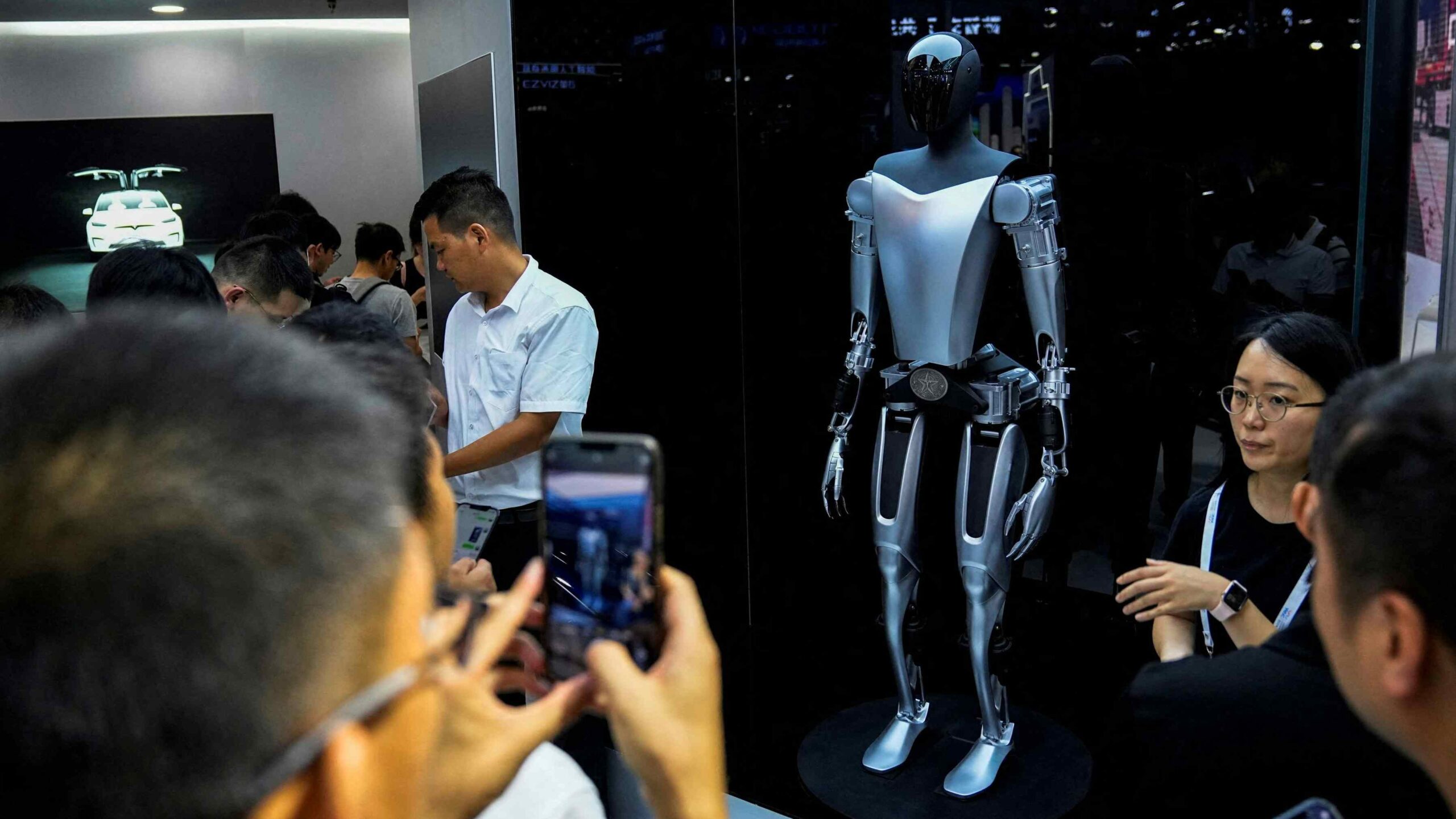
Tesla is no longer just an electric vehicle company. In February, Elon Musk delivered one of his most detailed updates ever about the Tesla Bot Optimus Gen 3, outlining production timelines, ambitious scaling plans, technological breakthroughs, and a bold economic vision that could reshape global labor.
During a three-hour discussion on the Cheeky Pine podcast, Musk revealed production targets reaching 1 million units per year, discussed the roadmap toward 10 million annual units with Optimus Gen 4, and introduced powerful new upgrades — including highly dexterous hands and full water resistance.
Here’s everything you need to know about the Tesla Optimus Gen 3, its mass production timeline, AI capabilities, competition, and why Musk calls it an “infinite money glitch.”
Tesla Bot Gen 3 Mass Production Timeline: When Will It Launch?
One of the biggest questions surrounding Tesla Optimus has always been: When will it be mass-produced?
According to Musk, the hardware for Optimus Gen 3 is now “good enough” for large-scale deployment. Tesla is targeting:
- Initial production in Q4
- Low-volume rollout in early 2026
- Ramp-up toward 1 million units per year
- A future jump to 10 million units annually with Gen 4
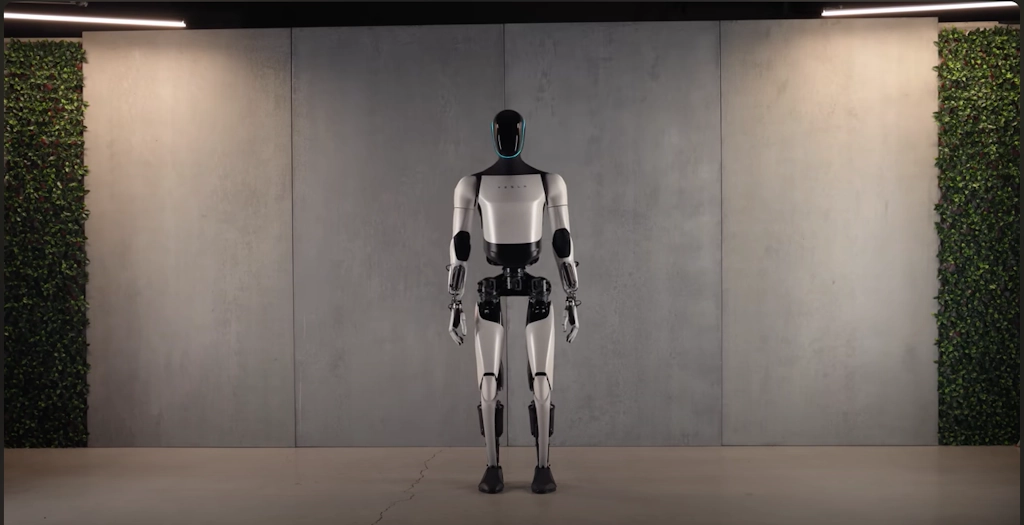
This marks a historic pivot for Tesla. By 2026, the company’s identity may shift from electric cars to humanoid robotics manufacturing.
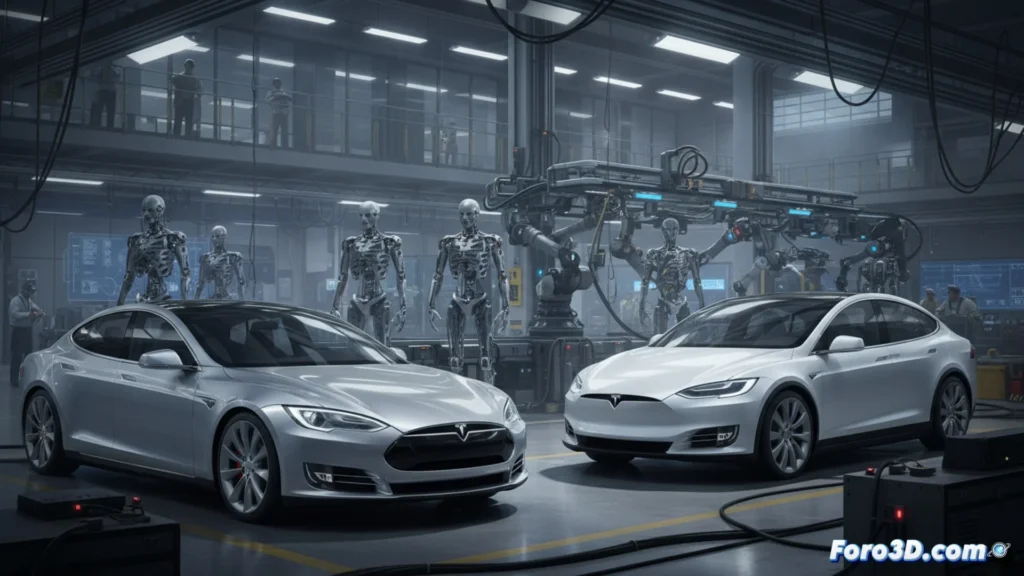
In fact, Tesla has already begun reallocating factory space — even pausing certain Model S and Model X production — to make room for Optimus manufacturing lines.
Optimus Gen 3 in Tesla Factories: Not Replacing Humans, But Amplifying Them
Contrary to fears of mass layoffs, Musk insists that Optimus will increase productivity — not eliminate jobs.
In Tesla Gigafactories, Optimus Gen 3 is expected to handle:
- Repetitive assembly tasks
- Material transport
- Component sorting
- Basic logistics
Elon estimates Optimus could take over 10–20% of factory workloads initially. However, instead of reducing staff, Tesla expects:
- Higher output per worker
- Engineers supervising multiple robots
- Increased overall workforce size
Musk envisions a future where humans and robots work together — with Optimus amplifying human capability rather than replacing it.
1 Million to 10 Million Robots: Tesla’s Exponential Scaling Plan
Optimus Gen 3 is the foundation.
Optimus Gen 4 is the breakout.
While Gen 3 aims for 1 million units annually, Tesla’s long-term goal is to reach 10 million units per year with Gen 4 — a scale unprecedented in robotics history.
Musk describes production following an S-curve:
- Slow initial ramp
- Rapid exponential acceleration
- Massive scale through vertical integration
If Tesla hits these numbers, Optimus revenue could rival or exceed major industrial corporations.
The Infinite Money Glitch: Robots Building Robots
Perhaps the most disruptive idea Musk presented is what he calls the “infinite money glitch.”
When robots begin manufacturing other robots:
- Labor cost dynamics fundamentally change
- Scaling becomes less dependent on human labor
- Output increases exponentially
This recursive production loop could redefine capitalism’s traditional relationship between capital, labor, and productivity.
Optimus Academy: How Tesla Trains Its Robots
Unlike Tesla vehicles, which gather driving data from millions of cars, humanoid robots lack real-world deployment at scale.
Tesla’s solution? Create its own data.
Optimus Academy
Tesla is building a large-scale training ecosystem that includes:
- Tens of thousands of real-world robots in controlled environments
- Millions of simulated robots in virtual worlds
- AI learning from YouTube tutorials and human demonstrations
- Shared learning across the entire robot fleet
When one Optimus learns a task — like cooking pizza — that knowledge instantly uploads to the network. Every robot benefits.
This decentralized learning model allows rapid AI evolution without manual programming.
Tesla Bot Gen 3 Hands: The Hardest Engineering Challenge
Musk admitted something surprising:
Building Optimus hands was harder than designing the Cybertruck.
Each hand features:
- 26 miniature motors
- Cable-driven tendon-like systems
- Human-inspired forearm mechanics
- Pressure and temperature sensors in fingertips
The result?
- Precise gripping
- Smooth articulation
- Ability to feel heat, cold, and texture
- Delicate object handling
These hands unlock real-world applications that previous humanoid robots couldn’t perform at scale.
Water Resistance Upgrade: A Critical Gen 3 Breakthrough
One major weakness of Optimus 2.5 was limited environmental durability.
Optimus Gen 3 changes that.
Tesla redesigned the robot with:
- Sealed actuators
- Relocated motors in forearms
- Protective external coverage
- Enhanced water resistance
Why is this important?
Because water is everywhere — kitchens, bathrooms, rain, snow, outdoor tasks.
Without water resistance, a $20,000 robot would be severely limited. With it, Optimus can:
- Operate outdoors in light rain
- Work in snowy environments
- Perform yard maintenance
- Patrol homes securely
This upgrade dramatically expands its usable environment.
Battery and Performance Specs
Optimus Gen 3 includes:
- 3 kWh battery
- Around 7 hours of operation
- Automatic recharge capability
- Running speeds up to 5–6.8 mph
- 22–24 degrees of freedom in movement
Tesla confirmed battery supply partnerships, including LG Energy Solution.
How Optimus Understands the Real World
This is not a scripted robot.
Optimus uses advanced neural networks to:
- Map environments in 3D
- Understand spatial relationships
- Adjust movement dynamically
- Distinguish trash from valuables
- Strategically clean rooms
It can:
- Vacuum intelligently
- Lift cushions and replace them precisely
- Pick up dropped keys
- Mow lawns evenly
- Return automatically to charging stations
This is what Tesla calls real-world AI.
Grok AI Integration and Personality Customization
Optimus integrates advanced conversational AI and includes a facial display.
Users will be able to:
- Customize voice
- Choose personality style
- Interact naturally
For example:
User: “I’m tired.”
Optimus: “Let me get you something to drink.”
Over time, the robot learns habits and anticipates needs.
Price Target: Under $20,000
Tesla aims to reduce Optimus pricing to around $20,000 at mass scale.
However, supply chain dynamics play a major role.
Morgan Stanley estimates removing Chinese components could increase production cost from:
- ~$46,000
to - ~$131,000 per robot
Tesla has partnered with hundreds of Chinese suppliers, building an Apple-like supply chain ecosystem.
Revenue Potential: $2,000 Per Month?
Musk suggests Optimus could generate:
- Around $2,000 per month
- Less than one-year payback period
Applications include:
Factories
- Flexible assembly tasks
- Material handling
Restaurants
- Taking orders
- Cooking
- Cleaning
Healthcare
- Assisting nurses
- Delivering medication
- Helping patients move safely
Security
- Mobile patrol
- Surveillance
- Evidence recording
Financial models suggest that if Optimus replaces two $25/hour workers while costing the equivalent of $5/hour, long-term value could exceed $200,000 per robot.
Global Labor Impact: Japan, Germany & Aging Populations
Countries facing labor shortages could see enormous benefits.
With aging populations in:
- Japan
- Germany
- South Korea
Humanoid robots may help fill critical workforce gaps in healthcare and manufacturing.
Optimus Gen 4 and Gen 5 Roadmap
Optimus Gen 4 (2027 Target)
- Near-human dexterity
- Dedicated Giga Texas production
- 10 million units annually
- Enhanced AI simulation training
Optimus Gen 5 (2028 Vision)
- 50–100 million units per year
- Fully autonomous supply chains
- AI learning 100+ tasks daily
- Potential price under $10,000
Tesla plans annual hardware refreshes similar to smartphone cycles.
Competition: China’s Low-Cost Humanoid Robots
Chinese companies like Unitree offer robots priced between:
- $6,000 to $13,000
Musk argues the key difference is capability, not price.
Tesla focuses on:
- Vertical integration
- Vehicle-derived engineering
- Neural network expertise
- Real-world AI training
Currently, Musk sees China as the only serious competition.
From Stage Demo to Economic Infrastructure
In 2021, Optimus was a person in a robot costume on stage.
By 2026, it could become:
- A mass-produced labor platform
- An income-generating asset
- A decentralized robotic workforce
Tesla is not just building a robot.
It is building a robotic labor network.
Much like the future robo-taxi platform, owners may deploy robots during idle hours — creating a distributed labor economy.
Will Tesla Bot Gen 3 Boost Tesla Sales?
Absolutely.
Optimus represents:
- A new revenue stream
- A new industry
- A shift beyond electric vehicles
- A convergence of AI, robotics, and clean energy
If Tesla executes its roadmap successfully, Optimus could become the most important product in the company’s history — potentially far larger than its vehicle business.
Final Thoughts: A New Economic Era?
Elon Musk presents Optimus as a household helper.
But the bigger vision is clear.
This is about:
- Redefining labor
- Scaling productivity
- Building AI-powered infrastructure
- Creating distributed ownership of robotic work
If robots build robots, learn autonomously, and generate income, the economic implications are staggering.
Optimus Gen 3 may be the first real step toward that future.
FAQs
1. What is Tesla Bot Optimus Gen 3?
Tesla Bot Optimus Gen 3 is the latest version of Tesla’s humanoid robot designed to perform real-world tasks in factories, homes, and commercial environments. It features upgraded dexterity, improved AI learning, and enhanced durability compared to previous versions.
2. When will Tesla Optimus Gen 3 be mass-produced?
Elon Musk has indicated that meaningful production will begin in the fourth quarter, with scaling planned through 2026. Tesla aims to ramp production toward 1 million units per year.
3. How much will Tesla Bot Gen 3 cost?
Tesla is targeting a price of under $20,000 at mass production scale. However, early production costs may be higher until supply chains and manufacturing reach full efficiency.
4. What can Tesla Optimus Gen 3 actually do?
Optimus Gen 3 can perform repetitive factory tasks, assist with household chores, cook simple meals, clean rooms, mow lawns, and support logistics operations. It learns tasks through AI training and simulation.
5. How long can Tesla Bot Gen 3 operate on one charge?
Optimus Gen 3 is powered by a 3 kWh battery and can operate for approximately 7 hours before automatically returning to its charging station.
6. Does Tesla Bot Gen 3 have human-like hands?
Yes. Each hand contains 26 miniature motors and advanced sensors, allowing near-human dexterity. The robot can feel pressure and temperature, enabling delicate and precise tasks.
7. Is Tesla Optimus water-resistant?
Yes. Gen 3 introduces improved water resistance with sealed actuators and protective coverage, enabling operation in light rain, kitchens, and outdoor environments.
8. Will Tesla robots replace human workers?
According to Elon Musk, Optimus is designed to amplify human productivity rather than replace workers. In factories, employees may supervise multiple robots instead of performing repetitive tasks manually.
9. How does Tesla train Optimus robots?
Tesla uses a system called Optimus Academy, combining real-world testing with millions of simulated training scenarios. Robots learn tasks from human demonstrations, online videos, and shared AI networks.
10. What is the “infinite money glitch” Elon Musk mentioned?
The “infinite money glitch” refers to robots building other robots. Once robots contribute to manufacturing, scaling production becomes less dependent on human labor, potentially accelerating economic output.
11. How does Tesla Optimus compare to Chinese humanoid robots?
Chinese companies offer lower-cost humanoid robots priced between $6,000 and $13,000. However, Tesla claims Optimus delivers significantly higher capability, AI intelligence, and real-world functionality.
12. Can Tesla Bot Gen 3 generate income?
Elon Musk suggests Optimus could potentially generate around $2,000 per month performing labor tasks. If accurate, this could result in a payback period of under one year.
13. Will Optimus work in healthcare and elderly care?
Yes. Tesla envisions Optimus assisting nurses, delivering medication, monitoring patients, and helping elderly individuals with mobility — particularly in countries facing labor shortages.
14. What is the roadmap after Optimus Gen 3?
Optimus Gen 4 is expected around 2027 with higher dexterity and production scaling toward 10 million units per year. Gen 5 may target tens of millions of units annually with even more advanced AI.
15. Where will Tesla manufacture Optimus robots?
Initial production lines are being installed in Fremont and Giga Texas. Final assembly is expected in the U.S., while many components may be sourced globally.
16. Why is Tesla focusing more on robots than cars?
Tesla sees humanoid robotics as a potentially larger long-term opportunity than electric vehicles. If successful, Optimus could transform Tesla into the world’s leading robotics and AI manufacturing company.
Read More:
- Elon Musk Announced New Starship V4 “Bigger, Longer & Better” Stunned Everyone
- SpaceX and xAI tapped by Pentagon for autonomous drone contest
- Tesla Korea hiring AI Chip Engineers amid push for high-volume AI chips
- Starlink restrictions are hitting Russian battlefield comms: report
- Tesla hasn’t adopted Apple CarPlay yet for this shocking reason
- Tesla launches new Model 3 financing deal with awesome savings