
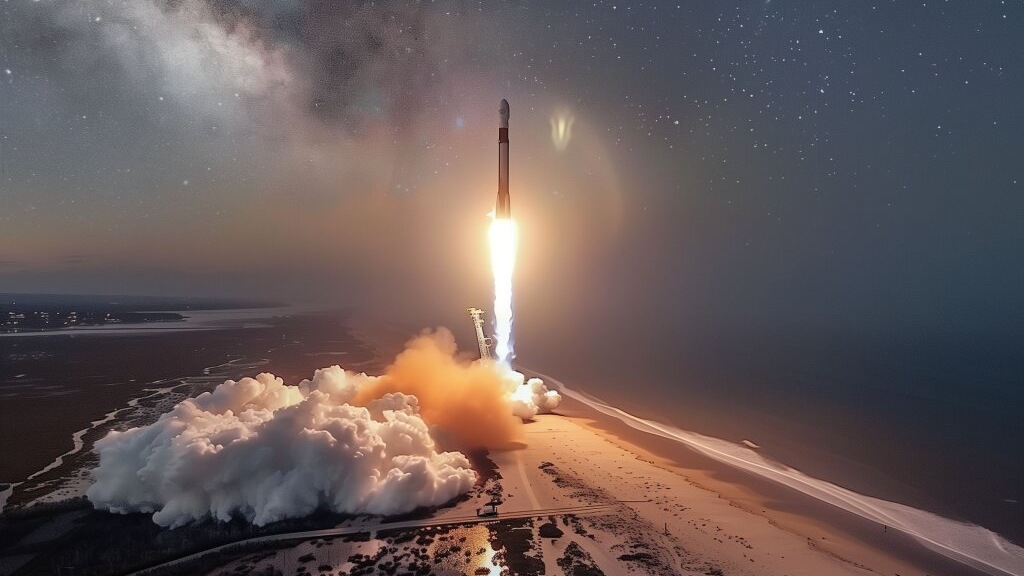
The Artemis program has been one of NASA’s most ambitious and expensive lunar endeavors, yet it faces challenges that threaten both timelines and budgets. Every time a crude Starship lands on the moon, NASA could end up spending more than $4 billion per mission. While that may sound unrelated at first, the reason is simple: bringing astronauts back to Earth still depends on NASA’s legacy systems, SLS and Orion, infamous for enormous costs and persistent technical hurdles.
But SpaceX isn’t willing to accept these limitations. They have a bold vision to remove NASA’s legacy hardware entirely from lunar missions, relying solely on Starship. Not only could this dramatically reduce costs, but it could also make lunar missions simpler, faster, and more sustainable than previously imagined.
Let’s break down what this means, how SpaceX plans to achieve it, and why NASA might finally benefit from a Starship-driven lunar architecture.
Why NASA’s Lunar Approach is Costly and Fragile
The current Artemis missions rely heavily on SLS (Space Launch System) and Orion, which are the backbone of NASA’s lunar transportation plan.
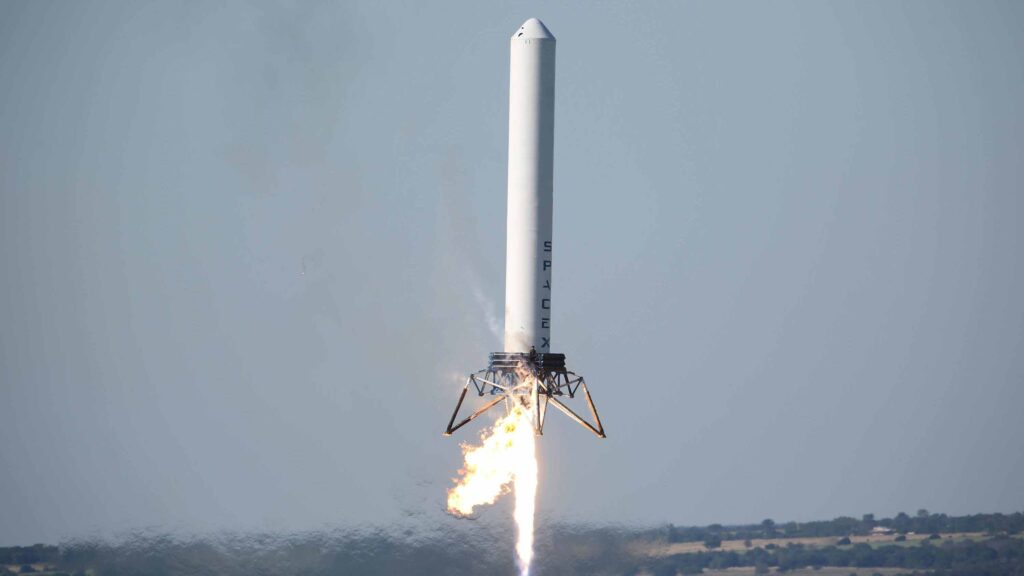
Key issues with NASA’s architecture include:
- Extreme cost per launch: Each SLS launch costs roughly $2 to $4 billion, not including Orion.
- Technical fragility: The recent Artemis 2 wet dress rehearsal revealed a helium flow disruption in the cryogenic propulsion stage, forcing a rollback of the entire stack.
- Outdated design: These systems inherit Apollo-era technology and are not reusable, leading to slow cadence and high operational complexity.
Every technical hiccup, delay, or inspection pushes costs even higher and slows down mission frequency, making a sustainable lunar base seem decades away.
SpaceX’s Vision: Starship as the Game-Changer
Elon Musk’s Starship philosophy is the opposite of NASA’s approach:
- Rapid reuse of vehicles
- Low marginal cost per flight
- High launch cadence
Starship is designed to cut costs dramatically, with a standard flight potentially below $10 million. Even the HLS (Human Landing System) variant, which doesn’t return to Earth, could cost roughly $100 million—a fraction of NASA’s multi-billion-dollar launches.
Why Starship could revolutionize lunar missions:
- Eliminates the reliance on SLS and Orion for Earth-to-Moon transport
- Increases mission frequency
- Supports sustainable infrastructure, such as Moon Base Alpha
Moon Base Alpha: A Vision for a Sustainable Lunar Economy
The ultimate goal isn’t just landing astronauts on the moon—it’s building infrastructure for long-term human presence.
H3: Key Components of a Lunar Base
- Fission Surface Power Systems
- Compact nuclear reactors delivering continuous energy through the two-week lunar night.
- Mass Drivers and Electromagnetic Launch Systems
- Launching satellites and refined lunar materials into orbit at low cost, leveraging low lunar gravity and vacuum.
- ISRU (In-Situ Resource Utilization) Manufacturing
- Using local lunar resources for construction, fuel, and life support.
- Permanent Presence and Mars Launch Points
- The moon becomes a springboard for Mars missions, lowering Earth-to-Mars energy requirements.
None of this becomes possible unless Starship HLS can safely land astronauts on the lunar surface and return them to lunar orbit. This step is crucial for a reusable, high-cadence lunar system.
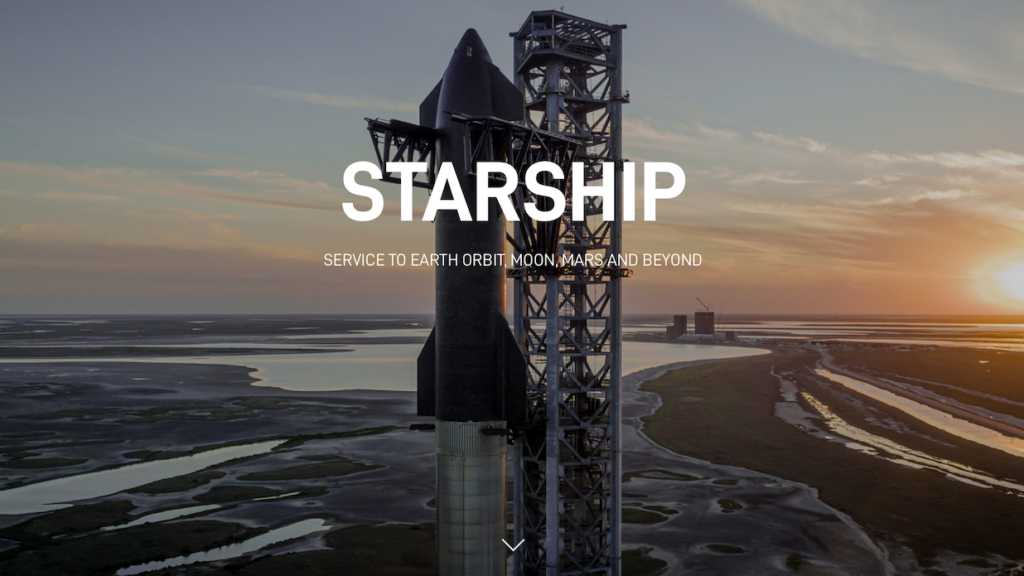
Starship HLS vs NASA’s Legacy Systems
The Cost Comparison
| Vehicle | Cost per Mission | Reusable? | Technical Notes |
|---|---|---|---|
| SLS + Orion | $2–$4 billion | No | Technical delays, complex production chain |
| Starship HLS | ~$100 million | Yes | Can remain in lunar orbit as part of base |
| Standard Starship | <$10 million | Yes | Fully reusable, high cadence |
Even if Starship HLS successfully lands astronauts, the current Earth-to-Moon round trip still depends on SLS and Orion, which is the bottleneck.
SpaceX’s Two Proposed Approaches to Lunar Missions
SpaceX’s mission simplification proposals for Artemis 3 focus on removing NASA’s legacy hardware. There are two main strategies:
Option 1: Starship + Orion Hybrid
- Orion remains fully assembled in its European Service Module and Launch Abort System.
- Orion is placed inside Starship’s payload bay.
- Starship launches from LC-39A at Kennedy Space Center or a SpaceX pad.
- After reaching low Earth orbit (LEO), Orion is deployed and uses its engines for trans-lunar injection.
- Starship HLS awaits in lunar orbit, ready for crew transfer.
- Astronauts conduct surface operations, then return via HLS to Orion and back to Earth.
Benefits of this approach:
- $2–3 billion saved per mission
- Fewer technical delays
- High launch flexibility
- Validates Starship as the primary heavy-lifter
Option 2: Fully Reusable Starship Architecture
- Two Starships launch from Earth: one for HLS, one for crew.
- HLS docks with a propellant depot in orbit, then performs trans-lunar burn.
- Crew Starship docks in orbit, transfers to HLS, and descends to lunar surface.
- Surface missions last days to weeks, supporting extended exploration and base module deployment.
- Crew returns using heat-shielded Starship for Earth re-entry.
Advantages:
- No SLS, no Orion
- Dramatic cost reduction, potentially a few hundred million per mission
- Higher mission cadence, enabling annual or more frequent lunar flights
- Greater crew volume and cargo capacity than Orion
This approach aligns with Elon Musk’s long-term vision for sustained human presence beyond Earth.
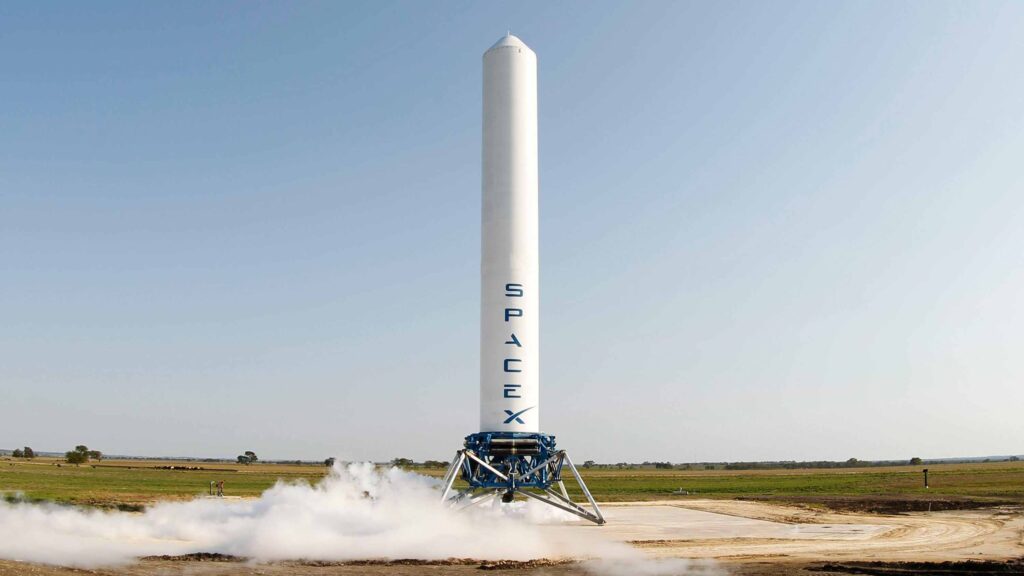
Option 3: Hybrid with Crew Dragon
A third, more practical option combines Starship with Crew Dragon + Falcon Heavy:
- Starship HLS launches first, fully fueled in lunar orbit.
- Crew Dragon launches astronauts to LEO at a fraction of SLS cost.
- Astronauts transfer to Starship for trans-lunar injection, dock with HLS, and land on the moon.
- Return journey follows the same Starship-based protocol.
Benefits:
- Dramatically lower cost per mission
- Uses proven spacecraft for crew transport
- Simpler logistics without multi-billion-dollar SLS launches
The Technical Advantages of Starship-Based Missions
- Reusability: Each Starship can perform multiple flights, reducing marginal costs.
- High Launch Cadence: Missions could occur annually or more frequently.
- Increased Payload: Supports extended surface operations, including base modules, rovers, and experiments.
- Flexibility: Starship can be adapted for crew, cargo, or HLS missions.
- Simplified Mission Architecture: Reduces complex orbital refueling sequences and risks.
Economic Implications
Replacing SLS and Orion with Starship has massive financial implications:
- Current model: 20 astronauts across multiple missions = $20–40 billion in taxpayer funds
- Starship model: Missions could cost $100 million–$500 million, primarily for HLS production and propellant
- Reduced delays: Faster deployment of lunar infrastructure
- Scalability: Enables a real lunar economy with reusable transport, energy systems, and manufacturing
SpaceX’s October 2025 analysis of Starship Flight 11 data supports these projections, showing feasibility for Artemis simplification proposals.
Long-Term Vision: A Moon Economy and Mars Prep
Building Moon Base Alpha isn’t about flags—it’s about infrastructure:
- Sustainable energy systems like fission reactors
- Material extraction and manufacturing (ISRU)
- Electromagnetic launch systems to orbit satellites and lunar materials
- Permanent human presence for research and Mars preparation
With Starship, each mission becomes scalable and repeatable, allowing NASA and SpaceX to build a lunar economy, instead of a one-off expedition.
Why Starship Could Be 100x Better Than SLS
- Lower costs: $100 million vs $4 billion
- Reusability: High-frequency flights vs one-shot SLS
- Flexibility: Adaptable for HLS, cargo, and crew
- Infrastructure-friendly: Supports Moon Base Alpha and Mars prep
- Simplified logistics: Eliminates orbital refueling complexity
In short, Starship isn’t just a spacecraft—it’s the backbone of a new era of lunar exploration.
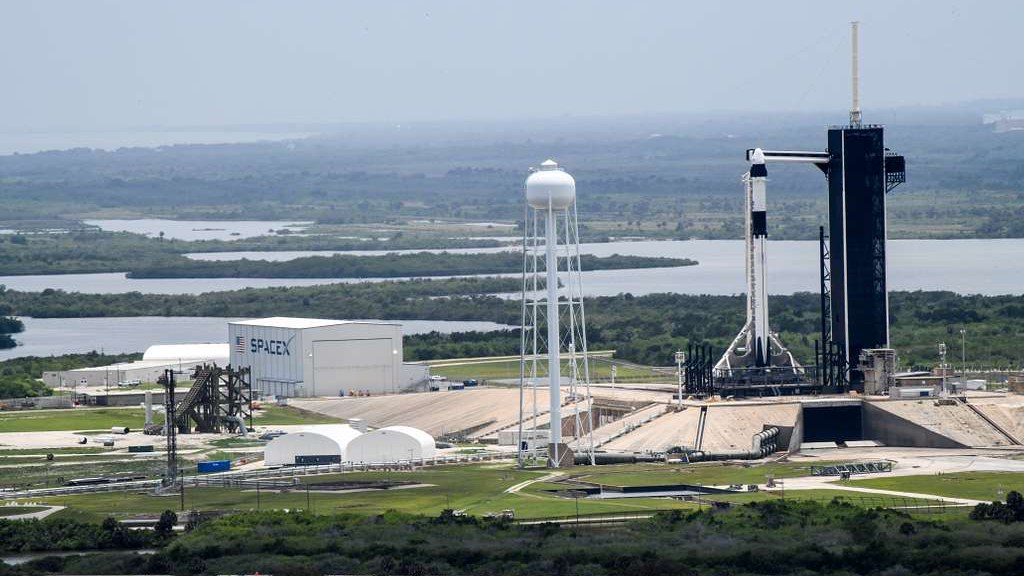
Conclusion: The Future of Lunar Missions
NASA’s current SLS-Orion system is expensive, slow, and prone to technical delays, while SpaceX’s Starship proposals promise a radical simplification, massive cost reductions, and a highly reusable infrastructure.
Whether through the hybrid Orion-Starship model, a fully reusable Starship system, or a Crew Dragon-Starship combination, the future of lunar missions may finally break free from the multi-billion-dollar bottleneck.
Starship has the potential to transform human presence on the moon, supporting long-term bases, scientific discovery, and even Mars colonization.
The question is no longer whether humans can return to the moon—but whether NASA and SpaceX will embrace Starship as the future of space exploration.
FAQs
1. What is NASA’s Artemis program?
The Artemis program is NASA’s initiative to return humans to the moon, develop sustainable lunar bases, and prepare for future Mars missions using SLS, Orion, and other spacecraft.
2. Why is NASA’s SLS rocket so expensive?
The SLS (Space Launch System) costs between $2–4 billion per launch due to its complex legacy design, non-reusability, and expensive production chain.
3. What is Orion, and why is it important?
Orion is NASA’s crew capsule designed for deep-space missions. It provides life support, propulsion, and re-entry protection for astronauts traveling beyond Earth orbit.
4. How does SpaceX’s Starship differ from SLS and Orion?
Starship is a fully reusable spacecraft designed for low-cost, high-frequency flights. Unlike SLS, it can transport crew and cargo to the moon, Mars, or Earth orbit repeatedly.
5. What is Starship HLS?
Starship HLS (Human Landing System) is a lunar-optimized variant of Starship designed to land astronauts on the moon and potentially remain in lunar orbit as part of infrastructure.
6. How much could a Starship lunar mission cost?
A Starship HLS mission could cost around $100 million, significantly lower than the $4 billion for a single SLS-Orion flight.
7. What is Moon Base Alpha?
Moon Base Alpha is a proposed sustainable lunar base aimed at providing continuous human presence, infrastructure, and resources on the moon, including nuclear power and manufacturing.
8. What role do fission surface power systems play on the moon?
These are compact nuclear reactors that deliver continuous energy through the two-week lunar night, powering habitats, instruments, and mining operations.
9. What are mass drivers on the moon?
Mass drivers are electromagnetic launch systems that can send satellites or lunar materials into orbit at low cost, leveraging the moon’s low gravity and vacuum.
10. How does Starship enable high-frequency lunar missions?
Starship’s reusability, high payload capacity, and rapid turnaround allow for multiple launches per year, unlike the multi-billion-dollar, single-use SLS system.
11. Can Starship replace SLS and Orion entirely?
Yes. SpaceX has proposed two main approaches:
- Hybrid – Orion carried by Starship for safety.
- Fully reusable Starship system – No Orion or SLS needed, with Starship handling crew and cargo transport.
12. How does Crew Dragon factor into lunar missions?
In a hybrid approach, Crew Dragon could transport astronauts to low Earth orbit, where they transfer to Starship for lunar transit, reducing costs and risks.
13. What is the Artemis 3 mission plan with Starship?
Artemis 3 may use Starship HLS to land astronauts on the lunar south pole, conduct scientific operations, and return them to orbit for Earth transit, potentially eliminating SLS.
14. How long could astronauts stay on the lunar surface using Starship HLS?
Starship HLS could support extended stays of several days to weeks, enabling long-duration EVAs, base construction, and scientific experiments.
15. What is ISRU, and why is it important?
In-Situ Resource Utilization (ISRU) uses local lunar materials for fuel, construction, and life support, reducing the need to transport everything from Earth.
16. How does Starship support Mars exploration?
Starship can serve as a moon-to-Mars transport vehicle, using the moon as a staging point, allowing refueling, cargo staging, and testing long-duration crewed missions.
17. Why are SLS and Orion considered outdated?
They rely on Apollo-era technology, are non-reusable, have high technical risk, and require complex production chains, driving costs higher.
18. What are the main benefits of Starship over SLS?
- Lower cost per mission
- Reusability
- High launch cadence
- Increased crew and cargo capacity
- Simplified mission architecture
19. How does Starship handle Earth re-entry?
Starship uses ceramic heat shields and aerodynamic flaps for controlled re-entry, combined with propulsive landing on land or sea.
20. What is the long-term vision for Starship in space exploration?
Starship aims to enable a sustainable lunar presence, support a lunar economy, facilitate Mars colonization, and revolutionize human access to space at dramatically lower costs.
Read More:
- SpaceX IPO could push Elon Musk’s net worth past $1 trillion: Polymarket
- Music City Loop could highlight The Boring Company’s real disruption
- Tesla Sweden appeals after grid company refuses to restore existing Supercharger due to union strike
- Elon Musk fires back after Wikipedia co-founder claims neutrality and dubs Grokipedia “ridiculous”
- Tesla FSD (Supervised) fleet passes 8.4 billion cumulative miles