
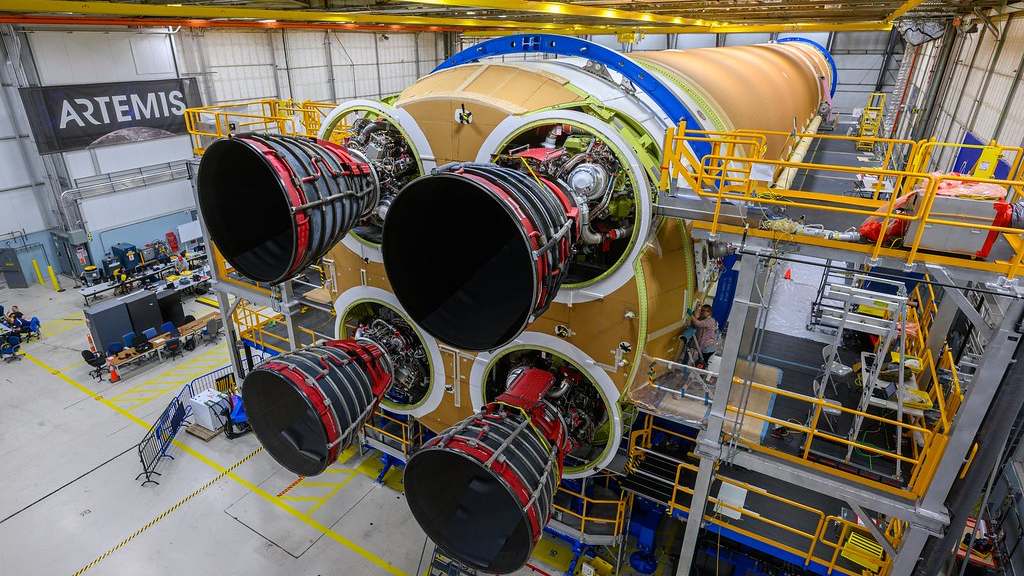
The countdown has officially begun. After more than half a century since humans last ventured beyond low Earth orbit, NASA is preparing to make history once again. The Artemis II mission represents a bold leap into the future of space exploration, reigniting humanity’s ambition to explore deep space and ultimately establish a sustained presence on the Moon.
With all systems declared “go,” anticipation is reaching a fever pitch. Yet alongside the excitement lies a critical question: why is NASA willing to take such a significant risk now?
This blog explores the mission readiness, the risks involved, the technology behind Artemis II, and why this mission could redefine humanity’s future in space.
A Historic Moment: The Return to Deep Space
For decades, human spaceflight has remained largely confined to low Earth orbit, with missions focused on the International Space Station and satellite deployment. Artemis II changes that narrative.
This mission will send astronauts on a journey around the Moon, marking the first crewed lunar mission since the Apollo era. It is not just a symbolic return—it is a foundational step toward long-term lunar exploration and eventual missions to Mars.
The stakes are enormous. Success would cement a new era of exploration, while failure could delay progress for years.
The Readiness Review: A Rare “Clean” Status
On March 29th, NASA conducted a critical readiness review ahead of the April 1st launch window. The outcome surprised even seasoned experts.
NASA officials described the mission status as “clean”—a term rarely used in aerospace due to the complexity of space systems. This indicates that both the Space Launch System (SLS) rocket and Orion spacecraft have passed rigorous testing without major unresolved issues.
Why This Matters
- A “clean” status means minimal technical concerns remain
- Launch rehearsals have been smoother than expected
- Systems integration appears stable and reliable
This level of readiness suggests NASA has successfully addressed many of the challenges that delayed previous missions.
Why Take the Risk Now?
Despite the encouraging reports, space exploration remains inherently dangerous. Artemis II is no exception. So why proceed?
1. Human-Rating the System
The primary objective of Artemis II is to prove that the spacecraft can safely carry humans.
While Artemis I demonstrated that the system works without a crew, Artemis II must validate:
- Life support systems
- Environmental controls
- Crew safety mechanisms
This is the first real test of whether humans can survive and operate in deep space using this new architecture.
2. The New Space Race
The global space landscape has evolved dramatically. Space exploration is no longer dominated by a single nation.
Countries like China are actively pursuing their own lunar ambitions, aiming for a crewed Moon landing within this decade.
Why This Matters
- Maintaining leadership in space is a strategic priority
- Lunar resources, especially water ice, are highly valuable
- The Moon could serve as a launchpad for Mars missions
Artemis II is not just a scientific mission—it is a geopolitical statement.
3. Critical Mission Training (Proximity Operations)
Within the first 24 hours of flight, astronauts will perform a crucial maneuver known as Proximity Operations (Prox Ops).
This involves manually piloting the Orion spacecraft to within just 10 meters of the rocket’s upper stage.
Why This Test is Essential
- Prepares astronauts for docking maneuvers
- Simulates future missions involving lunar landers
- Builds confidence in manual spacecraft control
This is not a demonstration—it is training for the future of human spaceflight.
Understanding the Risks
Even with flawless preparation, space missions carry significant risks. Artemis II faces several key challenges.
The Power Beneath the Rocket
The Space Launch System is fueled by approximately 1.4 million gallons of supercooled propellant. This immense energy source is both necessary and dangerous.
A failure during launch could have catastrophic consequences.
The Launch Abort System: A Lifeline
To counter this risk, NASA has equipped the Orion spacecraft with a Launch Abort System (LAS).
How It Works
- Activates in case of rocket failure
- Generates massive thrust to pull the capsule away
- Subjects astronauts to extreme forces (up to 17 Gs)
While physically intense, this system dramatically increases the crew’s chances of survival during emergencies.
Weather: The Unpredictable Factor
Even the most advanced technology cannot control the weather.
NASA follows strict guidelines, including the “thick cloud rule.”
What is the Thick Cloud Rule?
- Launch is prohibited through dense cloud layers
- Especially critical when temperatures are near freezing
- Prevents lightning strikes triggered by the rocket
Weather remains one of the few variables that could delay launch.
Deep Space Challenges
Unlike missions in low Earth orbit, Artemis II ventures far beyond immediate rescue capabilities.
Limited Return Options
- Orion has less thrust compared to Apollo spacecraft
- Crew cannot quickly turn back in an emergency
- Mission follows a free-return trajectory around the Moon
This trajectory ensures the spacecraft will naturally return to Earth using the Moon’s gravity.
Survival in Emergencies
If a critical failure occurs, astronauts rely on specialized systems.
- Flight suits can sustain life for up to 6 days
- Matches the time required to return to Earth
- Designed for extreme conditions
These systems act as a final safeguard in worst-case scenarios.
Life Inside the Orion Capsule
While the mission lasts around 10 days, life inside the spacecraft presents unique challenges.
Living Space: Compact but Advanced
The Orion capsule is larger than its Apollo predecessor, offering about 60% more space.
However, with four astronauts onboard, it remains a confined environment.
Food in Space
Microgravity affects appetite, so NASA has carefully curated a diverse menu.
Menu Highlights
- Smoked beef brisket
- Variety of snacks and meals
- Multiple hot sauce options
A total of 189 food items are available to maintain nutrition and morale.
Hygiene Improvements
Unlike the rudimentary systems used during Apollo missions, Orion features an upgraded waste management system.
- Urine is safely vented into space
- Solid waste is stored for return
- More hygienic and efficient
This marks a significant improvement in astronaut comfort.
Exercise in Microgravity
Prolonged exposure to microgravity leads to muscle and bone loss.
Daily Routine
- 30 minutes of exercise
- Compact rowing machine
- Helps maintain physical health
Even short missions require strict physical discipline.
The Bigger Vision: Beyond the Moon
Artemis II is not an isolated mission—it is part of a larger strategy.
NASA plans to invest heavily in building a sustainable lunar presence.
The Gateway Station
A space station orbiting the Moon, known as Gateway, will serve as a hub for future missions.
Its Role
- Supports lunar landings
- Enables long-term exploration
- Acts as a staging point for Mars missions
A Permanent Lunar Base
NASA aims to establish a human presence on the Moon’s surface.
Why the Moon?
- Presence of water ice
- Potential for fuel production
- Testing ground for deep space living
This is a stepping stone toward interplanetary exploration.
A New Era of Space Exploration
Artemis II bridges the gap between the past and the future.
Unlike Apollo missions, this journey will be documented using modern technology.
- High-definition 4K cameras
- Advanced communication systems
- Real-time data sharing
For the first time, humanity will experience deep space exploration in unprecedented detail.
Why the Risk is Worth It
Every major leap in human history has involved risk.
From early ocean exploration to the first Moon landing, progress has always required courage.
Key Reasons Artemis II Matters
- Expands human presence beyond Earth
- Advances scientific understanding
- Strengthens global leadership in space
- Inspires future generations
The potential rewards far outweigh the dangers.
Final Thoughts: The Countdown Begins
As the launch approaches, the world watches with anticipation.
Artemis II is more than a mission—it is a statement of intent. It signals that humanity is ready to move forward, to explore, and to push beyond known boundaries.
Yes, the risks are real. But so is the opportunity.
In just two days, four astronauts will embark on a journey that could redefine our place in the universe.
The countdown is on—and history is waiting.
FAQs
1. What is the Artemis II mission?
Artemis II is NASA’s first crewed mission to travel around the Moon since the Apollo era, aiming to test the Orion spacecraft and Space Launch System with astronauts onboard.
2. When is the Artemis II launch scheduled?
The launch window is currently targeted for early April, with final timing dependent on weather and technical conditions.
3. How long will the Artemis II mission last?
The mission is expected to last approximately 10 days, including a lunar flyby and return to Earth.
4. Who are the astronauts on Artemis II?
The crew consists of four astronauts, including a commander, pilot, and mission specialists selected by NASA for this historic journey.
5. What is the main goal of Artemis II?
The primary objective is to test life-support systems and spacecraft performance with humans onboard in deep space.
6. How far will Artemis II travel?
The spacecraft will travel hundreds of thousands of kilometers from Earth, orbiting the Moon before returning.
7. Is Artemis II landing on the Moon?
No, Artemis II will not land on the Moon. It is a flyby mission designed to prepare for future lunar landings.
8. What is the Space Launch System (SLS)?
SLS is NASA’s most powerful rocket, designed to carry astronauts and cargo beyond low Earth orbit to the Moon and eventually Mars.
9. What safety measures are in place for Artemis II?
NASA has implemented multiple safety systems, including the Launch Abort System (LAS), advanced life-support systems, and emergency survival suits.
10. What is the Launch Abort System (LAS)?
LAS is an emergency system that can quickly pull the crew capsule away from the rocket in case of a launch failure.
11. What is a free-return trajectory?
A free-return trajectory uses the Moon’s gravity to naturally guide the spacecraft back to Earth without needing major engine burns.
12. Why is Artemis II considered risky?
Deep space missions involve high risks, including limited rescue options, exposure to radiation, and complex system dependencies.
13. What will astronauts eat during the mission?
Astronauts will have access to 189 food items, including meals like smoked beef brisket and various snacks designed for microgravity.
14. How do astronauts exercise in space?
They will use a compact rowing machine for about 30 minutes daily to maintain muscle and bone health.
15. What comes after Artemis II?
The next mission, Artemis III, aims to land humans on the Moon, including the first woman and next man on the lunar surface.
16. Why is Artemis II important for the future?
It is a crucial step toward establishing a permanent human presence on the Moon and enabling future missions to Mars.
Read More:
- Elon Musk announces disappointing Tesla Optimus update
- Elon Musk hints at “official ceremony” with throwback photo to close Tesla Model S, Model X chapter
- SpaceX files confidentially for IPO that will rewrite the record books
- Tesla begins ‘honorable discharge’ of Model S, X with massive move
- New Tesla Battery: Aluminum-Ion after lithium? 65M tons/yr aluminum + 95% lower recycle energy
1 thought on “NASA’s Artemis II Moon Rocket is finally on Pad for Launch in 2 Days. Why Risk it?”