
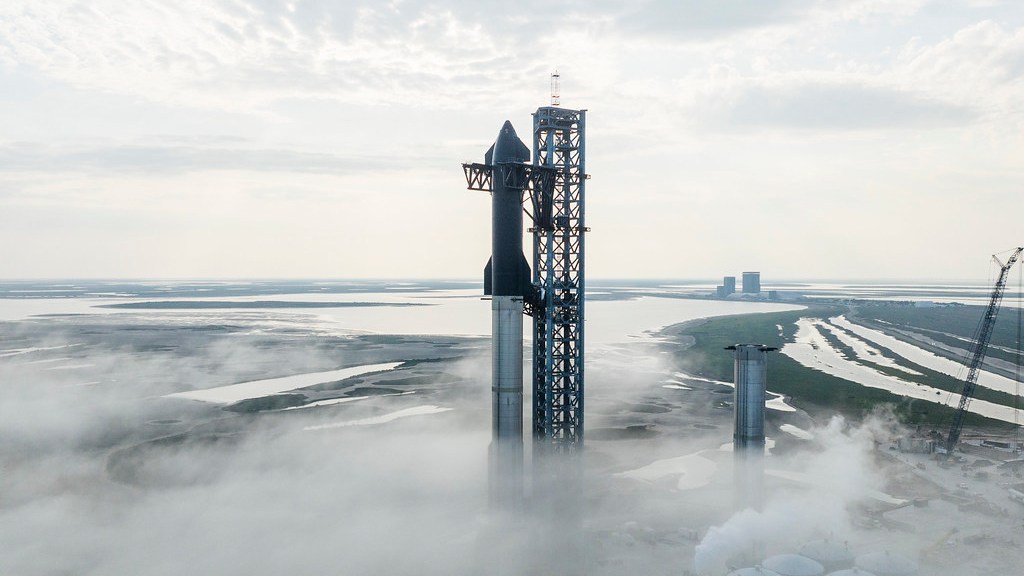
The global space industry is entering one of its most intense and transformative phases in history. What was once dominated by government agencies is now a high-stakes race between private giants pushing the limits of engineering, speed, and ambition. At the center of this revolution is SpaceX, whose latest milestone—the full engine fire test of Starship Ship Version 3 (S39)—has reignited excitement across the aerospace world.
But alongside this success comes an intriguing mystery: the repeated delays of Booster 19 (B19). At the same time, competitors like Blue Origin are accelerating their own efforts with New Glenn, adding pressure to an already heated space race.
This in-depth, SEO-friendly blog explores everything you need to know—from the groundbreaking S39 test to infrastructure upgrades, B19 delays, and the broader implications for NASA’s Artemis missions.
The Breakthrough Moment: Starship V3 S39 Full Engine Fire Test
A New Chapter in Starship Evolution
The development of Starship has always followed a philosophy of rapid iteration. Each version builds on previous failures and successes, but Version 3 (V3) represents something fundamentally different—a leap toward operational maturity.
Unlike earlier prototypes, Starship V3 is designed with:
- Improved structural durability
- Enhanced engine reliability
- Greater thrust capabilities
- Better thermal protection systems
This isn’t just another prototype—it’s a serious contender for orbital missions and beyond.
The Surprise Test That Shocked Everyone
On April 14, SpaceX conducted an unexpected full-duration static fire test of Ship S39 at its Starbase facility in Texas. Unlike previous tests, there were no major public warnings or road closures.
Instead, the sequence began quietly—with venting.
What is Venting?
Venting is when a rocket releases excess pressure during fueling. As supercooled liquid oxygen and methane fill the tanks, visible vapor clouds form—essentially the rocket “breathing” before ignition.
Key Visual Indicators Observed
- Heavy frost buildup on oxygen tanks
- Methane condensation patterns
- Active flap movement tests
The flaps—massive aerodynamic surfaces—moved rhythmically, almost like mechanical fins. This signaled that both mechanical and flight control systems were being tested simultaneously.
Six Engines. Sixty Seconds. Massive Power.
The highlight of the test was the ignition of all six Raptor engines.
- Total thrust: ~1,700 tons
- Duration: Nearly 60 seconds
- Power comparison: Equivalent to ~300 elephants jumping at once
This wasn’t a brief burst—it was a full-duration burn, which is critical for real mission validation.
Why This Matters
A 60-second static fire allows engineers to evaluate:
- Thermal endurance under sustained heat
- Structural integrity during intense vibrations
- Engine performance consistency
- Gimbal control precision for steering
The Stunning Physics: Shock Diamonds
During the burn, observers spotted shock diamonds—a mesmerizing pattern in the exhaust plume.
These occur when supersonic exhaust gases interact with atmospheric pressure, creating visible waves of compression and expansion. The result? A chain of glowing diamond shapes in blue and purple hues.
This wasn’t just visually impressive—it confirmed optimal combustion efficiency and nozzle performance.
Official Confirmation and Next Steps
Shortly after the test, Elon Musk confirmed the success, hinting that S39 is now a primary candidate for upcoming orbital flights.
This marks a major step toward:
- Full reusability
- Deep space missions
- Supporting Artemis lunar landings
The Hidden Hero: Starbase Infrastructure Upgrades
Learning from Past Failures
The success of S39 wasn’t just about the rocket—it was also about the launch site evolution.
After earlier incidents like the S36 explosion, SpaceX made major improvements to its testing infrastructure at Starbase.
The Flame Trench Advantage
One of the biggest upgrades is the flame trench system.
What It Does
- Redirects exhaust away from the rocket
- Prevents debris from damaging hardware
- Improves visibility during tests
Earlier designs created massive dust clouds that obscured visibility. Now, exhaust is cleanly diverted, allowing engineers to monitor performance in real-time.
The Deluge System
Another critical addition is the water deluge system.
Key Benefits
- Absorbs acoustic energy
- Reduces heat damage
- Protects launchpad structures
Together, these upgrades enable:
- More frequent testing
- Longer burn durations
- Higher safety margins
Booster 19 (B19): The Mystery Behind the Delays
While S39 stole the spotlight, its counterpart—Booster 19 (B19)—has been unusually quiet.
What’s Happening with B19?
B19 has faced multiple delays during its testing cycle:
Timeline of Events
- April 12: Test postponed for cryogenic checks
- April 14: Fueling initiated but aborted early
- No full frost formation observed
This indicates the process was halted before full tank loading.
Signs of Technical Troubleshooting
Observers noticed unusual activity:
- Ship Quick Disconnect (SQD) arm cycling repeatedly
- Launch tower “chopstick” arms repositioning
- Booster stabilization adjustments
These are classic signs of:
- Sensor inconsistencies
- Minor mechanical faults
- Software calibration issues
Why Delays Are Actually a Good Thing
In rocketry, delays are not failures—they’re risk mitigation strategies.
Fixing a problem on the ground is far better than:
- Losing a vehicle mid-flight
- Damaging launch infrastructure
- Delaying entire mission timelines
Given that B19 is the most powerful booster ever built, extra caution is expected.
Rising Competition: Blue Origin’s New Glenn
While SpaceX dominates headlines, Blue Origin is making serious progress.
Introducing New Glenn
New Glenn is Blue Origin’s answer to Starship—a heavy-lift rocket designed for orbital and deep-space missions.
Recent Milestone: Launch Rehearsal
New Glenn recently completed a full launch rehearsal, which included:
- Countdown simulation
- Fuel loading procedures
- System checks
The only thing missing? Engine ignition.
The Big Test Ahead: Hotfire
The upcoming hotfire test will be crucial.
This involves firing engines while the rocket remains anchored to the pad—similar to what SpaceX just achieved with S39.
An Ambitious Timeline
Blue Origin is targeting:
- Hotfire test
- Launch attempt within 24 hours
This is extremely aggressive.
Most companies take days—or even weeks—to analyze data for:
- Microfractures
- Fuel leaks
- Thermal damage
The Jaclyn Drone Ship
Blue Origin has also deployed its recovery vessel:
- Named after Jeff Bezos’s mother
- Designed to catch returning boosters
If successful, New Glenn could achieve first-flight booster recovery, a milestone even SpaceX took years to perfect.
The Human Element: Axiom’s Next-Gen Spacesuit
Rockets get us to space—but survival requires something more.
Enter Axiom Space.
The AxEMU Spacesuit
Axiom is developing the AxEMU (Axiom Extravehicular Mobility Unit) for NASA’s Artemis missions.
Why the Moon Is Dangerous
The lunar environment is extremely hostile:
- No atmosphere
- Extreme temperature swings
- High radiation exposure
Without proper protection, survival is impossible.
Key Features of AxEMU
1. Advanced Durability
- Radiation-resistant materials
- Extreme temperature tolerance
2. Enhanced Mobility
Unlike older suits, AxEMU allows astronauts to:
- Bend naturally
- Walk efficiently
- Perform scientific tasks like collecting samples
3. Certification Progress
- Final evaluations nearing completion
- Fully functional prototype in assembly
Testing Strategy
Before humans use the suit, it will likely be tested via:
- Uncrewed missions
- Deployment on the International Space Station
- Lunar lander trials
This ensures safety before astronauts rely on it.
What This Means for NASA’s Artemis Program
All these developments tie directly into Artemis program.
Starship’s Role
SpaceX’s Starship is expected to serve as:
- Lunar lander
- Cargo transport system
- Long-term mission support vehicle
Why S39 Matters
The success of S39 indicates:
- Starship is nearing operational readiness
- Engine reliability is improving
- Long-duration burns are viable
Why B19 Matters Even More
Without a reliable booster, Starship cannot:
- Reach orbit
- Carry heavy payloads
- Support Artemis timelines
So while S39 is a win, B19 remains a critical bottleneck.
The Bigger Picture: A Multi-Front Space Race
We are witnessing a three-way evolution:
1. SpaceX
- Rapid iteration
- Aggressive testing
- Leading in reusability
2. Blue Origin
- Slower but methodical approach
- High ambition with New Glenn
- Focus on reliability
3. NASA & Partners
- Coordinating missions
- Developing human survival systems
- Driving long-term exploration goals
Final Thoughts: The Road to the Stars
The successful full engine fire of Starship V3 S39 is more than just a test—it’s a statement of intent.
It shows that:
- SpaceX is closing in on fully reusable spaceflight
- Engineering challenges are being solved rapidly
- The dream of interplanetary travel is becoming tangible
At the same time:
- Booster 19’s delays remind us that rocket science is unforgiving
- Blue Origin’s progress ensures competition remains fierce
- Axiom’s spacesuits prove that human survival is just as critical as launch capability
The journey to the stars isn’t defined by a single launch—it’s built on thousands of tests, failures, fixes, and breakthroughs.
And right now, all eyes are on the next countdown.
Because the next giant leap? It’s closer than ever. 🚀
FAQs
1. What is Starship V3 and why is it important?
Starship V3 is the latest evolution of Starship developed by SpaceX. It represents a more advanced, powerful, and reliable version designed for long-duration missions, including trips to the Moon and Mars.
2. What happened during the S39 full engine fire test?
Ship S39 successfully fired all six of its Raptor engines for nearly 60 seconds, generating about 1,700 tons of thrust, marking a major milestone in rocket testing.
3. Why is a full-duration static fire test significant?
A full-duration test simulates real flight conditions, allowing engineers to evaluate:
- Heat resistance
- Structural integrity
- Engine performance
- Flight control systems
4. What are Raptor engines?
Raptor engine are advanced methane-fueled engines developed by SpaceX, designed for high efficiency and reusability in Starship missions.
5. What are “shock diamonds” seen during the test?
Shock diamonds are visible patterns in rocket exhaust caused by pressure differences between the engine plume and the atmosphere, indicating efficient combustion.
6. Why was the S39 test unexpected?
Unlike typical tests, this one had no prior public announcement or road closures, making it a surprise event for observers and space enthusiasts.
7. What is Booster 19 (B19)?
Booster 19 is the Super Heavy rocket booster designed to launch Starship into orbit. It provides the massive thrust needed for liftoff.
8. Why is Booster 19 delayed?
B19 has faced delays likely due to:
- Sensor issues
- Mechanical adjustments
- Incomplete fueling cycles
These are common in complex rocket testing.
9. Are delays in rocket testing normal?
Yes, delays are a standard part of aerospace development. Engineers prioritize safety and reliability over speed to prevent failures during flight.
10. What is the role of the flame trench at Starbase?
The flame trench redirects rocket exhaust away from the launchpad, reducing damage, improving visibility, and increasing safety during tests.
11. What is the deluge system?
The deluge system releases large amounts of water to:
- Reduce heat
- Suppress sound waves
- Protect infrastructure
12. What is Blue Origin’s New Glenn rocket?
New Glenn is a heavy-lift rocket developed by Blue Origin to compete with Starship for orbital and deep-space missions.
13. What is a launch rehearsal?
A launch rehearsal is a full simulation of a launch sequence without engine ignition. It tests systems like fueling, countdown, and communications.
14. What is the AxEMU spacesuit?
The AxEMU is a next-generation spacesuit developed by Axiom Space for astronauts in NASA’s lunar missions.
15. How does this relate to NASA’s Artemis program?
Artemis program aims to return humans to the Moon, and Starship is expected to play a key role as a lunar lander.
16. What’s next for SpaceX after this test?
Following the success of S39, SpaceX will likely:
- Continue testing Booster 19
- Prepare for orbital flight attempts
- Refine systems for future Moon missions
Read More:
- Tesla Full Self-Driving shows stunning maneuver in Europe to silence skeptics
- Tesla Model 2 2026 Senior Edition $20–25K: Outer Crash Pods Spare $15–20K Pack + Anti-Rust Panels
- SpaceX Found Problems after B19’s tests, No Static Fire until…! New Glenn on Pad to Launch
- Tesla 2026 Spring Update drops 12 new features owners have been waiting for
- Tesla parked 50+ Cybercabs outside its Texas Factory with some crash tested
1 thought on “SpaceX finally Completed First Ship V3’s Full Engine Fire Test, But B19 Delayed Again, WHY?”