

The recent stress-test incident involving Starship Booster 18 (B18) sent shockwaves across the aerospace community. Images of the torn-open tanks and mangled steel quickly fueled speculation: Was Starship V3 already a failure?
Yet beneath the dramatic visuals lies a deeper story—one filled not only with damage and setbacks, but also unexpected strengths, engineering victories, and promising data that shocked even veteran industry observers.
In this comprehensive breakdown, we’ll cover:
- What really happened to B18 during the test
- Why the damage isn’t the disaster it appears to be
- What the new V3 upgrades revealed under extreme conditions
- The critical weaknesses SpaceX must fix next
- How Ship 39 and Booster 19 are now setting the stage for Flight 12
- What this means for the entire Starship program
Let’s dive into the details.
The B18 Incident: A Test Gone Wrong—Or Exactly as Planned?
When B18 reached the final stages of its structural stress testing, few expected a catastrophic failure so early in the V3 program. The liquid oxygen (LOX) tank burst open, exposing internal musculature of the booster that was never meant to see daylight. The methane tank shifted and warped, signaling massive internal pressure distortions.
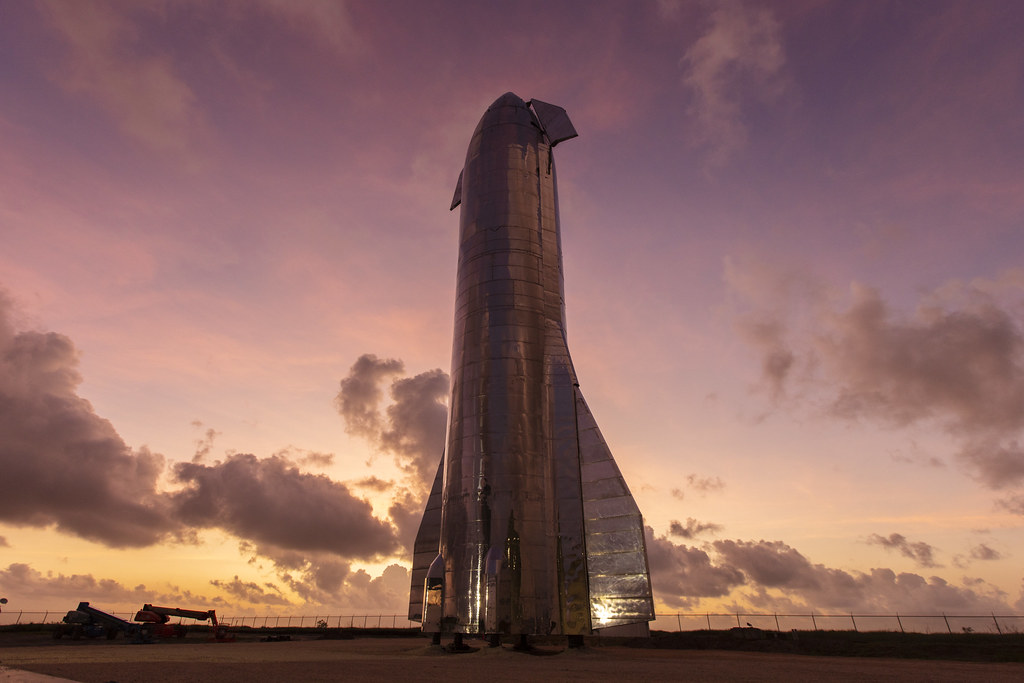
To many observers, this looked like a total structural collapse.
But was it?
Surprisingly, no. And here’s why.
Why B18’s Destruction Isn’t a Sign of Failure
1. The V3 Transfer Tube Survived—Almost Perfectly
One of the most impressive upgrades in Starship V3 is the larger, Falcon-9-scale transfer tube—a crucial internal system responsible for delivering propellant from tank to engines.
Despite being located inside the very tank that ruptured, the tube emerged with only a minor puncture.
This is shocking because:
- The explosion originated inside the LOX tank
- The previous transfer-tube design would have been “shredded,” according to engineers
- The tube essentially acted like a steel spine, holding the booster together
The survival of this part suggests huge gains in structural durability, engine-startup reliability, and flip-maneuver performance—key for future reusable booster operations.
2. B18 Didn’t Collapse—Even With Its Tanks Destroyed
SpaceX fans will remember earlier boosters sagging, leaning, or collapsing after tank failures.
B18 stayed upright.
This proves:
- The V3 frame is significantly more rigid
- The booster’s load-bearing design is dramatically stronger
- The new central transfer tube plays a major role in stabilization
Had the booster collapsed, equipment and personnel at Starbase could have faced a catastrophic situation. The fact that B18 remained standing shocked safety engineers—in a good way.
3. The Forward Section Is Nearly Untouched
The hot staging hardware, grid fins, and stage-separation systems were completely unharmed. Partly this is due to the separation before the explosion—but also because:
- V3’s forward structural reinforcements are working as intended
- The high-precision landing and navigation hardware stayed intact
- It demonstrates excellent resilience of future “catch tower” components
The forward section is where some of Starship’s most important future operations will happen, including eventual precision booster catching.
4. SpaceX’s Decision-Making Prevented a Disaster
Perhaps the most overlooked win:
SpaceX intentionally chose to conduct a fuel-free structural test first, before loading cryogenics.
Had they proceeded directly to cryogenic loading:
- A tank rupture could have triggered a massive fireball
- Starbase infrastructure could have been damaged for months
- B18 might have caused a domino effect across the launch site
Instead, the failure provided valuable data without risking a catastrophic event.
What B18 Teaches Us About the New Starship V3 Design
Even in destruction, V3 showed major progress:
- More durable internal structures
- Stronger load-bearing architecture
- Improved safety testing protocols
- Better compartmentalization during failures
- Clear survivability of key forward-section hardware
This is why many engineers now believe:
V3 is not a step backward—it’s the first Starship version built for true long-term reusability.
But SpaceX still has major work ahead.
Key Areas SpaceX Must Improve Before Flight
1. Reinforcing the Fuel Tanks
The LOX and methane tanks face:
- Extreme pressure swings
- Cryogenic temperatures near −180°C
- Weld stress
- Rapid depressurization during testing
To prevent future ruptures, SpaceX will need:
- Stronger weld geometries
- Protective reinforcements
- Improved tank dome designs
- Additional thermal buffering systems
A tank failure during flight—or on the pad—would be catastrophic. SpaceX must get this perfect.
2. Upgrading the Internal Plumbing (“Blood Vessels” of Starship)
The plumbing system distributes:
- LOX
- Liquid methane
- Helium
- Pressurization gases
Any crack, blockage, or fracture could:
- Stall an engine
- Trigger an explosion
- Cause loss of vehicle
For a fully reusable Starship, SpaceX must ensure these internal systems:
- Survive multiple flights
- Tolerate thermal cycling
- Resist vibration and stress
- Are easy to refurbish
3. Preparing the Engine Section for Raptor 3
The new Raptor 3 engines will debut on B19—and they are beasts:
- More thrust
- Higher chamber pressure
- Far fewer components
- More reliability
- Simplified plumbing layout
Integrating 33 Raptor 3s means the engine compartment must be redesigned to:
- Handle extreme heat
- Prevent vibration-induced failures
- Support new power levels
- Enable rapid restart cycles
This is one of the most important upgrades of V3.
4. Ensuring Ship’s Vacuum Raptors Are Reliable
Upper-stage vacuum raptors face:
- Freezing space temperatures
- Complex orbital maneuvers
- Long-duration burns during lunar missions
V2 ships experienced multiple engine-out failures.
V3 cannot afford that.
5. Heat Shield Improvements
The heat shield must withstand:
- Re-entry plasma
- Shock heating
- Tile loss events
- Rapid refurbishment demands
V3 aims not just to survive re-entry—but to fly again quickly.
That requires:
- Better tile bonding
- Stronger abrasion resistance
- Reduced tile gaps
- Easier inspection systems
The Road Ahead: Ship 39 and Booster 19
Ship 39 (S39): Ahead of Schedule
S39 has:
- Completed stacking
- Begun final inspections
- Preparing for Massie stress testing
- Preparing for cryogenic load tests
If successful, S39 will return to Mega Bay 2 to:
- Install its Raptor 3 engines
- Conduct its static fire
- Become the first Raptor-3-powered ship
Estimated completion: Late December.
Booster 19 (B19): The Star of Flight 12
B19 is slightly behind S39 but rapidly closing the gap.
Current timeline:
- Stacking complete by mid/late December
- Stress test → end of December
- Cryogenic test → early January
- Raptor 3 installation → mid-January
Then comes the moment the world is waiting for:
B19 Static Fire: Over 9,000 Tons of Thrust
This could become:
- The most powerful static fire ever conducted
- A historic demonstration leading directly to Flight 12
Possible date: Mid-January.
Flight 12: Targeting Late January or Early February
If:
- S39 completes engine installation
- B19 finishes cryogenic testing
- The static fires go according to plan
Then SpaceX can green-light Starship Flight 12.
This would keep the program on track for:
- Multiple Starship flights in 2025
- V3 reusability tests
- Lunar simulation missions
- Potential on-orbit refueling demos
Why This Failure Might Be the Turning Point for Starship
SpaceX has repeatedly demonstrated:
- Failures → data
- Data → upgrades
- Upgrades → rapid progress
Just as with V2—after Ship 36’s setback—SpaceX bounced back with two successful flights.
V3 is far more ambitious:
- Stronger
- Heavier
- More capable
- More reliable
- Designed for full reuse
With every iteration, Starship takes a massive leap forward.
Are We Close to the Next Major Starship Evolution?
Yes. And the B18 incident may prove to be exactly the data point SpaceX needed.
It showed:
- What parts are strong
- What parts must be reinforced
- Where hidden weaknesses lie
- Which V3 upgrades are already paying off
If you’ve followed SpaceX long enough, you know:
The path to Mars is paved with stainless steel and failed test tanks.
And each failure is another step closer.
Final Thoughts: A Stronger Starship Emerges
The B18 stress test wasn’t the disaster it appeared to be—it was a breakthrough moment.
SpaceX confirmed:
- The V3 skeleton is strong
- New hardware is robust
- Core components are maturing
- Design improvements are working
- And most importantly—
critical flaws were discovered before flight, not during.
With Ship 39 and Booster 19 moving quickly toward Flight 12, the next chapter of Starship is nearly here.
The next leap in the Starship program is coming. Are you ready?
FAQs
1. What caused the failure of Starship Booster 18 (B18)?
B18 failed during a structural stress test, which caused the LOX tank to rupture and expose internal components. The incident emerged from pressure buildup during non-cryogenic testing.
2. Was the B18 failure considered a complete setback for Starship V3?
No. Despite the dramatic damage, the event revealed several unexpected strengths in the V3 design, proving it is not a failure but a valuable data-gathering milestone.
3. Why did SpaceX run a fuel-free stress test instead of loading cryogenics?
SpaceX wanted to identify structural weaknesses safely. A fuel-free test prevents explosions, fires, and destruction of ground infrastructure.
4. What V3 upgrade performed the best during the B18 incident?
The new, larger transfer tube survived nearly intact, even though the explosion originated in the same tank. This was one of the most encouraging results of the test.
5. How did the V3 frame react to the tank rupture?
The V3 structural frame was strong enough that B18 did not collapse, proving SpaceX has significantly improved the booster’s load-bearing stability.
6. Did the forward section of the booster suffer any damage?
No. The upper section containing grid fins, hot-staging hardware, and navigation systems remained completely undamaged.
7. What improvements must SpaceX make to Starship V3 next?
SpaceX must reinforce the fuel tanks, improve internal plumbing, and finalize preparations for the powerful Raptor 3 engine installation.
8. What is the purpose of the larger transfer tube in V3?
The upgraded tube allows faster flip maneuvers, increased engine-start reliability, and the possibility of multiple-engine restarts during critical flight phases.
9. When will Raptor 3 engines debut on a flight-ready booster?
Raptor 3 engines are expected to debut on Booster 19 (B19) once it completes cryogenic testing and inspection.
10. What is special about the upcoming B19 static fire test?
It will involve over 9,000 tons of thrust, making it potentially the most powerful static fire in rocketry history.
11. What stage of development is Ship 39 (S39) currently in?
Ship 39 has finished stacking, is undergoing detailed inspection, and will soon be transported to Massie Test Site for stress and cryogenic evaluations.
12. When will Flight 12 of Starship likely take place?
If the schedule stays on track, Flight 12 could occur in late January or early February.
13. How does SpaceX handle failures in Starship development?
SpaceX treats every failure as data, rapidly implements design improvements, and often rebounds with multiple successful flights after setbacks.
14. Why is tank reinforcement important for Starship V3?
Cryogenic fuel tanks endure extreme pressure changes. Proper reinforcement prevents leaks, cracks, and catastrophic ruptures.
15. How will the heat shield improve in Starship V3?
V3 aims for a more durable, re-usable heat shield with better tile bonding, reduced tile loss, and quicker refurbishment between flights.
16. Why is the B18 incident actually good for long-term Starship development?
It exposed hidden weaknesses early, validated major V3 upgrades, and ensured SpaceX can refine the design before committing to orbital missions.
Read More:
- Tesla Full Self-Driving v14.2.1 texting and driving: we tested it
- Tesla reliability rankings skyrocket significantly in latest assessment
- Tesla FSD (Supervised) stuns Germany’s biggest car magazine
- Tesla expands Model 3 lineup in Europe with most affordable variant yet
- Man credits Grok AI with saving his life after ER missed near-ruptured appendix
2 thoughts on “SpaceX Found Unexpected Data on Starship Booster Failure just Shocked the Entire Rocket Industry”