
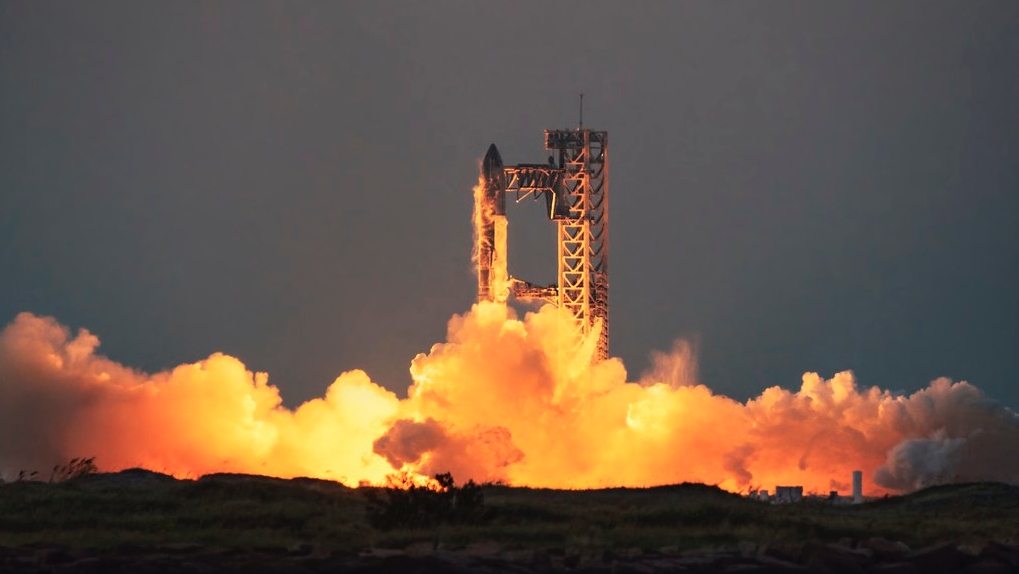
SpaceX revealed New Starship Variant to Refuel Starship to the Moon Sooner than China: NASA has been searching for a faster, simpler way to get humans to the Moon, and over the years, countless plans have been proposed—and just as quickly dismissed as impractical. However, there’s one idea from SpaceX that’s quietly gaining traction: an expendable version of Starship.
So, how could an expendable Starship accelerate lunar missions? Let’s dive deep into this game-changing concept in today’s post.
Elon Musk and the Vision for Space Exploration
Elon Musk is undoubtedly one of the most eccentric and visionary entrepreneurs of our time. From a young age, he dreamed of flying to Mars and building a self-sustaining colony with millions of people. That childhood dream has grown into SpaceX, now the world’s leading private space company. Musk himself is considered one of the richest people on Earth, all while pursuing one audacious goal: taking humanity beyond Earth.
To achieve this, Musk spearheaded the creation of Starship, the most ambitious rocket in history. Of course, he wasn’t alone—he had an army of brilliant engineers behind him—but even with their expertise, the path to the Moon is far from straightforward.

Before Musk can consider Mars, he must prove that Starship can reach the Moon safely and efficiently.
The Critical Role of Heat Shields in Lunar Missions
The key to enabling lunar Starship missions lies in fully reusable heat shield technology. Musk has openly described developing a heat shield that can withstand multiple flights without extensive repairs as a “nightmare.”
Early attempts, like using stainless steel tiles, failed catastrophically. During Starship Flight 10, the tiles corroded, leaving the spacecraft bright orange with rust. To this day, SpaceX hasn’t revealed the final material solution, but the challenge remains: the heat shield is absolutely vital for reusable missions, particularly for the tanker version of Starship.
Why the Heat Shield Matters for Tanker Starships
SpaceX’s lunar strategy requires three versions of Starship:
- Tanker – refuels depots in orbit.
- Depot – serves as a fuel station for HLS (Human Landing System).
- HLS – lands astronauts on the Moon.
The tanker must fly repeatedly to refill the depot, land, get checked, refueled, and return to orbit. Any delays increase propellant boil-off and complicate mission logistics.
Additionally, reusable spacecraft need extra hardware:
- Landing propellant tanks
- Aerodynamic flaps
- Sensors and advanced plumbing
- Sophisticated software
All of these add weight, cost, and complexity.
The Case for an Expendable Starship
What if Starship didn’t need to be reusable?
A one-time expendable Starship would be dramatically simpler to design and build. Imagine a stripped-down Starship:
- No flaps for aerodynamic control
- No heat shield required
- No auxiliary tanks
- No landing system like Mechazilla
Its only purpose? Deliver propellant to orbit and then disappear.
While this may sound wasteful, it’s actually cost-effective. SpaceX could still focus on recovering the Superheavy booster, which contains the most expensive engines. Meanwhile, expendable Starships could handle heavy cargo and depot refueling.

Advantages of an Expendable Starship
- Faster development times – skipping full reusability initially.
- Higher payload capacity – Musk has said Starship can deliver around 180 tons fully reusable but ~300 tons if expendable.
- Reduced mission risk – fewer flights needed to refill the depot.
- Lower costs – no heat shield or landing systems required.
How an Expendable Starship Simplifies Lunar Refueling
SpaceX is part of NASA’s Artemis 3 mission, tasked with landing astronauts on the Moon using the HLS. Before the HLS can launch, the depot needs 1,500 tons of propellant, requiring 8-12 tanker flights with reusable Starship—or potentially 15 if failures occur.
By using expendable Starship tankers, the scenario changes dramatically:
- Each expendable tanker could deliver ~275 tons instead of 175 tons.
- The depot could be filled in just 4-5 flights, reducing risk by nearly 50%.
- Cost and time savings from skipping 18,000 heat shield tiles are enormous.
In short, an expendable Starship accelerates the journey to the Moon while reducing complexity and risk.
Implications for Mars and Heavy Payload Missions
While this approach is ideal for lunar refueling, it has implications far beyond the Moon:
- Mars Missions – Expendable Starships could carry heavy cargo and propellant efficiently.
- Oversized payloads – With ~300 tons of lift, Starship could transport the largest space station modules in fewer flights.
For perspective, the International Space Station (ISS) weighs about 420 tons. A theoretical expendable Starship could carry 300 tons into orbit—enough to transport most ISS modules in just two or three launches.
Example: Haven 2 Space Station Launch
SpaceX is partnering with Vast Space to launch the Haven 2 space station using Starship:
- Core module (~7 m diameter) – launched by Starship
- Secondary modules (~3.8 m diameter) – launched by Falcon Heavy
This hybrid approach optimizes cost and schedule while demonstrating Starship’s capability for NASA’s DLD program.

Reusable vs. Expendable Rockets: A Strategic Trade-Off
Globally, 95% of rockets are expendable. Fully reusable rockets are revolutionary but add complexity. SpaceX’s Starship aims for total reusability, but an expendable variant could be strategically deployed for high-capacity missions.
Key considerations:
- Frequency of launches – expendable Starships may launch less often, similar to Falcon Heavy.
- Payload efficiency – smaller, frequent launches often make more sense economically.
- Mission risk reduction – fewer flights needed means fewer chances for failure.
By developing an expendable Starship, SpaceX could reduce costs, save time, and minimize risk, all while preparing for the Moon and Mars.
Celebrating Achievements in Space
On a related note, astronaut Chris Williams celebrated Thanksgiving aboard the ISS on November 27, 2025, alongside Russian colleagues Sergey Kudchkov and Sergey Mikv. Their Soyuz MS28 launched from Baikonur, Kazakhstan, docking just three hours later.
Highlights from the holiday in space:
- Menu: turkey, mashed potatoes, crab, salmon, lobster
- Crew activities: setting up gym equipment, testing fuel-saving techniques, growing semiconductor crystals
- Russian crew tested Gigachhat, a Russian-speaking AI assistant
These achievements highlight the advancements in international space collaboration and technological innovation.
Russia’s Soyuz 5 Rocket: A New Competitor
After nearly a decade of development, Russia’s Soyuz 5 rocket is ready for its inaugural launch from Baikonur Cosmodrome.
Key specifications:
- Payload to low Earth orbit: ~18 tons
- Engine: RD171MV, the most powerful methane LOX engine flying today
- Features: modern hot-staging for efficiency
Soyuz 5 represents a critical milestone for Roscosmos, restoring medium-to-heavy lift capabilities and laying the foundation for potential future Superheavy-class rockets.

Conclusion: The Expendable Starship Revolution
The idea of an expendable Starship may sound simple, but it could revolutionize lunar missions, heavy payload launches, and even Mars preparation. By temporarily prioritizing expendable Starships:
- SpaceX can deliver propellant faster and safer
- Reduce dependency on fully reusable technology
- Lower costs and streamline development timelines
Ultimately, this strategy doesn’t abandon reusability—it enhances mission flexibility and ensures faster progress toward human exploration of the Moon and beyond.
As SpaceX continues its Starship development, the question remains: Will expendable Starships become a key stepping stone in humanity’s journey to the Moon and Mars?
Do you think an expendable Starship is feasible? Share your thoughts below. Space exploration is accelerating faster than ever, and the next giant leap could be closer than we think.
FAQs
1. What is an expendable Starship?
An expendable Starship is a stripped-down version of SpaceX’s Starship rocket designed to deliver cargo or propellant once without returning to Earth. It doesn’t require a heat shield, landing systems, or auxiliary hardware.
2. How does an expendable Starship differ from a reusable Starship?
A reusable Starship is built to return safely to Earth after each mission, requiring heat shields, landing legs, and flaps. Expendable Starships eliminate these components, making them simpler, lighter, and capable of carrying more payload per flight.
3. Why does SpaceX need an expendable Starship for lunar missions?
To refuel lunar depots efficiently, reduce mission risks, and cut down on costly heat shield installations, an expendable Starship can deliver more propellant per flight and simplify the Artemis 3 lunar mission workflow.
4. How much payload can an expendable Starship carry?
A fully expendable Starship could theoretically carry up to 300 tons to low Earth orbit, compared to around 180 tons for a fully reusable Starship.
5. Can expendable Starships be used for Mars missions?
Yes, they could deliver large amounts of cargo or propellant to Mars orbit, supporting initial colonization efforts while SpaceX continues developing fully reusable Starships.
6. What is the benefit of skipping the heat shield in expendable Starships?
Skipping the heat shield reduces cost, weight, and complexity, allowing the rocket to carry more payload per flight and decreasing development time.
7. How many expendable Starship flights are needed to fill a lunar depot?
An expendable Starship tanker could reduce lunar depot refueling missions to 4-5 flights, compared to 8-12 flights with reusable Starships, lowering mission risk by nearly 50%.
8. Will SpaceX abandon reusable Starships if expendable versions are used?
No. The expendable Starship is a temporary solution to speed up lunar missions. SpaceX still aims for fully reusable Starships in the long term.
9. How does Starship compare to Falcon Heavy?
Starship can carry far heavier payloads, with expendable versions capable of lifting 300 tons to orbit. Falcon Heavy is excellent for smaller or specialized payloads but is less efficient for extremely heavy cargo.
10. What role does the Superheavy booster play in expendable Starship missions?
The Superheavy booster contains the most expensive engines and can still be recovered and reused, even if the Starship itself is expendable, reducing overall mission costs.
11. Can an expendable Starship launch modules for space stations?
Yes. Starship’s large payload bay (~8-8.5 m diameter, 18-22 m length) can transport oversized modules, like those for the Haven 2 space station, in far fewer flights than smaller rockets.
12. Is the expendable Starship environmentally wasteful?
While it is single-use, the benefit of faster, safer, and cheaper missions outweighs the waste, especially when focusing on lunar and Mars exploration milestones.
13. How does Starship refuel depots in orbit?
Reusable or expendable Starships deliver cryogenic propellant to orbital depots. Expendable versions can carry larger quantities per trip, making depot refueling faster and more efficient.
14. What is the Artemis 3 mission?
Artemis 3 is NASA’s mission to land astronauts on the Moon, using SpaceX’s HLS Starship and lunar propellant depots as part of the mission infrastructure.
15. How soon could an expendable Starship be ready for lunar missions?
While SpaceX hasn’t announced an exact timeline, an expendable Starship variant could be developed faster than the fully reusable version, potentially accelerating lunar missions by years.
Read More:
- Tesla continues growing its Cybercab production team with new job listings
- Elon Musk reiterates why Tesla will never make an electric motorcycle
- Elon Musk predicts AI and robotics could make work “optional” within 20 years
- Tesla’s new Holiday perk is timed perfectly to make FSD a household name
- Tesla Model Y Standard Full Review: Is it worth the lower price?
1 thought on “SpaceX revealed New Starship Variant to Refuel Starship to the Moon Sooner than China”