
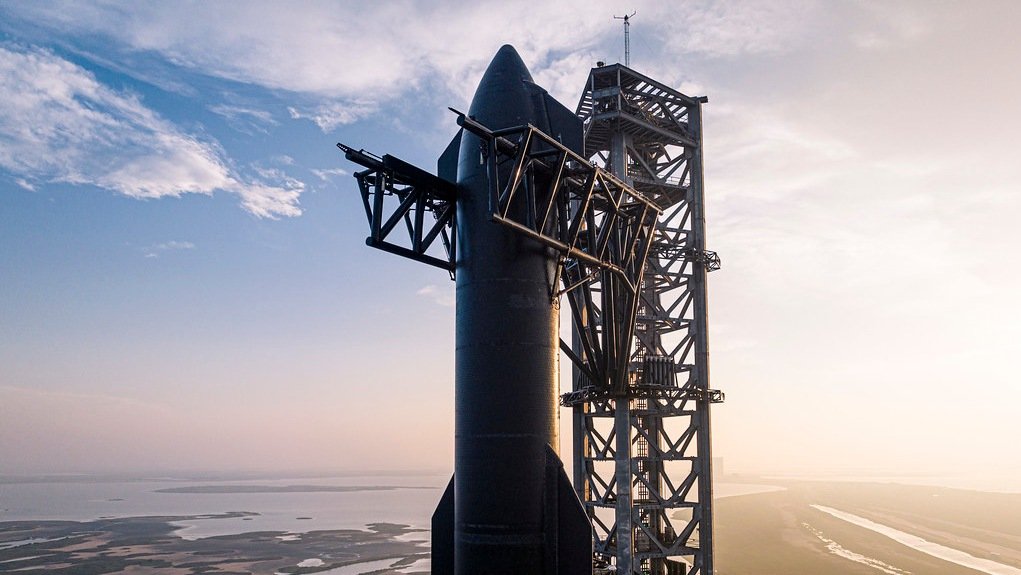
SpaceX’s Flight 15 Landing Footage Revealed How Exactly Chopsticks Caught First Starship: The aerospace industry has witnessed another important milestone in the development of reusable rocket technology. SpaceX’s Starship Flight 15 has provided a closer look at how the company’s massive Mechazilla launch tower successfully caught a returning Starship using its innovative mechanical arms, widely known as chopsticks. Newly released footage and photographs reveal incredible engineering details that were not fully visible during the original live broadcast.
Beyond SpaceX’s Starship recovery achievement, the commercial space industry is celebrating another major accomplishment. Rocket Lab has completed its 100th Electron launch, demonstrating the growing reliability of small orbital launch vehicles. Meanwhile, NASA is reconsidering its strategy for returning samples from Mars as international competition intensifies.
These developments highlight three important directions for the future of space exploration: fully reusable spacecraft, reliable commercial launch services, and ambitious deep-space scientific missions.
SpaceX Releases New Starship Flight 15 Catch Footage
Following the successful recovery demonstration during Starship Flight 15, SpaceX released multiple photographs and video recordings showing the return of Starship S42 from orbit and its capture by the Mechazilla tower.
The newly published material offers several perspectives, including ground-level recordings, tower-mounted cameras, wide-angle photographs, and onboard footage. Together, these recordings provide a much clearer understanding of the recovery process.
Unlike traditional rocket landings that depend on landing legs and prepared landing surfaces, SpaceX is developing a system in which the launch tower itself catches the returning spacecraft.
This approach could eventually reduce the need for additional landing hardware while allowing Starship to be rapidly prepared for another mission.
Nine Landing Photographs Reveal Starship’s Final Approach
One of the most interesting parts of the newly released material is a collection of nine photographs showing S42 during its final landing burn.
These images capture the spacecraft approaching the designated catching area while its engines control the final descent.
An interesting engineering detail is the visible difference between the vehicle’s windward and leeward sides.
- Leeward side: Strong venting is visible during the landing sequence.
- Windward side: The photographs provide a clearer view of the spacecraft’s heat shield.
- Landing approach: The images reveal how Starship positions itself before entering the tower’s catching zone.
These details provide valuable visual information about the spacecraft’s thermal protection system and its behavior during atmospheric return.
How Mechazilla’s Chopsticks Caught Starship S42
The most important footage includes four separate videos, each lasting approximately 19 to 32 seconds.
The recordings show the tower’s mechanical arms moving inward before Starship arrives. At the critical moment, the chopsticks coordinate their movement to align with the spacecraft’s designated catching points.
The catching system depends on precise timing and positioning. Starship must approach the tower at the correct speed, orientation, and altitude for the arms to make contact with its structural catching points.
The footage reveals several important stages:
- Final descent: Starship approaches the tower after completing its atmospheric return.
- Landing burn: Its engines slow the spacecraft and control its vertical movement.
- Alignment: The vehicle positions itself near the catching arms.
- Chopsticks movement: The mechanical arms move into the required catching position.
- Capture: The spacecraft’s catching points meet the tower’s landing rails.
- Stabilization: The tower absorbs the spacecraft’s momentum and supports its weight.
This sequence demonstrates why the Mechazilla system requires advanced coordination between spacecraft guidance, engine control, sensors, and ground infrastructure.
Tower Cameras Reveal Details Missing From the Live Broadcast
Additional recordings from underneath and around the launch tower provide another perspective on the recovery.
One video shows minor structural vibration during the landing sequence. The footage also captures a brief hovering moment as the aft section of Starship approaches the height of the catching arms.
Tower-top cameras provide particularly dramatic views of S42 emerging through the clouds before igniting its engines for the landing burn.
Another recording shows an engine shutting down shortly before the spacecraft enters between the chopsticks.
After capture, Starship experiences slight swaying as the tower absorbs its remaining movement and supports the vehicle.
These observations offer valuable information about the mechanical forces involved in catching a massive orbital spacecraft.
Starship S42 Onboard Footage Reveals Landing Rail Details
SpaceX also released footage from cameras mounted on both sides of Starship S42.
These onboard recordings follow the spacecraft through its horizontal descent, cloud exit, vertical landing flip, and final contact with the tower.
The videos also clearly show the distinctive Don’t Panic S42 markings.
One particularly interesting detail appears when the spacecraft settles onto the catching rails. The rails seem to flex slightly, suggesting that the structure is designed to distribute the vehicle’s weight and absorb some of the forces generated during capture.
However, the onboard footage also reveals an area that could require additional engineering improvements.
Stainless Steel Wool Could Replace the Existing Landing Protection
Footage from the left-side onboard camera shows material along the inside of a landing rail scraping against the spacecraft’s catching area during entry.
This section uses thinner rectangular protective sheets rather than the standard thermal protection tiles covering much of Starship.
Although the material is designed to withstand significant heat, the footage indicates that it experienced some scraping during the capture process.
Following discussions on X, Elon Musk indicated that SpaceX plans to replace this material with stainless steel wool on future flights.
The modification could potentially appear as early as Starship S43.
Stainless steel wool may provide a more suitable protective solution for an area exposed to repeated contact and high temperatures during recovery.
This is another example of SpaceX’s iterative development philosophy: identify potential weaknesses through real flight data, modify the design, and test improvements on subsequent vehicles.
Rocket Lab Celebrates Its 100th Electron Launch
While SpaceX was demonstrating Starship recovery technology, Rocket Lab reached an important milestone in the small-launch vehicle market.
On November 14, at approximately 12:30 a.m. Eastern Time, Rocket Lab completed its 100th Electron launch from New Zealand.
The milestone mission, named The Mountain God Rises, featured a special black-and-gold rocket design and carried a private Japanese Earth-observation satellite into orbit.
Electron Becomes a Major Player in Commercial Spaceflight
Electron made its debut in May 2017, followed by its first successful orbital mission in January 2018.
Since then, the rocket has developed into one of the most frequently flown small orbital launch vehicles in the commercial space industry.
Rocket Lab CEO Peter Beck highlighted that Electron reached 100 launches faster than any other commercially developed orbital rocket, including SpaceX’s Falcon 9.
The company also reported a 96% reliability rate across Electron’s first 99 launches.
This achievement demonstrates the growing demand for dedicated small-satellite launches.
Instead of depending entirely on large rockets carrying multiple payloads, satellite operators can use Electron to access orbit through missions designed around their specific requirements.
Rocket Lab’s Future Beyond 100 Launches
Reaching 100 launches represents an important foundation for Rocket Lab’s next development phase.
The company is also working toward introducing Neutron, a larger launch vehicle designed to serve heavier payloads and broader commercial and government markets.
Electron and Neutron could give Rocket Lab access to different segments of the launch industry, from dedicated small-satellite missions to larger spacecraft deployments.
The next challenge will be maintaining Electron’s reliability while expanding the company’s overall launch capabilities.
NASA Rethinks Its Mars Sample Return Mission
Another major development involves NASA’s efforts to bring Martian samples back to Earth.
The agency’s Mars Sample Return (MSR) program is considered one of the most scientifically valuable planetary exploration projects ever planned.
NASA’s Perseverance rover landed in Jezero Crater in February 2021. Since then, it has collected and sealed rock and soil samples from an ancient environment that scientists believe could contain important evidence about Mars’s geological history and past habitability.
Some samples could potentially preserve clues about ancient microbial life.
However, returning these materials to Earth has proven extremely complicated.
The original mission architecture faced substantial challenges involving costs, technical requirements, mission schedules, and coordination between multiple spacecraft.
NASA is now exploring a revised approach known as the Perseverance Sample Retrieval (PSR) architecture.
NASA Develops a New Mars Sample Retrieval Strategy
Mars Exploration Program director Tiffany Morgan outlined the updated planning effort during a virtual meeting of the Mars Exploration Program Analysis Group on November 9.
The initiative is intended to identify a more practical and financially sustainable method of retrieving Perseverance’s collected samples.
The team’s responsibilities include:
- Developing independent recommendations for sample retrieval.
- Reviewing previous Mars Sample Return planning efforts.
- Evaluating existing spacecraft and retrieval technologies.
- Assessing alternative acquisition and mission-development strategies.
- Identifying requirements for future Mars exploration missions.
The assessment work is expected to begin in January 2027, with a final report targeted for winter 2027–2028.
This process could help NASA establish a clearer direction for one of its most complicated planetary science objectives.
China’s Tianwen-3 Mission Increases Competition
NASA is not the only space agency pursuing Martian sample retrieval.
China is developing its Tianwen-3 mission, which is targeting a launch around 2028.
The planned architecture involves two Long March 5 rockets launching from Wenchang, with the objective of collecting approximately 500 grams of Martian material and returning it to Earth around 2031.
If successful, China could become the first country to retrieve samples directly from the surface of Mars.
This international competition adds urgency to NASA’s planning process.
Returning samples from Mars is not simply about reaching another planet. It requires landing equipment, collecting materials, launching a vehicle from the Martian surface, transferring samples into an Earth-return spacecraft, and safely delivering them through Earth’s atmosphere.
Every stage introduces significant engineering challenges.
Could SpaceX Starship Help NASA Bring Mars Samples Home?
One possible future development involves SpaceX Starship.
With its enormous payload capacity and fully reusable architecture under development, Starship could eventually support larger and more capable planetary exploration missions.
If Starship progresses from lunar missions toward early Mars cargo flights around 2028, its capabilities could become relevant to future Mars sample retrieval planning.
A sufficiently capable Starship-based architecture could theoretically transport heavier landing systems, additional scientific equipment, and more advanced sample-retrieval hardware.
It could also create opportunities to bring back larger quantities of Martian material.
However, this remains a potential future application rather than a confirmed NASA mission selection.
NASA must evaluate technical feasibility, cost, mission schedules, and scientific requirements before deciding which architecture offers a practical solution.
Conclusion: SpaceX, Rocket Lab, and NASA Are Shaping the Future of Space Exploration
The latest developments across the commercial and government space sectors demonstrate how quickly spaceflight technology is evolving.
SpaceX’s Starship Flight 15 catch footage provides an unprecedented look at the engineering behind Mechazilla’s chopsticks and reveals improvements that could influence future Starship vehicles.
Meanwhile, Rocket Lab’s 100th Electron launch establishes another important commercial launch milestone and strengthens the company’s position in the small-satellite market.
At the same time, NASA’s revised Mars Sample Return strategy highlights the scientific ambitions and financial challenges associated with bringing material from another planet back to Earth.
These programs represent different but interconnected parts of the future space industry. Reusable spacecraft could reduce transportation costs, commercial launch providers could expand access to orbit, and advanced deep-space missions could transform our understanding of the Solar System.
The coming years will reveal how far these technologies can progress—and whether the next major breakthroughs will come from catching reusable rockets, expanding commercial launch operations, or successfully returning samples from Mars.
FAQs
1. What happened during SpaceX Starship Flight 15?
SpaceX Starship Flight 15 demonstrated the successful recovery of Starship S42 using the Mechazilla launch tower’s mechanical catching arms, known as chopsticks. The achievement provided important insights into reusable spacecraft recovery technology.
2. How did Mechazilla’s chopsticks catch Starship S42?
The Mechazilla chopsticks moved into position as Starship approached the tower. They aligned with the spacecraft’s designated catching points and supported its weight during the capture process, allowing Starship to be recovered without traditional landing legs.
3. What is Starship S42?
Starship S42 is a SpaceX Starship vehicle associated with the Flight 15 recovery demonstration. It was captured by the Mechazilla tower after completing its return from space.
4. What did the newly released Starship Flight 15 footage reveal?
The newly released footage revealed multiple perspectives of Starship’s landing burn, final approach, vertical alignment, chopsticks movement, and successful capture. It also showed structural vibration, slight post-catch swaying, and details of the landing rails.
5. Why are SpaceX’s Mechazilla chopsticks important?
The Mechazilla chopsticks are important because they allow SpaceX to recover and potentially rapidly reuse massive spacecraft. The system could reduce the need for landing legs and simplify ground operations for future Starship missions.
6. What is the stainless steel wool modification planned for future Starship flights?
Elon Musk indicated that SpaceX plans to replace material near the landing rail contact area with stainless steel wool. The modification is intended to address scraping observed during S42’s capture and could appear as early as Starship S43.
7. Did Starship’s landing rails flex during the Flight 15 catch?
Yes. The onboard footage appeared to show the landing rails flexing slightly as Starship settled onto them. This suggests that the catching structure helps distribute the spacecraft’s weight and manage forces during recovery.
8. What does Starship Flight 15 mean for SpaceX’s reusable rocket program?
Flight 15 provides valuable engineering data for SpaceX’s fully reusable Starship program. Successful tower recovery could eventually support faster turnaround times, reduced recovery costs, and more frequent space missions.
9. When did Rocket Lab complete its 100th Electron launch?
Rocket Lab completed its 100th Electron launch on November 14, at approximately 12:30 a.m. Eastern Time, from New Zealand. The mission was named The Mountain God Rises and carried a Japanese Earth-observation satellite.
10. What is Rocket Lab’s Electron rocket used for?
The Electron rocket is designed primarily to launch small satellites and other lightweight payloads into orbit. It provides dedicated launch opportunities for commercial companies, research organizations, and government customers.
11. What reliability rate did Rocket Lab report for Electron?
Rocket Lab CEO Peter Beck highlighted a 96% reliability rate across Electron’s first 99 launches. The achievement demonstrates the rocket’s development into an established commercial small-launch vehicle.
12. What is Rocket Lab’s upcoming Neutron rocket?
Neutron is Rocket Lab’s next-generation, larger launch vehicle. It is being developed to carry heavier payloads and expand the company’s capabilities beyond the small-satellite launch market served by Electron.
13. Why is NASA reconsidering its Mars Sample Return mission?
NASA is reconsidering its Mars Sample Return (MSR) mission because the original architecture faced significant cost, technical complexity, and scheduling challenges. The agency is evaluating alternative approaches to make sample retrieval more practical and sustainable.
14. What is NASA’s Perseverance Sample Retrieval architecture?
The Perseverance Sample Retrieval (PSR) architecture is a revised planning approach intended to identify a practical way to retrieve samples collected by NASA’s Perseverance rover. It involves reviewing technologies, mission requirements, and alternative acquisition strategies.
15. What is China’s Tianwen-3 Mars mission?
China’s Tianwen-3 mission is an ambitious Mars sample-return project targeting launch around 2028. The mission aims to collect approximately 500 grams of Martian material and return it to Earth around 2031, potentially making China the first country to retrieve samples directly from Mars.
16. Could SpaceX Starship help NASA bring Mars samples back to Earth?
Yes, SpaceX Starship could potentially support future Mars Sample Return missions because of its large payload capacity and developing reusable architecture. It could theoretically transport heavier landing systems and advanced retrieval equipment, although NASA has not confirmed Starship as the selected solution for its revised Mars sample-return strategy.
Read More:
- 5 Minutes to FULL Charge! Tesla’s Battery Revolution Is HERE
- Tesla Robotaxi takes over for Uber credits and loaners at Service locations
- Tesla’s Cybercab fleet just had its biggest day ever
- Tesla Cybercab without steering wheel and pedals expands public rides to Dallas
- Elon Musk Unveils UFO Fighter Jet That Defies Physics
1 thought on “SpaceX’s Flight 15 Landing Footage Revealed How Exactly Chopsticks Caught First Starship”