
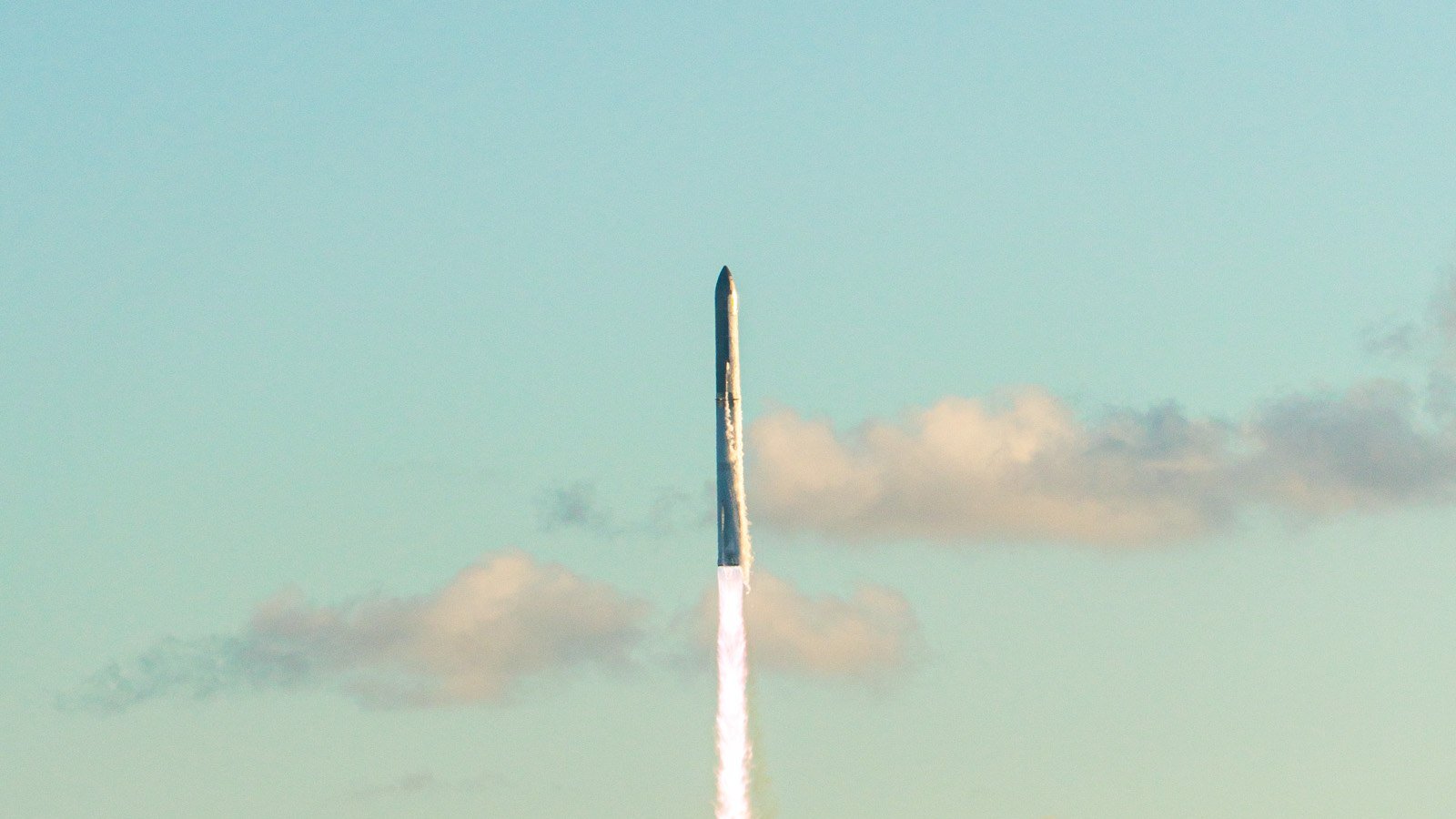
Starship B22 Static Fire Completed, Ready for First Booster V3 Catching in Weeks: The commercial space industry is entering an exciting phase as SpaceX, Blue Origin, and Rocket Lab continue advancing their launch capabilities, production strategies, and long-term ambitions. As late 2026 unfolds, SpaceX is preparing for Starship Flight 15, following a major static fire test of its Super Heavy booster B22.
At the same time, production is progressing on future Starship vehicles, Blue Origin’s potential initial public offering (IPO) is generating industry discussion, and Rocket Lab is approaching its historic 100th mission.
These developments highlight how the global space industry is shifting from experimental launches toward high-frequency commercial spaceflight. With reusable rockets, expanding manufacturing infrastructure, and increasing demand for satellite deployment, the coming months could be critical for the future of space transportation.
SpaceX Completes Starship Booster B22 Static Fire Test
SpaceX has reached another important milestone in its preparations for Starship Flight 15. Operations at Starbase in Texas have focused on Super Heavy booster B22, which was transported from Mega Bay 1 to the orbital launch mount for a major engine test.
On October 25, according to the supplied report, SpaceX conducted a full-duration static fire test involving all 33 Raptor engines installed on the booster.
33 Raptor Engines Deliver Enormous Thrust
During the test, the booster underwent propellant loading, with liquid oxygen filling the relevant tanks and methane partially loaded. SpaceX then activated the launch pad’s powerful water deluge system before igniting the engines.
The engines reportedly burned for approximately 15 to 16 seconds, producing combined thrust exceeding 9,000 metric tons, as stated in the source material.
This test represents an important step in validating the performance of the Super Heavy booster under demanding operating conditions. Engineers can use the collected data to evaluate engine behavior, structural loads, thermal conditions, and launch-pad systems.
The firing also provides valuable information about how the vehicle and ground infrastructure perform together during a high-thrust operation.
Why the Static Fire Matters for Flight 15
A static fire is one of the most important tests conducted before a rocket launch. Although the vehicle remains secured to the launch mount, its engines operate under conditions designed to simulate a critical part of launch operations.
The test allows SpaceX to identify potential problems before committing the vehicle to flight.
Following the reported successful firing, the launch tower’s mechanical arms, known as the chopsticks, were lowered around the booster. The vehicle could then proceed toward post-test inspections and refurbishment inside Mega Bay 1.
The source identifies November 8, 2026, as the target date for Flight 15. However, this should be treated as a target rather than a confirmed launch date because additional inspections, testing, weather conditions, and regulatory requirements can affect the schedule.
Starship Flight 15 and the First Booster V3 Catching Ambition
One of the most exciting goals associated with SpaceX’s Starship program is the recovery of Super Heavy boosters using the launch tower’s mechanical arms.
This recovery method, often called a booster catch, is designed to eliminate the need for a conventional landing on a separate platform. Instead, the booster returns to the launch site, where the tower’s chopsticks attempt to capture and support it.
How the Mechazilla Catch System Works
SpaceX’s launch tower incorporates large mechanical arms that can move into position to receive a returning Super Heavy booster.
The system is intended to support rapid vehicle recovery, inspection, refurbishment, and reuse. If successful and repeatable, it could reduce turnaround time and help SpaceX achieve a much higher launch frequency.
A successful catch would also provide valuable information about booster guidance, engine relighting, aerodynamic control, and the coordination between the rocket and launch infrastructure.
However, a successful static fire does not guarantee a successful booster catch. The catch requires additional flight maneuvers, precise navigation, and reliable performance throughout ascent and descent.
The possibility of a first catch involving a V3-generation booster is an important part of the broader development story, but the specific vehicle configuration and catch schedule require confirmation from official SpaceX updates.
Starship Flights 16, 17, and 18: Production Continues
While SpaceX prepares for Flight 15, its production facilities are simultaneously working on hardware for subsequent missions. This parallel development strategy is essential to the company’s ambition to increase launch frequency.
Flight 16: Ship 43 and Booster B23
According to the supplied report, Ship 43 (S43) has completed several testing activities at Massey’s test site, including cryogenic testing, ambient-temperature checks, and environmental flap testing.
Its companion Super Heavy booster, B23, reportedly completed cryogenic testing earlier in October.
These activities are intended to validate the structural integrity and operational readiness of the hardware before additional integration and launch preparations.
The source identifies December as a potential target for Flight 16, although the actual schedule will depend on testing progress and the readiness of both vehicles.
Flight 17: Booster B24 and Ship 44
Production is also advancing on the hardware intended for Flight 17. The aft section of booster B24 has reportedly arrived at the production area, while Ship 44 is preparing for flap installation.
The next steps could include further assembly, environmental checks, cryogenic testing, and static fire activities where required.
Maintaining a steady flow of completed vehicles will help SpaceX avoid relying on a single rocket for successive missions.
Flight 18: Ship 45 Takes Shape
The manufacturing pipeline extends to Flight 18, with structural stacking for Ship 45 (S45) reportedly underway inside Mega Bay 2.
This progress demonstrates the importance of large-scale production facilities in the Starship program.
Rather than manufacturing each vehicle only after the previous mission has finished, SpaceX can develop several rockets simultaneously. This approach could eventually support more frequent launches, provided the company can also scale testing, launch-site operations, recovery, and refurbishment.
Blue Origin IPO Speculation: Could Jeff Bezos Take the Company Public?
SpaceX is not the only company attracting attention in the commercial space industry. Blue Origin, founded by Jeff Bezos in 2000, is also expanding its ambitions in launch services, lunar exploration, and advanced rocket technology.
The possibility of a Blue Origin initial public offering (IPO) has generated speculation among industry observers. However, the company has not established a confirmed public-listing timetable in the supplied material, and an IPO should not be considered an announced plan.
Potential Benefits of a Blue Origin IPO
Taking a company public can provide access to substantial capital. For a space company, that funding could support rocket manufacturing, engine development, lunar lander programs, infrastructure, and expanded launch operations.
An IPO could also create a way for early investors to sell shares and provide the company with a publicly traded valuation.
Nevertheless, going public comes with significant responsibilities.
Public companies face greater financial disclosure requirements, investor scrutiny, and pressure to demonstrate sustainable growth. Research and development programs that take years to mature can be difficult to manage when investors expect regular financial results.
New Glenn Could Be a Critical Factor
Blue Origin’s New Glenn heavy-lift rocket is central to its commercial ambitions. After its orbital debut in January 2025, the company needs to demonstrate reliable operations, repeatable launches, and competitive economics.
A broader customer base spanning commercial satellite operators and government missions could strengthen its business position.
Ultimately, Blue Origin’s long-term financing strategy will depend on its business needs, operational progress, and management decisions. An IPO remains a possibility to watch, not a confirmed event.
Rocket Lab Completes Its 98th Mission
While SpaceX develops a fully reusable launch system and Blue Origin expands its heavy-lift capabilities, Rocket Lab continues building its reputation in the small-satellite launch market.
According to the supplied report, Rocket Lab completed its 98th overall mission on October 23, 2026, using its Electron rocket from Launch Complex 1 in New Zealand.
The mission, named We’re Not Hawking Around, reportedly deployed three radio-frequency reconnaissance satellites for Virginia-based Hawkeye 360 into an orbit approximately 520 kilometers above Earth.
How Hawkeye 360 Satellites Support Monitoring
Hawkeye 360 operates satellite systems designed to detect and analyze radio-frequency signals. Such capabilities can support maritime awareness, communications monitoring, and the detection of navigation-system interference.
Operating satellites in coordinated groups allows the company to compare signal observations and derive information about the sources and locations of radio transmissions.
These services are relevant to government agencies, defense organizations, and other customers that require improved awareness of activity across large geographic areas.
Rocket Lab Moves Toward Its 100th Mission
With mission 98 reportedly complete, Rocket Lab is approaching the important 100-mission milestone.
Reaching this achievement would demonstrate the operational experience accumulated by the Electron launch system and the company’s ability to serve customers requiring dedicated small-satellite launches.
Rocket Lab is also developing its larger Neutron rocket, which is intended to serve a different segment of the launch market.
Neutron could help the company compete for larger payloads and more demanding commercial and national-security missions. Its eventual impact will depend on development progress, flight testing, reliability, and customer demand.
Conclusion: Commercial Spaceflight Enters a New Industrial Era
The final months of 2026 are shaping up to be an important period for the global aerospace industry. SpaceX’s reported 33-engine B22 static fire marks a major step in its preparations for Starship Flight 15, while production continues across Flights 16, 17, and 18.
At the same time, Blue Origin’s potential IPO remains an interesting corporate-finance question, and Rocket Lab is closing in on its 100th mission while developing the Neutron launch vehicle.
The broader trend is clear: commercial space companies are working to make launches more frequent, reliable, and economically sustainable.
If SpaceX improves booster recovery and vehicle turnaround, Blue Origin scales New Glenn operations, and Rocket Lab successfully expands beyond Electron, the industry could see significant changes in launch capacity and competition.
The next major milestones will depend on successful testing, verified flight results, and operational execution. Together, these efforts illustrate the growing ambition to transform space transportation from a series of isolated achievements into a repeatable, high-frequency industrial service.
FAQs
1. What is the Starship B22 static fire test?
The Starship B22 static fire test is an engine test in which SpaceX fires the Super Heavy booster’s engines while the vehicle remains secured to the launch mount. The test helps engineers evaluate engine performance, structural loads, and launch-pad systems before flight.
2. When did SpaceX complete the B22 static fire test?
According to the provided report, SpaceX completed the full-duration static fire test on October 25, 2026. The test reportedly involved all 33 Raptor engines operating for approximately 15 to 16 seconds.
3. How many engines does the Super Heavy B22 booster have?
The Super Heavy B22 booster is described in the source as having 33 Raptor engines. These engines provide the enormous thrust required to lift Starship from the launch pad.
4. How much thrust did the B22 static fire reportedly generate?
The supplied report states that the 33-engine static fire generated combined thrust exceeding 9,000 metric tons. This figure describes the reported thrust level and should not be confused with the booster’s mass.
5. When is SpaceX Starship Flight 15 expected to launch?
The supplied report identifies November 8, 2026, as the target date for Starship Flight 15. This is a planned target rather than a guaranteed launch date because testing, inspections, weather, and regulatory requirements can cause delays.
6. What is the Starship booster catch system?
The booster catch system, commonly associated with SpaceX’s Mechazilla launch tower, uses large mechanical arms called chopsticks to catch a returning Super Heavy booster. The goal is to recover the booster at the launch site and make it available for inspection and reuse.
7. Why is the first Booster V3 catch important?
A successful Booster V3 catch would demonstrate progress toward recovering and reusing advanced Super Heavy boosters. This approach could reduce recovery requirements, improve turnaround times, and support SpaceX’s ambition for more frequent launches. The specific timing and vehicle configuration require official confirmation.
8. What is the difference between a static fire and a rocket launch?
A static fire test involves igniting rocket engines while the vehicle remains secured to the launch mount. During an actual launch, the engines generate enough thrust to lift the rocket into flight. Static fires help engineers evaluate systems before a mission.
9. What is happening with Starship Flight 16?
According to the supplied report, Ship 43 (S43) has undergone cryogenic, ambient-temperature, and environmental flap testing. Its companion booster, B23, reportedly completed cryogenic testing earlier in October. December is identified as a potential target for Flight 16.
10. What progress has SpaceX made on Starship Flights 17 and 18?
Production is progressing on both missions. Booster B24 and Ship 44 are associated with Flight 17, while structural stacking for Ship 45 (S45) is reportedly underway for Flight 18. These parallel production activities are intended to support a faster Starship launch cadence.
11. Why does SpaceX manufacture several Starship vehicles simultaneously?
Building multiple vehicles at once allows SpaceX to continue manufacturing while other rockets undergo testing, refurbishment, or launch operations. This production strategy could help increase launch frequency, provided testing facilities, launch infrastructure, and recovery operations can keep pace.
12. Is Blue Origin planning an initial public offering (IPO)?
A potential Blue Origin IPO has attracted speculation, but the supplied information does not establish a confirmed public-listing date or formal IPO announcement. Any decision to go public would depend on the company’s financial strategy, operational progress, and management decisions.
13. How could an IPO benefit Blue Origin?
An initial public offering could provide Blue Origin with additional capital for rocket manufacturing, propulsion development, lunar exploration, and infrastructure. However, a public listing would also introduce greater financial disclosure requirements and pressure to demonstrate consistent commercial growth.
14. Why is the New Glenn rocket important to Blue Origin?
The New Glenn rocket is central to Blue Origin’s plans for heavy-lift commercial spaceflight. Demonstrating reliable launches, competitive costs, and repeatable operations could help the company attract more commercial and government customers.
15. What happened during Rocket Lab’s 98th mission?
According to the supplied report, Rocket Lab completed its 98th overall mission on October 23, 2026, using its Electron rocket to deploy three radio-frequency reconnaissance satellites for Hawkeye 360 into an orbit approximately 520 kilometers above Earth.
16. What is Rocket Lab’s Neutron rocket, and why is it important?
The Neutron rocket is Rocket Lab’s larger launch vehicle under development. It is designed to expand the company’s capabilities beyond Electron’s small-satellite launch market and pursue larger commercial and national-security payloads. Its long-term success will depend on development progress, testing, reliability, and customer demand.
Read More:
- Tesla Cybercabs take over Austin’s F1 weekend
- Tesla expands Robotaxi geofence in Houston with an ode to SpaceX merger
- Tesla Assisted Driving expands to tenth EU country
- How SpaceX Is raising Raptor’s sea-level thrust while holding engine mass steady
- SpaceX just Changed Starship Flight 16 Plan: Not Coming to Florida, Why?