
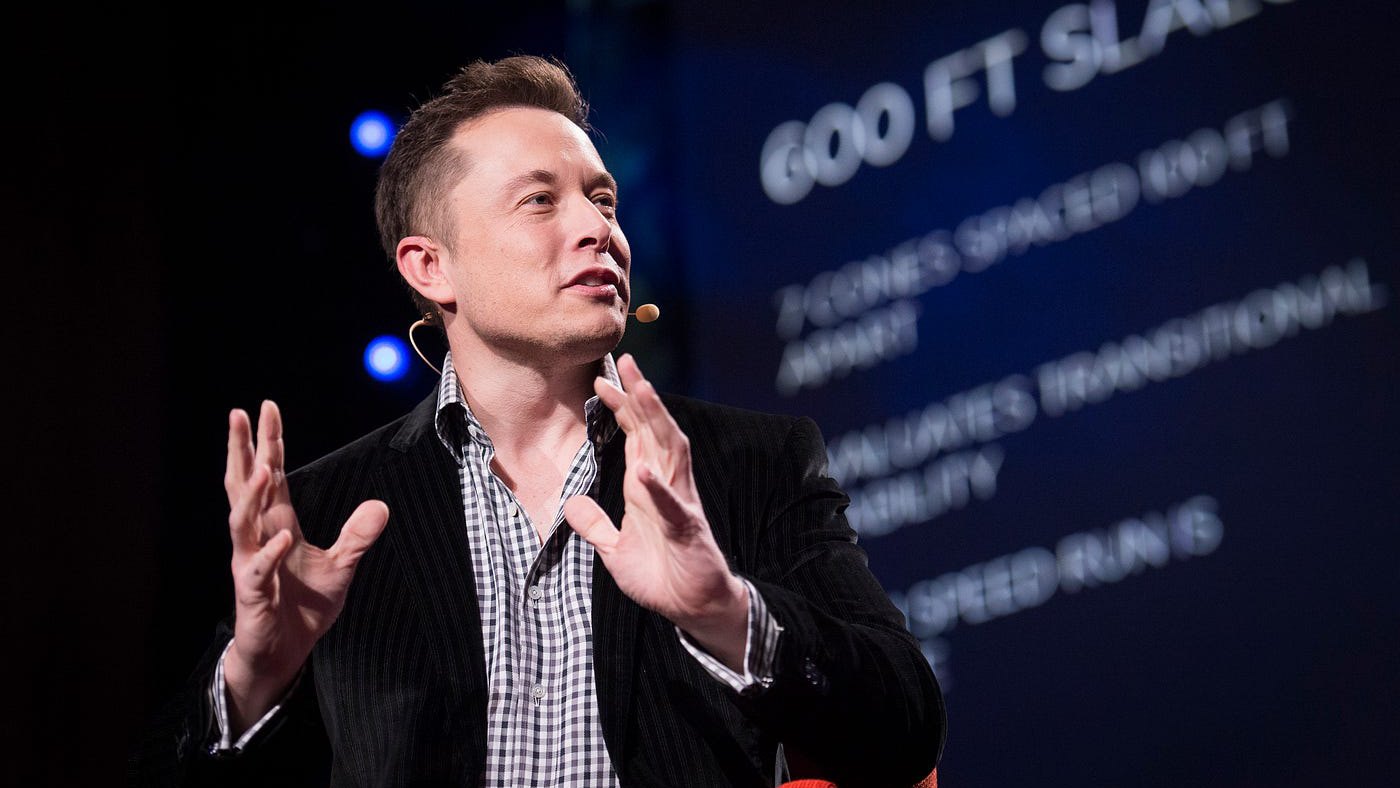
The world of artificial intelligence, semiconductor manufacturing, and futuristic infrastructure is evolving at a breathtaking pace—and at the center of this transformation stands Elon Musk. In a groundbreaking reveal at the Seaholm Power Plant in Austin, Texas, Musk introduced one of his most ambitious and potentially world-changing projects: the TeraFab AI Factory.
This massive initiative, backed by industry giants like Tesla, SpaceX, and xAI, aims to revolutionize not only chip manufacturing but also the future of artificial intelligence, autonomous vehicles, and even space-based computing.
What Is the TeraFab AI Factory?
The TeraFab is a $25 billion mega-project designed to produce an astonishing 1 terawatt of annual computing power. To understand the scale, consider this: the entire global semiconductor industry currently produces around 20 gigawatts of compute power annually.
That means if TeraFab succeeds, it could generate 50 times more computing power than the entire world combined.
Why This Matters
Artificial intelligence is becoming increasingly compute-hungry. From self-driving cars to humanoid robots and large-scale AI models, the demand for chips is exploding. TeraFab is Musk’s answer to this growing demand—a single, vertically integrated facility capable of supplying the compute backbone for the future.
Fixing the Broken Silicon Supply Chain
The Current Problem
Today’s semiconductor manufacturing process is highly fragmented:
- Chips are designed in the U.S.
- Fabricated in Taiwan
- Packaged and tested in Southeast Asia
This global relay creates:
- Long shipping delays
- Supply chain vulnerabilities
- Increased geopolitical risks
TeraFab’s Solution: Vertical Integration
Musk’s approach is radical yet simple: bring everything under one roof.
The TeraFab will integrate:
- Chip design
- Lithography
- Fabrication
- Advanced packaging
This means companies like Tesla will no longer depend heavily on external suppliers like TSMC or Samsung.
Why Vertical Integration Is a Game-Changer
By controlling the entire process, Tesla can:
- Iterate hardware as quickly as software
- Reduce production delays
- Lower costs over time
- Scale faster than competitors
As Musk himself emphasized, without such infrastructure, future AI growth could stall due to chip shortages.
Dual Architecture: The Two Brains of TeraFab
Unlike traditional semiconductor plants, TeraFab will focus on two specialized chip architectures.
1. Terrestrial Inference Chips (AI5 & AI6)
These chips will power:
- Tesla’s Full Self-Driving systems
- Autonomous Cybercabs
- The Optimus humanoid robot
These processors are optimized for real-time decision-making, enabling machines to interpret and react to the physical world instantly.
Use Cases
- Autonomous driving
- Robotics
- Smart infrastructure
- Industrial automation
2. Orbital Computing Chips (D3 Chip)
This is where the vision becomes truly futuristic.
The D3 chip is:
- Radiation-hardened
- Designed for space environments
- Optimized for high-performance AI workloads
Moving AI to Space
Shockingly, 80% of TeraFab’s computing output is intended for space deployment.
Why?
Advantages of Space-Based Data Centers
- Solar energy is 5x stronger without atmospheric interference
- Natural cooling via the vacuum of space
- Reduced energy costs
- Near-infinite scalability
Musk’s plan involves deploying millions of AI-powered satellites via SpaceX, creating an orbital computing network that could redefine global AI infrastructure.
The Mind-Blowing Scale of TeraFab
TeraFab isn’t just big—it’s almost incomprehensibly.
Key Stats
- 100 million square feet in size
- 1 million wafer starts per month
- Comparable to entire micro-nations combined
How Big Is That Really?
To visualize:
- 10× larger than Gigafactory Texas
- 30× larger than Apple’s headquarters
- Similar in size to Vatican City, Monaco, and Gibraltar combined
This makes TeraFab one of the largest industrial facilities ever conceived.
Why TeraFab Is Critical for the AI Future
Powering Autonomous Vehicles
Self-driving technology relies heavily on real-time AI processing. With TeraFab:
- Tesla vehicles gain more powerful onboard AI
- Faster updates and improvements
- Increased safety and reliability
Enabling the Robot Economy
Humanoid robots like Optimus require:
- Advanced perception systems
- Real-time decision-making
- Massive training datasets
TeraFab provides the compute infrastructure needed to make billions of robots viable.
Supporting Orbital AI Infrastructure
With the rise of space-based computing:
- Data centers could move off Earth
- Energy consumption becomes more efficient
- AI systems operate at unprecedented scale
This could fundamentally change how the internet and cloud computing work.
Tesla Semi: A Glimpse Into Automated Logistics
While TeraFab dominated headlines, Tesla also revealed updates to the Tesla Semi—its electric heavy-duty truck.
Automated Conductive Charging
One of the most exciting innovations is hands-free charging.
How It Works
- The truck drives over a charging pad
- Charging begins automatically
- No cables or manual effort required
Why This Matters
The Tesla Semi can:
- Charge at 1.2 megawatts
- Recover 60% range in 30 minutes
Coincidentally, U.S. regulations require truck drivers to take a 30-minute rest break.
This means:
👉 Charging happens during mandatory rest time
👉 No additional downtime
👉 Increased efficiency for logistics companies
Neuralink Breakthrough: A New Way to Live
Another major milestone came from Neuralink, Musk’s brain-computer interface venture.
Patient Story: John L. Noble
John L. Noble, a paralyzed British Army veteran, became Patient 18 in Neuralink trials.
After suffering a C4 spinal injury, Noble lost movement below the neck. But with Neuralink’s N1 implant, his life changed dramatically.
The 100-Day Transformation
Week 1–2
- Surgical implantation completed
- Discharged the next day
- Connected to a MacBook
Week 3
- Learned to control a cursor using thought
- Clicking and typing became natural
Day 80
- Played World of Warcraft
- Navigated virtual worlds entirely with his mind
Why This Is Revolutionary
Neuralink doesn’t just restore functionality—it creates entirely new ways of interacting with technology.
For patients like Noble:
- Independence increases
- Communication becomes possible
- Quality of life improves dramatically
As he described, it wasn’t just a tool—it was a new way to live.
The Bigger Picture: A Unified Technological Ecosystem
What makes TeraFab truly unique is how it connects multiple industries into one ecosystem.
The Musk Technology Stack
- Tesla → Vehicles & robots
- SpaceX → Satellite deployment
- xAI → AI models
- Neuralink → Human-AI interface
TeraFab sits at the center, providing the compute power that fuels all of them.
Challenges and Risks
Despite its ambition, TeraFab faces significant hurdles:
1. Engineering Complexity
Building a facility of this scale requires:
- Advanced manufacturing techniques
- Massive energy infrastructure
- Workforce coordination
2. Financial Risk
A $25 billion investment is enormous—even for Musk’s ventures.
3. Execution Timeline
Projects of this magnitude often face delays, especially in:
- Construction
- Equipment installation
- Production scaling
SEO Takeaways: Why TeraFab Is Trending
If you’re searching for:
- Elon Musk AI factory
- TeraFab project details
- Future of AI chips
- Space-based computing
Then this project is at the center of all those conversations.
Final Thoughts: The Future Is Being Built Now
The TeraFab AI Factory isn’t just another industrial project—it’s a bold reimagining of how the world builds and uses computing power.
By combining:
- Vertical integration
- Massive scale
- Space-based infrastructure
- AI-driven demand
Elon Musk is attempting to reshape the technological foundation of modern civilization.
If successful, TeraFab could:
- Eliminate chip shortages
- Accelerate AI development
- Enable autonomous systems at scale
- Move computing beyond Earth
In short, it’s not just a factory—it’s the engine of the next technological revolution.
FAQs
1. What is the TeraFab AI Factory?
The TeraFab AI Factory is a $25 billion semiconductor and AI infrastructure project led by Elon Musk in collaboration with Tesla, SpaceX, and xAI. It aims to produce 1 terawatt of computing power annually.
2. Why is TeraFab considered revolutionary?
TeraFab is revolutionary because it could generate 50 times more compute power than the current global semiconductor industry, transforming AI, robotics, and space computing.
3. Where will the TeraFab AI Factory be located?
The project was unveiled in Austin, Texas, near Tesla’s operations, though the full-scale facility will be significantly larger than Gigafactory Texas.
4. What problem does TeraFab aim to solve?
It addresses the fragmented global chip supply chain, reducing dependency on companies like TSMC and Samsung.
5. What is vertical integration in TeraFab?
Vertical integration means designing, manufacturing, and packaging chips in one location, allowing faster innovation and reduced delays.
6. What types of chips will TeraFab produce?
TeraFab will produce:
- AI inference chips (AI5 & AI6)
- Radiation-hardened space chips (D3 chip)
7. What are AI inference chips used for?
They power real-time AI systems such as:
- Tesla Full Self-Driving
- Autonomous vehicles
- Robotics like Optimus
8. What is the D3 chip?
The D3 chip is a space-grade processor designed to operate in extreme conditions, including radiation and vacuum environments.
9. Why does Elon Musk want to move AI computing to space?
Space offers:
- 5× stronger solar energy
- Natural cooling
- Scalability for massive AI workloads
10. How big is the TeraFab facility?
The facility is expected to span 100 million square feet, making it one of the largest industrial complexes ever built.
11. How much computing power will TeraFab produce?
It aims to produce 1 terawatt annually, far exceeding the current global output of around 20 gigawatts.
12. How will TeraFab impact Tesla vehicles?
It will enhance:
- Autonomous driving capabilities
- Faster AI processing
- Improved safety and performance
13. What role does SpaceX play in TeraFab?
SpaceX will deploy satellites that use TeraFab-built chips to create orbital AI data centers.
14. What is the connection between TeraFab and xAI?
xAI will utilize TeraFab’s computing power to train and run advanced AI models.
15. What is Tesla Semi’s automated charging system?
The Tesla Semi features a conductive charging pad that allows trucks to charge automatically without plugging in cables.
16. How fast can the Tesla Semi charge?
The Tesla Semi can charge at 1.2 megawatts, gaining up to 60% range in just 30 minutes.
17. What is Neuralink’s role in this ecosystem?
Neuralink is developing brain-computer interfaces that connect humans directly with AI systems powered by TeraFab.
18. Who is John L. Noble in the Neuralink project?
John L. Noble is a Neuralink patient who regained digital interaction abilities—such as typing and gaming in World of Warcraft—using only his thoughts.
19. What is the future impact of TeraFab on AI and technology?
TeraFab could:
- Eliminate chip shortages
- Accelerate AI innovation
- Enable autonomous robots
- Support space-based computing infrastructure
Read More:
- The Boring Company clears final Nashville hurdle: Music City loop is full speed ahead
- Tesla’s newest “Folding V4 Superchargers” are key to its most aggressive expansion yet
- Elon Musk hints what Tesla’s new vehicle will be
- SpaceX’s IPO might arrive sooner than you think
- TIME honors SpaceX’s Gwynne Shotwell: From employee No. 7 to world’s most valuable company
1 thought on “Take A Look Inside Elon Musk’s TeraFab AI Factory”