
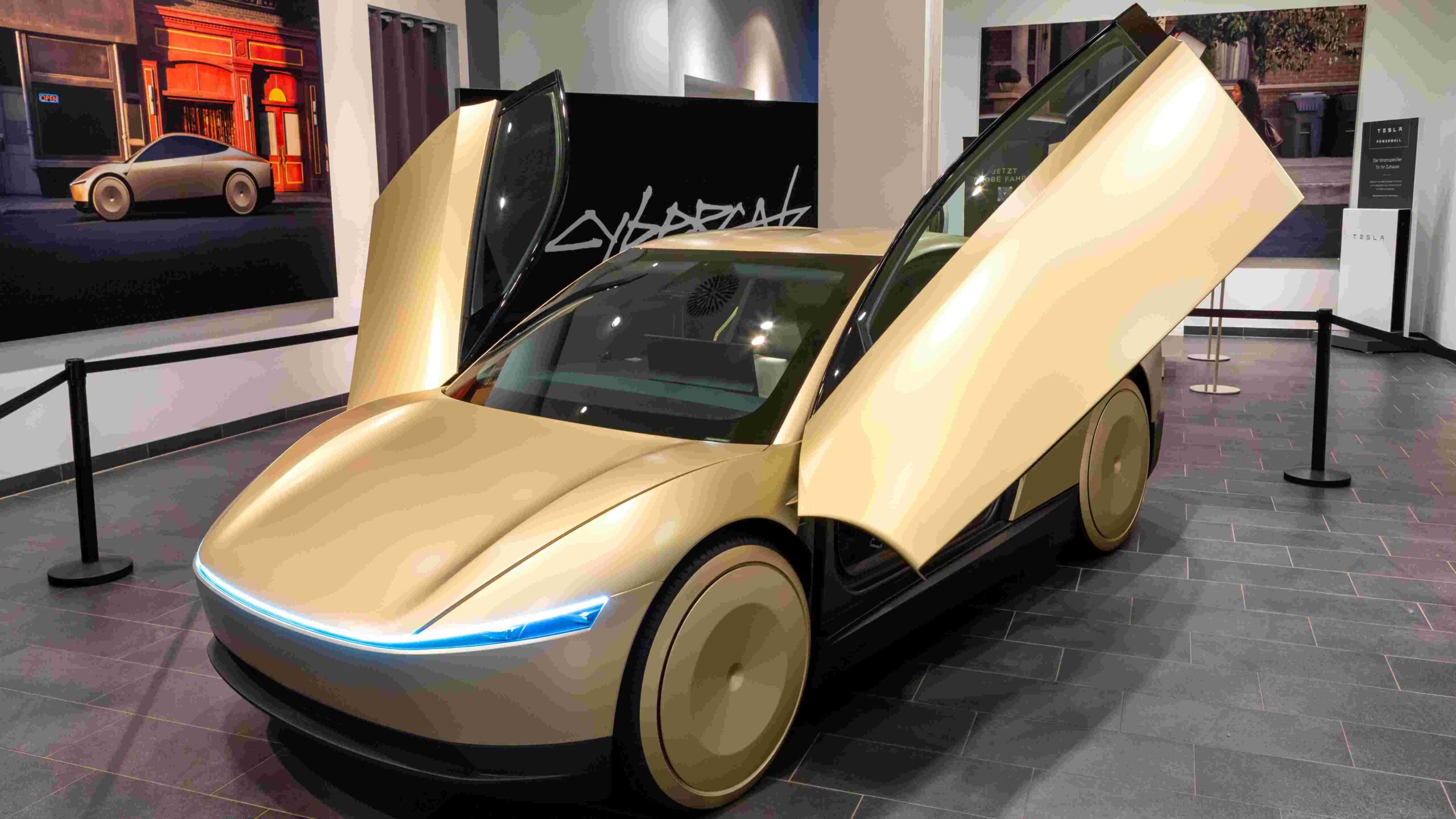
CES 2026 has been dominated not by electric cars, but by robotaxis and artificial intelligence. In a surprising twist, Tesla’s Cybercab was absent from the show floor, while Amazon-backed Zoox was physically present, showcasing its purpose-built autonomous vehicle and expanding its driverless ride-hailing service in Las Vegas and select San Francisco neighborhoods.
Yet despite Zoox’s visible presence, Tesla Cybercab managed to earn far greater recognition — and the reason isn’t simply that Tesla skipped CES. The truth is far deeper: Tesla’s absence may actually signal a strategic advantage, not a failure.
Why Tesla’s Cybercab Didn’t Show Up at CES 2026
When the Cybercab didn’t appear at CES, the tech world asked the same question:
“What is Elon Musk doing — and is Tesla falling behind?”
The answer is that Tesla is not competing in the same way as Zoox. Zoox is pursuing a hardware-heavy, safety-first approach — while Tesla is focused on solving the real challenge of autonomous driving:
A Strategic Shift from Hardware to Software
Zoox’s vehicle is designed from the ground up for autonomy. It features:
- Four-wheel steering
- Bidirectional design
- No clear front or rear
- A dense sensor suite including LIDAR, radar, cameras, and thermal sensors
- Multi-sensor fusion for redundancy
- Remote supervision and geo-fenced operation
In other words, Zoox admits that humans remain the final safety net.
Tesla, on the other hand, is taking a far more ambitious route:
Vision-based AI that interprets the world like humans do — without expensive LIDAR towers or bulky sensor arrays.
Why Tesla’s Vision-Based Approach Could Win
Tesla’s Cybercab is built on a simple premise:
Software intelligence trained on real-world data is more scalable than hardware-based autonomy.
Here’s why that matters:
1. Tesla’s Data Advantage is Unmatched
Millions of Teslas are already driving on real roads every day, collecting real driving data. This means Tesla’s AI can learn from:
- Dense urban traffic
- Unpredictable pedestrians
- Poor weather
- Complex lighting
- Rare edge cases
This scale of data cannot be replicated in closed test environments.
Tesla has already recorded over 7 billion real-world miles under supervised Full Self Driving (FSD) across multiple countries — giving it an enormous training advantage.
2. Zoox is Limited by Geo-Fencing
Zoox operates within tightly controlled zones and predictable conditions.
While impressive, this approach is not scalable.
Cities are chaotic. Autonomous systems that rely on perfection cannot win globally.
3. Tesla’s AI is Built for Real-World Chaos
Tesla’s system is designed to:
- Understand context
- Anticipate behavior
- Adapt dynamically
And because Tesla’s network is global, its AI is trained on real conditions across multiple regions — not just a few mapped cities.
Design Philosophy: Familiarity Wins Trust
Zoox’s vehicle is unmistakably robotic:
- Box-shaped
- Symmetrical
- Inward-facing seats
- Optimized for short trips
It looks like an experimental pod — not a car people are comfortable trusting.
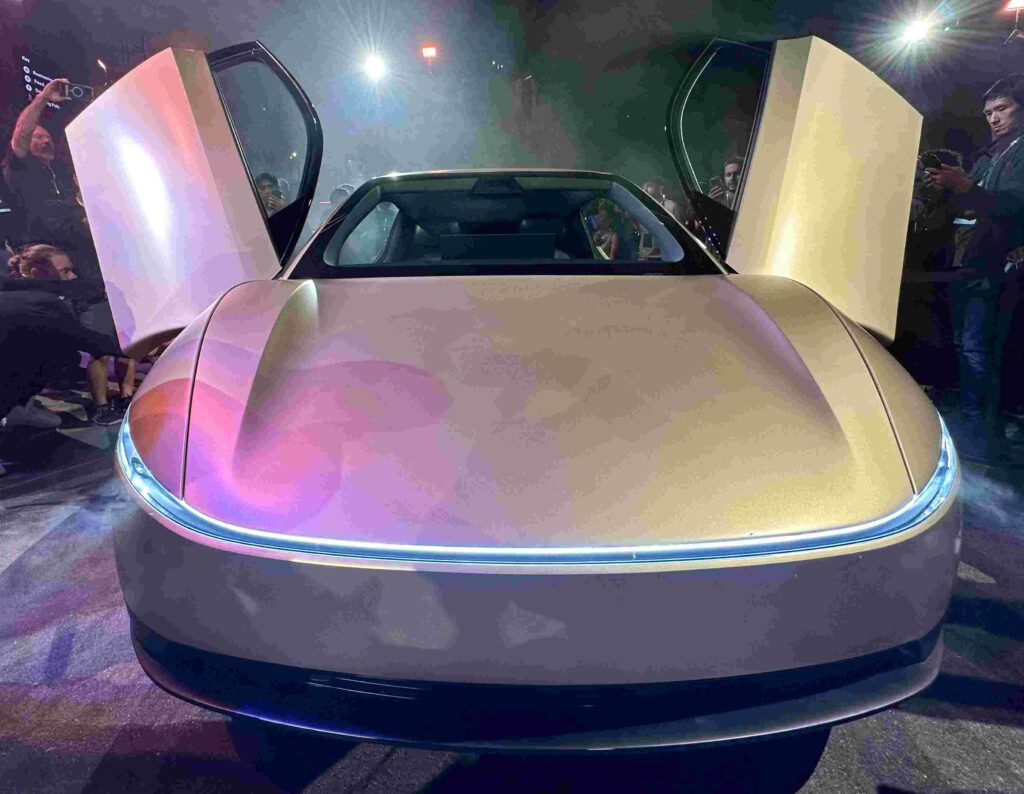
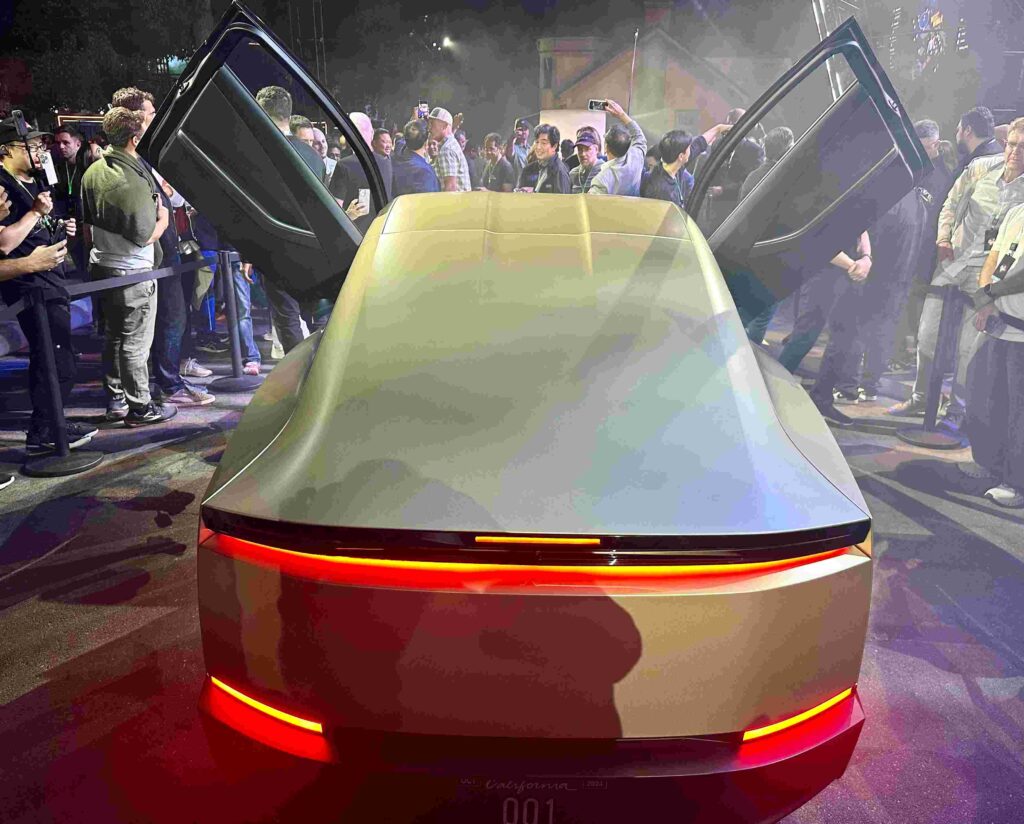
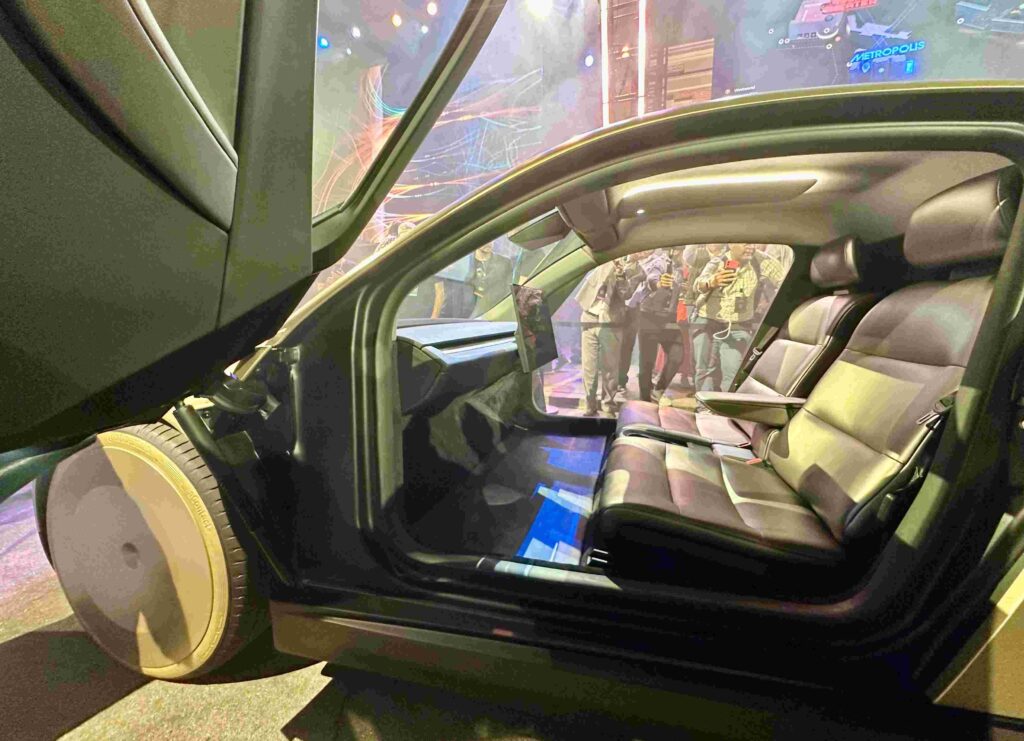
Tesla Cybercab is designed to blend into everyday traffic with a clean, modern aesthetic.
No bulky sensor towers. No exaggerated robotic features.
People trust what looks normal, and Tesla understands that psychological acceptance is a major barrier to adoption.
Cost and Scalability: Tesla’s Biggest Advantage
Zoox’s vehicle is expensive:
- Hardware-heavy sensor suite
- High onboard computing costs
- Cost per vehicle well into six figures
This makes Zoox economically impossible for private ownership.
Tesla takes a radically different approach:
- Camera-only vision system
- Advanced neural networks
- Lower production costs
- Simplified supply chain
Tesla can produce Cybercabs at a fraction of Zoox’s cost, enabling:
- Fleet deployment
- Consumer ownership
This isn’t a minor detail — it’s the defining factor that determines whether robo taxis can scale globally.
Tesla’s Ecosystem Strategy: A Game Changer
Zoox operates as a centralized fleet:
Users summon a ride, take the trip, and exit the system.
Tesla is building a decentralized transportation platform:
- Tesla-owned Cybercabs
- Privately-owned Teslas joining the network when idle
- Owners can earn income by contributing to the robo taxi economy
This transforms every Tesla into a revenue-generating asset — turning Cybercab into a node in a global network rather than just another vehicle.
Tesla vs Zoox: The Real Philosophical Divide
Both vehicles are designed without steering wheels or pedals, but their starting assumptions differ.
Zoox
- Built for controlled environments
- Short trips
- Safety-first
- Hardware-heavy
Tesla
- Built for high utilization
- Urban mobility
- Lightweight, efficient construction
- Cost-effective design
- Scalable autonomy
Manufacturing Advantage: Tesla’s “Electronics” Approach
At Giga Texas, Tesla is manufacturing Cybercab like a consumer tech product, not a traditional car.
Tesla’s approach includes:
- Simplicity
- Automation
- High-speed assembly
- Reduced mechanical complexity
Elon Musk has hinted the factory could eventually reach one Cybercab every 5 seconds — a number that seems impossible by conventional standards, but aligns with Tesla’s goal of treating cars like electronics.
Tesla is also conducting crash testing to validate safety, proving Cybercab is engineered from the ground up — not adapted after the fact.
The Real Breakthrough: Removing Human Supervision
For years, the autonomous industry used the term “self-driving” while relying on:
- Safety drivers
- Remote operators
- Human fallback systems
Tesla is crossing that boundary.
Recent tests show:
- Robotaxis operating on public roads
- Without drivers
- Without remote oversight
- Without human intervention
Elon Musk confirmed being driven around Austin in a Tesla with no onboard supervision — and Tesla’s AI handled complex traffic flawlessly.
This marks a pivotal moment:
Tesla’s AI may now be capable of true autonomy.
Why Tesla Skipped CES: It Was Strategic
While other companies show prototypes, Tesla is solving the hardest problem:
Software Intelligence at Real-World Scale
Elon Musk frames Full Self Driving v14.3 as the natural outcome of Tesla’s long-term strategy:
Scalable, software-driven autonomy for the masses.
This includes:
- Passengers sleeping while the car drives
- No human oversight
- Full autonomy
Tesla’s operational groundwork includes new cleaning policies for passengers, ensuring vehicles remain clean and operational — preparing for a future where vehicles run continuously without drivers.
Tesla vs Whimo: A Different Comparison
Many compare Tesla to Whimo, but this misses the point.
Whimo:
- City-based service
- Thousands of vehicles
- Mapped environments
- Retrofit sensor arrays
Tesla:
- Autonomy on every road
- Every country
- Plans for international expansion (including China in early 2026)
- Designed from day one for autonomy
Tesla’s cost advantage is huge:
- Only nine cameras
- No LIDAR
- No radar
- Estimated cost around $45,000
Tesla’s bet is clear:
Software scales better than hardware.
The Future of Transportation is Not a Trade Show
Tesla didn’t need a CES stage because the real battle isn’t about flashy prototypes.
It’s about solving autonomy at scale.
When measured across:
- Data learning
- Speed
- Cost efficiency
- Manufacturing capability
- Ecosystem integration
- Global expansion
Tesla’s approach emerges as the most disruptive and dominant model of autonomous mobility ever attempted.
Conclusion: Tesla’s Absence Was a Statement
Zoox is impressive today — operating within controlled zones.
But Tesla is preparing something far larger:
A universal shift in how people move:
- Independence for older adults
- Reduced congestion
- Transportation as on-demand access
- Powered by AI
That’s why Tesla didn’t need CES.
Tesla’s “real stage” is a global network — not a booth in Las Vegas.
Final Question: Can Any Hardware-Heavy System Survive?
When Tesla’s AI-only approach reaches full autonomy at global scale, the question won’t be:
“Can Cybercab compete?”
It will be:
“Can any hardware-heavy system survive?”
FAQs
1. Why wasn’t Tesla’s Cybercab at CES 2026?
Tesla chose not to showcase the Cybercab at CES because the company is focused on solving real-world autonomous driving challenges rather than presenting prototypes. Tesla is prioritizing data-driven AI development and mass-scale production over trade show presence.
2. Did Tesla fall behind Zoox at CES 2026?
Not necessarily. While Zoox showcased a working robo taxi, Tesla’s absence is strategic. Tesla is building a vision-based AI system that scales globally, which may be a bigger long-term advantage than Zoox’s hardware-first approach.
3. What makes Zoox’s robo taxi different from Tesla’s Cybercab?
Zoox relies on hardware-heavy sensors like LIDAR, radar, and thermal cameras, operating within geo-fenced zones. Tesla relies on camera-only AI, trained on real-world data, aiming for full autonomy without expensive sensors.
4. Is Zoox safer than Tesla’s Cybercab?
Zoox’s safety model is based on controlled environments and remote supervision, which reduces risk in limited areas. Tesla’s approach focuses on massive real-world data, aiming for long-term scalability and AI-driven decision-making.
5. Why is Tesla’s data advantage so important?
Tesla has over 7 billion miles of real-world driving data, collected from millions of vehicles worldwide. This provides unmatched training for its neural networks, enabling the Cybercab to learn rare edge cases and chaotic city conditions.
6. Can Tesla’s Cybercab operate without human supervision?
Yes. Tesla has already conducted tests showing robotaxis operating without drivers, remote operators, or human intervention, indicating the system is approaching true autonomy.
7. How does Tesla’s manufacturing strategy differ from Zoox?
Tesla manufactures Cybercab like a consumer technology product, using automation and high-speed assembly. This approach allows faster production and lower costs, unlike Zoox’s traditional automotive manufacturing model.
8. Will Cybercab be available for consumer ownership?
Yes. Tesla’s camera-only design and cost-efficient manufacturing make it possible for both fleet deployment and consumer ownership, unlike Zoox’s six-figure vehicle cost.
9. What is the cost difference between Cybercab and Zoox?
Zoox vehicles are very expensive due to heavy sensor suites. Tesla’s Cybercab is designed to be produced at a fraction of the cost, potentially around $45,000, enabling wider adoption.
10. Does Zoox operate in multiple cities?
Zoox currently operates in limited geo-fenced zones, such as Las Vegas and select areas in San Francisco. Their model is not designed for global expansion at the same speed as Tesla.
11. What is Tesla’s long-term vision for Cybercab?
Tesla aims to create a global autonomous network, where Cybercabs and privately-owned Teslas join the system, enabling transportation access on demand.
12. What is “Full Self Driving v14.3” and why is it important?
FSD v14.3 is Tesla’s latest autonomous software version, designed to enable fully driverless operation. It represents Tesla’s shift from supervised driving to true autonomy.
13. How does Tesla plan to handle ride cleanliness and maintenance?
Tesla introduced cleaning policies that charge passengers for damage or contamination. This prepares for a future where vehicles operate continuously without human drivers to clean or supervise them.
14. How does Cybercab’s design impact user trust?
Cybercab is designed to look like a normal car, making passengers feel comfortable. Zoox’s robotic design may feel unfamiliar, which can affect user trust and adoption.
15. Why does Tesla’s approach scale better globally?
Tesla’s camera-only system reduces costs, supply chain constraints, and reliance on expensive sensors. This allows Tesla to expand globally faster than hardware-heavy systems.
16. Are Tesla and Zoox direct competitors?
They are competing in the same market but with different strategies. Zoox focuses on controlled urban zones, while Tesla aims for global autonomy across all roads and regions.
17. Will Tesla’s Cybercab redefine urban transportation?
Yes. If Tesla achieves full autonomy at scale, it could revolutionize transportation by enabling on-demand access, reduced congestion, and autonomous mobility worldwide.
Read More:
- SpaceX’s Genius Solution to send Starship Straight to the Moon! Better than NASA and China
- Tesla begins Cybertruck deliveries in a new region for the first time
- Tesla removes Autopilot as standard, receives criticism online
- Tesla Model S completes first ever FSD Cannonball Run with zero interventions
- Tesla makes dramatic change to Online Design Studio to show FSD plans
- SpaceX Ready to Rollout Starship Flight 12 Rocket for Testing after Completing Important Steps