
The future of transportation is no longer a distant dream—it is unfolding right now. Tesla’s Robotaxi CyberCab represents one of the most ambitious technological shifts in automotive history, promising a world where passengers can fall asleep and wake up at their destination while the vehicle handles everything autonomously. With Full Self-Driving (FSD) versions 14.2 and 14.3, Elon Musk believes Tesla is approaching a historic milestone that could redefine mobility, pricing, and urban life itself.
In this in-depth, we explore how Tesla’s CyberCab, combined with the Model Y robotaxi fleet, is positioned to disrupt competitors like Waymo, radically reduce transportation costs, and usher in the era of scalable autonomous transportation.
The Road to Full Autonomy: Tesla FSD 14.2 and 14.3 Explained
Tesla’s progress toward unsupervised autonomy has accelerated rapidly. According to Elon Musk, FSD version 14.3, expected ahead of the 2026 Robotaxi launch, will be the point at which Tesla vehicles can operate fully autonomously, allowing drivers—or rather passengers—to sleep during trips.
Key Milestones in Tesla FSD Development
- FSD 14.2.2.2 currently deploying
- 7 billion miles driven globally with supervised FSD
- Continuous real-world learning across six countries
- Massive neural network training advantage over competitors
This unprecedented dataset is nearly impossible to replicate and forms the backbone of Tesla’s confidence in its vision-only, AI-driven autonomy strategy.
Tesla vs Waymo: Two Opposite Philosophies of Autonomous Driving
Recent viral videos showing Tesla vehicles overtaking Waymo autonomous cars on public roads highlight a stark contrast in approach.
Waymo’s Hardware-Heavy Strategy
Waymo equips its vehicles with:
- 29 cameras
- 5 LiDAR units
- 6 radar sensors
- A dedicated high-performance rear-mounted computer
This creates extremely detailed 3D environmental maps but comes at a steep cost—around $180,000 per vehicle. These cars are not sold to consumers and operate only within tightly geofenced areas.
Tesla’s Minimalist Vision-Based Approach
Tesla, on the other hand, relies on:
- 9 cameras
- No LiDAR
- No radar
- AI-powered computer vision
This reduces vehicle costs to approximately $44,990, enables consumer ownership, and—most importantly—allows rapid global scalability.
Elon Musk has repeatedly stated that LiDAR is inefficient and unnecessary, calling Tesla’s approach the only one capable of achieving autonomy at scale.
The San Francisco Power Outage: A Turning Point for Autonomous Debate
A recent incident in San Francisco reignited public debate when Waymo vehicles froze at intersections during a power outage. Without functioning traffic lights, Waymo’s system treated intersections as four-way stops and often required remote human confirmation, leading to congestion and service suspension.
Waymo later acknowledged:
- Over 7,000 signal-less intersections handled
- System overload due to excessive human confirmation requests
- Fleet-wide software updates underway
Tesla, meanwhile, claims its Robotaxi CyberCab can continue operating during power outages, thanks to its vision-based system and local decision-making capabilities—though Tesla vehicles remain under supervision during the current testing phase.
Introducing the Tesla CyberCab: Purpose-Built for Autonomy
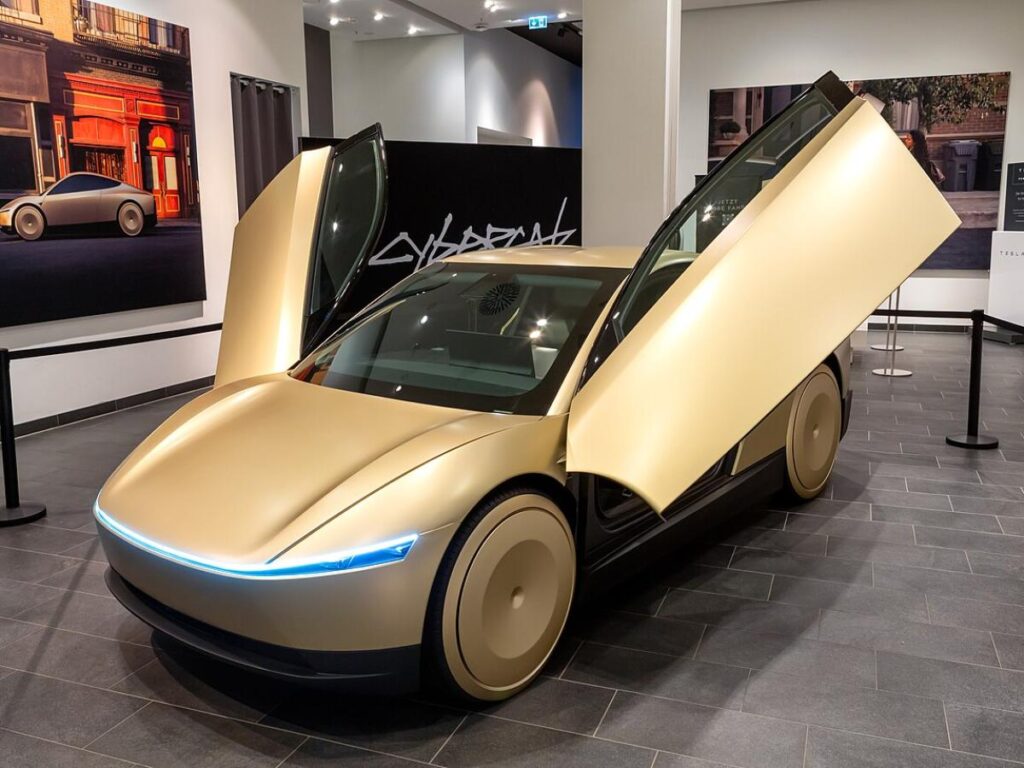
Unlike traditional cars retrofitted with self-driving software, the Tesla CyberCab is designed from the ground up as an autonomous vehicle.
What Makes the CyberCab Different?
- No steering wheel
- No pedals
- Two-seat configuration
- Designed for continuous urban operation
This clean-slate design eliminates decades of assumptions about human driving, resulting in a vehicle that is lighter, cheaper, and more efficient.
CyberCab Design and Engineering: Radical Simplicity
Extreme Weight Reduction
Tesla estimates the CyberCab will weigh just 3,000–3,200 lbs, making it 700–900 lbs lighter than a Model 3.
This is achieved through:
- Front and rear giga castings
- Fewer parts, welds, and joints
- Improved structural integrity
- Lower production and maintenance costs
Polyurethane Plastic Body Panels
Instead of steel or aluminum, Tesla uses polyurethane plastic, which is:
- Lighter
- More corrosion-resistant
- More durable against minor impacts
For a robotaxi expected to rack up hundreds of thousands of miles, durability is essential—not optional.
Powertrain and Battery Strategy: Efficiency Over Excess
Tesla’s CyberCab prioritizes reliability and cost efficiency.
Single-Motor Rear-Wheel Drive
- Reduced complexity
- Lower cost
- Smooth, predictable city handling
Smaller Battery, Smarter Design
- Under 50 kWh battery pack
- 200–250 miles of range
- Faster charging
- Lower weight and cost
Combined with an estimated 5.5 miles per kWh efficiency, the CyberCab dramatically undercuts operating costs.
Elon Musk claims the Robotaxi network could operate at just 20 cents per mile, a figure that could upend ride-hailing economics globally.
Minimalist Interior: Designed for Shared Mobility
The CyberCab interior removes everything unnecessary:
- No rear bench
- No massive infotainment screen
- Minimal trim
- Easy-to-clean surfaces
This isn’t austerity—it’s functional honesty. A robotaxi doesn’t need luxury; it needs:
- Durability
- Comfort for short trips
- Fast turnaround between rides
This design clearly positions the CyberCab as transportation-as-a-service, not a personal possession.
CyberCab Pricing: Why Tesla Keeps It Secret
Tesla is expected to price the CyberCab under $30,000, a figure made possible by:
- Lower material costs
- Fewer components
- Simplified manufacturing
- Massive production scale at Giga Texas
By keeping pricing details under wraps, Elon Musk avoids:
- Competitive interference
- Regulatory pressure
- Premature market expectations
Production is expected to begin late April, with volume ramping rapidly ahead of the Q1 2026 launch.
Regulatory Advantage: Built for Certification
A purpose-built autonomous vehicle is easier to:
- Certify
- Monitor
- Regulate
Standardized components and predictable behavior strengthen Tesla’s case for a unified federal autonomy framework, something that could accelerate nationwide deployment.
Why Tesla Chose the Model Y as Its First Robotaxi Platform
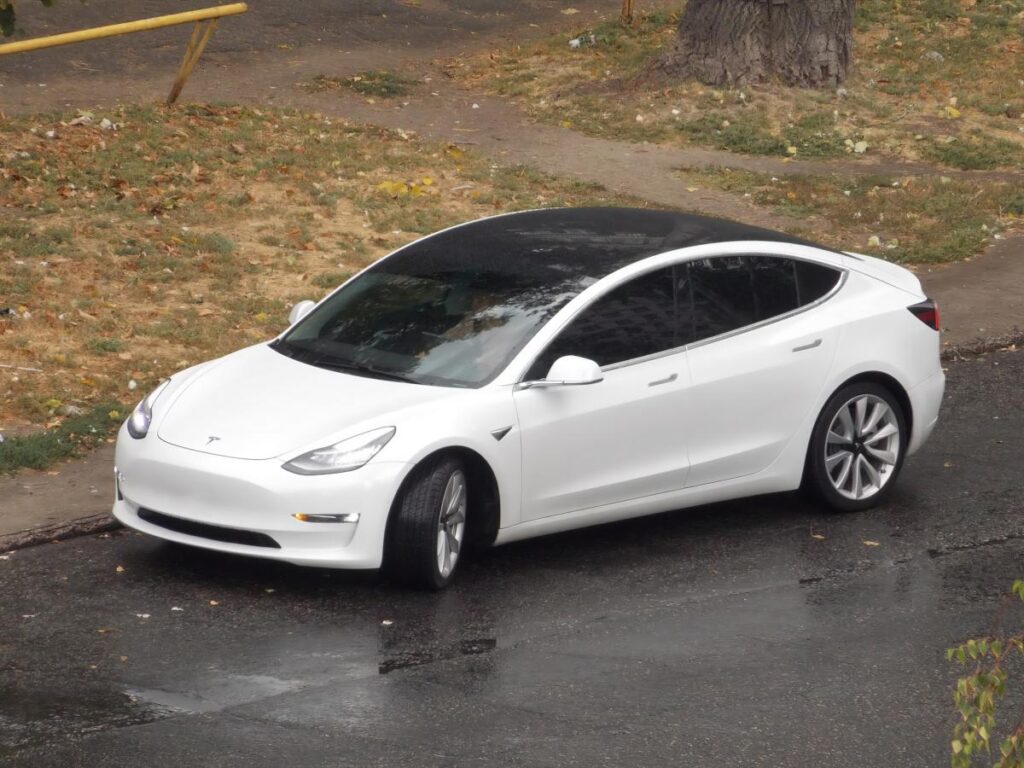
Before the CyberCab, Tesla is deploying Model Y vehicles as the foundation of its robotaxi fleet.
Why the Model Y Makes Sense
- Proven platform since 2020
- Millions of vehicles sold
- Billions of miles of real-world data
- Hardware continuity for FSD learning
This continuity is crucial—autonomy thrives on consistency.
Model Y Juniper Refresh: Efficiency Over Flash
Instead of larger batteries or expensive mechanics, Tesla focused on:
- Aerodynamic optimization
- Refined lighting inspired by CyberCab and Cybertruck
- ~4% efficiency improvement
That translates to ~20 extra miles of range without added cost—an enormous gain for a robotaxi operating nonstop.
Model Y Range Highlights
- RWD: 357 miles EPA
- AWD Long Range: 327 miles EPA
Fewer charging stops mean higher uptime and better fleet economics.
Interior Comfort: Trust in an Autonomous World
Without a human driver, the cabin must inspire confidence.
Key Interior Improvements
- Redesigned materials and textures
- Double-pane rear glass for noise reduction
- Quieter, calmer ride
- Improved seating ergonomics
- Enhanced climate control with Airwave 2.0
Silence and comfort become psychological anchors in autonomous travel.
User-Centric Engineering: A Subtle Shift
Tesla’s decision to retain a traditional turn signal stalk in the Model Y signals a pragmatic shift:
- Operational clarity over ideology
- Reliability during transitional autonomy phases
- Reduced confusion for passengers and regulators
Tesla vs Waymo: Caution or Confidence?
Waymo emphasizes safety through redundancy and human oversight. Tesla emphasizes scalability, AI learning, and economic viability.
So the question remains:
- Should we trust a system that is cautious but human-dependent?
- Or one that is bold, vision-based, and rapidly evolving?
Conclusion: The Moment Cars Became Infrastructure
The Tesla Robotaxi CyberCab is not flashy—it is coherent. Every design decision serves one vision:
- Autonomy at scale
- Minimal cost
- Real-world deployment
If Tesla’s unsupervised FSD continues to deliver, the CyberCab may be remembered as the moment cars stopped being personal possessions and became intelligent infrastructure.
Far from being a gimmick, the CyberCab represents one of the most disciplined engineering efforts in modern automotive history. If successful, it won’t just redefine Tesla—it will redefine how cities move.
FAQs
1. What is the Tesla Robotaxi CyberCab?
The Tesla Robotaxi CyberCab is a purpose-built autonomous electric vehicle designed specifically for ride-hailing services. It has no steering wheel or pedals and is optimized for full self-driving operation.
2. When will the Tesla CyberCab launch?
Tesla plans to launch the CyberCab in Q1 2026, with production expected to begin in late April 2025 at Giga Texas.
3. Will the Tesla CyberCab be fully autonomous?
Yes. Elon Musk has stated that with FSD version 14.3, the CyberCab will be capable of unsupervised full autonomy, allowing passengers to sleep during trips.
4. How much will the Tesla CyberCab cost?
Tesla is expected to price the CyberCab under $30,000, making it one of the most affordable autonomous vehicles ever produced.
5. Why doesn’t the CyberCab have a steering wheel or pedals?
The CyberCab is designed exclusively for autonomous driving. Removing manual controls reduces weight, cost, and complexity, while improving efficiency and safety.
6. How is Tesla’s approach different from Waymo’s?
Tesla relies on camera-based computer vision and AI, while Waymo uses LiDAR, radar, and heavy sensor arrays. Tesla’s approach is cheaper and more scalable.
7. How many sensors does the Tesla CyberCab use?
The CyberCab uses nine cameras and eliminates both LiDAR and radar, relying entirely on vision-based AI.
8. How much does a Waymo autonomous vehicle cost?
Waymo vehicles are estimated to cost around $180,000 per unit, largely due to their expensive LiDAR and sensor hardware.
9. What is Tesla’s Robotaxi operating cost per mile?
Elon Musk claims Tesla’s robotaxi service could operate at approximately $0.20 per mile, significantly undercutting traditional ride-hailing services.
10. How far can the Tesla CyberCab drive on a single charge?
The CyberCab is expected to have a range of 200–250 miles, optimized for short, frequent urban trips.
11. What battery size does the CyberCab use?
Tesla is expected to equip the CyberCab with a battery pack under 50 kWh, reducing cost, weight, and charging time.
12. Why is the CyberCab so lightweight?
The CyberCab weighs only 3,000–3,200 lbs due to:
- Giga castings
- Fewer parts
- Polyurethane plastic body panels
13. Will consumers be able to buy the CyberCab?
Tesla is expected to sell the CyberCab primarily for robotaxi fleets, though individual ownership for participation in the Tesla Robotaxi Network is possible.
14. How does Tesla handle power outages compared to Waymo?
Tesla claims its vehicles can continue operating during power outages using onboard vision and AI, while Waymo vehicles often require remote human confirmation.
15. Why did Tesla choose the Model Y for its robotaxi fleet?
The Model Y is built on a proven platform with billions of real-world driving miles, making it ideal for scalable autonomous deployment.
16. What improvements does the Model Y Juniper refresh bring?
The Juniper refresh improves:
- Aerodynamics
- Interior comfort
- Noise reduction
- Efficiency (~4% gain)
Resulting in up to 20 extra miles of range.
17. How does the CyberCab interior differ from regular Tesla vehicles?
The CyberCab interior is extremely minimalist:
- Two seats only
- No infotainment screen
- Easy-to-clean materials
- Designed for shared mobility, not ownership
18. Why is the Tesla CyberCab important for the future of transportation?
The CyberCab represents a shift from car ownership to intelligent infrastructure, enabling affordable, scalable, autonomous transportation in real cities.
Read More:
- SpaceX Starship is finally Launching Into Orbit for the First Time. Here’s Timeline
- Tesla Semi 2026: Elon Musk Reveals SHOCKING Factory Updates
- Elon Musk LEAKED 2026 Tesla Cybertruck FSD NEW Update! 4680 Battery Power SHOCKED Industry
- Starship Flight 12 launch Date So Close after Pad-2 almost Completed…Sooner Than We Thought
- Tesla AI Head says future FSD feature has already partially shipped
- Elon Musk’s xAI bets $20B on Mississippi with 2GW AI data center project