
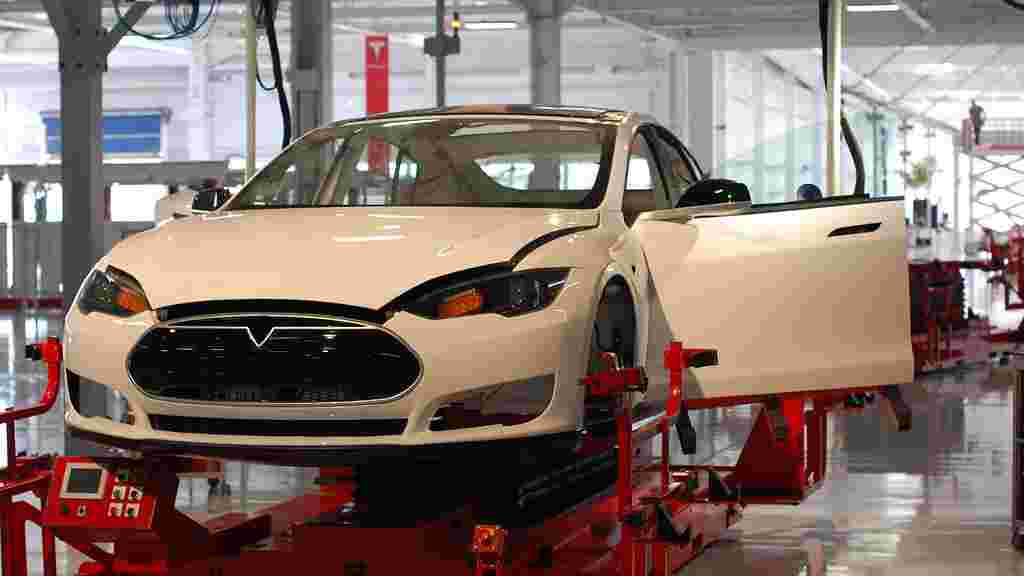
The global automotive industry is standing at the edge of one of the most dramatic manufacturing revolutions in history. Tesla’s 2026 upgrade to its Giga Press technology, centered around an almost unimaginable 50,000-ton Super Giga Press, is not just an incremental improvement—it is a complete redefinition of how cars are built.
This single machine has the potential to erase miles of factory complexity, replace thousands of robots, and push electric vehicle (EV) production speeds into territory once considered impossible. For Tesla, this could be the key to unlocking truly affordable electric cars for the masses. For legacy automakers, it may signal the beginning of the end for traditional manufacturing methods.
In this deep-dive, we’ll break down what the 50,000-ton Giga Press is, how it works, why it matters, and how it could turn Tesla’s factories into what Elon Musk openly calls “money-printing machines.”
The Biggest Manufacturing Leap in Tesla’s History
Tesla has always approached car manufacturing differently. While most automakers refine existing systems, Tesla prefers to delete complexity altogether. The 2026 Giga Press upgrade is the most extreme example of this philosophy so far.
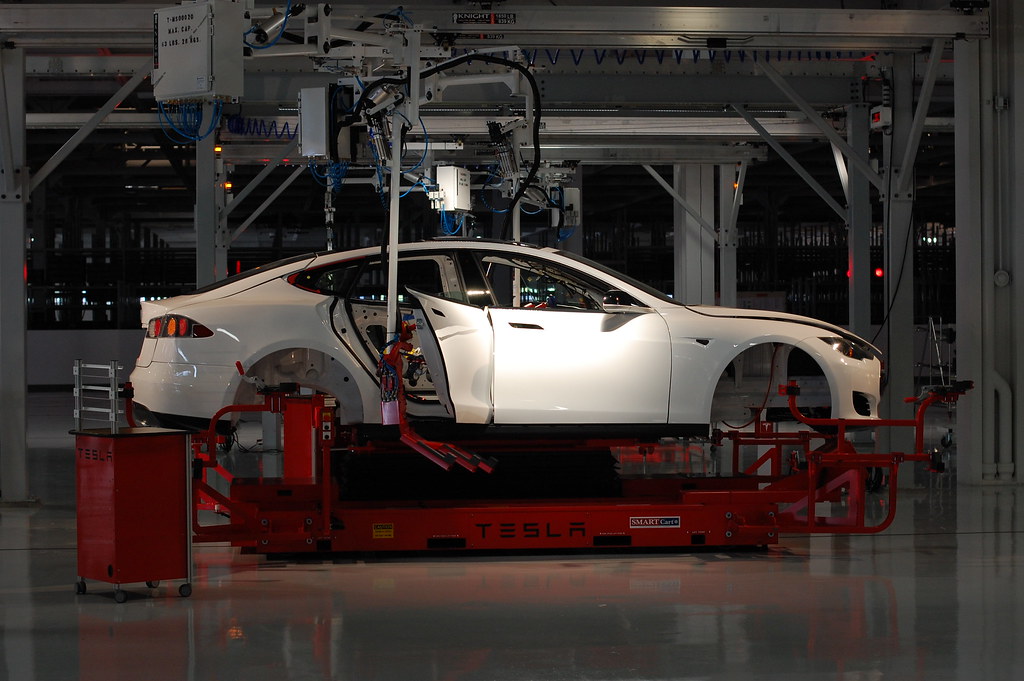
Instead of assembling hundreds of individual steel components, Tesla’s new Super Giga Press can cast an entire vehicle chassis as a single piece of aluminum. Think of it less like building a car and more like injecting molten metal into a massive mold, similar to how plastic toys are made—only on a scale never before attempted in automotive history.
This shift doesn’t just improve efficiency. It rewrites the economics of vehicle production.
Why Size Matters: From 6,000 Tons to 50,000 Tons
Understanding Clamping Force
One common misconception is that “50,000 tons” refers to the machine’s weight. It doesn’t.
It refers to clamping force—the immense pressure required to keep the mold sealed shut while molten aluminum is injected at extreme speed.
- 6,000-ton press → ~60,000 kilonewtons
- 9,000-ton press → ~90,000 kilonewtons
- 16,000-ton hypercasting press (China) → ~160,000 kilonewtons
- 50,000-ton Tesla Super Giga Press → ~500,000 kilonewtons
That means Tesla’s new machine delivers more than three times the force of the largest casting machine currently operating in China.
Tesla vs China: The Hypercasting Arms Race
Tesla pioneered the modern automotive Gigapress. But China, especially companies like XPeng, has aggressively pushed back.
- Tesla introduced a 6,000-ton press for the Model Y
- China responded with 7,000-ton systems
- Tesla upgraded to 9,000 tons for Cybertruck
- XPeng unveiled a 16,000-ton hypercasting machine
At the time, XPeng’s press was considered the largest in the world. It can cast one major chassis section per cycle, collapsing thousands of parts into just two large aluminum structures.
Tesla’s response?
Skip incremental competition and jump straight to 50,000 tons.
Casting Five Chassis at Once: A Production Breakthrough
Why the 50,000-Ton Giga Press Changes Everything
XPeng’s 16,000-ton machine can cast one chassis per cycle. Tesla’s 50,000-ton Giga Press is designed to cast at least five complete vehicle chassis simultaneously.
This single design choice explains Elon Musk’s bold claim that one car could roll off the production line every five seconds.
Key advantages include:
- Massive reduction in cycle time
- Smaller factory footprint
- Elimination of thousands of welding robots
- Lower labor and maintenance costs
- Dramatically reduced vehicle weight
This is manufacturing leverage at an entirely new scale.
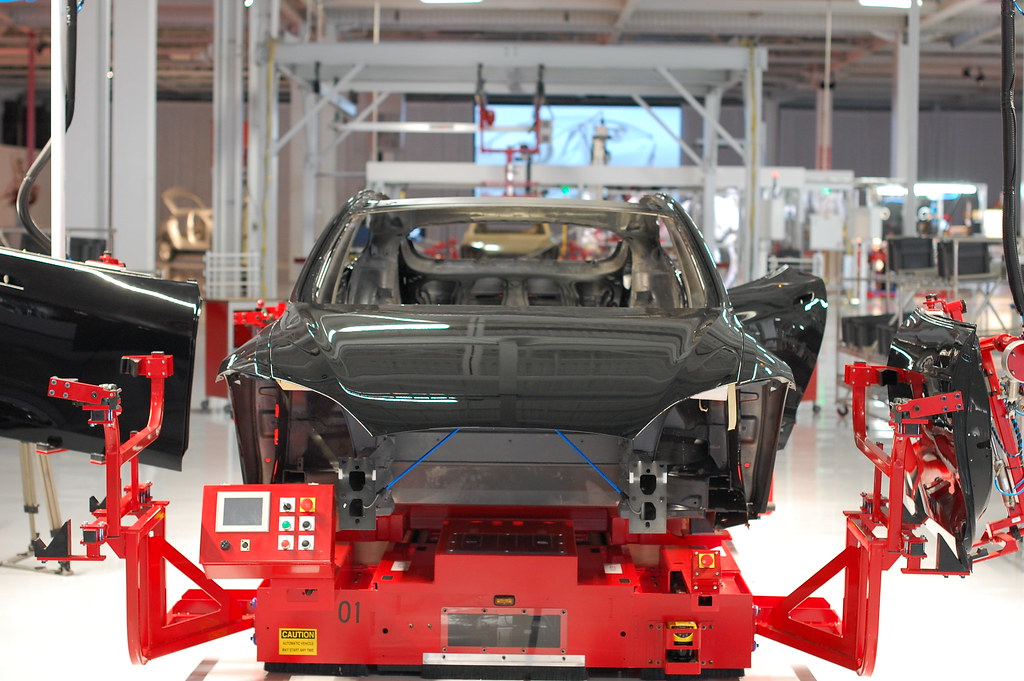
How Big Is the 50,000-Ton Giga Press Really?
While Tesla hasn’t released official dimensions yet, estimates can be made based on earlier machines.
Estimated Weight
- 6,000-ton press → ~430 metric tons (948,000 lb)
- 9,000-ton press → ~688 metric tons (1.52 million lb)
- 16,000-ton press → ~1,200 metric tons (2.6 million lb)
- 50,000-ton press (estimated) → ~8.16 million lb
That’s not just heavy—it’s industrial absurdity.
Estimated Size
Early projections suggest dimensions around:
- 131 ft long
- 42 ft wide
- 39 ft tall
That’s roughly the size of a three- to four-story building laid on its side. Tesla will likely need entirely new factory halls with ultra-deep reinforced concrete foundations just to support it.
Inside the Casting Process: How the Super Giga Press Works
Despite its scale, the operating principles remain similar to smaller presses—just far more demanding.
1. Aluminum Preparation
- Aluminum ingots and recycled scrap are melted at ~850°C
- A two-furnace system is used:
- Gas-fired melting furnace
- Electric holding furnace (750–850°C)
- Nitrogen gas prevents oxidation
- Argon gas and silicon carbide filters remove impurities larger than 25 microns
2. Mold Preparation
- Robots spray ~35 ml of soybean oil for lubrication
- A vacuum system removes air
- The mold is sealed under immense clamping force
3. High-Speed Injection
- Molten aluminum is injected by a piston at extreme speed
- On smaller presses:
- ~80 kg injected at 10 m/s
- On the 50,000-ton press:
- Significantly higher volume
- Even faster injection speeds
- Precision is critical:
- Too fast → air bubbles
- Too slow → premature cooling
4. Cooling and Extraction
- Part exits mold at ~400°C
- Rapid cooling tank reduces temperature to ~50°C
- This improves material strength and reduces defects
- Excess metal is trimmed and recycled
5. AI-Driven Quality Control
This proprietary integration is something competitors cannot easily replicate, even with similar hardware.
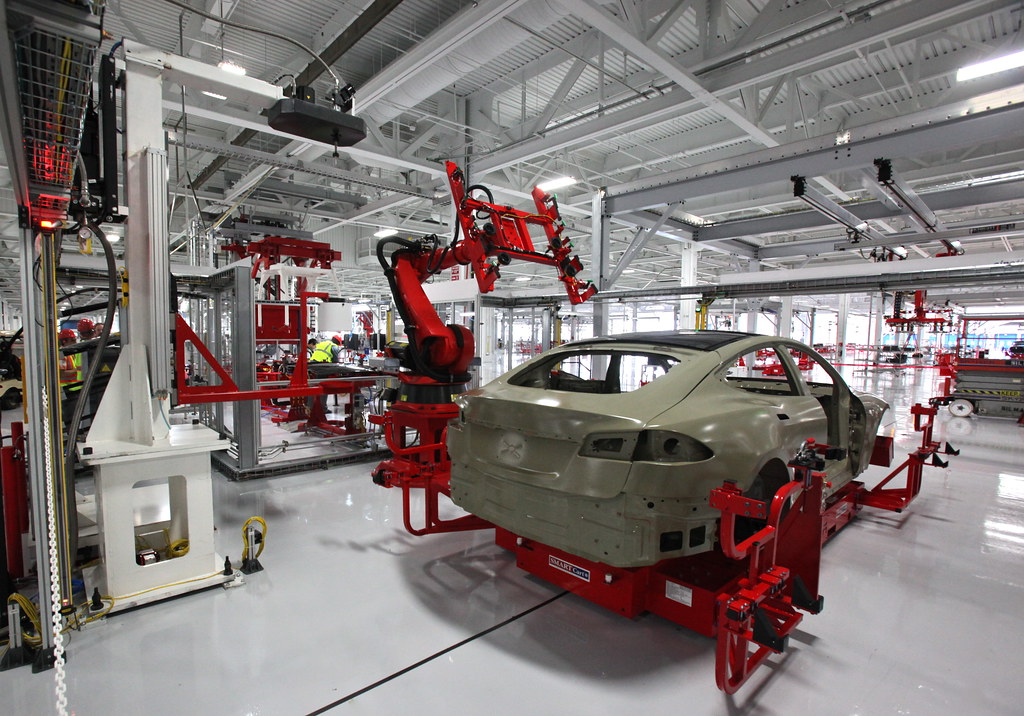
Why Precision Increases With Size
Counterintuitively, larger casting machines demand higher precision, not less. As mold size increases:
- Metal flow becomes harder to control
- Cooling gradients are more complex
- Structural tolerances tighten
Tesla’s advantage lies in its software-driven manufacturing stack, where real-time data adjusts casting parameters dynamically.
The Origins of the Giga Press: A Risk Nobody Wanted
When Elon Musk first proposed casting entire car structures in one shot, the idea was widely dismissed.
- Tesla contacted five major die-casting manufacturers
- All five rejected the concept
- As a last attempt, Musk contacted IDRA (Italy)
IDRA said: “Maybe.”
That was enough.
Tesla and IDRA worked together for over a year, with Tesla constantly demanding design changes. IDRA engineers reportedly worked around the clock to keep up. The result was the first automotive Giga Press, now replicated—but not surpassed—globally.
How Much Does a Giga Press Cost?
Estimated Pricing
- 6,000-ton press → ~$6.48 million
- 9,000-ton press → $9.7–11.3 million
- 16,000-ton hypercasting press → $17.3–21.6 million
- 50,000-ton Giga Press → $43.2–64.8 million
Yes, it’s expensive—but context matters.
Why the Price Is Worth It
Hidden Costs of Traditional Manufacturing
A conventional rear underbody includes:
- 70–100 stamped steel parts
- ~600 welding robots
- Large factory footprint
- High labor and energy costs
One Giga Press can replace that entire system.
Benefits include:
- Up to 35% reduction in factory space
- Massive labor savings
- Lower energy consumption
- Faster ramp-up times
- Simplified supply chains
Over a vehicle’s production life, the Giga Press becomes not a cost—but a profit multiplier.
The Strategic Advantage: Why Tesla Is Hard to Catch
China’s hypercasting progress is impressive. But Tesla’s real advantage isn’t size alone.
It’s vertical integration.
- Software-defined manufacturing
- AI-based quality control
- Custom aluminum alloys
- Real-time production optimization
- Global scalability
While competitors experiment at pilot scale, Tesla deploys at industrial scale with speed.
A Manufacturing Revolution on the Scale of Ford and Toyota
Just as:
- Ford’s assembly line reshaped mass production
- Toyota’s lean manufacturing redefined efficiency
Tesla’s 50,000-ton Giga Press is setting a new benchmark for the electric era.
This isn’t about building a bigger machine.
It’s about rewriting the rules of manufacturing.
Final Thoughts: The Future of Electric Vehicle Production
The Tesla 2026 Giga Press upgrade represents more than an engineering marvel. It’s a strategic weapon—one that could:
- Slash EV prices
- Accelerate global adoption
- Push competitors into radical redesigns
- Redefine how factories are built
At this point, the real question isn’t who will catch up.
It’s who is willing to push manufacturing this far, this fast.
And as history has shown, Tesla rarely waits for permission.
The age of the Super Giga Press has begun.
FAQs
1. What is Tesla’s 50,000-ton Giga Press?
The 50,000-ton Giga Press is Tesla’s next-generation high-pressure die-casting machine designed to cast entire vehicle chassis in a single piece. It delivers an unprecedented 500,000 kilonewtons of clamping force, making it the most powerful automotive casting machine ever conceived.
2. Why is the 50,000-ton Giga Press important for Tesla?
This machine allows Tesla to dramatically reduce production time, factory size, and manufacturing costs. By replacing hundreds of parts and thousands of welding robots with a single casting, Tesla can build vehicles faster and more efficiently than any competitor.
3. Does “50,000 tons” refer to the machine’s weight?
No. 50,000 tons refers to clamping force, not physical weight. It describes the force used to keep the mold sealed while molten aluminum is injected at high speed.
4. How does the 50,000-ton Giga Press differ from earlier Giga Press machines?
Unlike the 6,000-, 9,000-, or 16,000-ton presses, the 50,000-ton version can cast up to five vehicle chassis at the same time, significantly increasing output and reducing cycle time.
5. How fast can Tesla produce cars using the Super Giga Press?
According to Elon Musk, this technology could allow one vehicle to roll off the production line in under five seconds, a speed previously unimaginable in automotive manufacturing.
6. How does Tesla’s Giga Press compare to China’s hypercasting machines?
China’s largest hypercasting machines, such as XPeng’s 16,000-ton press, can cast only one chassis per cycle. Tesla’s 50,000-ton Giga Press can cast multiple chassis simultaneously, giving Tesla a major efficiency advantage.
7. What materials are used in Giga Press casting?
Tesla primarily uses specialized aluminum alloys that do not require heat treatment. These alloys are optimized for strength, weight reduction, and fast cooling.
8. How does Tesla ensure quality with such large castings?
Tesla uses AI-powered quality inspection, X-ray scanning, and real-time process monitoring to detect internal defects and ensure structural integrity in every casting.
9. How large is the 50,000-ton Giga Press?
Estimates suggest it could be roughly 131 feet long, 42 feet wide, and nearly 39 feet tall, comparable to a three- or four-story building laid on its side.
10. How much does a 50,000-ton Giga Press cost?
The estimated cost ranges from $43 million to $65 million, depending on configuration, automation level, and cooling systems.
11. Why is the Giga Press so expensive?
The cost comes from precision clamping systems, massive steel molds, advanced cooling technology, robotics, AI inspection systems, and the need for custom-built factory infrastructure.
12. Does the Giga Press replace human workers?
The Giga Press reduces manual labor in welding and assembly, but it also creates new high-skilled jobs in automation, robotics, maintenance, and software engineering.
13. Which Tesla vehicles will use the 50,000-ton Giga Press?
While Tesla has not officially confirmed models, the technology is widely expected to support next-generation platforms, including affordable mass-market EVs and future autonomous vehicles.
14. Can other automakers buy a 50,000-ton Giga Press?
In theory, yes—but hardware alone is not enough. Tesla’s advantage lies in its proprietary software, materials science, and factory integration, which competitors cannot easily replicate.
15. How does the Giga Press help lower electric vehicle prices?
By reducing parts count, factory space, labor, and energy use, the Giga Press lowers the cost per vehicle, helping Tesla move closer to its goal of affordable EVs for every household.
16. Is the 50,000-ton Giga Press the future of car manufacturing?
Many experts believe so. Just as the assembly line and lean manufacturing reshaped the industry, large-scale gigacasting and hypercasting are likely to define the future of automotive production—especially for electric vehicles.
Read More:
- Elon Musk’s Tesla Cybertruck Faces NEW Design Problems at Giga Texas! Buyer Beware?
- Tesla automotive will be forgotten, but not in a bad way: investor
- Tesla Robotaxi’s biggest rival sends latest statement with big expansion
- Tesla CEO Elon Musk trolls budget airline after it refuses Starlink on its planes
- Tesla Full Self-Driving gets outrageous insurance offer with insanely cheap rates
- Tesla reveals awesome Model 3 and Model Y incentive, but it’s ending soon