
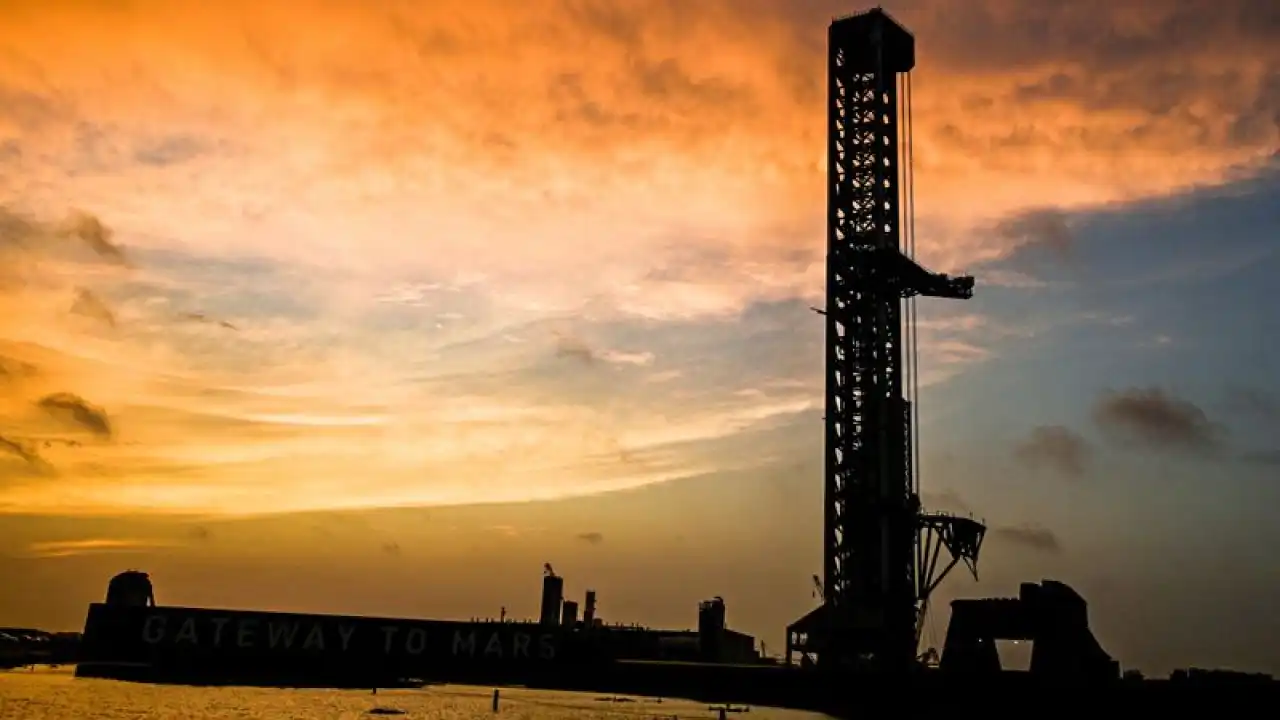
What SpaceX Did to Solve Starship Launch Pad Explosion Problem Totally Humiliated Blue Origin: The modern space race is no longer just about building bigger rockets. It is about creating an entire ecosystem capable of surviving failure, scaling rapidly, and maintaining relentless operational momentum. In this new era, SpaceX has introduced a revolutionary strategy that could fundamentally change aerospace forever.
While competitors focus on protecting individual launch sites, SpaceX is embracing a completely different philosophy: build so much redundancy that no single failure can stop progress.
This approach became especially critical as the company pushed forward with its ambitious Starship program, the largest and most powerful rocket system ever created. A Starship launch pad explosion is not merely a costly accident—it can threaten the entire operational schedule of the world’s most ambitious space project.
To solve this challenge, SpaceX launched what many industry observers now call the Redundancy Revolution, a strategy centered around multiple launch pads, mass-produced infrastructure, advanced manufacturing, and offshore recovery systems.
The result? A launch architecture that could leave competitors such as Blue Origin struggling to keep up.
The Massive Problem SpaceX Needed to Solve
Every rocket company faces risk. Rockets explode. Components fail. Launches get delayed.
However, Starship operates on an entirely different scale.
Standing approximately 120 meters tall and powered by 33 Raptor engines, Starship carries thousands of tons of liquid methane and liquid oxygen. The amount of energy involved during launch is unprecedented.
When smaller rockets experience launch pad failures, damage is often localized. But a catastrophic Starship explosion could severely damage or completely destroy critical launch infrastructure.
This creates a dangerous bottleneck.
A lost rocket can be replaced.
A destroyed launch pad may require months or even years to rebuild.
This reality became increasingly important as SpaceX dramatically increased Starship production.
According to Elon Musk, SpaceX’s manufacturing system is capable of producing multiple boosters and ships annually. The company’s greatest concern is no longer rocket production itself.
Instead, the biggest risk is infrastructure loss.
This realization drove SpaceX toward a groundbreaking solution.
The Redundancy Revolution: Building Multiple Launch Pads
Traditional aerospace companies often treat launch facilities as unique, irreplaceable assets.
SpaceX does the opposite.
The company is building a network of launch pads designed to ensure that operations continue even if one facility becomes unavailable.
This strategy effectively eliminates the launch pad as a single point of failure.
Why Redundancy Matters
Imagine an airport with only one runway.
If that runway becomes damaged, the entire airport shuts down.
Now imagine an airport with five runways.
One runway can close for repairs while operations continue normally.
This is essentially the model SpaceX is implementing for Starship.
Rather than relying on a single launch complex, the company is constructing a network of facilities capable of supporting high-frequency launches.
The Five-Pad Starship Infrastructure Network
SpaceX is currently developing one of the largest launch infrastructures ever assembled.
1. Starbase Pad 1 – Boca Chica, Texas
Starbase Pad 1 is the historic birthplace of Starship testing.
Many early Starship launches originated from this facility.
After supporting numerous flight tests and static fires, Pad 1 is undergoing a major modernization effort.
Key upgrades include:
- Redesigned Orbital Launch Mount
- Enhanced flame trench systems
- Stronger structural support
- Improved operational reliability
The goal is to transform the original launch site into a more resilient and efficient facility.
2. Starbase Pad 2 – Boca Chica, Texas
Pad 2 represents the next generation of SpaceX infrastructure.
Lessons learned from early launch operations directly influenced its design.
Major improvements include:
- Reinforced flame deflection systems
- Improved sensor integration
- Hardened propellant storage protection
- Advanced thermal resistance features
Pad 2 serves as a blueprint for future Starship launch facilities.
3. Launch Complex 39A – Kennedy Space Center
Launch Complex 39A is one of the most historic launch sites in spaceflight history.
It hosted Apollo missions and Space Shuttle launches.
SpaceX is transforming this iconic facility into a major Starship launch center.
Engineers have redesigned key structural elements to support the immense forces generated by Starship launches.
The facility will eventually become a major East Coast launch hub.
4. Space Launch Complex 37 Site A
Following the retirement of Delta IV Heavy operations, SpaceX acquired access to valuable launch real estate at Cape Canaveral.
The company is clearing and redeveloping the site for Starship operations.
Site A will support high-cadence launch activities from Florida.
5. Space Launch Complex 37 Site B
Perhaps the most remarkable aspect of the project is that SpaceX plans to build not one but two launch stands at SLC-37.
This creates built-in redundancy within redundancy.
If one launch stand experiences issues, the second can continue operating.
This philosophy perfectly illustrates how SpaceX views infrastructure.
Why This Strategy Could Humiliate Blue Origin
One reason SpaceX maintains a commanding lead in commercial launch services is its willingness to challenge traditional assumptions.
Blue Origin’s heavy-lift rocket strategy remains heavily dependent on a limited number of launch facilities.
This creates a potential vulnerability.
A significant launch pad issue could temporarily halt operations.
SpaceX’s multi-pad network dramatically reduces this risk.
Key Competitive Advantages
Operational Flexibility
Vehicles can be moved between launch locations.
Reduced Downtime
Maintenance on one pad does not stop the entire launch program.
Higher Launch Frequency
Multiple launch sites enable more missions per year.
Improved Reliability
Failures become isolated events instead of program-wide disruptions.
In practical terms, SpaceX can continue launching while competitors are still repairing infrastructure.
The Staractory: The Manufacturing Machine Behind the Strategy
Multiple launch pads are only useful if rockets are available to launch.
This is where SpaceX’s manufacturing revolution enters the picture.
The company has transformed rocket production using a facility known as the Staractory.
Moving Beyond Traditional Aerospace Manufacturing
Traditional aerospace production resembles custom craftsmanship.
Each vehicle is treated as a unique engineering project.
SpaceX has adopted a different approach.
The Staractory operates more like an automotive assembly line.
The goal is simple:
Build rockets at scale.
Raw stainless steel enters the facility and moves through a streamlined manufacturing process involving:
- Automated welding
- Standardized components
- Specialized assembly stations
- High-volume production workflows
This dramatically increases production speed.
Gigabays: The Vertical Factories Building Starship
Supporting the Staractory are enormous structures known as Gigabays.
These giant assembly buildings allow multiple Starships and Super Heavy boosters to be constructed simultaneously.
Compared to earlier facilities, Gigabays offer:
- Greater capacity
- Faster integration
- Improved workflow efficiency
- Expanded production scalability
The result is a manufacturing ecosystem capable of feeding multiple launch pads continuously.
Engineering for Extreme Violence
Starship launches generate conditions unlike anything previously encountered in aerospace.
The combined output of 33 Raptor engines produces over 16 million pounds of thrust.
This creates:
- Massive acoustic energy
- Extreme thermal loads
- Intense vibration
- Powerful shockwaves
Without specialized infrastructure, launch sites would quickly deteriorate.
Water Deluge Systems
One of SpaceX’s most important innovations is the giant water-cooled flame deflection system.
Large quantities of water are sprayed beneath the rocket during ignition.
This system helps:
- Reduce thermal damage
- Absorb acoustic energy
- Protect launch infrastructure
- Minimize debris generation
Reinforced Launch Hardware
SpaceX also strengthened critical components such as:
- Quick Disconnect systems
- Propellant lines
- Launch towers
- Sensor networks
Every test provides new data that drives rapid engineering improvements.
The Mechazilla Revolution
Perhaps no Starship innovation is more visually striking than Mechazilla.
Instead of relying on traditional landing legs, SpaceX developed giant mechanical arms capable of catching returning boosters.
Benefits of Tower Catching
The system offers several advantages:
- Reduced vehicle weight
- Increased payload capacity
- Faster turnaround times
- Simplified recovery operations
Removing landing legs saves valuable mass.
That mass can instead be used for cargo, fuel, or mission equipment.
Why SpaceX Is Bringing Landing Legs Back
Despite the advantages of tower catches, there is one major problem.
Mars does not have Mechazilla towers.
Neither does the Moon.
For interplanetary missions, Starship must be capable of landing independently.
As a result, SpaceX is developing leg-equipped variants of Starship.
Engineering Challenges
Adding landing legs is far from simple.
Engineers must address:
Internal Rearrangement
The base of Starship contains engines, plumbing, and fuel systems.
Finding room for landing gear requires extensive redesign work.
Heat Shield Integration
Landing legs must survive atmospheric reentry.
They need protection from extreme temperatures.
Weight Management
Large vehicles require large landing legs.
A Starship landing system must support enormous loads while remaining lightweight.
Offshore Recovery: The Next Frontier
Another major component of SpaceX’s redundancy strategy involves ocean operations.
The company is adapting drone ships to support future Starship recoveries.
Why Recover at Sea?
Offshore recovery offers several advantages.
Reduced Noise Impact
Starship launches create tremendous sound levels.
Operating farther from populated areas minimizes community disruption.
Improved Fuel Efficiency
Landing downrange requires less fuel than returning to the launch site.
This increases payload capacity.
Global Spaceport Potential
Mobile landing platforms could eventually serve as floating spaceports.
This aligns with SpaceX’s long-term vision of rapid global transportation.
Scaling Drone Ships for Starship
Recovering a Falcon 9 booster is already challenging.
Recovering a Super Heavy booster is vastly more difficult.
The Weight Difference
A Falcon 9 booster typically lands at around 25 tons.
A Super Heavy booster can weigh hundreds of tons during recovery.
This requires:
- Reinforced decks
- Stronger structural supports
- Advanced station-keeping systems
- Heavy-duty maritime operations
Essentially, SpaceX must create floating launch infrastructure capable of handling rocket-scale forces.
How SpaceX Is Eliminating Single Points of Failure
The most important lesson from SpaceX’s strategy is that the company is no longer designing isolated systems.
It is designing an integrated network.
Every component supports redundancy.
Multiple Launch Pads
If one pad fails, others continue operating.
High-Volume Manufacturing
If one vehicle is lost, another is already being built.
Offshore Recovery
If one recovery method becomes unavailable, alternatives exist.
Diverse Launch Locations
Texas and Florida provide geographical flexibility.
This layered redundancy dramatically increases resilience.
The Road to Mars Depends on Infrastructure
Most people focus on the rockets.
Few pay attention to the infrastructure.
Yet infrastructure may be the most important element of all.
A rocket can only fly if:
- Manufacturing works
- Launch pads operate
- Recovery systems function
- Supply chains remain active
SpaceX understands this reality.
Rather than waiting for infrastructure failures to occur, the company is proactively building safeguards into the system.
Future Outlook for Starship Operations
Industry observers expect SpaceX to continue refining:
- Mechazilla catches
- Booster recovery techniques
- Launch cadence
- Manufacturing output
- Offshore landing operations
As these systems mature, launch frequency could increase dramatically.
The combination of multiple launch pads and mass production could eventually enable launch rates never before seen in aerospace history.
Conclusion
The story of Starship’s launch pad expansion is much bigger than launch infrastructure.
It represents a complete rethinking of aerospace operations.
Instead of treating launch facilities as fragile monuments, SpaceX treats them as scalable, replaceable components within a larger system.
By building five launch pads, expanding Starship production through the Staractory, developing offshore recovery capabilities, and introducing multiple layers of operational redundancy, SpaceX has effectively removed one of the greatest risks facing its ambitious Mars program.
This strategy gives the company an enormous competitive advantage and highlights why many analysts believe SpaceX is years ahead of its rivals.
In the end, the true innovation is not just Starship itself.
It is the creation of a fully redundant space transportation ecosystem designed to survive failures, maintain momentum, and continue pushing humanity toward becoming a multi-planetary species.
That is the real reason SpaceX’s launch pad strategy has become one of the most significant developments in modern aerospace—and why it has placed immense pressure on competitors like Blue Origin to rethink their entire approach.
FAQs
1. Why is SpaceX building multiple Starship launch pads?
SpaceX is building multiple launch pads to eliminate single points of failure. If one launch pad is damaged or undergoing maintenance, Starship missions can continue from other locations without major delays.
2. How many Starship launch pads is SpaceX developing?
SpaceX is currently working on five Starship launch facilities, including two pads at Starbase in Texas, Launch Complex 39A in Florida, and two planned launch stands at Space Launch Complex 37.
3. What is the biggest risk of a Starship launch pad explosion?
The greatest risk is not losing the rocket itself but damaging the launch infrastructure. Replacing a Starship can be faster than rebuilding a heavily damaged launch pad.
4. What is Starbase Pad 2?
Starbase Pad 2 is SpaceX’s next-generation Starship launch facility in Texas. It includes improved flame deflection systems, reinforced structures, and enhanced protection against launch-related damage.
5. Why is SpaceX upgrading Launch Complex 39A?
Launch Complex 39A is being modified to support Starship launches from Florida’s East Coast, giving SpaceX greater operational flexibility and increased launch capacity.
6. What is the Staractory?
The Staractory is SpaceX’s advanced manufacturing facility designed to mass-produce Starship vehicles using highly automated production processes similar to automotive assembly lines.
7. How does the Staractory help SpaceX launch more frequently?
By streamlining production and increasing output, the Staractory allows SpaceX to build multiple Starships and Super Heavy boosters simultaneously, ensuring a steady supply of vehicles for launch operations.
8. What is Mechazilla?
Mechazilla is SpaceX’s giant launch tower equipped with mechanical arms known as “chopsticks” that can stack Starship vehicles and catch returning Super Heavy boosters during landing.
9. Why did SpaceX originally remove landing legs from Starship?
Eliminating landing legs reduced vehicle weight, increased payload capacity, and allowed SpaceX to rely on Mechazilla tower catches for booster and spacecraft recovery.
10. Why is SpaceX now developing Starship landing legs?
Landing legs are necessary for future missions to the Moon, Mars, and offshore recovery platforms where Mechazilla towers will not be available.
11. How do Starship water deluge systems work?
The water deluge system sprays massive amounts of water beneath the rocket during ignition, helping absorb heat, reduce acoustic energy, and protect launch infrastructure from damage.
12. What role do drone ships play in Starship operations?
Drone ships will serve as offshore landing platforms for Starship and Super Heavy boosters, reducing fuel requirements and minimizing noise impacts on coastal communities.
13. How is Starship different from Falcon 9 in terms of recovery?
Starship and Super Heavy are significantly larger and heavier than Falcon 9. Recovering them requires stronger infrastructure, more powerful recovery systems, and larger offshore platforms.
14. Why is SpaceX’s launch pad strategy considered a challenge to Blue Origin?
SpaceX’s multi-pad approach allows rapid launch operations even after infrastructure issues, while competitors with fewer launch facilities may face longer delays after pad-related problems.
15. How does this strategy support SpaceX’s goal of reaching Mars?
By creating a redundant network of launch pads, manufacturing facilities, recovery systems, and operational infrastructure, SpaceX ensures that no single failure can significantly slow its long-term mission of establishing a human presence on Mars.
Read More:
- Elon Musk Shocked the Industry at Tesla’s 2026 New Product Showcase: Flying Cars & AI Robots
- Tesla exec says Roadster unveil is soon — for real this time
- Tesla owner fixes common feature complaint with crafty DIY retrofit
- SpaceX’s New Upgrades to Fix Starship Booster V3 Problem, Get Ready for Flight 13
- Tesla’s Giant 100GW Solar Factory Is Real — Elon Musk Just Confirmed