
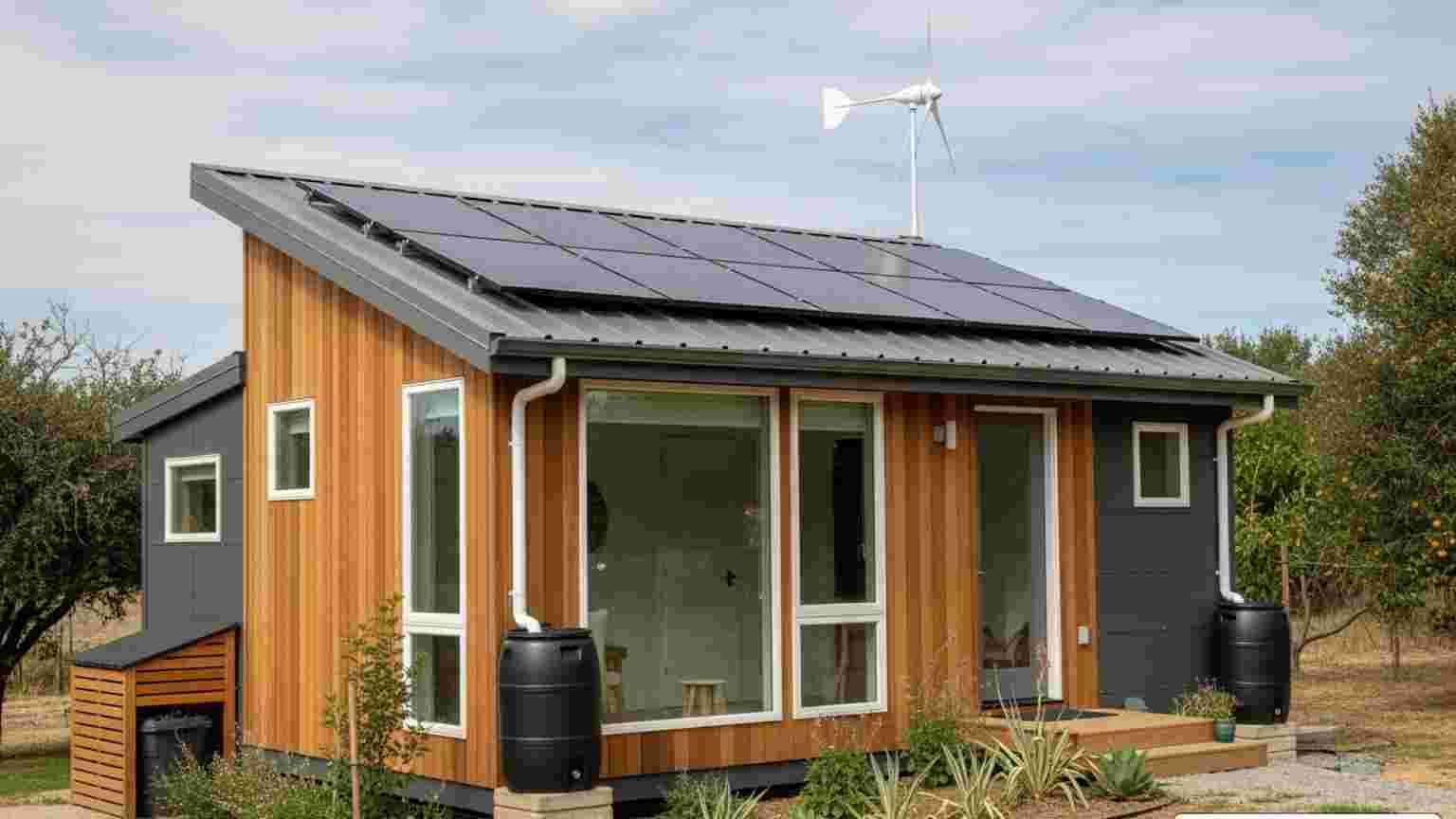
The housing market is at a breaking point. Skyrocketing prices, rising interest rates, and crushing mortgages have pushed homeownership out of reach for millions. Against this backdrop, a bold new idea has captured global attention: a $7,999 Tesla tiny house that promises energy independence, mobility, and radically lower living costs.
From the very first trials, visitors described their reaction in one word: awe. Compact, futuristic, and deployable in just minutes, this tiny home challenges everything we think we know about housing. But how realistic is it? What role does Elon Musk actually play in this vision? And could tiny, modular homes truly reshape the future of living?
In this in-depth guide, we break down everything you need to know about the Tesla tiny house concept, its technology, costs, community model, and the hard truth behind the headlines.
The First Impression: Why the Tesla Tiny House Feels Revolutionary
Seeing the Tesla tiny house in person is not like touring a traditional home. It feels closer to witnessing a piece of aerospace engineering land in the housing world.
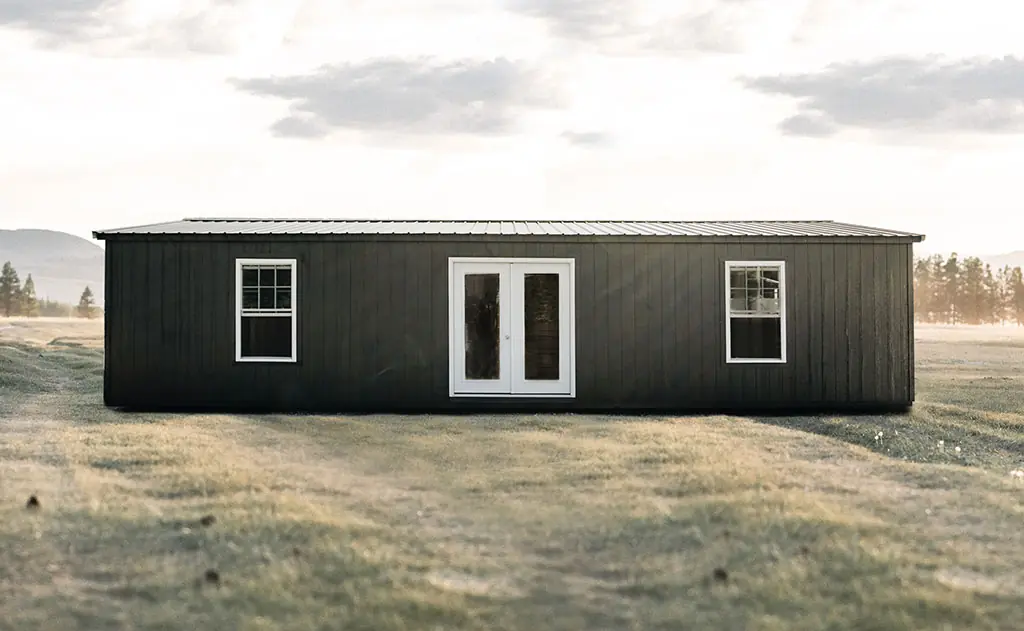
At just 280 square feet, the house is small, but astonishingly efficient. It can be deployed faster than pitching a tent, unfolding and leveling itself in minutes. Despite its size, it comfortably accommodates a family of four, complete with a kitchen, bathroom, living area, and sleeping space.
What makes it truly disruptive is not just the size or price, but the philosophy behind it:
- Ultra-low upfront cost
- Minimal ongoing expenses
- Energy self-sufficiency
- Mobility without compromise
In a market where the average U.S. home costs $350,000 to $800,000 (excluding land), a sub-$8,000 alternative naturally draws massive attention.
Why Americans Are Rethinking Traditional Housing
To understand the appeal of tiny houses, you need to understand the problem they aim to solve.
The True Cost of Building a Home in the U.S.
- Average construction cost: $180–$280 per square foot
- Total cost of a basic home: $350,000–$800,000
- Land, permits, and taxes: not included
- Property taxes in some states: $10,000+ per year
For many Americans, especially retirees and younger families, these numbers are simply unsustainable.
This is where the Tesla tiny house idea becomes compelling:
280 square feet for under $8,000, with drastically reduced land, tax, and utility costs.
A Breakthrough Moment: The First 1,000 Tiny Homes
Just as the first 1,000 Tesla Model S vehicles changed how the world viewed electric cars, the first 1,000 tiny homes could redefine housing expectations.
While tiny homes won’t replace traditional housing overnight, their impact goes far beyond raw numbers. They introduce:
- A new category of ownership
- A bridge between renting and buying
- A solution for housing shortages and affordability
This isn’t just about living smaller—it’s about living smarter.
Built Like a Spacecraft: Engineering Behind the Structure
One of the most impressive aspects of the Tesla tiny house concept is its construction.
Aerospace-Grade Strength
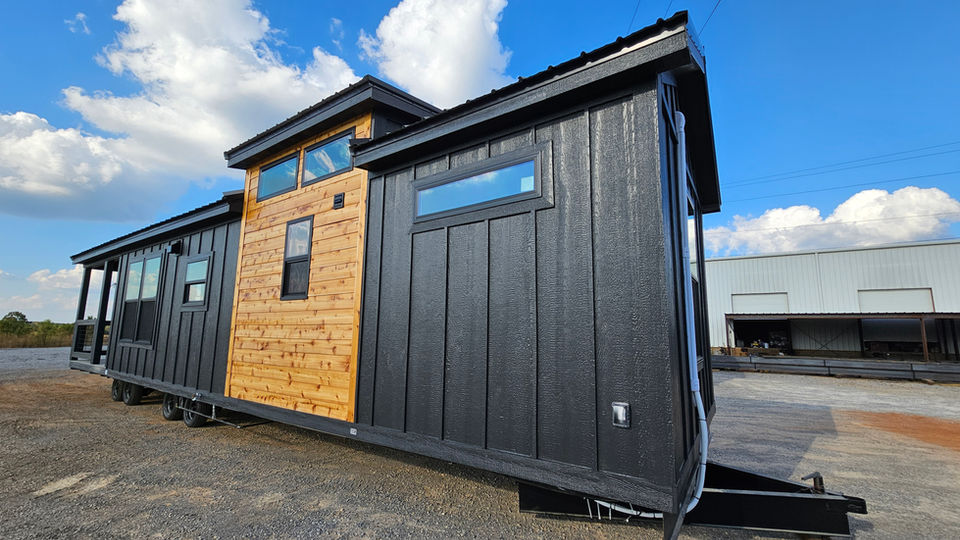
- Built from aerospace-grade steel
- Tensile strength: 50,000 PSI
- Rated for 100+ relocations without degradation
In real-world testing, a unit was towed 2,000 miles at highway speeds with no structural deformation.
Hydraulic Self-Leveling System
- Four hydraulic jacks, each supporting 2.5 tons
- Fully self-levels in under 2 minutes
- Maintains accuracy within 0.1°
- Works even on soft ground
This eliminates many issues that plague traditional trailers and mobile homes.
Mobility Without Compromise
Mobility is not an afterthought—it’s a core design principle.
- Meets standard towing dimensions
- Can be moved with a common pickup truck
- No commercial license required
- Coast-to-coast relocation costs: ~$600 in fuel
For international transport, a foldable hinge system allows the house to collapse to 22 feet, fitting inside a standard 40-foot shipping container and cutting shipping costs nearly in half.
Designed for Harsh Environments
Environmental resilience is baked into the design.
- Stable on slopes up to 15°
- Wind resistance: 50 mph
- Roof converts into a 120 sq. ft. terrace
- Solar panel area expands from 100 to 180 sq. ft.
- Daily energy output: up to 5 kWh
In heavy rain, the roof automatically closes within 30 seconds via a mobile app.
Expected lifespan: 50 years
Annual maintenance cost: ~$350
Solar Power & Energy Independence
At the heart of the concept is energy self-sufficiency.
Each unit integrates:
- Solar panels
- Battery storage
- Smart energy management
Tesla’s experience as one of the largest solar installers in the U.S. gives it a significant advantage. With federal solar tax credits still available, homeowners can drastically reduce or even eliminate electricity bills.
Instead of being consumers of energy, residents become producers.
Flexible Modular Living
The Tesla tiny house is not static—it evolves with your life.
Base Configuration
- 280 sq. ft.
- Full kitchen
- Bathroom
- Living area
Expandable Design
- Foldable interiors expand usable space to 330 sq. ft.
- Additional 70 sq. ft. modules attach magnetically
- Total area up to 400 sq. ft.
- Setup time: 10 minutes
Even more impressively, five houses can connect into a shared tiny village, totaling 1,400 sq. ft. and reducing energy costs by up to 40%.
Tiny Homes, Big Communities
Perhaps the most radical idea isn’t the house—it’s the community model.
Microland Programs
- Large shared plots (up to 50 acres)
- Residents pay only $100 per year for infrastructure
- No traditional property taxes in some regions
Compare that to states like New York, where average property taxes exceed $12,000 per year.
Shared Microgrids
- 6 kW shared energy system
- Generates 20 kWh per day
- Cuts energy demand by 60%
Water & Waste Innovation
- 80% water recycling
- 3,000-gallon rainwater storage
- Composting systems
- Up to 90% self-sufficiency
Monthly living costs can drop to $15.
High-Speed Internet Anywhere
Remote living often raises one major concern: connectivity.
That’s where Starlink changes the game.
- Global satellite internet coverage
- Speeds: 25–220 Mbps
- Monthly cost: ~$120
- Works in remote and rural areas worldwide
This ensures that tiny home living doesn’t mean sacrificing work, entertainment, or communication.
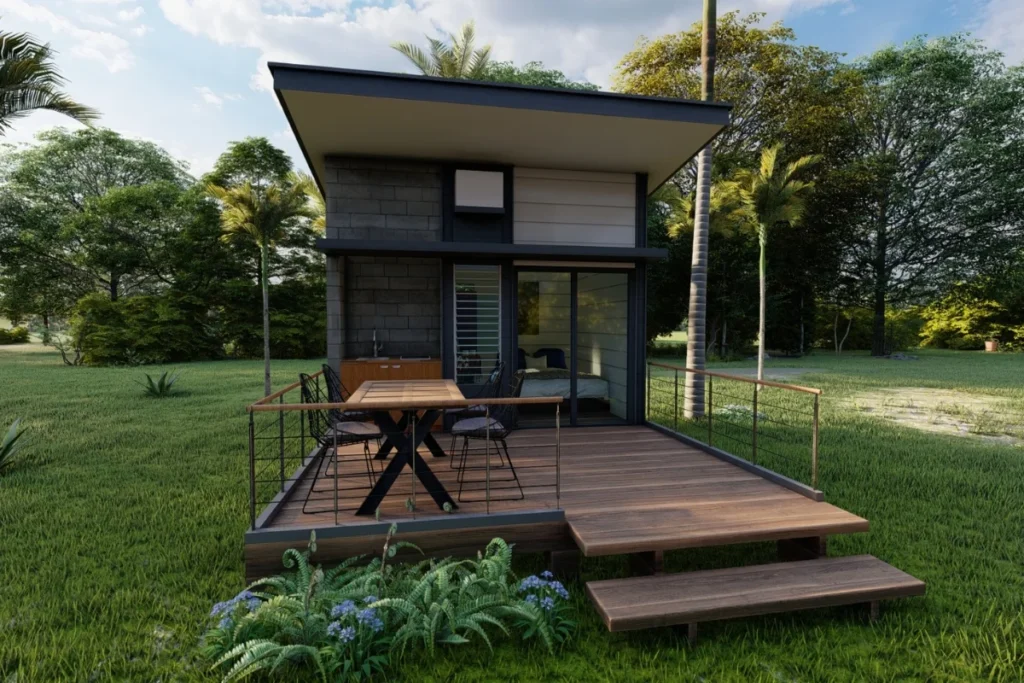
Style Meets Minimalism
Despite its small size, the interior feels modern and open.
Interior Highlights
- Shaker-style kitchen
- Full-size refrigerator & dishwasher
- Pull-out dining table
- 8-foot sliding glass door
- Ceiling height: 9.6 feet
- Skylight for stargazing
Smart lighting, efficient heating and cooling, and wireless-enabled appliances create a clean, futuristic living experience.
The Reality Check: Is Tesla Really Selling Tiny Houses?
Here’s where the story gets complicated.
Despite widespread claims, there is no official confirmation that Tesla currently sells tiny houses as a commercial product. While Elon Musk has publicly embraced minimalist living and modular housing concepts, Tesla’s official offerings remain focused on:
- Solar panels
- Solar roofs
- Energy storage systems
Musk has stated that he lives in a modest, rented home in Texas and has praised modular housing ideas—but not as an official Tesla product line.
This distinction matters.
Many viral claims blend real engineering concepts, existing modular housing companies, and Tesla’s energy technology into a single narrative that feels real—but remains largely speculative.
Could Modular Housing Still Change the Future?
Absolutely.
Even without Tesla directly manufacturing homes, the ideas behind this concept are powerful:
- Faster construction
- Lower costs
- Sustainable materials
- Energy independence
- Scalable communities
Companies like Boxable and others continue to develop modular solutions, though production challenges remain.
The real question isn’t whether Tesla is shipping tiny houses today—it’s whether modular housing can realistically scale to address the housing crisis.
Final Thoughts: More Than a Tiny House
The $7,999 Tesla tiny house represents more than just a building. It symbolizes:
- Freedom from crushing debt
- A shift toward sustainable living
- A redefinition of homeownership
- Community over isolation
Whether or not Tesla officially enters the housing market, the vision has already sparked a conversation that won’t go away.
In a world where traditional housing feels increasingly unattainable, the tiny house movement offers something rare: hope, flexibility, and control.
FAQs
1. What is the Tesla tiny house?
The Tesla tiny house is a concept for a compact, modular, energy-efficient home inspired by Tesla’s renewable energy technology and minimalist design philosophy. It focuses on affordability, mobility, and self-sufficiency, rather than traditional large-scale housing.
2. Is the $7,999 Tesla tiny house officially sold by Tesla?
As of now, Tesla has not officially announced or sold tiny houses as a commercial product. The $7,999 price is associated with conceptual and prototype-based discussions, not an officially listed Tesla offering.
3. How big is the Tesla tiny house?
The base layout offers approximately 280 square feet, with expandable modular options that can increase total living space to 330–400 square feet, depending on configuration.
4. How fast can the tiny house be set up?
The house can be deployed and self-leveled in just a few minutes, thanks to hydraulic leveling jacks and a foldable design that unfolds automatically on site.
5. Can the Tesla tiny house be moved easily?
Yes. The structure is designed to meet standard towing dimensions and can be transported using a pickup truck without a commercial driver’s license.
6. What materials are used in the construction?
The house uses aerospace-grade steel, reinforced concrete, insulating foam, and multi-layer cladding, making it highly durable, weather-resistant, and long-lasting.
7. Is the Tesla tiny house powered by solar energy?
Yes. The concept integrates solar panels, energy storage batteries, and smart energy management, allowing homeowners to generate and store their own electricity.
8. How much does it cost to maintain a tiny house like this?
Estimated annual maintenance costs are around $350, significantly lower than traditional homes, which often cost thousands per year in upkeep.
9. Can a family live comfortably in a tiny house?
Yes. The interior is designed to support up to four people, with a functional kitchen, bathroom, living space, sleeping areas, and foldable furniture to maximize usability.
10. Are the tiny houses resistant to extreme weather?
The design includes wind resistance up to 50 mph, reinforced foundations, impact-resistant windows, and a self-anchoring hydraulic system that stabilizes the structure on uneven terrain.
11. What is the lifespan of the Tesla tiny house?
The estimated lifespan is up to 50 years, thanks to corrosion-resistant materials and robust structural engineering.
12. Can multiple tiny houses be connected together?
Yes. Several units can be linked together to form shared living spaces or tiny villages, allowing residents to share energy, water systems, and community infrastructure.
13. Does the tiny house include internet access?
While not built-in, the concept strongly supports Starlink satellite internet, providing high-speed connectivity even in remote areas.
14. Are there land or property taxes for these homes?
In proposed community models, residents may have little to no property tax, especially in shared microland programs. Policies vary by location and local regulations.
15. Can the tiny house be customized or expanded?
Yes. The modular design allows owners to add extra modules, rearrange interiors, or reconfigure layouts to meet changing lifestyle needs.
16. Will Tesla release tiny houses in the future?
There is no confirmed announcement from Tesla regarding mass production of tiny houses. However, Elon Musk has expressed interest in modular and minimalist housing, leaving the possibility open for future innovation.
Read More:
- SpaceX’s Genius Solution to Build Gravity Starship Space Station, Better than NASA ISS, China’s
- Ford cancels all-electric F-150 Lightning, announces $19.5 billion in charges
- Tesla stands to gain from Ford’s decision to ditch large EVs
- Tesla Cybertruck earns IIHS Top Safety Pick+ award
- Tesla Model Y L is gaining momentum in China’s premium segment
- Tesla gets bold Robotaxi prediction from Wall Street firm