
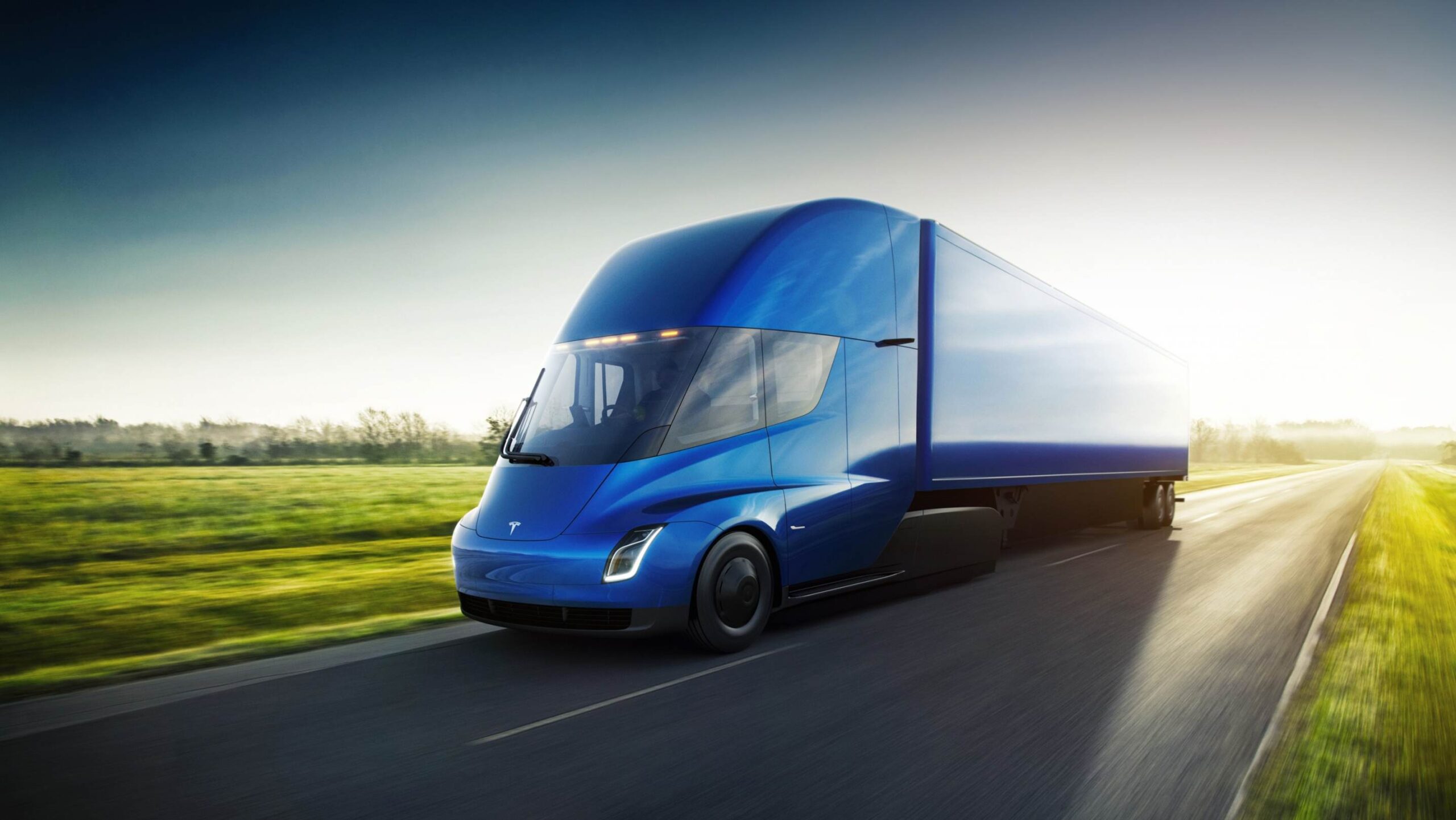
After nearly nine years of speculation, the Tesla Semi price has finally been revealed—and it’s significantly higher than many originally expected. Since its dramatic unveiling in 2017, the electric Class 8 truck has remained one of the most anticipated commercial vehicles in the world. Yet through design updates, production delays, and evolving battery technology, one major detail remained unclear: How much does the Tesla Semi actually cost?
Now, reputable sources confirm that pricing has increased by as much as 60% compared to the originally projected figures. But does that make it overpriced—or still a bargain in the electric truck market?
Let’s break down everything you need to know about the 2026 Tesla Semi pricing, specifications, performance, efficiency, and long-term value.
Tesla Semi Price in 2026: What We Finally Know
When Tesla first unveiled the Semi in 2017, Elon Musk announced ambitious pricing:
- $150,000 for the 300-mile range version
- $180,000 for the 500-mile range version
At the time, those numbers shocked the trucking industry. They positioned Tesla’s electric truck as a competitive alternative to diesel models.
Fast forward to 2026, and the reality looks very different.

Updated Tesla Semi Pricing (2026)
According to reliable reports:
- Tesla Semi Standard Range (325 miles): ~$260,000
- Tesla Semi Long Range (500 miles): ~$290,000
Importantly, these prices do not include shipping fees or taxes.
That’s roughly a 60% increase from the originally promised $180,000 for the long-range model.
Tesla still has not publicly listed pricing on its website. Instead, pricing details appear to be shared directly with businesses placing pre-orders—a common practice in the commercial trucking industry.
Why Did the Tesla Semi Price Increase by 60%?
At first glance, a 60% increase seems dramatic. However, when viewed realistically, several factors explain the shift:
1. Inflation Over Nine Years
The original price targets were set in 2017. Nearly a decade later, inflation alone has dramatically changed manufacturing costs.
2. Battery Technology Upgrades
The Tesla Semi has undergone a significant technological evolution, including a switch to high-energy-density 4680 battery cells, replacing earlier assumptions of LFP chemistry.
3. Design Refresh and Performance Improvements
Tesla recently refreshed the Semi’s design and updated specifications, adding measurable value.
4. Supply Chain and Production Delays
Years of delays—pandemic disruptions, material shortages, and factory construction setbacks—inevitably increased costs.
Given these factors, pricing the Semi at 2017 levels in 2026 would have been unrealistic.
Tesla Semi vs Competitors: Is It Still Affordable?
While many reacted negatively to the higher price, there’s an important detail often overlooked:
The Average Electric Class 8 Truck Costs $435,000 (2024 data)
If that benchmark holds, Tesla’s pricing looks surprisingly competitive:
- Tesla Semi Long Range: $290,000
- Industry Average: $435,000
- Tesla Advantage: ~$145,000 less
Despite the 60% increase, the Tesla Semi remains significantly cheaper than many competing zero-emission Class 8 trucks.
However, the electric truck market is rapidly evolving, and manufacturers frequently adjust pricing to maximize available government incentives.

Tesla Semi vs Diesel Trucks: Cost Comparison
The real question for fleet operators is not just purchase price—it’s total cost of ownership (TCO).
Upfront Cost Comparison
- Tesla Semi: ~$260,000–$290,000
- Typical Diesel Class 8 Truck: ~$150,000–$180,000
The Semi costs approximately $110,000 more upfront than a diesel equivalent.
Fuel Cost Comparison
Diesel trucks:
- 6–7 miles per gallon
- Diesel price (early 2026): $3.50–$4.00 per gallon
- Fuel cost: $0.50–$0.67 per mile
Tesla Semi:
- 1.7 kWh per mile
- Electricity: ~$0.18 per kWh
- Energy cost: ~$0.31 per mile
That’s a potential savings of $0.19–$0.36 per mile.
Break-Even Timeline
With those savings, the Tesla Semi can reportedly reach break-even in about 4 years, depending on usage patterns and electricity rates.
For high-mileage fleet operators, that’s a compelling value proposition.
Tesla Semi Performance Specs (2026 Update)
Tesla now officially lists two primary versions:
Standard Range Version
- 325-mile range
- Curb weight: Under 20,000 lbs
- 1.7 kWh per mile efficiency
- Three motors
- 800 kW output
Long Range Version
- 500-mile range
- Curb weight: 23,000 lbs
- 1.2 megawatt maximum charging power
- Same 800 kW tri-motor setup
Both versions are rated for a gross combined weight of 82,000 lbs.
A Breakthrough in Electric Truck Efficiency
One of the most impressive aspects of the Tesla Semi is its efficiency.
At 1.7 kWh per mile, it achieves remarkable performance given its size.
To put this in perspective:
- Tesla Model 3: ~0.25 kWh per mile
- Model 3 weight: ~4,000 lbs
- Tesla Semi weight (with load): 82,000 lbs
Despite hauling roughly 20 times more weight, the Semi’s energy usage is proportionally impressive. Tesla has set a new efficiency benchmark in heavy-duty trucking.
Power and Torque: 800 kW of Electric Muscle
The Tesla Semi delivers:
- 800 kW total output
- Equivalent to well over 1,000 horsepower
- Instant electric torque
For fleet operators, this means:
- Maintaining highway speeds on steep grades
- No slow crawls at 30 mph uphill
- Improved delivery times
- Better driver experience
Electric torque transforms long-haul driving performance.
Payload Concerns: Did Tesla Solve the Weight Problem?
For years, critics argued that a 500-mile electric truck would require such a massive battery pack that payload capacity would suffer.
Many claimed the Semi would weigh over 40,000 lbs, making it economically impractical.
However, Tesla’s shift to 4680 battery cells with higher energy density appears to have solved much of this issue.
With a curb weight of just 23,000 lbs for the 500-mile version, Tesla exceeded industry expectations.
This significantly improves:
- Payload capacity
- Route flexibility
- Economic viability
Electric Power Takeoff: A Hidden Advantage
Another standout feature is the 25 kW electric power takeoff (ePTO) system.
This allows the truck to power:
- Refrigerated trailers
- Specialized equipment
- Auxiliary systems
Without:
- Diesel-powered auxiliary engines
- Extra emissions
- Additional fuel costs
This simplifies logistics operations and reduces overall fleet emissions.
Mega Charger Network: The Missing Piece
While depot charging may cost around $0.18 per kWh, long-haul charging via Tesla’s upcoming Mega Charger network could be more expensive.
Tesla must:
- Expand Mega Charger coverage
- Control per-kWh pricing
- Ensure minimal downtime
Without robust infrastructure, large-scale electric truck adoption remains limited.
Production Targets: Can Tesla Deliver 50,000 Units?
Elon Musk has stated that Tesla aims to produce 50,000 Tesla Semis annually at a new factory near Gigafactory Nevada.
However:
- The facility is still in final construction stages
- Production line installation continues
- Mass production may not begin until Q3–Q4 2026
Given Tesla’s history of ambitious timelines, delivering 50,000 units in 2026 appears unlikely.
A more realistic estimate? Possibly under 20,000 units in 2026.
Market Reality: Is Demand Strong Enough?
The U.S. Class 8 truck market totals roughly 245,000 units annually.
Electric truck adoption remains limited due to:
- Infrastructure constraints
- High upfront costs
- Fleet transition complexity
Tesla’s Semi must compete not just on performance—but on economics and charging accessibility.
So, Is the 2026 Tesla Semi Affordable or Expensive?
The answer depends on perspective.
It’s Expensive If:
- You compare it to 2017 promised pricing
- You focus only on upfront cost
- You operate low-mileage routes
It’s Affordable If:
- You compare it to other electric Class 8 trucks
- You consider total cost of ownership
- You run high-mileage fleet operations
- You value emissions reduction and performance
Despite the 60% price increase, Tesla may still offer one of the most competitively priced long-range electric Class 8 trucks on the market.
Final Thoughts: A New Era for Electric Freight
The 2026 Tesla Semi price revelation marks a turning point in the electric trucking industry.
Yes, the price increased dramatically from initial promises. But nearly a decade later, with improved battery technology, higher efficiency, better performance, and rising inflation, the new pricing reflects current market realities.
At approximately $260,000 to $290,000, the Tesla Semi remains:
- Cheaper than many electric competitors
- More efficient than expected
- Technologically advanced
- Potentially profitable within 4 years
The biggest remaining challenge isn’t pricing—it’s scaling production and building charging infrastructure fast enough to meet demand.
As mass deliveries begin in 2026, the industry will finally see whether Tesla can revolutionize heavy-duty freight the same way it transformed passenger EVs.
FAQs
1. What is the 2026 Tesla Semi price?
The 2026 Tesla Semi price is reportedly around $260,000 for the 325-mile standard range version and $290,000 for the 500-mile long-range version, excluding taxes and shipping fees.
2. Why did the Tesla Semi price increase by 60%?
The price increase is largely due to inflation, upgraded battery technology (4680 cells), supply chain costs, production delays, and design improvements since the truck was first unveiled in 2017.
3. How much did the Tesla Semi originally cost in 2017?
Tesla originally announced pricing of $150,000 for the 300-mile version and $180,000 for the 500-mile version when it unveiled the Semi in 2017.
4. What is the driving range of the Tesla Semi?
The Tesla Semi comes in two versions:
- Standard Range: 325 miles
- Long Range: 500 miles
5. How efficient is the Tesla Semi?
Tesla claims the Semi consumes approximately 1.7 kWh per mile, even while hauling up to 82,000 pounds gross combined weight.
6. How does the Tesla Semi compare to diesel trucks in fuel cost?
Diesel trucks typically cost $0.50–$0.67 per mile in fuel, while the Tesla Semi costs approximately $0.31 per mile in electricity, depending on energy rates.
7. How long does it take for the Tesla Semi to break even?
Fleet operators can potentially reach break-even in around four years, depending on mileage, electricity prices, and operating conditions.
8. What battery does the 2026 Tesla Semi use?
The latest Tesla Semi is believed to use high-energy-density 4680 battery cells, which help reduce weight and improve performance compared to earlier assumptions about LFP batteries.
9. How powerful is the Tesla Semi?
The Tesla Semi delivers 800 kW of power, which is equivalent to over 1,000 horsepower, along with instant electric torque.
10. What is the curb weight of the Tesla Semi?
- Standard Range: Under 20,000 lbs
- Long Range: Approximately 23,000 lbs
This is significantly lower than many critics initially predicted.
11. What is the maximum charging power of the Tesla Semi?
The long-range Tesla Semi supports up to 1.2 megawatts of charging power using Tesla’s upcoming Mega Charger network.
12. Is the Tesla Semi cheaper than other electric Class 8 trucks?
Yes. With competitors averaging around $435,000, the Tesla Semi at $260,000–$290,000 is reportedly about $145,000 cheaper than many rivals.
13. When will Tesla begin mass deliveries of the Semi?
Mass production is expected to begin in late 2026 (Q3–Q4) at a dedicated factory near Gigafactory Nevada.
14. How many Tesla Semis will be produced in 2026?
Tesla aims to produce up to 50,000 units per year, but realistic estimates suggest deliveries may be under 20,000 units in 2026.
15. What is the gross combined weight rating (GCWR) of the Tesla Semi?
The Tesla Semi is designed to haul up to 82,000 pounds gross combined weight, meeting U.S. Class 8 truck standards.
16. Does the Tesla Semi support refrigerated trailers?
Yes. The Semi features an electric power takeoff (ePTO) system rated at 25 kW, allowing it to power refrigerated trailers and other equipment directly from the main battery.
17. Is the Tesla Semi available to individual buyers?
No. The Tesla Semi is currently designed for business and fleet operators only, and pricing is typically shared with companies placing pre-orders.
18. Is the Tesla Semi worth the price in 2026?
While the upfront cost is higher than diesel trucks, the lower operating costs, improved efficiency, reduced emissions, and long-term savings may make it a smart investment for high-mileage fleet operators.
Read More:
- Wow! Elon Musk just Announced Delay Mars to send Starship to the Moon in 2027, Moonbase FIRST
- Tesla ends Full Self-Driving purchase option in the U.S.
- Tesla Model 2 $149 Month NO Subsidy! 2026 Lease + High Residual Value + LFP Battery Upgrades
- NASA announced Artemis 2 Rocket Problem Fixed for 2nd WDR Test! The Countdown Begins
- 2026 Tesla Model 2 $15,990 FINALLY Launch In US! What’s Inside & First Look?
- Tesla ramps up Sweden price war with cheaper Model Y offer