
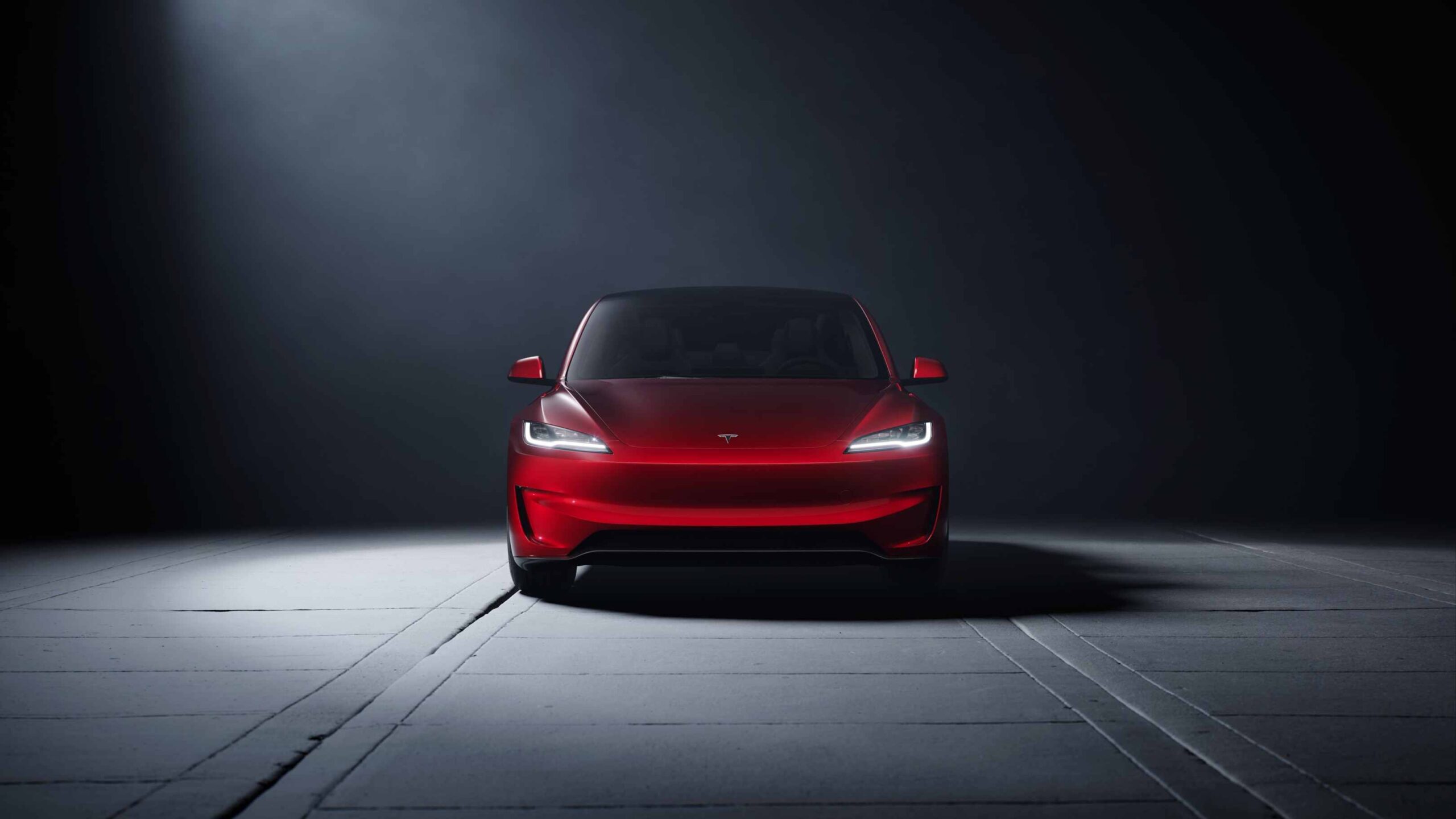
The electric vehicle (EV) revolution is no longer just about who sells the most cars—it’s about who builds them smarter, faster, and cheaper. As of Q1 2026, Tesla has entered an entirely new phase of industrial dominance. While producing 48,386 vehicles in a quarter is impressive, the real disruption lies beneath the surface: a manufacturing overhaul so radical that it challenges over 100 years of automotive tradition.
Welcome to Tesla 4.0 technology—a powerful combination of next-generation casting, revolutionary assembly processes, and advanced battery innovation. These breakthroughs are not incremental improvements. They are paradigm shifts that could render legacy manufacturing obsolete.
In this in-depth guide, we’ll explore the three core pillars of Tesla’s manufacturing revolution and how they are reshaping the global EV industry.
1. The 50,000-Ton Gigapress: Manufacturing at Unimaginable Scale
Tesla’s introduction of the 50,000-ton Gigapress marks one of the most ambitious engineering feats in automotive history. This isn’t just a bigger machine—it’s a completely new way of building cars.
Engineering the Impossible
Traditional car manufacturing involves assembling hundreds of individual metal components. Tesla has flipped that model entirely.
With 50 million kilograms of force, the Gigapress injects molten aluminum into massive molds and produces single-piece structural components in milliseconds. What once required:
- 200–300 parts
- Thousands of welds
- Multiple suppliers
…is now reduced to a single cast structure.
This is not just efficiency—it’s industrial simplification at scale.
Why This Changes Everything
1. Radical Simplification
Instead of stitching together multiple pieces, Tesla creates large unified sections, potentially even the entire underbody, in one shot. Fewer parts mean:
- Fewer defects
- Less labor
- Faster assembly
2. Supplier Elimination
By consolidating components, Tesla reduces dependence on:
- Tier-1 suppliers
- Tier-2 suppliers
- Complex logistics networks
This creates a more vertically integrated ecosystem, cutting costs dramatically.
3. Extreme Speed
At full capacity, Tesla aims to produce one vehicle every 10 seconds. That’s not just fast—it’s mass production redefined.
The Hidden Risks
However, such aggressive optimization comes with trade-offs.
- Single Point of Failure: If one Gigapress goes offline, production halts entirely.
- High Stakes Defects: Even a 1% defect rate could result in tens of thousands of unusable castings annually.
Unlike traditional manufacturing, where small errors can be corrected, this system is binary:
perfect or scrap.
2. The “Unboxed” Process: Killing the Assembly Line
For over a century, automakers relied on the moving assembly line—a system pioneered in the early 1900s. Tesla has now eliminated it entirely.
Introducing the Unboxed Process: a modular, parallel manufacturing system that cuts production costs by up to 50%.
The “Skateboard First” Philosophy
At the core of this system is the structural battery pack, also known as the “skateboard.”
Instead of building around a frame, Tesla starts with this flat base, which serves as:
- The vehicle’s floor
- The structural foundation
- The primary reference point for assembly
How the Unboxed Process Works
1. 360° Robotic Access
Traditional factories force robots to work through narrow openings like doors or windshields. Tesla eliminates this constraint.
With an open structure:
- Robots operate from above and all sides
- Automation efficiency increases by over 50%
2. Parallel Assembly Lines
Instead of building cars step-by-step, Tesla builds them simultaneously in multiple lanes.
For example:
- Rear modules get drive units
- Front modules receive steering systems
- Interior components are prepared separately
This is essentially multi-core processing for manufacturing.
3. Vertical Interior Integration
Seats, dashboards, and consoles are lowered vertically into the vehicle using gantry robots.
Benefits include:
- Zero interior damage
- Faster installation
- Reduced human intervention
Real-World Impact
This new approach compresses a 10-hour manufacturing process into just 6 hours.
That’s a 40% time reduction, with massive implications:
- Lower labor costs
- Higher output
- Faster scalability
Even more impressive, Tesla can now target a $25,000–$30,000 price point for autonomous vehicles—without sacrificing margins.
No More Paint Shops
One of the most surprising innovations?
Tesla has eliminated the paint shop entirely.
Instead of painting vehicles:
- Pre-colored panels are attached at the final stage
This removes:
- The most energy-intensive process in manufacturing
- Massive factory space requirements
- Environmental concerns tied to paint emissions
3. Third-Generation LFP Batteries: Power Meets Efficiency
Tesla’s third pillar is its shift toward third-generation Lithium Iron Phosphate (LFP) batteries—a strategic move focused on cost, durability, and scalability.
Why LFP Matters
Unlike traditional nickel-based batteries, LFP offers:
- Lower cost
- Greater thermal stability
- Longer lifespan
Tesla has also expanded its supply chain by partnering with multiple global suppliers, ensuring resilience and scalability.
Key Innovations in Gen 3 LFP
1. Prismatic Cell Design
Tesla is transitioning from cylindrical cells to rectangular prismatic cells.
Advantages include:
- Better space utilization
- Higher energy density
- More efficient packaging
2. Ultra-Fast Charging (3C Rate)
The new batteries support 3C charging speeds, enabling:
- 10% to 80% charge in ~20 minutes
This dramatically reduces downtime and enhances usability for:
- Daily commuters
- Ride-sharing fleets
- Autonomous vehicles
3. Exceptional Durability
Traditional batteries last:
- 1,000–1,500 cycles
Gen 3 LFP batteries exceed:
- 3,000 cycles
This means:
- Longer vehicle lifespan
- Lower replacement costs
- Better total cost of ownership
4. Superior Thermal Stability
LFP chemistry is inherently safer and more stable.
This allows Tesla to:
- Simplify cooling systems
- Reduce vehicle weight
- Lower manufacturing complexity
The Competitive Landscape
While Tesla’s advancements are impressive, competition is intensifying.
Some manufacturers are already pushing:
- 5.5C charging speeds
- Sub-10-minute charge times
Tesla’s strategy focuses on partnerships and scalability, ensuring it remains competitive while maintaining cost efficiency.
Conclusion: Tesla Is Rewriting the Rules of Manufacturing
Tesla is no longer just building electric vehicles—it is reinventing how they are made.
By combining:
- Gigantic single-piece casting
- Parallel modular assembly
- Durable, cost-efficient battery systems
Tesla has created a manufacturing ecosystem that is:
- Faster
- Cheaper
- More scalable
Traditional automakers, with their legacy factories and rigid systems, face a massive challenge. Retrofitting old infrastructure to match Tesla’s innovations is not just difficult—it may be physically impossible.
This is not an evolution. It’s a reset.
The companies that adapt will survive. The ones that don’t risk becoming irrelevant in a world where cars are no longer assembled—they are engineered at scale with precision and speed never seen before.
Final Thoughts
The future of the EV industry won’t be decided by design or branding alone. It will be determined by manufacturing intelligence.
And right now, Tesla isn’t just leading—it’s changing the game entirely.
FAQs
1. What is Tesla 4.0 technology?
Tesla 4.0 technology refers to the company’s next-generation manufacturing system that combines Gigapress casting, the Unboxed assembly process, and Gen 3 LFP batteries to produce vehicles faster, cheaper, and at massive scale.
2. What is the 50,000-ton Gigapress?
The 50,000-ton Gigapress is an advanced casting machine that uses extreme pressure to form large sections of a vehicle’s structure in a single piece, replacing hundreds of smaller parts.
3. How does the Gigapress improve manufacturing efficiency?
It reduces:
- The number of parts
- Welding requirements
- Production time
This leads to lower costs, faster production, and fewer defects.
4. What are the risks of using Gigapress technology?
The main risks include:
- Single point of failure if the machine stops working
- High material waste if defects occur
- Expensive maintenance and downtime
5. What is Tesla’s “Unboxed” process?
The Unboxed process is a parallel manufacturing system where different parts of a vehicle are built simultaneously instead of sequentially on a traditional assembly line.
6. How is the Unboxed process different from traditional assembly lines?
Unlike traditional systems:
- Cars are not built step-by-step
- Multiple sections are assembled at the same time
- Robots have 360-degree access, increasing efficiency
7. What is the “skateboard” platform in Tesla vehicles?
The skateboard platform is the structural battery pack that forms the base of the vehicle, acting as the foundation for all other components.
8. How much cost reduction does the Unboxed process provide?
Tesla claims the Unboxed system can reduce manufacturing costs by up to 50%, making EVs more affordable.
9. Why is Tesla eliminating paint shops?
Paint shops are:
- Energy-intensive
- Expensive
- Space-consuming
Tesla replaces them with pre-colored panels, improving efficiency and sustainability.
10. What are third-generation LFP batteries?
These are advanced Lithium Iron Phosphate batteries designed for:
- Lower cost
- Longer lifespan
- Improved safety
11. How fast can Tesla’s new LFP batteries charge?
They support 3C charging, allowing:
- 10% to 80% charge in about 20 minutes
12. How long do Gen 3 LFP batteries last?
They can last over 3,000 charge cycles, which is significantly longer than traditional batteries.
13. Are LFP batteries safer than other battery types?
Yes, LFP batteries are:
- More thermally stable
- Less prone to overheating
- Safer in extreme conditions
14. How does Tesla’s manufacturing compare to traditional automakers?
Tesla’s system is:
- More automated
- Less dependent on suppliers
- Faster and more scalable
Traditional automakers still rely on complex assembly lines and legacy infrastructure.
15. Can other car manufacturers replicate Tesla’s technology?
It is extremely difficult because:
- Existing factories are not designed for these processes
- Upgrading would require massive investment and redesign
- Tesla has a significant first-mover advantage
16. What does this mean for the future of the EV industry?
Tesla’s innovations could:
- Lower EV prices globally
- Accelerate EV adoption
- Force competitors to rethink manufacturing
Ultimately, the industry may shift toward simpler, faster, and highly automated production systems.
Read More:
- Tesla just unlocked sales to 50,000+ government agencies
- Why SpaceX just made a $60 billion bet on AI coding ahead of historic IPO
- Tesla Earnings: financial expectations and what we should to hear about
- SpaceX is following in Tesla’s footsteps in a way nobody expected
- SpaceX’s Crazy Upgrades on Starship V3 heat shield to Reach Orbit and Beat 1500 °C Re-entry
1 thought on “3 NEW INSANE 4.0 Tesla Tech Destroys ALL EVs Industry”