
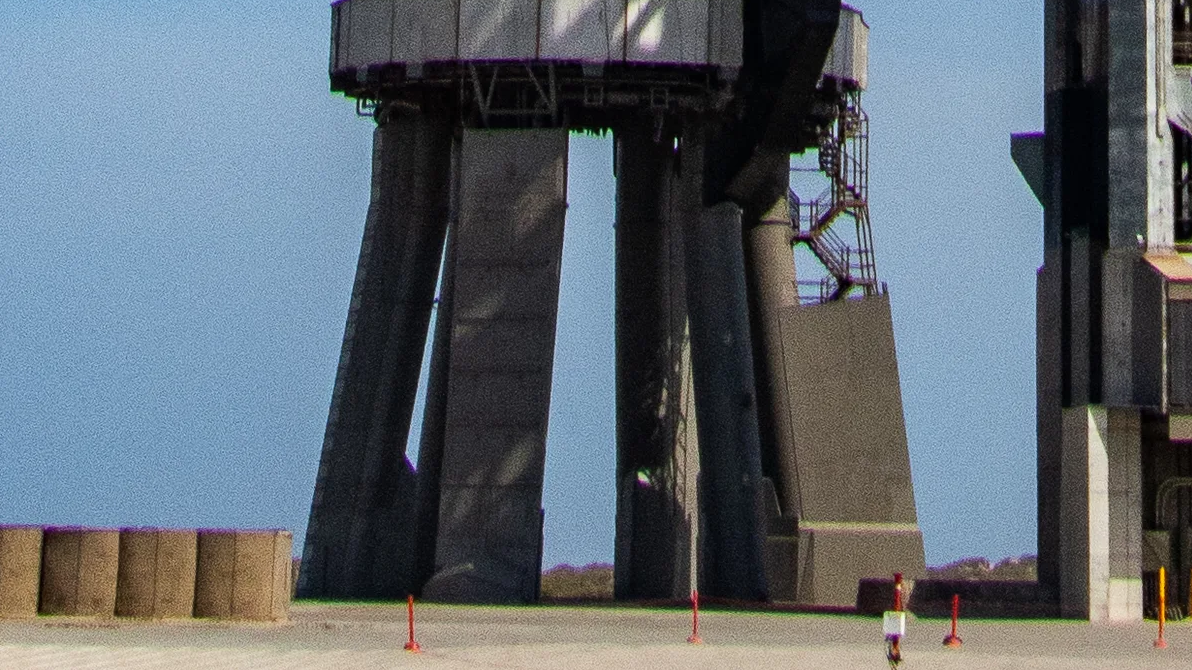
SpaceX Is READY For Starship Go Orbit! Flight 15 & 16 Launch Dates Even Crazier: SpaceX’s Starship program is entering a new phase where the biggest challenge is no longer simply proving that the rocket can fly. The focus is increasingly shifting toward launch cadence, rapid turnaround, and operational infrastructure. A successful Wet Dress Rehearsal for Starship Flight 14 has highlighted how SpaceX is preparing its next missions, while potential schedules for Flight 15 and Flight 16 point toward an unusually aggressive sequence.
According to the supplied source, Flight 14 involves Booster 21 (B21) and Ship 41 (S41), with potential follow-up missions only weeks apart.
Starship Flight 14 Moves Toward Launch
A Critical Wet Dress Rehearsal
SpaceX recently completed a Wet Dress Rehearsal (WDR) for the Flight 14 vehicle stack. The test involved Super Heavy Booster 21 and Ship 41, giving engineers an opportunity to simulate key launch procedures without actually igniting the Raptor engines.
During the rehearsal, the chopstick arms moved away from the vehicle, while the Quick Disconnect arm remained connected as the primary umbilical interface. Cryogenic propellant loading then began, filling the massive rocket with liquid methane and liquid oxygen.
One of the most interesting details was the reported approximately 30-minute fueling window. Full propellant loading was achieved by around 10:41 AM, demonstrating the kind of rapid fueling operation SpaceX wants to develop for future high-frequency launches.
At the same time, engine chill procedures were conducted to prepare the propulsion system for cryogenic conditions. The rehearsal eventually concluded with a check of the launchpad’s water-deluge system.
This type of testing is important because Starship’s future depends not only on having a powerful vehicle, but also on making the entire launch system increasingly repeatable and efficient.
Flight 15 Could Follow Shockingly Fast
Potential October 19 Target
The supplied FAA planning information points toward an ambitious schedule for Starship Flight 15.
According to the source, Flight 14 is targeted for late September, while Flight 15 is listed with a potential target date of October 19 from Starbase, Texas. That would create a turnaround of roughly 21 days between the two missions.
For a vehicle as large and complex as Starship, such a schedule would represent a major emphasis on rapid processing.
Instead of treating every flight as a completely separate engineering campaign, SpaceX is working toward a model where lessons from one mission can quickly feed into the next.
Why Rapid Turnaround Matters
The significance of a short turnaround extends beyond simply launching more rockets.
A high launch cadence could allow SpaceX to:
- Gather more flight data
- Test hardware changes faster
- Identify problems earlier
- Improve launch infrastructure
- Develop reusable operations
- Increase confidence in future missions
The source describes the Flight 15 target as a potential rapid turnaround of about 21 days after Flight 14, which would push Starship operations toward a much faster rhythm.
Flight 16 Could Push the Schedule Even Further
October 30 Starlink Mission
The proposed Flight 16 timeline is even more ambitious.
The supplied planning table identifies Starlink 30-1, designated as Flight 16, with Booster 23 and Ship 43. Its potential target date is listed as October 30, with either LC-39A in Florida or Starbase identified as a possible launch location. The mission could potentially involve an initial Starlink payload deployment.
That would place Flight 16 only about 11 days after the proposed Flight 15 date.
If such a sequence were achieved, it would represent a dramatic change in the operational rhythm of the Starship program.
The supplied sequence can therefore be summarized as:
Flight 14 → Flight 15 → Flight 16
Late September → October 19 → October 30
The source specifically describes the possibility of approximately 21 days between Flights 14 and 15 and roughly 11 days between Flights 15 and 16.
The Biggest Challenge: Starship Turnaround
Texas and Florida Could Become Part of One System
A major feature of the proposed Flight 16 schedule is the possibility of using Launch Complex 39A in Florida alongside Starbase in Texas.
Operating across two launch locations could theoretically help SpaceX separate missions geographically and create more flexibility in its launch schedule. The supplied source notes that a dual-site operation could potentially allow launches to be spaced only 11 days apart.
However, this does not mean the schedule is guaranteed.
Flight 16 hardware, including Ship 43 and Booster 23, still requires important testing. The source specifically identifies cryogenic proofing and static-fire testing as remaining requirements, with Texas facilities playing an important role before hardware could potentially move to Florida.
That creates a complicated logistics challenge.
Starship Is Becoming an Operations Problem
From Rocket Development to Launch Infrastructure
The evolution of Starship can be viewed as a transition from proving the basic vehicle to developing an entire launch ecosystem.
The rocket must be manufactured, transported, tested, fueled, launched, recovered or processed, inspected, and prepared for another mission. Every stage introduces potential delays.
That means the long-term challenge is not simply building a bigger rocket.
It is building a system capable of supporting frequent launches.
The completed Flight 14 Wet Dress Rehearsal is therefore significant because it demonstrates progress in the supporting infrastructure as well as the rocket itself. The source identifies the program’s major bottleneck as operational cadence—how quickly SpaceX can test, process, and launch consecutive missions.
What Flight 15 and Flight 16 Could Mean
If the proposed dates materialize, SpaceX would be attempting to compress multiple Starship missions into a remarkably short period.
Flight 15 would demonstrate whether the company can achieve a roughly three-week turnaround following Flight 14.
Flight 16 would then test whether that cadence can become even faster, while potentially introducing Starlink payload deployment and greater involvement from launch infrastructure outside Texas.
The important point is that these dates should be viewed as potential targets rather than guaranteed launch dates. Hardware readiness, regulatory requirements, testing, weather, range availability, and pad operations can all affect launch schedules.
The Bigger Starship Vision
Building Toward High-Frequency Spaceflight
SpaceX’s broader Starship strategy requires more than successful individual launches. The vehicle is intended to become part of a high-frequency transportation system, and that requires infrastructure capable of supporting repeated missions.
The Flight 14 rehearsal provides a glimpse into this direction. The approximately 30-minute fueling process, integrated engine chill operations, and launchpad procedures all contribute to a system designed around repeatability.
The potential Flight 15 and Flight 16 schedule takes that concept even further.
Instead of waiting months between major missions, SpaceX is exploring a future where Starship flights could occur within weeks—or potentially days—of one another.
That would fundamentally change the amount of flight data the program could generate and the speed at which engineers could iterate on the vehicle.
Conclusion
Starship Flight 14 represents more than another launch attempt. The completed Wet Dress Rehearsal demonstrates that SpaceX is continuing to develop the infrastructure needed for increasingly complex operations.
Meanwhile, the potential October 19 Flight 15 and October 30 Flight 16 targets reveal just how aggressive the future launch cadence could become.
The most important development may ultimately be the transition from individual test flights toward a repeatable launch operation. If SpaceX can shorten processing times, coordinate multiple launch sites, complete testing efficiently, and support payload missions, Starship could move closer to the high-frequency launch architecture envisioned for the program.
For now, the dates remain potential targets, but the direction is clear: SpaceX is working to make Starship not just a giant rocket that can fly, but a system capable of flying again and again at an increasingly rapid pace.
FAQs
1. What is SpaceX Starship Flight 14?
Starship Flight 14 is the mission involving Super Heavy Booster 21 (B21) and Ship 41 (S41). The supplied source describes it as the next major step in SpaceX’s Starship testing program.
2. What is a Wet Dress Rehearsal?
A Wet Dress Rehearsal (WDR) is a launch countdown simulation in which the rocket is loaded with propellant and launch procedures are practiced, but the engines are not ignited.
3. Did SpaceX complete the Flight 14 Wet Dress Rehearsal?
Yes. The supplied material states that SpaceX completed a Flight 14 WDR involving Booster 21 and Ship 41. The rehearsal included propellant loading, engine chill operations, and launchpad-system checks.
4. How quickly was Starship reportedly fueled during the rehearsal?
The source reports that full propellant loading was achieved in approximately 30 minutes, with loading beginning around 10:08 AM and reaching full load around 10:41 AM.
5. What propellants does Starship use?
The supplied source identifies liquid methane and liquid oxygen as the cryogenic propellants loaded into the Starship stack during the rehearsal.
6. When could Starship Flight 14 launch?
The source lists late September as the potential target period for Flight 14 from Starbase, Texas. It should be treated as a potential schedule rather than a guaranteed launch date.
7. When is Starship Flight 15 potentially scheduled?
The supplied FAA planning information lists October 19 as a potential target date for Flight 15 at Starbase, Texas.
8. How soon could Flight 15 follow Flight 14?
The proposed schedule places Flight 15 approximately 21 days after Flight 14, representing a particularly aggressive potential turnaround for the Starship program.
9. What is Starship Flight 16?
The source identifies Flight 16 as Starlink 30-1, involving Booster 23 (B23) and Ship 43 (S43). It could potentially include an initial Starlink payload deployment.
10. When could Starship Flight 16 launch?
The supplied planning information lists October 30 as a potential target date for Flight 16. Possible launch locations identified are LC-39A in Florida or Starbase, Texas.
11. Could Flight 16 launch only 11 days after Flight 15?
According to the potential schedule in the source, yes. Flight 15 is listed for October 19 and Flight 16 for October 30, creating a possible 11-day interval.
12. Why is a rapid Starship launch cadence important?
The source identifies operational cadence as an increasingly important challenge for Starship. Faster testing and processing could allow SpaceX to conduct consecutive missions and gather flight data more rapidly.
13. Could SpaceX use both Texas and Florida for Starship launches?
The supplied material identifies a potential dual-site operation, using Starbase in Texas and Launch Complex 39A in Florida. Such an arrangement could provide additional operational flexibility.
14. What testing is still required for Flight 16 hardware?
The source states that Ship 43 and Booster 23 still require cryogenic proofing and static-fire testing. It also notes that Texas testing facilities remain important before potential transportation to Florida.
15. Is the October 19 Flight 15 date guaranteed?
No. The supplied material presents October 19 as a potential target from FAA planning information. Actual launch timing can depend on hardware readiness, testing, infrastructure, regulatory requirements, and other operational factors.
16. What is the bigger goal behind the Flight 15 and Flight 16 schedule?
The source frames the rapid sequence as part of SpaceX’s effort to move Starship toward high-frequency launch operations and multi-site capabilities. The potential schedule illustrates a shift from isolated test flights toward increasingly rapid mission processing.
Read More:
- Google just picked SpaceX for its first step into orbital AI
- SpaceX readies Starship Flight 14 for a historic journey into uncharted territory
- Tesla Full Self-Driving release in the EU gets delayed
- All New Tesla Roadster 2.0 Flying, Huge Specs! Elon Musk Reveals
- The Boring Company’s New Hyperloop Is INSANE