
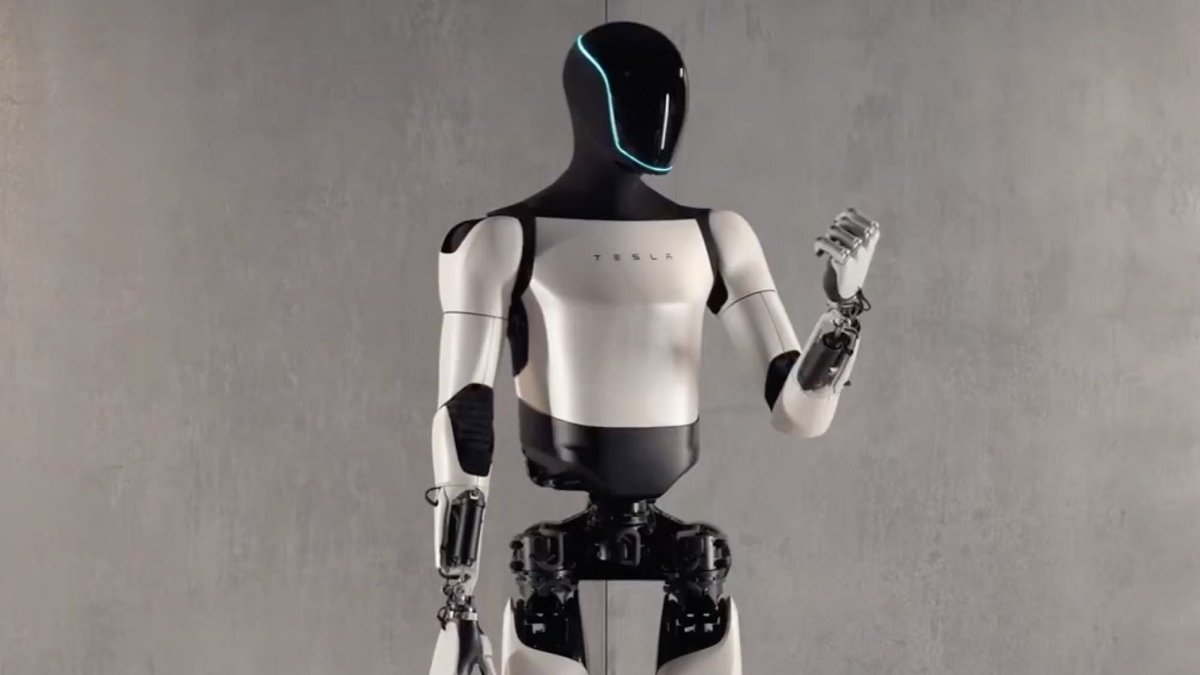
Tesla Optimus Gen 3 2027 LEAKED Amazing Design, It’s Eye-Opening: The Tesla Optimus Gen 3 is shaping up to be one of the most ambitious developments in humanoid robotics. What began as an experimental robot platform has increasingly moved toward a machine designed for practical industrial work. Reported details surrounding the next-generation Optimus suggest a major redesign focused on manufacturing efficiency, mechanical dexterity, artificial intelligence, and energy efficiency.
While many details remain unconfirmed and should be treated as reported or expected specifications rather than official production specifications, the proposed Gen 3 architecture provides an intriguing look at where Tesla’s humanoid robot program could be heading.
Tesla Optimus Gen 3 Design: A Major Visual Transformation
Earlier Optimus prototypes were clearly engineering machines. Exposed components, visible wiring, bulky joints, and experimental mechanical structures were useful during rapid development but would be difficult to accept in a large-scale commercial product.
The reported Optimus Gen 3 design represents a different philosophy: make the robot look and function more like a finished product.
Fully Enclosed Humanoid Body
One of the most noticeable changes is the move toward a fully enclosed outer shell. Instead of exposing much of the internal mechanical architecture, Gen 3 is expected to use smooth body panels surrounding its motors, wiring, sensors, and other components.
This approach could have several advantages. A sealed exterior can provide additional protection against dust, debris, and accidental contact, while also creating a safer surface for robots operating alongside humans.
The redesign could also improve manufacturability by allowing Tesla to standardize exterior components and simplify the assembly process.
Slimmer Arms and Legs
Another reported improvement is significantly slimmer limb geometry.
Reducing the mass of the arms and legs can be extremely important in a humanoid robot. Heavy limbs require more torque to accelerate, decelerate, and change direction. By reducing rotational inertia, engineers can potentially improve walking efficiency while making movements quicker and smoother.
For an industrial robot, this could translate into faster pick-and-place operations, improved balance, and lower energy consumption.
Advanced Hands Could Be the Biggest Upgrade
Walking is impressive, but human-like manipulation may ultimately determine how useful a general-purpose humanoid robot becomes.
Factories contain countless objects that vary in shape, weight, texture, and fragility. A robot needs to handle everything from heavy components to tiny fasteners without damaging them.
More Degrees of Freedom
The reported Optimus Gen 3 hands are expected to provide greater movement capability through increased degrees of freedom (DoF).
More independently controlled joints can allow the robot to perform sophisticated grips, including pinch grips, power grips, and lateral grasps.
This is particularly important for manufacturing environments where robots may need to manipulate tools, packaging, cables, components, and other irregular objects.
Tendon-Driven Actuation
A particularly interesting concept is the use of tendon-driven mechanisms.
Instead of placing large motors directly inside every finger, some actuation hardware can be positioned farther up the arm while flexible tendons transmit force to the fingers. This can potentially create slimmer and lighter hands.
The result could be faster finger movement and improved dexterity without making the hands excessively heavy.
Tactile Sensors
Vision alone is not enough for delicate manipulation. A robot also needs to understand how much force it is applying.
Reported tactile and force sensing improvements could allow Optimus to distinguish between holding a fragile object and gripping a heavy tool.
That kind of feedback could become essential for tasks involving glass, electronics, packaging, wiring, and other objects that require precise handling.
AI5 and the Optimus Robot’s Artificial Intelligence
A sophisticated mechanical body requires an equally sophisticated control system.
The reported AI5 compute architecture could provide Optimus with significantly greater onboard processing capability for vision, neural-network inference, motion planning, and motor control.
Vision-Based End-to-End Control
Tesla has emphasized neural-network-based perception in its automotive systems, and a similar philosophy could be applied to Optimus.
Instead of programming every possible movement manually, an advanced neural network can learn relationships between visual input, environmental conditions, and physical actions.
A simplified control loop would look something like this:
Cameras → Visual Understanding → Neural Network → Motion Planning → Motor Commands
This architecture could allow Optimus to react dynamically rather than simply repeating predetermined movements.
Real-Time Environmental Awareness
Imagine a robot carrying a box when another object suddenly falls in front of it. A sufficiently capable control system needs to recognize the obstacle, adjust its balance, modify its trajectory, and continue the task.
That requires extremely fast processing.
Reported Gen 3 architecture concepts therefore emphasize onboard AI computation, reducing dependence on remote processing for fundamental robotic movements.
Battery Life Could Determine Commercial Success
A humanoid robot can have incredible mechanical capabilities, but limited battery life would severely restrict its usefulness.
According to the supplied projections, Gen 3 could move toward a 2.5–3.0 kWh high-density battery system, compared with the approximately 2.3 kWh pack associated with Gen 2 in the reported specifications.
The bigger goal is not simply increasing battery capacity. Tesla would also need to reduce energy consumption across the entire robot.
Toward Full-Shift Operation
Reported targets suggest approximately 6–8+ hours of active operation could be possible with improvements to motor efficiency, computing, and power management.
Dynamic power states could allow motors and computing hardware to reduce consumption when full performance is unnecessary.
An autonomous charging system could further reduce downtime by allowing Optimus to return to a charging station without human intervention.
For factories, this could be critical because robot uptime directly affects economic value.
Tesla Optimus Gen 3 and Mass Production
The biggest challenge may not be building one impressive robot. It will be building thousands or millions of reliable robots at an affordable cost.
Tesla already operates a large-scale manufacturing ecosystem involving batteries, electric motors, power electronics, casting, software, and automated production.
If Optimus can use elements of this existing industrial infrastructure, Tesla could potentially reduce manufacturing complexity.
The $20,000–$30,000 Target
Reported expectations have placed a potential future Optimus price in the $20,000–$30,000 range.
However, a target price is not the same as a confirmed retail price. Achieving such a figure would require enormous production volumes, reliable components, efficient assembly, and years of engineering validation.
The economic argument behind humanoid robots depends heavily on these factors.
Tesla Factories as a Testbed
Tesla’s own factories could provide an important environment for Optimus development.
Instead of immediately deploying robots everywhere, Tesla could gradually introduce them to controlled tasks such as moving components, transporting parts, sorting materials, and supporting manufacturing operations.
Real factory environments would generate valuable data while exposing mechanical weaknesses that may not appear during laboratory testing.
Why Optimus Gen 3 Could Be Important
The significance of Gen 3 extends beyond its appearance.
A successful general-purpose humanoid robot would combine mechanical engineering, artificial intelligence, computer vision, battery technology, manufacturing, and autonomous control into one platform.
The reported design changes suggest Tesla is attempting to move Optimus from an experimental prototype toward a potentially scalable industrial product.
That transition is extremely difficult. Robots must survive millions of repeated movements, maintain accuracy, operate safely around people, and remain economically useful.
The Road Ahead for Tesla Optimus
The reported Tesla Optimus Gen 3 architecture presents an ambitious vision of what a production-oriented humanoid robot could become.
A fully enclosed body, lighter limbs, advanced tendon-driven hands, tactile sensing, powerful onboard AI, improved battery technology, and autonomous charging could collectively transform Optimus into a far more capable machine.
However, leaked or reported specifications should not be confused with confirmed Tesla production specifications. The final hardware, software capabilities, pricing, and production timeline could change substantially as development continues.
If Tesla can successfully solve the remaining challenges of reliability, safety, manufacturing cost, battery endurance, and autonomous manipulation, Optimus could become an important platform in the broader development of general-purpose robotics.
The most eye-opening aspect of Gen 3 may therefore not simply be its sleek new design. It is the possibility of a humanoid robot engineered from the beginning with mass production and real-world work in mind.
FAQs
1. What is the Tesla Optimus Gen 3?
The Tesla Optimus Gen 3 is the reported next-generation version of Tesla’s humanoid robot platform. It is expected to feature improvements in design, mobility, hands, artificial intelligence, battery efficiency, and manufacturing.
2. When will Tesla Optimus Gen 3 be released?
Tesla has not publicly confirmed a definitive Optimus Gen 3 release date. Reported timelines should therefore be treated as expectations rather than confirmed production schedules.
3. What does the Optimus Gen 3 design look like?
Reported design details describe a sleeker, slimmer, and more fully enclosed humanoid robot compared with earlier prototypes. The redesigned exterior is intended to protect internal components while creating a more production-oriented appearance.
4. Will Optimus Gen 3 have better hands?
The reported Gen 3 architecture includes more advanced robotic hands, potentially featuring additional degrees of freedom, tendon-driven mechanisms, and tactile sensing for more precise manipulation.
5. What are tendon-driven actuators in Optimus Gen 3?
Tendon-driven actuation uses flexible mechanical elements to transfer force from motors positioned farther up the arm to the fingers. This approach can help create lighter, slimmer, and more agile robotic hands.
6. Will Tesla Optimus Gen 3 have tactile sensors?
Reported specifications suggest that Gen 3 could incorporate force and tactile sensors in the fingers. These sensors could help the robot determine how much pressure it needs when handling objects.
7. What AI chip could Optimus Gen 3 use?
The supplied Gen 3 architecture points toward Tesla’s AI5 compute platform for onboard artificial-intelligence processing. However, specific production hardware specifications have not been officially confirmed.
8. How will Optimus Gen 3 use artificial intelligence?
Optimus is designed around computer vision and neural-network-based control. The robot can potentially use camera input to understand its surroundings and generate appropriate movements instead of relying entirely on manually programmed motions.
9. How long could Optimus Gen 3 operate on one charge?
Reported projections suggest a potential 6–8+ hours of active operation, although actual runtime would depend on the workload, movement intensity, computing requirements, and final battery configuration.
10. What battery could Optimus Gen 3 use?
The reported architecture suggests a high-density battery pack of approximately 2.5–3.0 kWh. These figures remain expected specifications rather than confirmed final production numbers.
11. Could Optimus Gen 3 charge itself?
One reported goal is autonomous charging, potentially using a dedicated charging pad. Such a system could allow Optimus to recharge without requiring a worker to manually connect a cable.
12. How much could Tesla Optimus Gen 3 cost?
Reported target pricing has been discussed in the $20,000–$30,000 range, but Tesla has not confirmed a final consumer or commercial price for Gen 3.
13. Where could Tesla use Optimus Gen 3 first?
Tesla could potentially deploy humanoid robots in its own manufacturing facilities for controlled tasks such as moving components, sorting materials, transporting parts, and supporting production operations.
14. Why is Optimus Gen 3 important for humanoid robotics?
The reported Gen 3 improvements focus on several major robotics challenges simultaneously: dexterity, mobility, AI control, energy efficiency, safety, and manufacturability. Solving these challenges is important for making general-purpose humanoid robots practical at scale.
15. Is the Tesla Optimus Gen 3 information officially confirmed?
Not all reported Gen 3 specifications are officially confirmed by Tesla. Details involving the AI5 chip, battery capacity, runtime, pricing, and production configuration should be considered reported or expected information until Tesla formally announces them.
Read More:
- Google just picked SpaceX for its first step into orbital AI
- SpaceX readies Starship Flight 14 for a historic journey into uncharted territory
- Tesla Full Self-Driving release in the EU gets delayed
- All New Tesla Roadster 2.0 Flying, Huge Specs! Elon Musk Reveals
- The Boring Company’s New Hyperloop Is INSANE