
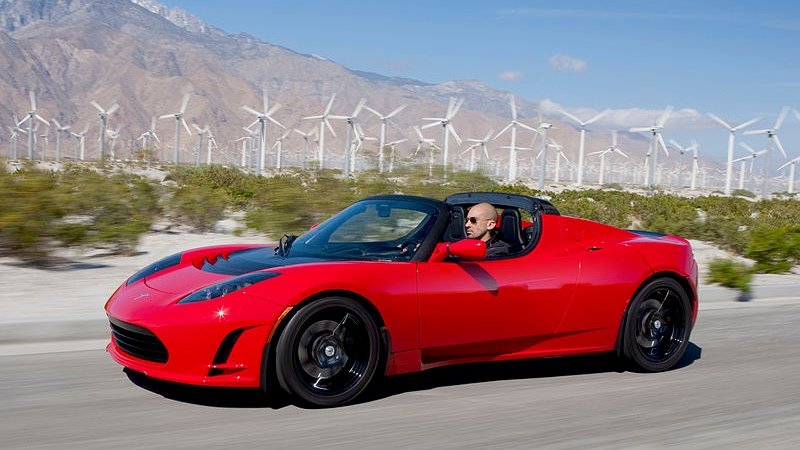
All New Tesla Roadster 2.0 Flying, Huge Specs! Elon Musk Reveals: The Tesla Roadster 2.0 has been one of the most anticipated performance cars since Tesla unveiled its second-generation Roadster in 2017. At the time, its proposed specifications sounded almost unbelievable: 0–60 mph in 1.9 seconds, a top speed above 250 mph, and approximately 620 miles of range.
Years of delays have followed, but the latest Roadster concept described in the supplied material could represent something considerably more ambitious than another electric hypercar. Instead of simply increasing motor power, Tesla is reportedly exploring a way to overcome one of the most fundamental limitations affecting extremely fast cars: tire-to-road traction.
The result could be an extraordinary combination of electric vehicle technology and SpaceX-inspired propulsion, potentially allowing the Roadster to generate thrust beyond what its tires alone can provide.
Tesla Roadster 2.0 Could Challenge the Laws of Traction
Modern electric hypercars have already demonstrated astonishing acceleration. Vehicles such as the Rimac Nevera, BYD Yangwang U9, and Xiaomi SU7 Ultra show how electric motors can deliver enormous performance.
But there is a fundamental problem.
The Tire Friction Limit
No matter how powerful an electric motor becomes, acceleration through the wheels ultimately depends on the amount of grip between rubber tires and asphalt. Once available traction is exceeded, additional motor torque does not necessarily translate into faster acceleration. Instead, the tires can begin to spin, forcing traction-control systems to intervene.
This creates a fascinating engineering bottleneck.
A simplified traditional EV acceleration system looks like this:
Battery → Electric Motors → Wheels → Tires → Asphalt
The tires effectively become the final bottleneck.
Tesla’s proposed solution, according to the supplied source, is to add another force directly to the vehicle: cold-gas thrust.
SpaceX Package Could Give the Roadster Extra Thrust
The most dramatic part of the Roadster concept is the proposed SpaceX package. Rather than relying exclusively on tire-generated traction, the system described in the source would use compressed cold-gas thrusters integrated into the vehicle.
Unlike conventional rocket engines, cold-gas propulsion does not burn fuel to create thrust. Instead, highly compressed gas is released through specialized nozzles.
How Cold-Gas Thrusters Could Work
The supplied material describes several possible applications:
- Horizontal thrust: Additional forward force could assist acceleration and potentially target a sub-one-second 0–60 mph time.
- Vector control: Rapidly controlled thrust could potentially assist cornering and braking.
- Vertical force: Downward-directed thrust could generate short bursts of vertical force, potentially lifting or unloading the vehicle momentarily.
This would make the Roadster fundamentally different from a conventional electric hypercar.
Instead of asking the tires to deliver all acceleration, the concept combines mechanical wheel torque with pneumatic thrust.
The Texas Airspace Clue
Another intriguing detail in the supplied source involves SpaceX’s McGregor facility in Texas.
The material describes a Temporary Flight Restriction around the facility extending from ground level to 10,000 feet MSL, with a listed radius of approximately 1.5 nautical miles and a timeframe running from mid-September into early October. The source connects the restriction with a planned October 1 Roadster unveiling event.
The source interprets the unusual airspace restriction as potentially consistent with demonstrations involving vertical bursts, high-pressure impulse systems, or short-duration airborne behavior.
However, an airspace restriction by itself does not establish exactly what Tesla or SpaceX would demonstrate. Its significance depends on the actual activities taking place at the facility.
Huge Tesla Roadster Battery and Range
Performance is only one part of the Roadster story.
The supplied material describes a potential 200 kWh battery pack associated with a target of approximately 620 miles of range.
A battery this large could provide substantial energy capacity, but it also creates an engineering trade-off.
The Weight Problem
Battery capacity comes with mass. A heavier vehicle can experience disadvantages in areas such as:
- Handling
- Braking
- Energy efficiency
- Acceleration dynamics
Adding the SpaceX propulsion hardware introduces another challenge. High-pressure tanks, pneumatic plumbing, valves, mounting structures, and safety systems could add additional weight.
That creates one of the Roadster’s biggest engineering paradoxes: Tesla would need enough hardware to produce extraordinary performance without allowing that hardware to undermine the vehicle’s basic dynamics.
Tesla Roadster vs. SpaceX Package
The source describes two broad Roadster configurations.
Standard Roadster
The base version is presented as a tri-motor all-wheel-drive electric vehicle intended for conventional road use. Its focus would include extreme acceleration, high top speed, and long-distance range.
SpaceX Package Roadster
The more radical configuration would incorporate cold-gas thrusters and associated high-pressure equipment. Because of potential concerns involving noise, high-pressure gas discharge, and safety requirements, the source suggests that this version could be restricted to private tracks or controlled events.
This distinction is important because the most spectacular Roadster claims may not necessarily describe a vehicle that can perform every maneuver on an ordinary public road.
How the Roadster Compares With New Electric Hypercars
The competitive environment has changed dramatically since Tesla introduced the Roadster concept.
The Rimac Nevera has demonstrated extraordinary electric acceleration and established itself as a production performance benchmark. The BYD Yangwang U9 has explored advanced active suspension capabilities, including dynamic vertical movement. Meanwhile, the Xiaomi SU7 Ultra demonstrates how rapidly newer manufacturers are entering the high-performance EV market.
This means the Roadster cannot simply arrive with another powerful electric drivetrain and expect the same level of technological differentiation it had in 2017.
The proposed SpaceX-inspired propulsion system is therefore central to the concept’s identity.
Why Tesla Roadster 2.0 Could Be So Different
The biggest idea behind the new Roadster isn’t simply horsepower.
It is the possibility of combining automotive propulsion with aerospace-style thrust.
Traditional EVs transfer energy from the battery to electric motors, then through the wheels and tires into the road. The proposed Roadster adds another pathway: compressed gas producing force directly through the vehicle.
That could theoretically allow Tesla to explore performance beyond the conventional limits of tire traction.
At the same time, significant engineering questions remain around weight, structural loads, safety, thermal management, pressure systems, control software, and regulatory requirements.
The Future of the Tesla Roadster
The second-generation Roadster began as a promise to redefine electric-car performance. Nearly a decade later, the concept described in the source suggests Tesla may be pursuing a much more unusual direction.
A tri-motor electric drivetrain, long-range battery, advanced control systems, and a potential SpaceX cold-gas propulsion package would represent an unusual convergence of automotive and aerospace engineering.
If the technology can be engineered safely and reliably, the Roadster could demonstrate a new approach to high-performance vehicle dynamics.
For now, however, the most extreme capabilities described—including sub-one-second acceleration and airborne or hovering behavior—should be treated as targets or concepts presented in the supplied material rather than established production specifications.
The Tesla Roadster 2.0 remains a fascinating example of how electric vehicles could evolve beyond simply adding more motors and larger batteries. Its most important innovation may ultimately be the attempt to move beyond the traditional traction limit itself.
FAQs
1. What is the Tesla Roadster 2.0?
The Tesla Roadster 2.0 is Tesla’s second-generation electric sports car, originally unveiled in 2017. The source describes ambitious targets including 0–60 mph in 1.9 seconds, a top speed above 250 mph, and approximately 620 miles of range.
2. How fast could the new Tesla Roadster be?
The original target was 0–60 mph in 1.9 seconds, while the proposed SpaceX package described in the source targets less than one second for 0–60 mph.
3. What is the SpaceX package for the Tesla Roadster?
The SpaceX package is described as an optional system incorporating compressed cold-gas thrusters to provide additional thrust beyond conventional wheel-driven acceleration.
4. How would the Roadster’s cold-gas thrusters work?
According to the source, high-pressure composite tanks would release compressed gas through specialized nozzles. The resulting thrust could provide additional horizontal, directional, or vertical force.
5. Why does Tesla need thrusters if the Roadster already has powerful electric motors?
The source identifies tire friction as a fundamental acceleration limit. Once tire grip is exceeded, additional motor torque can cause wheelspin rather than additional forward acceleration.
6. Could the Tesla Roadster actually fly?
The supplied material describes the possibility of short-duration vertical thrust or momentary lifting, but it does not establish that the production Roadster will function as a conventional flying car.
7. What battery size is associated with the Roadster?
The source describes a potential approximately 200 kWh battery pack, associated with an estimated range target of around 620 miles.
8. Will the SpaceX package make the Roadster heavier?
It could. The source identifies high-pressure tanks, pneumatic lines, valves, and structural reinforcement as additional hardware that would add weight to the vehicle.
9. What is the Tesla Roadster’s expected top speed?
When the second-generation Roadster was unveiled, Tesla presented a target of more than 250 mph. The supplied source does not provide a newer confirmed production top-speed figure.
10. Could the SpaceX Roadster be street legal?
The source distinguishes between a street-oriented Roadster and a more extreme SpaceX package. It suggests that the thruster-equipped configuration could face restrictions because of high-pressure discharge, acoustic, and safety considerations.
11. Why is the Texas airspace restriction significant?
The supplied material describes a Temporary Flight Restriction around SpaceX’s McGregor, Texas facility, extending from ground level to 10,000 feet MSL. The source connects this with the possibility of controlled propulsion demonstrations, although the restriction itself does not prove what demonstration would occur.
12. How does the Roadster compare with the Rimac Nevera?
The source identifies the Rimac Nevera as a production electric hypercar with significant acceleration achievements. The Roadster concept seeks differentiation through its proposed combination of electric motors and cold-gas thrust.
13. What other electric hypercars are mentioned in the source?
The source references the Rimac Nevera, BYD Yangwang U9, and Xiaomi SU7 Ultra when discussing the rapidly developing electric-performance market.
14. What makes the Tesla Roadster 2.0 different from a normal EV?
Its proposed combination of tri-motor electric propulsion and pneumatic cold-gas thrust is the key difference. Rather than relying entirely on tire-generated traction, the concept introduces another method of producing force.
15. Is the Tesla Roadster 2.0’s extreme performance officially confirmed?
The source presents several figures and capabilities as targets, concepts, or proposed configurations, including sub-one-second acceleration and vertical thrust. They should therefore not automatically be treated as confirmed production specifications.
Read More:
- Tesla Optimus Gen 3 shows off a cleaner, factory-ready design in new app discovery
- Tesla App now shows you what your Supercharger will look like upon arrival
- Tesla leaks Semi customers ahead of handover event
- Tesla Cybercab gets initial tie-in to localized, in-house cathode plant
- New Tesla Semi Mass Production Line LEAKED CHANGE Everything