
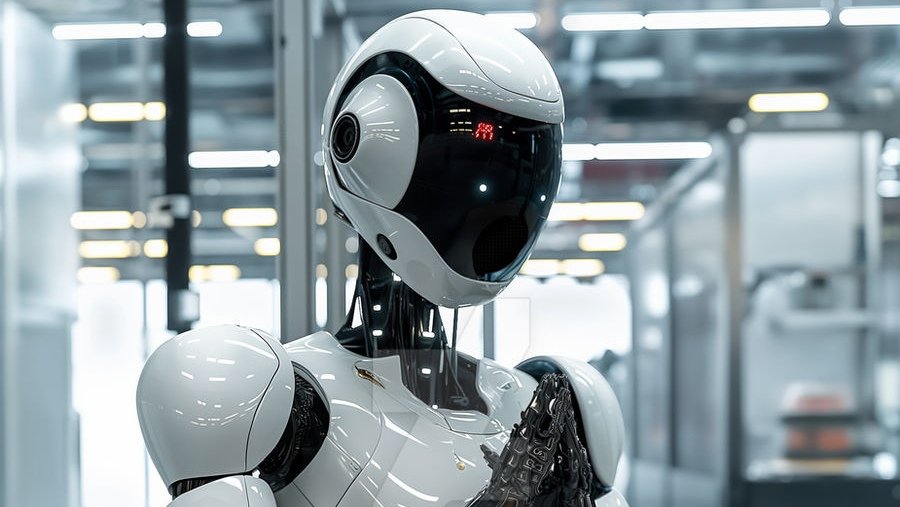
Tesla Bot Gen 3 NEW DESIGN! Elon Musk Drops MASSIVE UPDATE 1,000/Week: Tesla’s humanoid robot program is entering a new phase with the development of Optimus Gen 3. While earlier generations focused heavily on proving that a humanoid robot could walk, manipulate objects, and perform basic factory tasks, the latest design is centered on scalability, dexterity, autonomy, and mass production.
The biggest headline is Tesla’s ambitious goal of moving toward 1,000 Optimus units per week. If achieved, that production rate would represent a major shift from experimental robotics toward an industrial manufacturing model.
The Tesla Bot Gen 3 is expected to feature a substantially redesigned mechanical architecture, lighter materials, more sophisticated actuators, improved hands, tactile sensing, and dedicated AI computing. Together, these technologies could make the robot considerably more capable in environments designed around human workers.
Optimus Gen 3: A Major Redesign
The transition from Optimus Gen 2 to Gen 3 is described as more than a simple upgrade. Tesla is pursuing a broader redesign of the robot’s mechanical and electronic systems.
One of the most important objectives is weight reduction. The supplied specifications place Gen 2 at approximately 63 kg (139 lbs), compared with a target of around 57 kg (125 lbs) for Gen 3.
A lighter humanoid can potentially require less energy to move its limbs and maintain balance. It can also make rapid movements easier while reducing mechanical loads on its actuators.
Tesla Optimus Gen 2 vs. Gen 3
| Feature | Optimus Gen 2 | Optimus Gen 3 |
|---|---|---|
| Body Weight | ~63 kg | ~57 kg |
| Hand Degrees of Freedom | 11 DoF | 22 DoF |
| Actuators | ~28 | ~50 |
| AI Compute | HW4-based inference | AI5 custom silicon |
| Target Price at Scale | Prototype stage | $20,000–$30,000 |
The numbers illustrate Tesla’s apparent focus on turning Optimus into a high-volume commercial machine, rather than maintaining it as an expensive research prototype.
22-DoF Hands Could Transform Optimus
One of the most significant areas of improvement is the robot’s hands.
Humanoid robotics becomes particularly difficult when machines need to perform tasks requiring fine motor control. Picking up a box is relatively simple. Handling a small component, manipulating a tool, folding material, or holding a fragile object requires considerably more precision.
More Degrees of Freedom
The Gen 3 concept increases hand flexibility to 22 degrees of freedom, compared with approximately 11 in Gen 2.
This additional movement can allow the fingers and joints to perform more human-like motions. Instead of relying primarily on simple gripping actions, the robot could potentially pinch, rotate, slide, reposition, and manipulate objects with greater precision.
Tesla’s approach also places some actuation hardware within the forearm, allowing tendon-like mechanisms to control the fingers.
This architecture could help create a cleaner and more compact hand while providing greater flexibility.
Tactile Sensors Add a Sense of Touch
Vision alone is not enough for highly dexterous robotics.
A camera can determine where an object is located, but it does not directly tell a robot how much force its fingertips are applying. That is where tactile sensing becomes important.
Gen 3 is described as incorporating force and torque sensing into the fingertips. With this feedback, the robot could continuously monitor contact pressure.
That could help Optimus distinguish between gripping something securely and applying too much force.
For industrial applications, this capability could be extremely important when handling fragile components, cables, tools, packaging, or small mechanical parts.
Lighter Body, Better Balance
Tesla is also focusing on the robot’s overall physical architecture.
Reducing mass in the arms and upper body could help shift the robot’s center of mass toward the lower torso. For a bipedal machine, balance is critical.
Humans constantly make tiny adjustments while walking, turning, stopping, and reaching. A humanoid robot has to perform similar calculations while controlling numerous motors simultaneously.
A lower and more optimized center of mass could potentially improve walking stability, energy efficiency, and recovery from disturbances.
This becomes especially important inside factories, where robots may encounter uneven surfaces, moving equipment, workers, pallets, and unexpected obstacles.
Optimus Gen 3 and Tesla’s AI Advantage
The mechanical redesign is only half of the equation. A useful humanoid robot also needs sophisticated software capable of understanding its surroundings.
Tesla’s broader autonomy strategy is based heavily on computer vision and neural networks, and Optimus is designed to benefit from technologies developed for its vehicle programs.
Vision-Based Spatial Perception
Rather than depending entirely on external infrastructure, Optimus can use cameras to understand its environment.
Multiple cameras positioned around the robot can provide information about objects, obstacles, people, tools, and available pathways.
The resulting perception system can help the robot determine where it is, what is around it, and how it should move.
This is particularly useful in factories because production environments can change continuously.
A worker may move a box. A cart may appear in a previously clear pathway. A component may be placed in a different location.
A robot that can visually understand these changes has greater potential to operate without constant manual reprogramming.
AI5 and Local Processing
The supplied Gen 3 architecture also points toward AI5 custom silicon as the robot’s next-generation computing platform.
Local processing could reduce reliance on external computers by allowing Optimus to process perception and control information directly onboard.
The combination of custom AI hardware, neural networks, cameras, and real-time control could eventually allow the robot to make faster decisions while performing physical tasks.
Natural-language interaction is another potential component. Instead of programming every individual movement, workers could eventually give Optimus higher-level instructions and allow the robot’s software to determine the required sequence of actions.
Tesla’s 1,000-Units-Per-Week Manufacturing Ambition
Perhaps the most ambitious part of the Gen 3 strategy is production scale.
Building one humanoid robot is a robotics engineering challenge. Building 1,000 robots every week is primarily a manufacturing challenge.
Tesla’s experience with automotive production could provide an important foundation.
From Prototype to Factory Product
The proposed strategy involves deploying Optimus internally before attempting widespread commercial adoption.
Tesla factories could become real-world testing environments where Optimus performs repetitive activities such as:
- Moving components
- Sorting parts
- Handling materials
- Loading carts
- Transporting supplies
- Performing repetitive assembly tasks
This creates a potentially powerful feedback system.
The Real-World Data Loop
Every shift provides opportunities to collect information about how the robot performs.
If Optimus encounters a difficult object, unexpected obstacle, unusual movement, or manipulation failure, that experience can potentially be used to improve its neural networks and control systems.
The cycle becomes:
Factory Deployment → Real-World Data → Neural Network Training → Software Improvements → Better Robot Performance
This data engine could become one of the most important elements of Tesla’s humanoid robotics strategy.
Can Tesla Make Optimus a Mass-Market Robot?
The ultimate objective extends beyond factory demonstrations.
If Tesla can combine lower manufacturing costs, improved dexterity, reliable autonomy, and high-volume production, Optimus could eventually become a commercially deployable humanoid platform.
The supplied target of $20,000–$30,000 at scale places the concept in a dramatically different category from many specialized industrial robots.
However, reaching that price and production volume would require substantial engineering and manufacturing execution. Battery systems, actuators, sensors, AI computers, hands, motors, software, and mechanical structures all have to work reliably for thousands of operating hours.
The Bigger Picture for Tesla Bot Gen 3
Optimus Gen 3 represents a shift toward a robot designed not merely to demonstrate humanoid movement, but to become a repeatable industrial product.
The combination of 22-DoF hands, tactile sensing, lighter construction, advanced actuators, onboard AI computing, and vision-based autonomy addresses several of the biggest challenges facing humanoid robotics.
The proposed 1,000-units-per-week production target makes the manufacturing strategy just as important as the robot’s technical specifications.
If Tesla can successfully integrate its robotics hardware, AI software, factory infrastructure, and data-training pipeline, Optimus could evolve from an experimental Tesla Bot into a scalable platform for industrial automation and eventually broader commercial applications.
FAQs
1. What is Tesla Bot Gen 3?
Tesla Bot Gen 3, also known as Optimus Gen 3, is the next-generation humanoid robot designed to improve dexterity, mobility, AI processing, and manufacturing scalability compared with earlier Optimus versions.
2. What is the biggest change in Optimus Gen 3?
One of the biggest changes is the ground-up redesign of its mechanical and electronic architecture. Gen 3 focuses on reduced weight, improved actuators, more capable hands, tactile sensing, and advanced onboard AI.
3. How much will Optimus Gen 3 weigh?
The supplied specifications target approximately 57 kg (125 lbs) for Gen 3, compared with around 63 kg for Gen 2.
4. How many degrees of freedom will the Gen 3 hands have?
The Gen 3 hands are described as having 22 degrees of freedom (DoF), compared with approximately 11 DoF in the previous generation.
5. Why are 22-DoF hands important?
More degrees of freedom can provide greater finger movement and dexterity, potentially allowing Optimus to manipulate tools, components, fabrics, and other objects with greater precision.
6. Will Optimus Gen 3 have tactile sensing?
The described Gen 3 design includes tactile and force sensing in the fingertips. This can help the robot determine how much pressure it is applying when gripping objects.
7. How many actuators could Optimus Gen 3 use?
The supplied comparison estimates approximately 50 specialized actuators for Gen 3, compared with around 28 for Gen 2.
8. What AI technology is expected in Optimus Gen 3?
The provided specifications describe AI5 custom silicon as the next-generation onboard computing platform, intended to support faster local perception and control.
9. Will Optimus Gen 3 use cameras instead of LiDAR?
The described architecture emphasizes vision-based perception, using cameras and neural networks to understand the robot’s surroundings rather than relying primarily on external LiDAR infrastructure.
10. Can Optimus Gen 3 learn from Tesla factory operations?
Tesla’s proposed strategy involves using Optimus units in factories to perform repetitive tasks and collect real-world operational data that can potentially contribute to improvements in robotics software and neural networks.
11. What factory tasks could Optimus Gen 3 perform?
Potential tasks include moving components, sorting parts, transporting materials, loading carts, and repetitive assembly-related activities.
12. What is Tesla’s target production rate for Optimus?
The material describes an ambitious target of approximately 1,000 Optimus units per week as Tesla moves toward higher-volume humanoid robot manufacturing.
13. How much could Optimus Gen 3 cost?
The supplied target places the potential at-scale price around $20,000–$30,000, although actual pricing would depend on manufacturing costs, configuration, production volume, and commercialization.
14. Why is reducing Optimus’ weight important?
A lighter robot could potentially require less energy for movement, reduce mechanical loads, and improve agility and balance during walking and manipulation.
15. How could Optimus Gen 3 improve balance?
The redesigned structure aims to optimize the robot’s center of mass, while improved actuators and perception systems can help it make continuous adjustments while walking and interacting with its surroundings.
16. What is the data engine behind Optimus?
The concept involves a continuous cycle in which factory robots generate real-world data, that data helps improve neural-network training, and updated software can then be deployed to improve future robot performance.
17. What is the long-term goal of Tesla Optimus Gen 3?
The broader goal is to develop a mass-produced, general-purpose humanoid robot capable of handling repetitive physical work across factories and potentially other commercial environments.
Read More:
- Tesla teases “Halloween Mode” update with Optimus rising from a graveyard
- Tesla just made its headlights even better through a software update
- Starlink launches Communities Program for passive income through internet sharing
- Starship New Footage revealed How S41 Heat Shield was Perfect after 2 Hours in Orbit
- Unreal INSIDE Elon Musk’s $119B Terafab Largest Building On Earth