
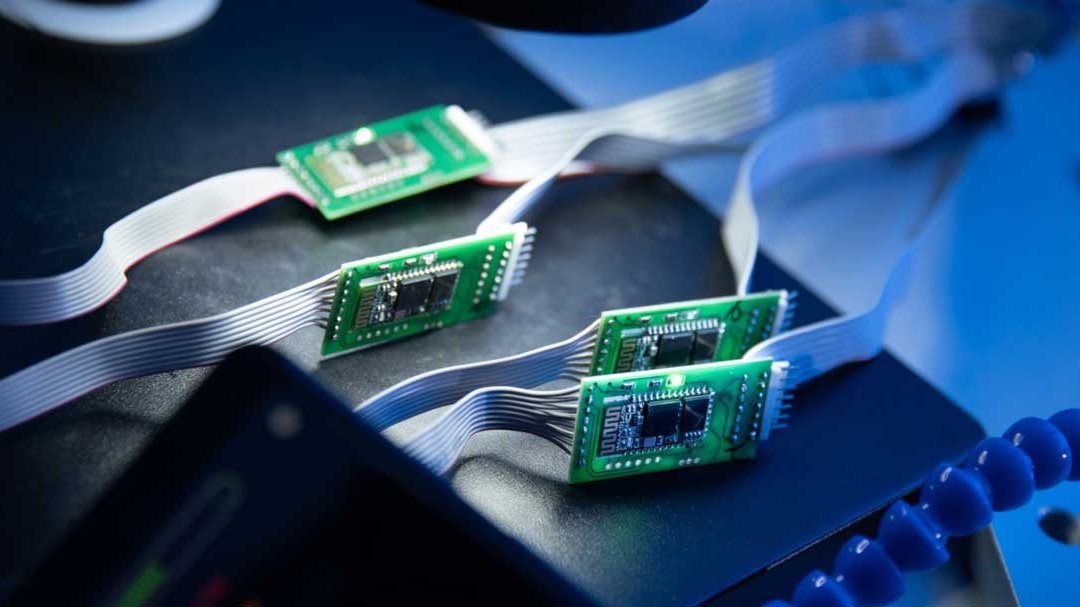
Unreal INSIDE Elon Musk’s $119B Terafab Largest Building On Earth: The semiconductor industry is entering a new era where AI computing power, robotics, autonomous vehicles, and space infrastructure are creating unprecedented demand for advanced chips. At the center of this transformation is the proposed Terrafab, a massive semiconductor manufacturing project associated with Elon Musk’s broader technology ecosystem.
According to the source material, Terrafab is envisioned as a nearly 100 million-square-foot megacomplex in Grimes County, Texas, with a projected investment of approximately $119 billion. The concept is designed around a simple but extremely ambitious objective: bring much more of the semiconductor supply chain under one roof.
If realized at the scale described, Terrafab would represent far more than another chip factory. It would be an attempt to create an end-to-end semiconductor ecosystem capable of supporting Tesla, SpaceX, artificial intelligence, robotics, and future computing infrastructure.
Why Elon Musk Needs a Massive Semiconductor Factory
Modern technology companies increasingly depend on advanced semiconductor capacity. Tesla needs powerful processors for Full Self-Driving, autonomous vehicles, Cybercab systems, and Optimus humanoid robots. SpaceX has its own growing requirements for satellites, communications infrastructure, and specialized computing hardware.
The challenge is that semiconductor manufacturing is highly fragmented.
A chip may involve design in one country, wafer fabrication in another, memory production somewhere else, and advanced packaging on another continent. Every step creates potential supply-chain delays and capacity constraints.
For a company attempting to scale AI-powered products into millions of units, that dependency can become a major strategic challenge.
Tesla’s Growing AI Chip Demand
Tesla’s future product roadmap depends heavily on computing.
Millions of vehicles equipped with advanced driver-assistance and autonomous systems require substantial quantities of AI inference hardware. At the same time, Tesla’s Optimus program could eventually require large-scale production of sophisticated processors, sensors, and controllers.
The emergence of Cybercab and other autonomous transportation systems could further increase demand.
Instead of treating computing hardware as an external component, Terrafab is presented as an effort to bring critical chip production closer to the companies using those chips.
SpaceX Has Different Semiconductor Requirements
SpaceX faces a different set of challenges.
Starlink satellites require efficient electronics that can operate reliably in the harsh environment of space. Future satellite generations and proposed orbital computing infrastructure could create additional demand for high-performance, energy-efficient, and potentially radiation-tolerant processors.
That makes semiconductor capacity strategically important for both terrestrial and space-based systems.
Inside the Proposed $119 Billion Terrafab
The most unusual aspect of Terrafab is its proposed vertical integration.
A conventional semiconductor ecosystem spreads manufacturing across specialized companies and geographic regions. Terrafab, by contrast, is described as attempting to combine multiple stages of production into a single enormous industrial complex.
Logic Chip Manufacturing
One of the core objectives would be the production of advanced logic processors.
The source material connects the project with future Tesla AI5 and AI6 processors and SpaceX-related computing hardware. These chips could potentially serve applications ranging from autonomous vehicles and humanoid robots to satellite systems.
The larger goal is to create a dependable domestic supply of advanced computing hardware rather than depending entirely on outside fabrication capacity.
Memory and Advanced Packaging
Producing logic wafers is only one part of semiconductor manufacturing.
Modern AI systems also depend heavily on high-bandwidth memory and advanced packaging technologies. As processors become more powerful, the connection between computing chips and memory becomes increasingly important.
Terrafab’s proposed integration of memory production and 3D packaging would therefore target another major bottleneck.
Instead of shipping wafers between multiple specialized facilities, the concept would bring more of the manufacturing chain into one location.
A Factory Nearly 50 Times the Pentagon’s Size
The sheer scale described for Terrafab is difficult to comprehend.
At nearly 100 million square feet, the proposed complex would be vastly larger than a conventional semiconductor fabrication facility. The source material compares its footprint with the Pentagon, emphasizing just how ambitious the project would be.
But the enormous footprint isn’t simply about having more floor space.
A semiconductor facility requires carefully controlled cleanrooms, chemical processing systems, utility infrastructure, cooling equipment, logistics networks, laboratories, and support facilities.
Every additional production line increases the demand for power, water, materials, and highly trained personnel.
The 2-Gigawatt Power Challenge
One of the biggest challenges would be electricity.
Semiconductor fabrication requires extremely stable power. Even brief disruptions can interfere with sensitive manufacturing processes and potentially damage wafers in production.
The Terrafab concept therefore includes dedicated energy infrastructure, reportedly involving more than 40 natural-gas turbines capable of producing close to 2 gigawatts of power.
Battery storage could provide an additional layer of protection.
This approach would make the facility less dependent on external grid conditions while providing the consistent electricity required for a giant semiconductor manufacturing operation.
Water Is Equally Important
Power isn’t the only critical resource.
Semiconductor manufacturing consumes enormous quantities of highly purified water for wafer cleaning and cooling.
The proposed Texas location near the Gibbons Creek Reservoir is therefore significant within the project’s design. Access to surface water could support industrial requirements while reducing reliance on regional groundwater resources.
Water would also need to undergo extensive treatment and recycling before being suitable for sensitive semiconductor processes.
The Biggest Problem: EUV Lithography
Even a giant building cannot automatically solve semiconductor manufacturing’s most difficult technological constraints.
Advanced processors depend on sophisticated lithography systems. Extreme Ultraviolet, or EUV, lithography is particularly important for manufacturing leading-edge semiconductor nodes.
These machines are extraordinarily complex and require specialized supply chains.
The source material suggests Terrafab could eventually target production approaching 1 million wafers per month. Reaching such a number would require an enormous number of advanced manufacturing tools.
That creates a fundamental question: Can the global semiconductor equipment industry produce enough machines to equip a factory of this scale?
Simply constructing the building would not guarantee the availability of the tools required to fill it.
Materials and Engineers Could Become Another Bottleneck
A semiconductor factory also needs a massive ecosystem of specialized suppliers.
That includes ultra-high-purity gases, photoresists, chemicals, silicon wafers, specialty materials, precision equipment, and replacement components.
Then comes the human challenge.
A facility operating at extreme scale would require thousands of engineers, technicians, process specialists, equipment operators, and cleanroom personnel.
Finding and training enough semiconductor professionals could become one of Terrafab’s most difficult operational challenges.
Could Terrafab Change AI Manufacturing?
The central idea behind Terrafab is larger than semiconductor independence.
AI is rapidly becoming a fundamental component of transportation, robotics, communications, and industrial automation. As these systems scale, access to computing hardware could become just as important as access to batteries, energy, and raw materials.
A vertically integrated semiconductor operation could theoretically give Tesla and SpaceX greater control over chip design, manufacturing schedules, packaging, and supply planning.
That could be particularly valuable if demand for AI processors grows faster than traditional foundries can expand capacity.
From Cars to Robots to Space
Terrafab’s proposed applications span multiple industries.
Tesla vehicles could use its processors for autonomous driving. Cybercab could require high-volume AI hardware for autonomous transportation networks. Optimus could depend on compact processors for perception and real-time control.
Meanwhile, SpaceX could use specialized chips across Starlink satellites and future orbital infrastructure.
This creates an unusual manufacturing strategy: one semiconductor ecosystem potentially supporting both Earth-based AI machines and space-based computing systems.
The Bigger Picture
Terrafab represents an extraordinarily ambitious vision for semiconductor manufacturing.
Its proposed $119 billion investment, enormous footprint, dedicated power infrastructure, water systems, advanced packaging capabilities, and semiconductor production lines would make it fundamentally different from an ordinary factory.
However, the project’s ultimate success would depend on far more than construction.
It would require access to advanced lithography equipment, enormous quantities of specialized materials, reliable utilities, and a highly skilled workforce. It would also need to achieve exceptional manufacturing yields while scaling production to unprecedented levels.
If those challenges can be addressed, Terrafab could become an important part of a broader strategy to secure AI computing capacity for autonomous vehicles, humanoid robots, satellites, and future industrial systems.
The real story is therefore not simply the size of the building. It is the attempt to turn semiconductor production into a massively integrated manufacturing platform capable of supporting multiple generations of technology.
For Tesla and SpaceX, controlling more of that computing supply chain could become increasingly important as their ambitions move from electric vehicles and rockets toward AI, robotics, autonomy, and space infrastructure.
FAQs
1. What is Terrafab?
Terrafab is described as a proposed massive semiconductor manufacturing complex in Grimes County, Texas. The concept aims to integrate multiple stages of chip production, including logic manufacturing, memory, and advanced packaging.
2. How much is Terrafab expected to cost?
The project is described in the source material as having a projected investment of approximately $119 billion, making it an extraordinarily ambitious semiconductor manufacturing proposal.
3. Where is Terrafab supposed to be located?
Terrafab is described as being planned for Grimes County, Texas, near the Gibbons Creek Reservoir, providing access to important industrial water resources.
4. How large could Terrafab become?
The proposed facility could span nearly 100 million square feet. The source compares this enormous footprint with the Pentagon to illustrate the project’s potential scale.
5. Why does Tesla need its own semiconductor capacity?
Tesla’s expansion into autonomous driving, AI, Cybercab, and Optimus robotics could require enormous quantities of advanced processors. Greater manufacturing capacity could potentially reduce dependence on external chip suppliers.
6. What chips could Terrafab produce?
The source associates Terrafab with future Tesla AI5 and AI6 processors and SpaceX-related computing hardware. The exact production portfolio would depend on the project’s actual development and manufacturing plans.
7. Could Terrafab manufacture memory?
Yes. The concept described in the source includes memory manufacturing and advanced packaging, potentially allowing multiple semiconductor production stages to operate within the same broader complex.
8. What is advanced semiconductor packaging?
Advanced packaging connects and integrates semiconductor components after wafer fabrication. Technologies such as 3D packaging can improve communication between chips and help increase computing performance and efficiency.
9. How much power could Terrafab require?
The source describes infrastructure capable of producing nearly 2 gigawatts of dedicated power, including more than 40 natural-gas turbines and additional battery storage.
10. Why is stable electricity important for semiconductor manufacturing?
Semiconductor fabrication requires highly controlled processes. Power interruptions or fluctuations can disrupt production and potentially damage wafers, making reliable electricity essential for a large-scale fab.
11. Why does Terrafab need so much water?
Semiconductor production uses large quantities of highly purified water for wafer cleaning, cooling, and other manufacturing processes. Water recycling would therefore be an important part of a facility operating at this scale.
12. What is EUV lithography?
Extreme Ultraviolet (EUV) lithography is an advanced manufacturing technology used to create extremely small features on semiconductor wafers. EUV equipment is among the most sophisticated and difficult machinery used in modern chip production.
13. What could be the biggest challenge for Terrafab?
One major challenge would be obtaining enough advanced semiconductor manufacturing equipment, particularly leading-edge lithography systems. Building a huge facility does not automatically provide access to all the specialized tools needed to operate it.
14. How many wafers could Terrafab potentially produce?
The source material describes a potential target of approximately 1 million wafers per month. This figure represents an extremely ambitious production scale and would require substantial equipment, materials, utilities, and workforce capacity.
15. How could Terrafab support SpaceX?
Terrafab could potentially provide specialized processors for Starlink satellites, communications infrastructure, and future space-based computing systems. Space applications can also require chips designed for demanding environmental conditions.
16. Could Terrafab help Tesla and SpaceX reduce supply-chain dependence?
The proposed vertical integration could give Tesla and SpaceX greater control over chip manufacturing, memory, packaging, and production scheduling. However, achieving that level of independence would still require advanced equipment, specialized materials, skilled engineers, and successful high-volume manufacturing.
Read More:
- Why Tesla Roadster unveiling delay might have nothing to do with it flying
- Tesla’s newest feature lets you floor it out of a Supercharger while plugged in
- Tesla deliveries best Wall Street guesses alongside second-best energy quarter
- SpaceX’s midnight spy satellite launch quietly set a new record
- Tesla says fixes on Full Self-Driving’s two biggest issues are on the way