
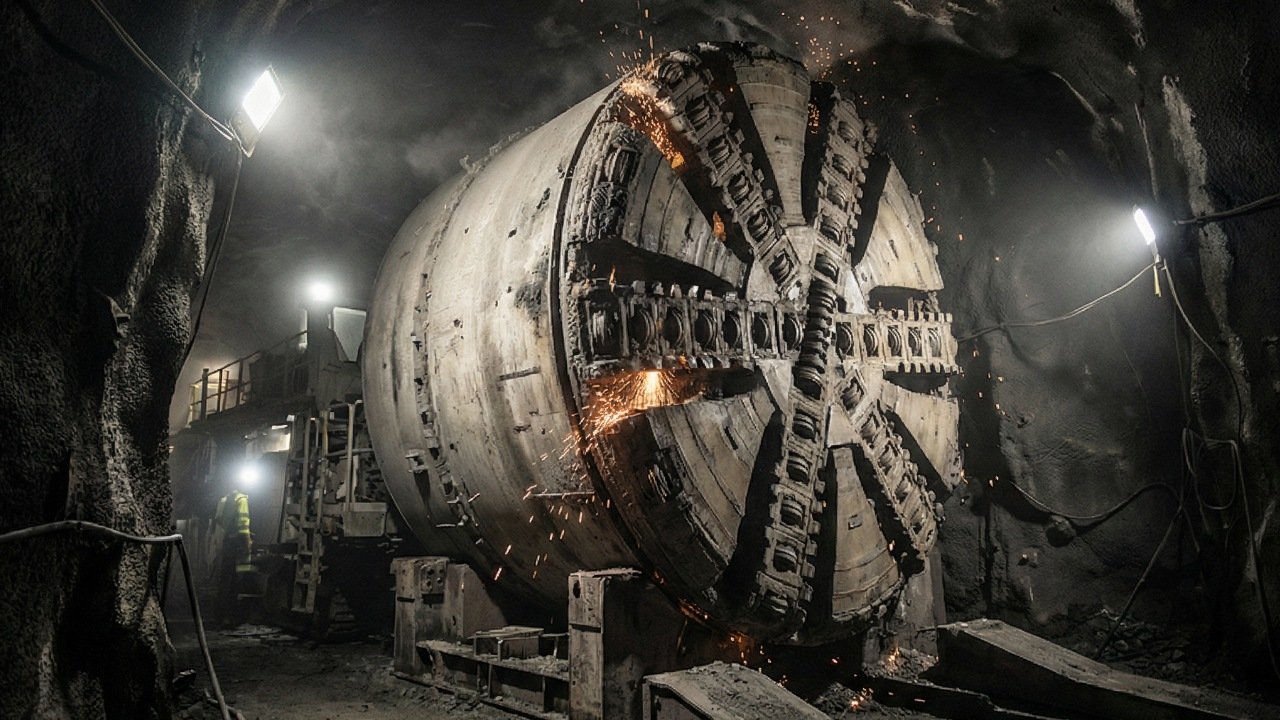
Major New Boring Company 2027 Update Revealed: The future of transportation, infrastructure, and autonomous mobility is moving forward as The Boring Company, SpaceX, and Tesla continue developing technologies that could reshape how people travel and how cities operate. From faster underground tunnel construction in Tennessee to SpaceX achieving its first-ever Starship upper-stage catch and Tesla introducing the production-ready Cybercab, several major developments are attracting attention across the technology and transportation industries.
The latest updates highlight three important milestones: The Boring Company’s improving tunneling operations, SpaceX’s progress toward fully reusable Starship vehicles, and Tesla’s ambitious Cybercab launch strategy. Together, these developments reveal how Elon Musk’s companies are working toward a future built around automation, reusable technology, and more efficient transportation systems.
The Boring Company 2027 Update: Faster Tunneling and Expansion Plans
The Boring Company is making progress toward expanding its underground transportation network, with new developments in Tennessee and Texas suggesting that its tunneling technology could become increasingly efficient.
One of the most interesting updates involves a potential underground transportation connection in Wilson County, Tennessee, located east of Nashville.
Wilson County Could Get Underground Transportation
Tennessee State Senator Mark Pody, who represents Wilson County, recently discussed the possibility of extending underground transportation from Nashville toward the surrounding communities.
During an interview with News Channel 5 Nashville, Pody suggested that two tunnel boring machines could excavate approximately three miles of tunnel per month.
That estimate translates to approximately:
- 1.5 miles per machine per month
- Around 260 feet of excavation per day
- Approximately three miles of combined tunneling every month
Although The Boring Company has not officially confirmed these excavation figures, Pody indicated that discussions with the company were progressing.
The proposed route would reportedly run approximately 30 feet underground along Lebanon Road, near the existing Music City Star commuter rail line.
Pody also expressed confidence that a Wilson County connection could become possible within five years.
Hard-Rock Tunneling Could Influence Construction Speed
One important challenge facing The Boring Company is the geological environment around Nashville.
The region contains substantial amounts of hard limestone, which requires specialized excavation equipment and can make tunneling more complicated.
In 2022, The Boring Company discussed an ambitious target of excavating up to one mile per week using its Prufrock tunnel boring machines.
However, actual excavation speeds depend on geological conditions, machine performance, maintenance requirements, and tunnel construction procedures.
The company’s Prufrock machines are designed to install tunnel lining while excavation continues. This approach reduces the need to stop frequently for separate wall construction.
Another important development is Tennessee’s regulatory framework. A new state law establishes state-level oversight for underground transportation projects, potentially reducing delays caused by individual municipal approval processes.
Prufrock 5 Demonstrates Faster Machine Relocation
Perhaps the most impressive development involves the ability to reuse tunnel boring machines instead of abandoning them underground.
Traditional tunnel boring machines are frequently left underground after completing projects because recovering them can be extremely expensive.
The Boring Company has developed its Prufrock machines with extraction and redeployment in mind.
Recently, Prufrock 5 began excavating a nearly one-mile tunnel at Morgan’s Inclusion Campus in San Antonio, just 29 days after completing another tunnel in Bastrop, Texas.
During that period, the company reportedly:
- Extracted the approximately 900,000-pound Prufrock 5 machine.
- Loaded the equipment onto a transportation vehicle.
- Moved it approximately 100 miles.
- Reassembled and prepared it for another tunneling project.
Meanwhile, Prufrock 1 has reportedly completed at least eight tunnels.
This ability to relocate expensive machinery quickly could significantly improve project economics and allow The Boring Company to expand into multiple markets.
SpaceX Starship Flight 15: Historic First-Ever Upper-Stage Catch
SpaceX achieved another major aerospace milestone on November 13 during Starship Flight 15.
The mission demonstrated an important advancement toward making the entire Starship transportation system reusable.
Ship 42 Completes Its Orbital Mission
The Flight 15 mission launched from Starbase with all 33 Raptor 3 engines on the Super Heavy booster firing during liftoff.
The Starship upper stage, identified as Ship 42, successfully reached orbit and completed approximately 14 revolutions around Earth.
During its orbital mission, the vehicle deployed 26 next-generation Starlink satellites.
Three satellites also captured images of Ship 42’s heat shield, providing valuable information about its thermal protection system before atmospheric reentry.
After completing its mission, Ship 42 performed a deorbit burn and began its return toward Earth.
SpaceX Catches Starship With Mechazilla Chopsticks
The most significant moment came approximately 22.5 hours after liftoff.
Ship 42 reentered the atmosphere belly-first, experiencing intense heating before performing a controlled flip maneuver.
The vehicle then reignited its engines, slowed down, and positioned itself near the Starbase launch tower.
The tower’s enormous mechanical arms, commonly called Mechazilla chopsticks, successfully caught the returning Starship upper stage.
This was the first-ever successful catch of a Starship upper stage.
SpaceX had previously demonstrated the ability to catch its Super Heavy booster in October 2024. Flight 15 extended that capability to the upper stage.
The achievement represents a critical step toward SpaceX’s long-term objective of rapidly reusing both major components of Starship.
Super Heavy Booster Faces Another Setback
Although the upper-stage catch was successful, the Super Heavy booster did not complete its planned recovery.
An engine experienced problems during the boostback burn, and automated flight systems determined that returning to the launch tower was not appropriate.
The booster instead moved toward the ocean, where its flight termination system activated shortly before impact.
SpaceX’s preliminary assessment pointed toward a possible low-fuel alarm interrupting the burn, while Elon Musk suggested that slight engine underperformance contributed to the issue.
Despite the booster setback, Flight 15 received significant positive attention from major media organizations, including CNN, Reuters, NPR, and Fox Business.
SpaceX is also continuing its Starlink development program, with V3 satellites already operating at orbital altitude, V4 designs underway, and additional Starship infrastructure being developed at Kennedy Space Center’s Pad 39A.
Tesla Cybercab Launch: $29,990 Price and Monthly Subscription
Tesla is also moving forward with its autonomous transportation strategy through the introduction of the Cybercab, a purpose-built robotaxi designed without a traditional steering wheel or pedals.
The company’s Roboaxi account announced invitations for select customers to purchase the vehicle for personal use.
Cybercab Starts at $29,990
The announced Cybercab purchase price is $29,990 before taxes, matching Elon Musk’s previously discussed target of keeping the vehicle below $30,000.
Customers are required to place a $1,000 deposit to secure an order.
Initial deliveries are expected to begin in December, with availability limited to five Texas cities:
- Austin
- Dallas
- Houston
- San Antonio
- Fort Worth
The initial rollout will allow Tesla to introduce its autonomous vehicle technology to selected customers while continuing to develop its robotaxi ecosystem.
$299 Monthly Autonomy Subscription Raises Questions
One of the most discussed aspects of the Cybercab is its monthly autonomy subscription.
Because the vehicle does not include a steering wheel or pedals, customers depend on its autonomous driving technology for transportation.
The initially announced subscription costs $299 per month, equivalent to approximately $3,588 annually.
Technology reviewer Marques Brownlee shared his reaction after viewing the Cybercab ordering page.
Elon Musk subsequently suggested that the monthly subscription price was too expensive and should move closer to existing Tesla Full Self-Driving and connectivity pricing.
The suggested range was approximately $115 to $150 per month.
If Tesla reduces the subscription to that level, it could make Cybercab ownership considerably more attractive.
It could also influence how Tesla eventually packages autonomous driving subscriptions across its other vehicles.
Cybercab Ownership Comes With Strict Conditions
The Cybercab purchase agreement also includes several unusual ownership restrictions.
Customers are currently limited to purchasing one Cybercab per person.
Each vehicle is expected to arrive with approximately 250 miles on its odometer due to testing and transportation.
Other important conditions include:
- Resale restrictions: Owners cannot resell their Cybercab without Tesla’s permission.
- Unauthorized resale penalty: Violations could trigger penalties of at least $50,000.
- Tesla buyback rights: Tesla retains the right to repurchase vehicles at fair market value.
- Robotaxi limitations: Owners cannot currently add personally owned Cybercabs to Tesla’s robotaxi network.
- Charging requirements: Vehicles are restricted to NACS fast-charging locations, including Tesla Superchargers.
- Insurance requirements: Coverage must account for empty autonomous trips made for charging or servicing.
These conditions demonstrate that Tesla is taking a controlled approach to introducing a vehicle designed primarily around autonomous operation.
Tesla Plans Major Cybercab Expansion at Giga Berlin
Tesla’s ambitions extend beyond the initial Texas rollout.
The company has announced a reported €3 billion expansion at Giga Berlin, including a new production hall designed to support Cybercab manufacturing.
The facility is expected to have the capacity to produce up to one million Cybercabs annually starting in 2029.
However, achieving that production target will depend on manufacturing readiness, demand, and regulatory approvals.
Elon Musk has also indicated that broader nationwide expansion will depend on receiving the necessary regulatory permissions.
Conclusion: The Boring Company, SpaceX, and Tesla Are Advancing Together
The latest developments across The Boring Company, SpaceX, and Tesla demonstrate the scale of Elon Musk’s long-term transportation ambitions.
The Boring Company is working to improve tunneling economics through faster machine relocation and more efficient excavation. SpaceX has achieved a historic milestone by catching a Starship upper stage, bringing full vehicle reusability closer to reality. Meanwhile, Tesla is preparing to introduce the Cybercab through a controlled rollout supported by subscription-based autonomous driving.
Although challenges remain, including tunneling costs, rocket reliability, regulatory approvals, and autonomous vehicle pricing, these developments represent important steps toward new transportation systems.
The next major milestone will be turning these technological demonstrations into reliable, scalable, and commercially sustainable operations.
FAQs
1. What is the major new Boring Company 2027 update?
The major Boring Company 2027 update focuses on faster tunnel construction, improved Prufrock machine relocation, and potential underground transportation expansion in Tennessee. These developments could help the company build underground transit networks more efficiently.
2. How fast can The Boring Company dig tunnels in Tennessee?
According to Tennessee Senator Mark Pody, two tunnel boring machines could potentially excavate around three miles per month. This would equal approximately 1.5 miles per machine each month, although The Boring Company has not officially confirmed these figures.
3. What is the proposed Wilson County tunnel project?
The proposed Wilson County tunnel project would extend underground transportation east of Nashville, Tennessee. The suggested route would run approximately 30 feet underground along Lebanon Road near the Music City Star commuter rail line.
4. What is a Prufrock tunnel boring machine?
A Prufrock is an advanced tunnel boring machine developed by The Boring Company. It is designed to excavate underground tunnels while installing tunnel lining simultaneously, helping reduce construction time and improve efficiency.
5. How quickly did Prufrock 5 move between Texas projects?
Prufrock 5 began digging at Morgan’s Inclusion Campus in San Antonio just 29 days after completing a tunnel in Bastrop, Texas. The approximately 900,000-pound machine was extracted, transported around 100 miles, and prepared for its next project.
6. Why is The Boring Company developing reusable tunnel boring machines?
The Boring Company designs reusable machines to avoid the high costs associated with abandoning traditional tunnel boring equipment underground. Reusing and relocating machines could reduce project expenses and accelerate future tunnel construction.
7. What happened during SpaceX Starship Flight 15?
SpaceX Starship Flight 15 achieved a historic milestone when Ship 42 successfully completed its orbital mission, deployed 26 next-generation Starlink satellites, returned to Earth, and was caught by the Starbase launch tower.
8. Did SpaceX successfully catch the Starship upper stage for the first time?
Yes. On November 13, SpaceX successfully caught the Starship upper stage, Ship 42, using the giant mechanical arms known as Mechazilla chopsticks. The catch occurred approximately 22.5 hours after launch.
9. How many orbits did Starship Ship 42 complete during Flight 15?
During Flight 15, Ship 42 completed approximately 14 orbits around Earth before performing its deorbit burn and returning toward Starbase.
10. Why did the Super Heavy booster fail to return for a catch?
The Super Heavy booster experienced an engine issue during its boostback burn. Preliminary indications suggested that a low-fuel alarm interrupted the burn, while Elon Musk also pointed toward slight engine underperformance. Automated systems redirected the booster toward the ocean instead of attempting a tower catch.
11. What is the starting price of the Tesla Cybercab?
The announced starting price of the Tesla Cybercab is $29,990 before taxes. Selected customers are invited to place a $1,000 deposit to secure their purchase.
12. When will Tesla Cybercab deliveries begin?
According to the announcement described in the update, initial Cybercab deliveries are expected to begin in December, with the first rollout limited to five Texas cities: Austin, Dallas, Houston, San Antonio, and Fort Worth.
13. How much does the Tesla Cybercab autonomy subscription cost?
The initially announced Cybercab autonomy subscription costs $299 per month, or approximately $3,588 annually. Elon Musk suggested that the price should eventually be closer to $115–$150 per month.
14. What restrictions apply to Tesla Cybercab owners?
Tesla’s Cybercab purchase agreement includes several restrictions. Customers are currently limited to one vehicle, unauthorized resale could result in penalties of at least $50,000, and owners cannot independently add their vehicles to Tesla’s robotaxi network. The agreement also includes specific charging and insurance requirements.
15. How many Tesla Cybercabs could Giga Berlin produce annually?
Tesla’s announced €3 billion Giga Berlin expansion includes a new production hall designed to support up to one million Cybercabs annually starting in 2029. Actual production will depend on manufacturing readiness, market demand, and regulatory approvals.
Read More:
- Tesla changes vehicle computers from ‘AI’ to ‘SI,’ reflecting President Trump change
- Tesla’s Powercore could change how data centers get power
- Tesla gears up Cybercab with Starlink for public debut, but with notable changes
- Sean Duffy fires back at Elon Musk over free Starlink
- $7,899 Tesla Tiny House is HERE: SHOCKING Production Line Revealed. Ready to Deliver
2 thoughts on “Major New Boring Company 2027 Update Revealed”