
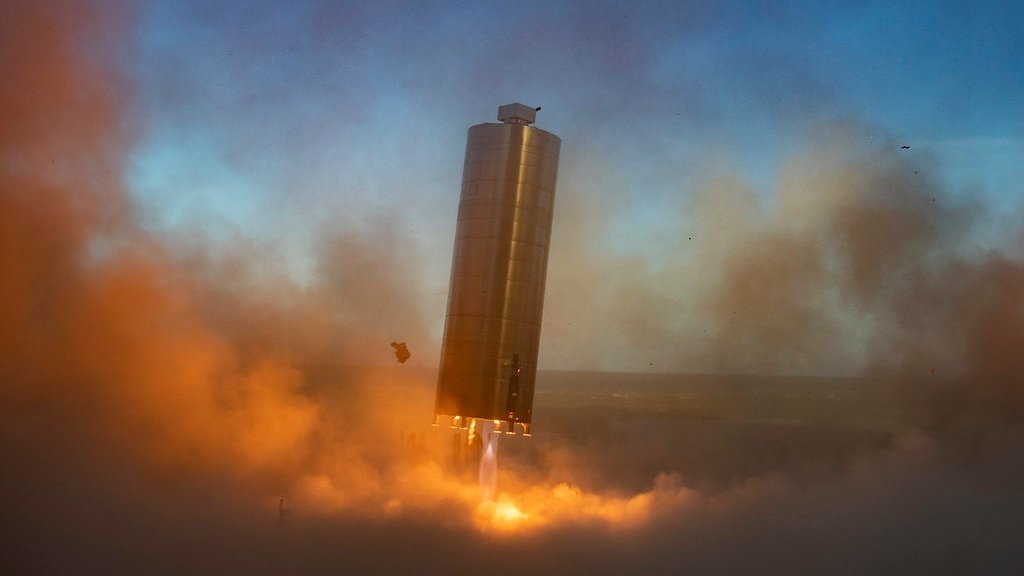
Starship New Footage revealed How S41 Heat Shield was Perfect after 2 Hours in Orbit: SpaceX’s Starship program continues to push the boundaries of reusable spacecraft engineering, and new footage of Ship 41 (S41) is drawing attention to one of the vehicle’s most important systems: its Thermal Protection System (TPS).
As Starship moves beyond short atmospheric demonstrations toward longer orbital missions, the heat shield must survive two dramatically different environments. First, the spacecraft spends extended time exposed to the cold vacuum of space. Then, during atmospheric reentry, it encounters extreme aerodynamic heating and plasma.
The ability of thousands of ceramic tiles to remain attached and protect the stainless-steel structure is therefore central to SpaceX’s long-term goal of rapid, full Starship reuse.
Why Ship 41’s Heat Shield Matters
Starship’s heat shield is designed to protect the vehicle during one of the most demanding phases of flight: hypersonic atmospheric reentry.
The underside of the spacecraft uses thousands of black ceramic thermal-protection tiles. These tiles are designed to absorb and radiate intense heat while preventing the stainless-steel hull beneath them from reaching damaging temperatures.
Earlier Starship tests demonstrated how vulnerable this system could become when individual tiles were damaged or lost. Once a tile is missing, the exposed structure can encounter intense heating during reentry.
Ship 41 represents an important step in SpaceX’s iterative approach, with improvements intended to make the TPS more durable, better attached, and more tolerant of damage.
The Challenge of Extended Orbital Exposure
A spacecraft surviving launch is only the beginning.
During an orbital mission, Starship can experience significant temperature differences as different portions of its surface move between sunlight and shadow. The stainless-steel structure and ceramic tiles also respond differently to temperature changes.
This creates mechanical stresses around tile attachments and joints.
For a reusable spacecraft, engineers must ensure that the heat shield can tolerate these conditions before atmospheric reentry even starts.
Major Heat Shield Improvements
SpaceX’s approach to Starship development has involved repeated changes to the way thermal protection is attached and supported.
Secondary Thermal Protection Layer
One important concept is the use of a secondary high-temperature insulation layer beneath the primary ceramic tiles.
This additional protection can provide an extra barrier if an outer tile becomes damaged. Rather than immediately exposing the stainless-steel skin to intense heating, the underlying layer can help delay heat transfer.
That additional protection is especially important during hypersonic reentry, when even a relatively small exposed area can experience severe thermal loads.
Reinforced Tile Attachment
Tile attachment is another critical engineering challenge.
During launch and atmospheric flight, Starship experiences high vibration, acoustic loads, aerodynamic forces, and thermal expansion. A tile that is perfectly positioned on the ground still has to remain attached through all of these conditions.
Ship 41’s generation incorporates stronger attachment strategies intended to reduce the probability of tile movement or loss.
Improved Plasma Gap Protection
The spaces between neighboring tiles are another potential vulnerability.
During reentry, extremely hot gases can attempt to penetrate gaps between thermal-protection components. Improved joint sealing can reduce the possibility of superheated flow reaching sensitive areas underneath the tiles.
This makes the overall heat shield function more like an integrated thermal-protection system rather than simply a collection of individual ceramic panels.
What Happens During the Two-Hour Orbital Phase?
The orbital portion of a Starship mission creates a unique thermal environment.
While traveling through space, Starship does not experience the same aerodynamic heating that occurs during atmospheric flight. Instead, it encounters radiative heating and cooling depending on its orientation relative to the Sun and Earth.
The spacecraft can become extremely cold in shadow while exposed surfaces can absorb solar energy.
This repeated temperature cycling creates expansion and contraction in the vehicle.
Thermal Expansion Mismatch
The stainless-steel hull and ceramic tiles have different thermal characteristics. As the structure changes temperature, the components can expand or contract at different rates.
That difference can produce mechanical stress around mounting points.
For a spacecraft expected to return repeatedly, surviving one flight is not enough. The system must maintain its structural integrity over repeated cycles.
The Extreme Reentry Challenge
After the orbital phase, Starship eventually faces its most demanding thermal event: atmospheric reentry.
At hypersonic speed, the spacecraft compresses the atmosphere in front of it, creating an extremely hot plasma environment around the vehicle.
The windward surface and belly receive particularly intense thermal loads.
Temperatures around exposed reentry surfaces can reach approximately 1,400°C or more, depending on location, trajectory, altitude, and aerodynamic conditions.
This is why Starship’s large thermal-protection surface is so important.
A damaged tile may appear relatively insignificant visually, but during reentry, even a small exposed region can experience enormous heat flux.
How Ship 41 Differs From Earlier Starships
SpaceX has continuously modified Starship hardware through successive prototypes.
| Feature | Earlier Prototypes | Later Generations / S41 Approach |
|---|---|---|
| Tile Attachment | Basic mechanical attachment | More reinforced attachment strategies |
| Underlayer Protection | Limited protection beneath tiles | Additional thermal insulation concepts |
| Tile Gaps | Greater vulnerability | Improved sealing and coverage |
| Control Flaps | Earlier-generation protection | More extensive thermal protection |
| Reuse Objective | Demonstrate survival | Support rapid refurbishment and reuse |
The significance of these changes is not simply that a spacecraft survives reentry.
The bigger objective is to make Starship operationally reusable.
Why an Intact Heat Shield Could Change Starship Operations
SpaceX’s ultimate vision depends heavily on reducing the amount of work required between flights.
If a spacecraft returns with substantial thermal damage, engineers must inspect, repair, and potentially replace numerous components before another launch.
That creates a major turnaround-time problem.
An increasingly robust heat shield could reduce the amount of refurbishment required after each mission.
Mechazilla Catch System
The heat shield also has implications for Starship’s planned Mechazilla catch system at Starbase.
SpaceX intends to use the tower’s mechanical arms to catch returning Super Heavy boosters and eventually Starships. For that concept to work reliably, critical structural areas, control surfaces, and landing-related systems need to remain functional after reentry.
A spacecraft returning with intact aerodynamic surfaces and thermal protection would be much easier to prepare for another mission than one requiring extensive repair.
Faster Turnaround
The ultimate target is a spacecraft that can potentially move from landing to another flight with dramatically less refurbishment.
That could support future missions involving orbital cargo, Starlink deployment, lunar missions, Mars exploration, and eventually high-frequency transportation.
The heat shield is therefore not just a survival system. It is a major part of the Starship business and operational model.
From Experimental Vehicle to Reusable Spacecraft
Starship’s development strategy has always emphasized testing, identifying failures, modifying hardware, and flying again.
The heat shield provides one of the clearest examples of this philosophy.
Earlier flights exposed weaknesses in tile attachment and thermal protection. Each subsequent vehicle provided additional engineering data that could be used to modify the next generation.
Ship 41 is part of that continuing evolution.
The importance of new footage showing the vehicle after an extended orbital period is therefore less about a single image and more about what it could demonstrate regarding thermal-protection durability.
The Road Ahead for Starship
A truly reusable Starship requires far more than a powerful launch vehicle.
It needs a heat shield capable of surviving repeated orbital missions, aerodynamic surfaces that remain functional, engines that can be inspected and reused, and a recovery system capable of safely handling the returning vehicle.
Among these challenges, thermal protection remains one of the most visible and technically demanding.
If SpaceX can consistently demonstrate that Starship’s TPS survives orbital exposure and extreme reentry with minimal damage, it could represent an important step toward the company’s goal of rapid Starship reuse.
A Critical Step Toward Full Reusability
The story of Ship 41’s heat shield illustrates the broader evolution of Starship.
What began as an experimental stainless-steel spacecraft covered with thousands of ceramic tiles is becoming a much more sophisticated reusable orbital transportation system.
The combination of stronger tile attachment, improved protection beneath the tiles, better treatment of gaps, and increasingly protected control surfaces is aimed at one objective: bringing Starship home in a condition suitable for another flight.
If these improvements continue to perform as intended, the heat shield could become one of the foundations of SpaceX’s long-term rapid-reuse strategy.
For Starship, surviving the journey is only part of the mission. The real breakthrough will be returning, recovering, inspecting, and launching again with minimal downtime.
FAQs
1. What is Starship S41?
Starship S41 refers to a Starship upper-stage vehicle developed by SpaceX as part of its continuing effort to improve orbital flight, thermal protection, and reusability.
2. Why is the S41 heat shield important?
The heat shield protects Starship’s stainless-steel structure from the extreme temperatures generated during atmospheric reentry. Its durability is essential for achieving reliable spacecraft reuse.
3. How does the Starship heat shield work?
Starship uses thousands of ceramic thermal-protection tiles across critical surfaces. These tiles are designed to withstand intense heating and prevent excessive heat from reaching the vehicle’s underlying structure.
4. What happens to Starship during orbital flight?
During orbit, Starship experiences alternating exposure to sunlight and the cold of space. These temperature changes can cause the spacecraft’s materials to expand and contract before reentry begins.
5. Why can orbital exposure stress the heat shield?
The ceramic tiles and stainless-steel hull respond differently to temperature changes. This difference can create mechanical stresses around tile attachment points and joints.
6. What is the biggest challenge during Starship reentry?
The major challenge is managing the extreme aerodynamic heating generated as Starship travels through Earth’s atmosphere at hypersonic speeds.
7. How hot can Starship’s surface become during reentry?
Parts of the vehicle exposed to intense reentry heating can experience temperatures of approximately 1,400°C or higher, depending on location and flight conditions.
8. Why are Starship’s black tiles important?
The black ceramic tiles form a critical thermal barrier on the spacecraft’s most heat-exposed surfaces, helping protect the underlying stainless-steel structure.
9. What happens if a Starship heat-shield tile is damaged?
A damaged or missing tile can expose underlying thermal-protection layers or the vehicle structure to increased heating. The severity depends on the size, location, and nature of the damage.
10. Does Starship have protection underneath its ceramic tiles?
Later Starship designs incorporate additional thermal insulation and protective layers beneath the primary tile system. These layers can provide additional protection if the outer surface is compromised.
11. How has SpaceX improved Starship tile attachment?
SpaceX has progressively experimented with stronger attachment methods, improved mounting hardware, and better protection around high-stress areas to reduce the likelihood of tile movement or loss.
12. Why are gaps between heat-shield tiles important?
Gaps can potentially allow high-temperature gases to penetrate beneath the thermal-protection surface during reentry. Managing these interfaces is therefore an important part of heat-shield design.
13. How does the S41 heat shield compare with earlier Starships?
The S41 generation represents continued development of the Starship TPS, with emphasis on tile attachment, underlying insulation, sealing, and protection of aerodynamic control surfaces compared with earlier prototypes.
14. How does the heat shield affect Starship reusability?
A durable heat shield can reduce the amount of inspection, tile replacement, and structural repair required after landing, potentially allowing SpaceX to shorten turnaround times.
15. What is Mechazilla’s connection to the Starship heat shield?
SpaceX’s Mechazilla tower system is designed to recover Starship hardware. For future vehicle catches, the spacecraft’s thermal protection, control surfaces, and structural areas must remain sufficiently intact after reentry.
16. Could an improved heat shield make Starship launch more frequently?
Potentially, lower refurbishment requirements could support faster turnaround. However, launch frequency also depends on engines, flight certification, ground infrastructure, inspections, payload operations, and other factors.
17. Is S41’s heat shield already proven for unlimited reuse?
No. Even strong results from an individual mission would not establish unlimited or routine reuse. Reusability must be demonstrated across repeated flights and increasingly demanding operational conditions.
18. Why is the S41 heat shield important for SpaceX’s long-term Starship plans?
A reliable thermal-protection system is one of the key technologies needed for rapidly reusable Starship operations. Consistent heat-shield performance could support future orbital missions, cargo transportation, satellite deployment, lunar missions, and eventually longer-duration exploration.
Read More:
- Why Tesla Roadster unveiling delay might have nothing to do with it flying
- Tesla’s newest feature lets you floor it out of a Supercharger while plugged in
- Tesla deliveries best Wall Street guesses alongside second-best energy quarter
- SpaceX’s midnight spy satellite launch quietly set a new record
- Tesla says fixes on Full Self-Driving’s two biggest issues are on the way