
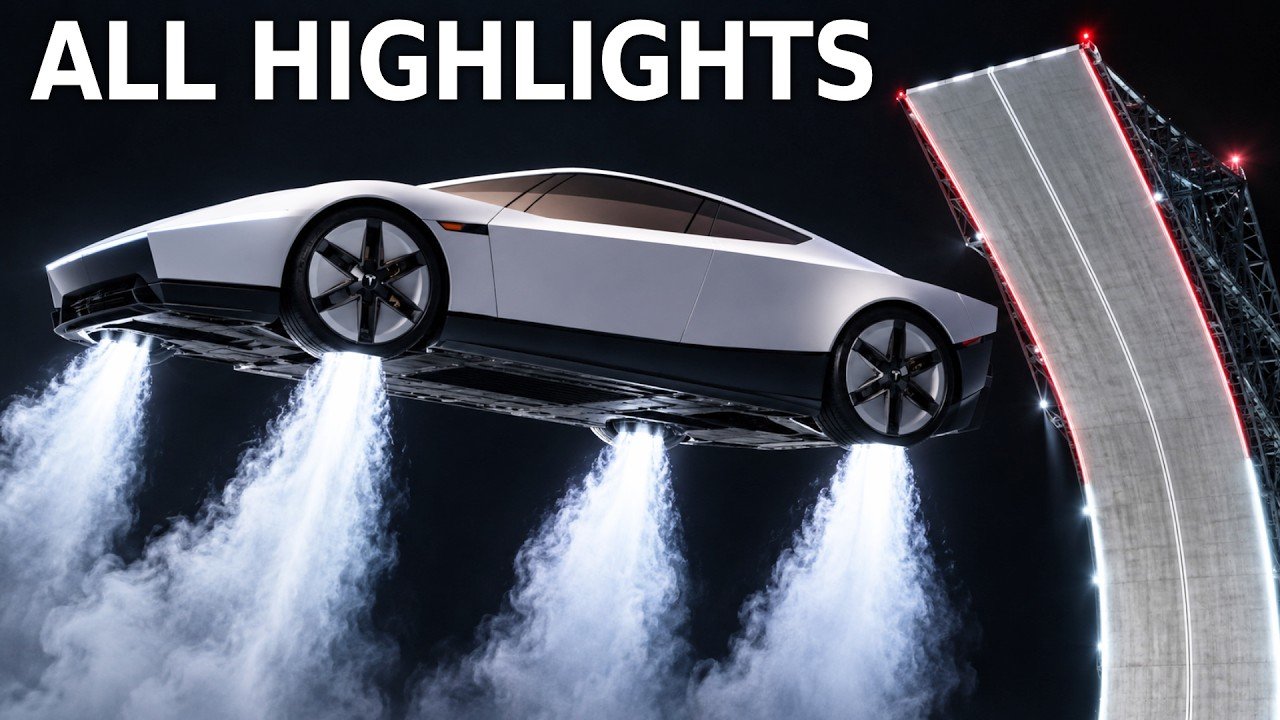
Full New Tesla Roadster Highlights INSANE Lauch Event: The new Tesla Roadster is attracting enormous attention with its futuristic design, aerospace-inspired engineering, and extraordinary performance claims. After years of anticipation following the original 2017 unveiling, Tesla’s next-generation electric supercar is presented as a radical evolution of high-performance electric vehicles. Combining advanced battery technology, aggressive aerodynamics, and concepts inspired by SpaceX, the Roadster aims to push the boundaries of acceleration and driving performance.
The reported launch event in McGregor, Texas, highlighted several ambitious features, including sub-1.6-second acceleration, specialized cold gas thrusters, and advanced downforce technology. However, questions remain about the final specifications, pricing, production schedule, and practical feasibility of bringing such an ambitious vehicle to market.
A Revolutionary New Tesla Roadster Design
The next-generation Tesla Roadster represents a dramatic departure from the original prototype introduced in 2017. Its exterior embraces Tesla’s futuristic Cyber-inspired design language, featuring sharp geometric lines, a low-slung profile, and a commanding supercar stance.
The showcased design features a glossy white exterior contrasted by black lower bodywork. Its pointed front end and full-width LED light bar create a distinctive appearance, while large multi-spoke wheels and low-profile tires emphasize its performance-focused character.
Aggressive Aerodynamics and Futuristic Styling
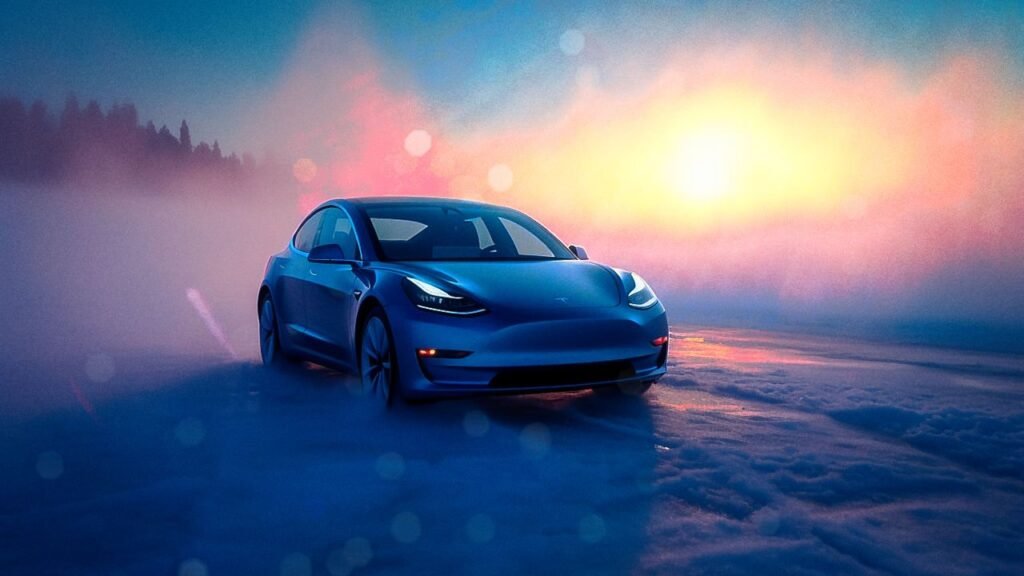
Aerodynamics play a central role in the Roadster’s design. Pronounced body creases, a retractable active spoiler, and a substantial rear diffuser are intended to improve airflow and stability at high speeds.
The upward-opening, gullwing-style doors add dramatic visual appeal. Unlike the original concept’s proposed four-seat configuration, the production-intent version described at the event features a strictly two-seat layout, emphasizing performance over passenger capacity.
The styling has generated mixed reactions. Supporters appreciate its futuristic, almost cyberpunk appearance, while critics prefer the smoother curves traditionally associated with exotic sports cars. Nevertheless, the Roadster’s distinctive design helps separate it from conventional electric supercars.
Inside the Aerospace-Inspired Tesla Roadster Cockpit
The interior follows a minimalist philosophy influenced by aircraft cockpit design. Instead of filling the cabin with conventional controls, the Roadster emphasizes lightweight materials, digital displays, and a driver-focused layout.
Gray micro-suede accents and heavily bolstered seats contribute to a performance-oriented environment. The reported use of carbon fiber, titanium, and magnesium highlights the importance of reducing weight while maintaining structural strength.
Advanced Steering and Digital Controls
The cockpit reportedly features a yoke-style steering wheel paired with advanced steer-by-wire technology. This system replaces a traditional mechanical steering connection with electronic controls, potentially allowing more precise customization of steering response.
Brake and accelerator pedals use electronic control systems designed to deliver responsive inputs. A large central touchscreen manages infotainment and essential vehicle functions, while smaller displays provide driving information such as speed and performance telemetry.
With very few physical buttons, the cabin creates an immersive environment focused on the driver. However, the effectiveness of this minimalist arrangement will ultimately depend on its ergonomics, reliability, and ease of use during high-performance driving.
New Tesla Roadster – Key Features and Performance Specifications
| Feature | Details |
|---|---|
| Vehicle Name | Next-Generation Tesla Roadster |
| Vehicle Type | High-Performance Electric Supercar |
| Expected Delivery | 2028, according to the supplied information; not confirmed |
| Design | Futuristic, Cyber-inspired styling with sharp geometric lines |
| Exterior Features | Full-width LED light bar, pointed front end, active spoiler, and rear diffuser |
| Doors | Gullwing-style doors |
| Seating Capacity | Two seats in the reported road-going configuration; the Rocket Variant is described as single-seat |
| Interior Materials | Carbon fiber, titanium, magnesium, and gray micro-suede accents |
| Steering System | Reported yoke-style steering wheel with steer-by-wire technology |
| Reported Power Output | Approximately 1 megawatt (1,341 mechanical horsepower) |
| Performance Variant Acceleration | Claimed 0–60 mph in under 1.6 seconds |
| Thrust Variant Acceleration | Claimed 0–60 mph in under 0.9 seconds |
| Rocket Variant Acceleration | Claimed 0–60 mph in under 0.59 seconds |
| Rocket Variant Top Speed | Reported target of over 230 mph |
| Rocket Variant Range | Reported target of more than 300 miles |
| Battery Technology | Compact, high-voltage battery pack integrated into the chassis |
| Aerodynamic Technology | Active spoiler, rear diffuser, and proposed fan-based suction system |
| Special Technology | SpaceX-inspired cold gas thrusters |
| Reservation Deposit | Reported $5,000 initial deposit, followed by an additional $45,000 within 10 days |
| Final Pricing | Not confirmed in the supplied information |
Three Tesla Roadster Variants and Performance Specifications
One of the most intriguing aspects of the announced lineup is the reported availability of three distinct configurations. Each variant targets a different type of driver, ranging from road-going supercar enthusiasts to specialized performance customers.
1. Performance Variant
The Performance Variant is designed for everyday road use while delivering extraordinary acceleration. According to the supplied event information, it features a two-seat configuration, active aerodynamic components, and a multi-mode cold gas thruster system.
Its claimed 0–60 mph acceleration time is under 1.6 seconds. If independently verified under defined testing conditions, that figure would place the Roadster among the quickest accelerating production-oriented vehicles.
2. Thrust Variant
The Thrust Variant is described as a limited-edition model focused on track performance. Its reported rear-mounted cold gas thrusters are intended to provide additional acceleration capability.
The claimed 0–60 mph time is under 0.9 seconds, an exceptionally ambitious target. Achieving such acceleration consistently would require substantial tire grip, sophisticated control systems, and carefully managed forces acting on the vehicle and its occupants.
3. Rocket Variant
The Rocket Variant is presented as an invitation-only, single-seat configuration that is not approved for public roads, according to the supplied material.
It reportedly combines a thruster system with auxiliary compressed-air nozzles for specialized maneuvers. The stated targets include a top speed exceeding 230 mph, a range of more than 300 miles, and acceleration from 0 to 60 mph in under 0.59 seconds.
These figures should be treated as reported claims rather than independently verified production specifications. The final performance capabilities will depend on engineering validation and real-world testing.
Megawatt Power and an Advanced Electric Powertrain
Beneath its futuristic exterior, the Roadster is described as using a compact, high-voltage battery pack integrated into the chassis. The design aims to combine efficient packaging with a low center of gravity and strong structural integration.
The reported electric powertrain produces approximately 1 megawatt of power, equivalent to around 1,341 mechanical horsepower. Such output would provide the foundation for extreme acceleration and high-speed performance.
A newly developed rear-wheel-drive unit is also mentioned in the supplied information. However, the final production drivetrain configuration, motor arrangement, battery capacity, and official power ratings still require confirmation.
Tesla’s challenge will be to balance performance with battery temperature management, durability, charging speed, and usable driving range. Delivering extraordinary acceleration is only one part of building a practical electric supercar.
SpaceX-Inspired Cold Gas Thrusters and Extreme Downforce
The most unusual reported feature is the integration of SpaceX-derived cold gas thruster technology. Unlike conventional rocket engines that burn propellant, cold gas thrusters generate thrust by releasing stored pressurized gas through specialized nozzles.
The system described at the event uses carbon-fiber-wrapped composite overwrapped pressure vessels, commonly known as COPVs, to store compressed gas. The supplied material claims that the system could generate up to 80 kilonewtons of force.
Another remarkable claim involves a combination of thrusters and fan-based suction capable of producing up to 2 Gs of downforce while stationary. Conventional aerodynamic downforce generally depends on airflow created as a vehicle moves, whereas an active suction system could theoretically generate vertical force even at low speeds.
Can Thrusters Transform Supercar Performance?
If successfully engineered, this technology could provide unusual control over acceleration, grip, and vehicle dynamics. However, integrating high-pressure gas systems into a road-going vehicle presents significant challenges involving safety, weight, energy consumption, maintenance, and regulatory approval.
The distinction between a demonstrated prototype capability and a certified production feature is important. Independent testing will be needed to establish how the system operates, how long it can deliver peak performance, and whether it can function safely outside controlled demonstrations.
Tesla Roadster Variants – Features, Acceleration, and Intended Use
| Specification | Performance Variant | Thrust Variant | Rocket Variant |
|---|---|---|---|
| Primary Purpose | Everyday road use with extreme performance | Specialized track performance | Invitation-only, specialized performance |
| Seating Configuration | Two seats | Two seats, according to the reported lineup | Single seat |
| Claimed 0–60 mph Time | Under 1.6 seconds | Under 0.9 seconds | Under 0.59 seconds |
| Thruster Technology | Reported multi-mode cold gas thruster system | Reported rear-mounted cold gas thrusters | Reported thrusters with auxiliary compressed-air nozzles |
| Aerodynamics | Active aerodynamic components | Performance-focused aerodynamic systems | Advanced performance-focused systems |
| Reported Top Speed | Not specified | Not specified | Over 230 mph |
| Reported Driving Range | Not specified | Not specified | More than 300 miles |
| Road-Legal Status | Intended for road use; final approval requires confirmation | Final intended approval status not specified | Described as not approved for public roads |
| Target Customer | Supercar enthusiasts seeking road-going performance | Track-focused performance enthusiasts | Selected customers seeking specialized high-performance capability |
| Main Attraction | Extreme acceleration and everyday usability | Additional thrust-assisted acceleration | Highest reported performance targets and experimental technology |
| Key Uncertainty | Final specifications and production readiness | Thruster effectiveness, safety, and validation | Practical feasibility, regulatory approval, and production availability |
Tesla Roadster Price, Reservations, and Expected Release Date
Despite the ambitious engineering claims, several important details remain unresolved. According to the supplied information, Tesla’s reservation process requires an initial $5,000 deposit, followed by an additional $45,000 within 10 days. The initial deposit is described as refundable, although prospective buyers should review the applicable reservation terms carefully.
The final prices for the Performance, Thrust, and Rocket variants have not been established in the provided material. Buyers will also need clarity on production quantities, warranty coverage, delivery schedules, and the availability of specialized thruster technology.
Is the New Tesla Roadster Coming in 2028?
The supplied event information points to 2028 as the expected delivery timeframe. However, an expected date is not the same as a confirmed production schedule. Complex engineering requirements, safety validation, manufacturing readiness, and regulatory approvals can all affect launch timing.
Tesla will need to demonstrate that its ambitious performance targets can be delivered reliably in customer vehicles before the Roadster can fully establish its position in the electric supercar market.
Final Thoughts on the New Tesla Roadster
The next-generation Tesla Roadster represents an ambitious vision for the future of electric performance. Its Cyber-inspired styling, minimalist cockpit, megawatt-class powertrain, and proposed SpaceX-inspired thrusters distinguish it from conventional supercars.
The reported acceleration figures are extraordinary, but important questions remain about real-world performance, pricing, production timing, and the practicality of its most experimental features.
Ultimately, the Roadster’s success will depend on Tesla’s ability to turn bold engineering concepts into a safe, reliable, and production-ready vehicle. If the company delivers on its most ambitious promises, the Roadster could become one of the most talked-about electric supercars of its generation.
FAQs
1. What is the new Tesla Roadster?
The new Tesla Roadster is a next-generation electric supercar designed to deliver extreme acceleration, futuristic styling, advanced aerodynamics, and aerospace-inspired technology. It aims to push the boundaries of electric vehicle performance.
2. What is the expected launch date of the new Tesla Roadster?
According to the supplied information, deliveries are expected to begin in 2028. However, a firm production and delivery schedule still needs confirmation.
3. What is the expected price of the new Tesla Roadster?
Tesla has not announced the final prices for the reported Performance, Thrust, and Rocket variants in the supplied information. Buyers should wait for official pricing details before making a purchase decision.
4. How fast can the new Tesla Roadster accelerate from 0 to 60 mph?
The reported acceleration targets vary by version. The Performance Variant aims for under 1.6 seconds, the Thrust Variant under 0.9 seconds, and the Rocket Variant under 0.59 seconds. These figures require independent verification.
5. How many variants of the new Tesla Roadster are described?
The supplied material describes three variants: Performance, Thrust, and Rocket. Each is intended for a different combination of road use, track performance, or specialized high-performance applications.
6. What makes the Tesla Roadster’s design different from the original prototype?
The new design features sharper geometric lines, a pointed nose, a full-width LED light bar, black lower bodywork, and a more aggressive aerodynamic profile. It also reportedly adopts a two-seat configuration instead of the original concept’s proposed four-seat layout.
7. Does the new Tesla Roadster feature gullwing-style doors?
Yes, the showcased design reportedly includes upward-opening gullwing-style doors. These doors contribute to the car’s futuristic appearance and help distinguish it from traditional sports cars.
8. What materials are used in the Tesla Roadster’s interior?
The reported interior incorporates carbon fiber, titanium, and magnesium in its structural design, along with gray micro-suede accents and supportive seats. These materials are intended to help reduce weight while maintaining strength.
9. How much power does the new Tesla Roadster produce?
The supplied information describes a power output of approximately 1 megawatt, equivalent to around 1,341 mechanical horsepower. The final production power rating and drivetrain specifications require official confirmation.
10. What are SpaceX-inspired cold gas thrusters?
Cold gas thrusters use pressurized gas released through nozzles to generate thrust without combustion. The proposed Roadster system draws inspiration from aerospace technology and is intended to support specialized acceleration and vehicle-control functions.
11. Can the new Tesla Roadster generate downforce while stationary?
The supplied material claims that a combination of thrusters and fan-based suction could generate up to 2 Gs of downforce while stationary. This capability should be treated as a reported claim until independently demonstrated and validated.
12. What is the top speed of the Tesla Roadster Rocket Variant?
The Rocket Variant is reported to target a top speed exceeding 230 mph. Its final top speed will depend on production specifications, aerodynamic performance, and engineering validation.
13. What is the driving range of the new Tesla Roadster?
The supplied information states that the Rocket Variant could offer more than 300 miles of range. Actual range will depend on the final battery configuration, driving conditions, speed, and use of performance systems.
14. How much is the Tesla Roadster reservation deposit?
According to the supplied material, reservations require an initial $5,000 deposit, followed by an additional $45,000 within 10 days. Prospective buyers should verify the current reservation terms and refund conditions directly with Tesla.
15. Is the new Tesla Roadster worth waiting for?
The new Tesla Roadster could appeal to enthusiasts seeking exceptional acceleration, futuristic styling, and innovative electric powertrain technology. However, its value will depend on the final price, independently verified performance, production timing, reliability, and availability of the proposed thruster systems. Buyers should wait for confirmed specifications before making a final decision.
Read More:
- SpaceX Just Vertical Ship 40 Back – And What It Revealed Is Kind of Mind-Blowing
- Amazing Inside 4.0 Elon Musk’s Assembly Production Line
- Tesla Pi Phone 2026: Release Date, Price, Features & Truth Behind the $199 No-Bill Rumor
- The Tesla Semi 2026 Update is HERE
- Tesla opens the Q&A for its biggest earnings call yet
1 thought on “Full New Tesla Roadster Highlights INSANE Lauch Event”