
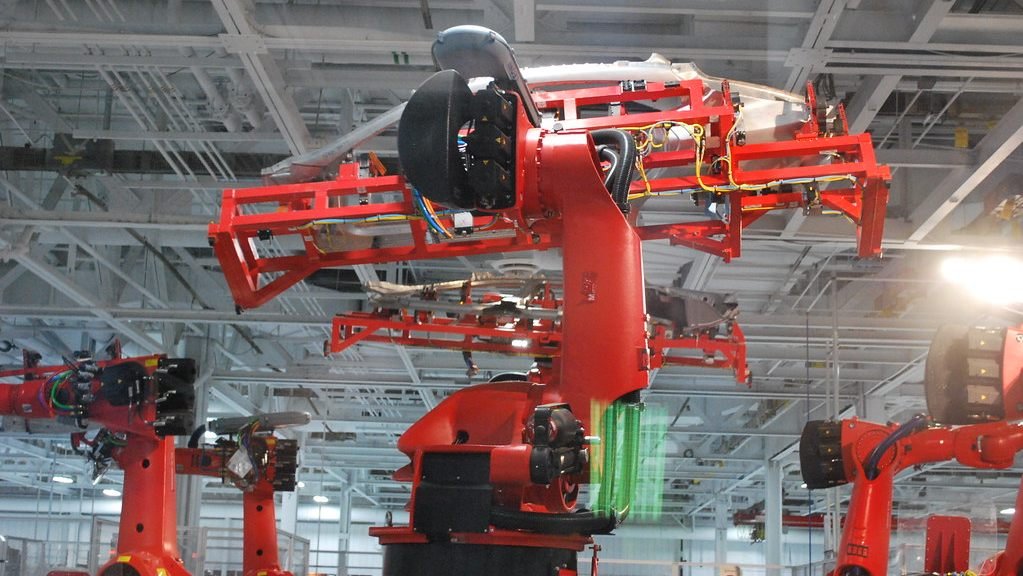
Amazing Inside 4.0 Elon Musk’s Assembly Production Line: Tesla is transforming the future of automotive manufacturing with its revolutionary Assembly Production Line 4.0, a next-generation approach designed to make vehicle production faster, more efficient, and more affordable. At Giga Texas in Austin, Tesla is rethinking traditional factory operations by combining advanced robotics, parallel assembly, massive Giga Press technology, innovative materials, and automated electric motor production.
The primary goal is to produce vehicles at an unprecedented rate while reducing factory space, labor requirements, and manufacturing complexity. Tesla’s innovative manufacturing philosophy is particularly important for the Cybercab robotaxi, a vehicle designed around autonomous transportation and the potential for large-scale production.
Instead of following the conventional automotive assembly model, Tesla is developing a more flexible system that builds major vehicle components simultaneously before combining them into a finished product.
What Makes Tesla Assembly Production Line 4.0 Different?
For more than a century, automotive manufacturers have relied on a sequential production process. Metal sheets are stamped, body panels are welded, vehicles are painted, and individual components are installed as the vehicle moves through different stations.
Although this method has helped manufacturers produce millions of cars, it also creates significant challenges. Each station depends on the previous one, and a delay at one point can affect the entire production line.
Tesla aims to overcome these limitations through Manufacturing 4.0, which emphasizes automation, modular construction, and simultaneous production.
According to the supplied source, Tesla’s advanced Cybercab production concept targets a vehicle production cycle of approximately 10 seconds, with a longer-term ambition of reducing the cycle time toward 5 seconds. These figures describe production ambitions and should not be interpreted as independently verified, sustained factory output.
The Problem With Traditional Car Manufacturing
Traditional vehicle assembly requires a long series of operations. After the body structure is assembled and painted, workers and machines install wiring, seats, dashboards, windows, air-conditioning systems, and other essential components.
This approach creates several disadvantages:
- Long production lines that require substantial factory floor space.
- Manufacturing bottlenecks when individual stations cannot maintain the required speed.
- Higher labor costs from complex assembly operations.
- Limited automation flexibility because many components are difficult to access after the body is assembled.
Tesla’s redesigned production philosophy attempts to address these problems by changing the order in which vehicles are manufactured.
Tesla’s Revolutionary Unboxed Manufacturing Process
One of the most important innovations behind Tesla’s production strategy is the unboxed manufacturing process.
Rather than assembling a complete vehicle around a single body shell, Tesla divides the vehicle into several major modules. These include the front section, rear section, two side sections, roof, and structural battery pack.
Each module can be assembled independently on a dedicated production line.
Parallel Assembly Makes Production Faster
The main advantage of the unboxed process is that multiple manufacturing operations can happen at the same time.
While robots assemble the front section, another production area can prepare the rear section. At the same time, technicians and automated systems can install seats and interior components onto the structural battery pack.
This arrangement gives workers and robots better access to individual components. It can also reduce the need to reach into a partially completed vehicle to install difficult-to-access parts.
Once the modules are ready, they are brought together at a central assembly station to form the completed vehicle.
Tesla compares this approach to constructing a house by preparing the walls, floors, and roof separately before joining them together.
The supplied source estimates that this strategy could reduce production-line length by approximately 50%, factory floor-space requirements by around 40%, and labor costs by roughly 30%. These are source-reported estimates, not guaranteed savings across every factory or vehicle program.
Inside Tesla’s Massive 50,000-Ton Giga Press
Another major part of Tesla’s manufacturing strategy is the use of large structural castings.
Conventional car bodies often require numerous individual metal components that must be stamped, positioned, welded, and inspected. Tesla’s Giga Casting technology replaces many smaller parts with large, single-piece aluminum structures.
The source describes a proposed or reported Cybercab manufacturing system using a 50,000-ton Giga Press, substantially larger than the 6,200-ton and 9,000-ton presses mentioned for other Tesla manufacturing applications.
How the Giga Casting Process Works
The process begins by melting aluminum at approximately 850°C. The molten metal is then transferred to a holding furnace before being injected into a specially designed mold under high pressure.
The press applies enormous clamping force to keep the mold securely closed during injection.
After the aluminum solidifies, the casting is removed and cooled. Excess material is trimmed, and recoverable aluminum can be returned to the melting process.
Finally, the component undergoes inspection, including automated X-ray testing intended to identify internal defects.
By reducing the number of separate components, large-scale casting can simplify vehicle assembly, reduce joining operations, and improve manufacturing efficiency. However, casting quality, tooling costs, repairability, and production consistency remain important engineering considerations.
Paint-Free Manufacturing With Reaction Injection Molding
Traditional automotive paint shops require considerable equipment, energy, floor space, and environmental controls.
Tesla’s described manufacturing concept uses reaction injection molding (RIM) for selected exterior body panels. In this process, polyurethane-based materials are molded into the required shapes, with color integrated into the material rather than applied as a conventional surface coating.
Why Color-Integrated Panels Matter
Because the color extends through the material, minor surface scratches may be less visually noticeable than scratches on a conventional painted panel.
Replacement panels can also be supplied in the appropriate color, potentially simplifying repairs and reducing the need for repainting.
Eliminating a conventional paint shop from a suitable vehicle design could reduce manufacturing complexity and energy consumption. It may also lower certain emissions associated with painting operations.
The supplied source estimates a reduction of approximately 35% in greenhouse gas outputs associated with panel manufacturing, although the exact environmental benefit would depend on materials, production methods, energy sources, and the assessment boundaries used.
This approach demonstrates how material innovation can influence the entire factory layout, not just the appearance of the finished vehicle.
Tesla’s Rare Earth-Free Electric Motor Technology
Tesla’s production strategy also focuses on simplifying the electric powertrain.
Many electric motors use rare-earth elements, including neodymium and dysprosium, to manufacture powerful permanent magnets. These materials can create supply-chain vulnerabilities and introduce additional cost considerations.
The motor described in the source is designed to operate without rare-earth permanent magnets, using alternative materials and an optimized rotor architecture.
A Smaller and Lighter Electric Drive Unit
According to the supplied material, the redesigned drive unit is approximately 18% smaller and 25% lighter than previous high-performance units.
The design also features a simplified bar-wound stator and an optimized lubrication system. These changes are intended to reduce manufacturing complexity while maintaining the performance required for an electric vehicle.
An automated production line reportedly targets a 10-second manufacturing cycle per motor.
If achieved consistently at scale, this approach could help Tesla manufacture electric drive units more efficiently while reducing dependence on specific rare-earth supply chains.
The actual benefits would depend on motor performance, efficiency, durability, production yields, and the availability of alternative materials.
How Assembly Production Line 4.0 Could Change the Automotive Industry
Tesla’s manufacturing innovations are significant because they combine several technologies into one production strategy.
The unboxed process enables parallel assembly. Large Giga Castings reduce the number of individual structural components. Color-integrated molded panels could eliminate conventional painting operations for selected designs. Meanwhile, redesigned electric motors support a more streamlined powertrain manufacturing process.
Together, these innovations aim to make factories more compact, reduce production bottlenecks, and support higher manufacturing volumes.
For the Cybercab, these improvements are particularly relevant because an autonomous ride-hailing vehicle may require a different production and cost structure from a conventional privately owned car.
However, ambitious cycle times and projected savings must be demonstrated through sustained production, quality control, reliability testing, and real-world manufacturing data.
Conclusion
Amazing Inside 4.0 Elon Musk’s Assembly Production Line represents a broader shift in how Tesla approaches vehicle manufacturing. Rather than simply adding more robots to a traditional factory, the company is rethinking the entire process—from structural design and component assembly to materials and electric motor production.
The combination of parallel unboxed assembly, massive Giga Press technology, reaction injection molding, and rare earth-free motor engineering offers a compelling vision of more efficient automotive manufacturing.
If these methods achieve their intended performance at commercial scale, they could reduce production complexity, improve factory-space utilization, and support more affordable electric vehicles.
Ultimately, the future of Tesla’s manufacturing strategy will depend on how successfully these innovations move from ambitious engineering concepts to reliable, high-volume production.
FAQs
- What is Tesla Assembly Production Line 4.0?
Tesla Assembly Production Line 4.0 is an advanced manufacturing concept focused on 𝗮𝘂𝘁𝗼𝗺𝗮𝘁𝗶𝗼𝗻, 𝗽𝗮𝗿𝗮𝗹𝗹𝗲𝗹 𝗮𝘀𝘀𝗲𝗺𝗯𝗹𝘆, 𝗶𝗻𝗻𝗼𝘃𝗮𝘁𝗶𝘃𝗲 𝗺𝗮𝘁𝗲𝗿𝗶𝗮𝗹𝘀, and faster vehicle production. It aims to simplify traditional automotive manufacturing and improve factory efficiency.
- What is Tesla’s unboxed manufacturing process?
The 𝗨𝗻𝗯𝗼𝘅𝗲𝗱 𝗺𝗮𝗻𝘂𝗳𝗮𝗰𝘁𝘂𝗿𝗶𝗻𝗴 𝗽𝗿𝗼𝗰𝗲𝘀𝘀 divides a vehicle into several large modules that can be assembled simultaneously. These modules are joined during the final assembly stage, potentially reducing production time, factory space, and labor requirements.
- How fast could Tesla’s new assembly line produce vehicles?
According to the supplied source, Tesla’s Cybercab production concept targets a cycle time of approximately 𝟭𝟬 𝘀𝗲𝗰𝗼𝗻𝗱𝘀 𝗽𝗲𝗿 𝘃𝗲𝗵𝗶𝗰𝗹𝗲, with a long-term ambition of reaching around 𝟱 𝘀𝗲𝗰𝗼𝗻𝗱𝘀. These figures represent production goals, not independently verified sustained output.
- Where is Tesla developing its advanced manufacturing technology?
The article focuses on 𝗚𝗶𝗴𝗮 𝗧𝗲𝘅𝗮𝘀 𝗶𝗻 𝗔𝘂𝘀𝘁𝗶𝗻, 𝗧𝗲𝘅𝗮𝘀, where Tesla is advancing its vehicle manufacturing strategy and developing production methods associated with the Cybercab.
- What is a Tesla Giga Press?
A 𝗚𝗶𝗴𝗮 𝗣𝗿𝗲𝘀𝘀 is a large industrial die-casting machine that produces major vehicle structural components as single pieces. This technology can replace numerous smaller parts and reduce welding and assembly operations.
- What is the 50,000-ton Giga Press used for?
The supplied source describes a 𝟱𝟬,𝟬𝟬𝟬-𝘁𝗼𝗻 𝗚𝗶𝗴𝗮 𝗣𝗿𝗲𝘀𝘀 for the Cybercab manufacturing concept. Its purpose is to produce large aluminum structural castings that could simplify vehicle assembly.
- How does unboxed manufacturing reduce factory space?
Unboxed manufacturing allows different vehicle modules to be assembled in parallel instead of requiring every operation to take place sequentially along one long production line. The source estimates that this approach could reduce factory floor-space requirements by approximately 𝟰𝟬%.
- Can Tesla’s new production line reduce labor costs?
The manufacturing strategy is designed to reduce repetitive tasks, simplify assembly, and increase automation. The supplied source estimates a potential 𝟯𝟬% 𝗿𝗲𝗱𝘂𝗰𝘁𝗶𝗼𝗻 𝗶𝗻 𝗹𝗮𝗯𝗼𝗿 𝗰𝗼𝘀𝘁𝘀, although actual savings would depend on factory design, production volume, and implementation.
- What is reaction injection molding (RIM)?
𝗥𝗲𝗮𝗰𝘁𝗶𝗼𝗻 𝗶𝗻𝗷𝗲𝗰𝘁𝗶𝗼𝗻 𝗺𝗼𝗹𝗱𝗶𝗻𝗴 (𝗥𝗜𝗠) is a manufacturing process used to form components from reactive polymer materials. In the described Tesla concept, selected polyurethane exterior panels incorporate color into the material instead of relying on conventional surface painting.
- Why would Tesla eliminate the traditional paint shop?
Eliminating a conventional paint shop for a suitable vehicle design could reduce 𝗲𝗻𝗲𝗿𝗴𝘆 𝗰𝗼𝗻𝘀𝘂𝗺𝗽𝘁𝗶𝗼𝗻, 𝗳𝗮𝗰𝘁𝗼𝗿𝘆 𝗰𝗼𝗺𝗽𝗹𝗲𝘅𝗶𝘁𝘆, 𝗽𝗿𝗼𝗱𝘂𝗰𝘁𝗶𝗼𝗻 𝗰𝗼𝘀𝘁𝘀, and certain emissions. Color-integrated molded panels may also make replacement and minor cosmetic repairs simpler.
- What is a rare earth-free electric motor?
A 𝗿𝗮𝗿𝗲 𝗲𝗮𝗿𝘁𝗵-𝗳𝗿𝗲𝗲 𝗲𝗹𝗲𝗰𝘁𝗿𝗶𝗰 𝗺𝗼𝘁𝗼𝗿 is designed to operate without rare-earth elements in its motor magnets. The approach described in the article aims to reduce dependence on materials such as neodymium and dysprosium while simplifying the electric powertrain supply chain.
- How much smaller and lighter is Tesla’s redesigned drive unit?
According to the supplied source, the redesigned electric drive unit is approximately 𝟭𝟴% 𝘀𝗺𝗮𝗹𝗹𝗲𝗿 𝗮𝗻𝗱 𝟮𝟱% 𝗹𝗶𝗴𝗵𝘁𝗲𝗿 than previous high-performance units. These figures are source-reported claims rather than independently verified measurements.
- How does parallel assembly improve manufacturing efficiency?
𝗣𝗮𝗿𝗮𝗹𝗹𝗲𝗹 𝗮𝘀𝘀𝗲𝗺𝗯𝗹𝘆 allows multiple teams and automated systems to work on different vehicle sections simultaneously. This can improve component accessibility, reduce waiting between production stages, and help prevent individual workstations from becoming bottlenecks.
- How could Assembly Production Line 4.0 benefit Tesla Cybercab production?
The combination of 𝗺𝗼𝗱𝘂𝗹𝗮𝗿 𝗮𝘀𝘀𝗲𝗺𝗯𝗹𝘆, 𝗹𝗮𝗿𝗴𝗲 𝘀𝘁𝗿𝘂𝗰𝘁𝘂𝗿𝗮𝗹 𝗰𝗮𝘀𝘁𝗶𝗻𝗴𝘀, 𝗺𝗼𝗹𝗱𝗲𝗱 𝗲𝘅𝘁𝗲𝗿𝗶𝗼𝗿 𝗽𝗮𝗻𝗲𝗹𝘀, and streamlined electric motors could help Tesla simplify Cybercab manufacturing. If successfully implemented at scale, these technologies may support higher production volumes and lower manufacturing costs.
- Will Tesla Assembly Production Line 4.0 change the future of the automotive industry?
Tesla’s approach could influence automotive manufacturing by encouraging greater automation, parallel production, and integration of vehicle design with factory engineering. Its long-term impact will depend on 𝗽𝗿𝗼𝗱𝘂𝗰𝘁𝗶𝗼𝗻 𝗿𝗲𝗹𝗶𝗮𝗯𝗶𝗹𝗶𝘁𝘆, 𝗺𝗮𝗻𝘂𝗳𝗮𝗰𝘁𝘂𝗿𝗶𝗻𝗴 𝗾𝘂𝗮𝗹𝗶𝘁𝘆, actual cost savings, and the ability to scale these technologies commercially.
Read More:
- Tesla opens the Q&A for its biggest earnings call yet
- Elon Musk breaks his silence on the Starlink impact to Ukraine drones
- Elon Musk says Tesla’s Roadster demo could be a bang, quite literally
- Starship’s NEW STMT looks Unreal and like Allien Technology
- 15,000 Tesla Bot Gen 3 Units Get INSANE Hand Upgrade For Cooking & Cleaning
2 thoughts on “Amazing Inside 4.0 Elon Musk’s Assembly Production Line”