
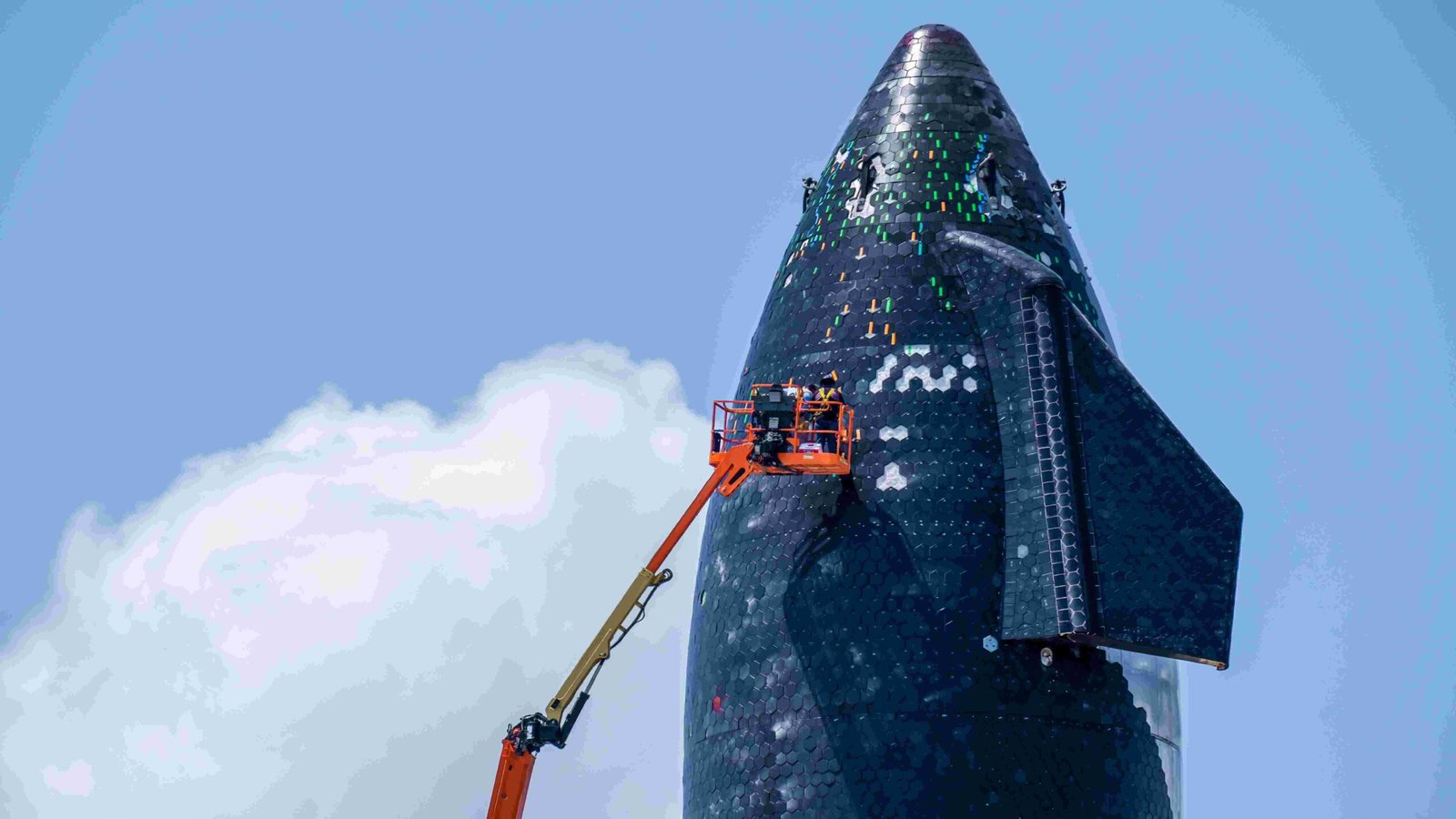
SpaceX just Changed Starship Flight 16 Plan: Not Coming to Florida, Why?: SpaceX continues to push the boundaries of rocket engineering, reusable launch systems, and deep-space exploration with its ambitious Starship program. However, the next phase of development may not follow the timeline that space enthusiasts originally expected.
While many anticipated that Starship Flight 16 would make its debut from Florida’s Kennedy Space Center, recent regulatory filings and logistical developments suggest that SpaceX may prioritize additional testing at Starbase, Texas.
This potential shift highlights an important objective: perfecting the recovery and rapid reuse of both Starship stages before expanding operations to a second major launch site. With future missions targeting Starlink deployments, lunar exploration, and eventually Mars, every successful test could contribute to SpaceX’s long-term strategy.
It is important to note that the reported Flight 16 plan remains subject to change. The available clues suggest a possible shift in priorities rather than a confirmed official cancellation of a Florida launch.
Why SpaceX May Keep Starship Flight 16 in Texas
Ship 43 and Booster 23 Lead the Hardware Lineup
According to the supplied development information, Ship 43 (S43) and Booster 23 (B23) are the vehicles associated with Starship Flight 16. Both vehicles must complete several important preparations before they can be considered ready for flight.
Booster 23 reportedly completed cryogenic testing at Massey’s test site before returning to the main production yard for additional verification. Cryogenic testing exposes rocket tanks and related structures to extremely cold propellants, helping engineers evaluate their performance under demanding operating conditions.
Meanwhile, Ship 43 underwent a similar series of cryogenic proof tests. These evaluations are essential because Starship must withstand significant structural loads during propellant loading, launch, atmospheric reentry, and recovery.
The next steps include engine installation, inspections, and static fire testing, during which installed engines are ignited while the vehicle remains secured to the ground.
However, the schedule for Booster 23 may depend on the outcome of Flight 15. If the previous mission encounters unexpected problems, SpaceX may need additional time to inspect hardware, analyze flight data, and prepare ground systems for another launch.
Regulatory Filings Raise Questions About Florida
Early projections pointed toward a possible December 2026 launch window for Starship Flight 16 from Florida. However, the supplied information identifies two developments that could indicate a different direction.
First, an FCC Experimental Special Temporary Authority (STA) filing reportedly references upcoming Starlink-related operations originating from Starbase, Texas. Its late-November activity window has raised questions about SpaceX’s immediate launch priorities.
Second, the support vessel You’ll Thank Me Later reportedly returned from Cape Canaveral carrying hardware toward Texas rather than remaining in Florida to support East Coast operations.
These developments may indicate that SpaceX is concentrating resources at its Texas facility. Nevertheless, neither a regulatory filing nor a vessel’s movements independently confirms the final launch location. An official SpaceX announcement or updated regulatory documentation would be needed to establish the definitive Flight 16 plan.
The Double Catch: SpaceX’s Biggest Reusability Challenge
Why Flight 15 Could Influence Flight 16
One of the most ambitious objectives in the Starship program is the recovery of both rocket stages. SpaceX has been developing a system designed to catch the Super Heavy booster and potentially the Starship upper stage using mechanical arms mounted on a launch tower known as Mechazilla.
The system is intended to reduce the need for conventional landing legs and support faster hardware turnaround. However, recovering two enormous rocket stages requires precise coordination between vehicle guidance, flight-control software, structural systems, and ground infrastructure.
The major objectives include:
- Super Heavy booster recovery: Guide the returning booster toward the launch tower for capture by its mechanical arms.
- Starship upper-stage recovery: Demonstrate the necessary guidance, thermal protection, and control systems for a potential tower catch.
- Rapid refurbishment: Inspect recovered vehicles, evaluate their condition, and determine how quickly they can be prepared for another flight.
Each step presents unique engineering challenges. The booster must manage its descent and align with the tower, while Starship must survive the intense heating and aerodynamic forces associated with atmospheric reentry.
Why Testing in Texas Makes Sense
Starbase provides SpaceX with an established environment for developing Starship hardware, testing software, and refining launch procedures. Engineers can use flight data to identify problems and adjust vehicle performance before attempting more demanding operations.
If Flight 15 does not achieve its intended recovery objectives, Flight 16 could provide another opportunity to test revised procedures. Keeping the next mission at the same development site could also reduce the number of new operational variables introduced into the process.
However, this does not mean that Flight 16 is guaranteed to repeat every Flight 15 objective. Its final mission profile will depend on hardware readiness, regulatory approval, and SpaceX’s assessment of previous test results.
The broader goal is full-stack reusability: recovering both stages, evaluating their condition, and reusing them efficiently rather than treating every launch vehicle as expendable hardware.
Starship Florida Expansion: What Is Happening at LC-39A?
Preparing Kennedy Space Center for Starship
Even if Flight 16 remains in Texas, Florida continues to play an important role in SpaceX’s long-term expansion strategy.
Launch Complex 39A (LC-39A) at Kennedy Space Center is an established launch site with a long history of human spaceflight and heavy-lift missions. Adapting it for Starship, however, requires substantial infrastructure development and validation.
Several systems are particularly important.
Launch tower and catch infrastructure: Starship operations require structures capable of supporting vehicle integration, launch operations, and potentially complex recovery procedures. Any tower-based catch system must be validated for the forces and loads involved.
Water deluge and sound suppression: Super Heavy’s 33-engine configuration generates enormous acoustic energy and thermal loads. Water-deluge infrastructure helps protect launch facilities and surrounding structures during liftoff.
Environmental and regulatory requirements: Florida launch operations must account for wildlife protection, airspace restrictions, public safety, and coordination with other activities along the Atlantic launch range.
These requirements make the transition from construction to routine operations a substantial engineering and regulatory undertaking.
Why Florida Is Important for Future Launches
Starbase remains a central location for Starship development, but relying on a single launch site could limit future launch frequency.
A second operational location could help SpaceX distribute missions across multiple pads, manage maintenance schedules, and reduce dependence on a single site’s availability. It could also support a broader range of commercial and government missions.
Florida’s development should therefore be understood as part of a long-term infrastructure strategy, rather than simply an alternative location for one particular flight.
Starbase Texas vs. Florida LC-39A: Key Differences
| Category | Starbase, Texas | Kennedy Space Center, Florida |
|---|---|---|
| Primary role | Starship development and flight testing | Expansion toward additional Starship launch operations |
| Infrastructure focus | Vehicle testing, launch operations, and recovery development | Tower construction, launch systems, and site validation |
| Potential advantage | Established development environment | Additional launch capacity on the East Coast |
| Major challenges | Flight-test constraints and regulatory coordination | Environmental requirements, range coordination, and infrastructure readiness |
| Long-term objective | Improve reusability and turnaround | Support higher launch cadence and future mission demand |
The two locations are intended to serve complementary purposes. Texas provides an established setting for iterative development, while Florida could eventually expand operational capacity.
How Starship Flight 16 Connects to NASA’s Artemis Program
Orbital Refueling Is a Critical Milestone
NASA’s Artemis program includes plans to return astronauts to the lunar surface. SpaceX’s Starship Human Landing System is a key component of NASA’s lunar exploration architecture.
A major challenge is that a lunar-bound Starship will require substantial propellant. The planned architecture relies on orbital refueling, which involves transferring propellant between spacecraft in orbit.
Making this approach practical will require multiple launches, reliable spacecraft operations, and successful demonstrations of propellant transfer. A higher launch cadence could help support these complex missions, although the exact number and timing of required flights depend on the final mission architecture.
Additional launch infrastructure in Florida could eventually help SpaceX manage this demand alongside commercial missions and Starlink deployments.
Starlink and Future Deep-Space Missions
Starship is also being developed to carry large payloads, including future generations of Starlink satellites. A fully reusable system could eventually lower launch costs and increase the amount of cargo transported per mission, provided the vehicles achieve the expected performance and turnaround rates.
Beyond Earth orbit, the same capabilities could support cargo delivery and other missions needed for long-term lunar and Mars exploration.
However, these benefits depend on overcoming substantial technical challenges, including reliable recovery, rapid refurbishment, orbital refueling, and consistent launch operations.
Conclusion: Why Starship Flight 16 May Stay in Texas
The possibility that Starship Flight 16 will not launch from Florida reflects the complex priorities involved in developing a fully reusable rocket system. According to the supplied information, Ship 43 and Booster 23 are associated with the upcoming mission, while regulatory and logistical clues point toward continued activity at Starbase, Texas.
The potential strategy is straightforward: establish reliable recovery procedures, learn from Flight 15, and strengthen the operational foundation before expanding Starship activities at Kennedy Space Center.
Meanwhile, work at LC-39A remains important for SpaceX’s long-term plans. Additional launch capacity could help support Starlink deployments, orbital refueling, and NASA’s Artemis lunar missions.
Ultimately, the significance of Flight 16 will depend not only on where it launches, but also on what SpaceX learns from the mission. Reliable recovery, rapid reuse, and scalable launch infrastructure are essential milestones on the path toward making Starship a practical transportation system for Earth orbit, the Moon, and potentially Mars.
FAQs
1. Why is SpaceX reportedly changing the Starship Flight 16 launch plan?
SpaceX may be prioritizing Starbase, Texas, to continue testing rocket recovery, reusability, and launch operations before expanding Starship activities in Florida. However, the final launch location has not been confirmed by the information provided.
2. Where could Starship Flight 16 launch from?
According to the supplied information, Starbase, Texas, is a possible launch location for Flight 16. An official SpaceX announcement would be needed to confirm the final launch site.
3. Which vehicles are expected to be used for Starship Flight 16?
The reported hardware lineup includes Ship 43 (S43) and Super Heavy Booster 23 (B23). Both vehicles require the necessary inspections, engine installations, and preflight testing before launch.
4. What is the current reported status of Booster 23?
Booster 23 reportedly completed cryogenic testing at Massey’s test site before returning to the main production yard for further verification and preparation.
5. What testing has Ship 43 completed?
Ship 43 reportedly underwent cryogenic proof testing to evaluate its tanks and structural integrity under extremely cold conditions associated with rocket propellants.
6. What is a cryogenic test in the Starship program?
A cryogenic test exposes rocket tanks and related systems to extremely low temperatures to evaluate their structural performance and identify potential problems before flight.
7. What is the double-catch objective for Starship?
The double-catch objective involves recovering both the Super Heavy booster and the Starship upper stage using the mechanical arms of the Mechazilla launch tower, if the required systems and mission conditions permit.
8. What is Mechazilla, and why is it important?
Mechazilla is SpaceX’s launch tower and mechanical recovery system. Its arms are designed to catch returning rocket hardware, potentially reducing the need for landing legs and supporting faster vehicle reuse.
9. How could Starship Flight 15 affect Flight 16?
The results of Flight 15 could influence Flight 16’s schedule, objectives, and hardware preparations. Any recovery anomalies or required engineering changes could lead to additional inspections and testing before the next launch.
10. Why might SpaceX prefer testing Starship at Starbase, Texas?
Starbase provides an established development environment for flight testing, software updates, recovery experiments, and hardware inspections. Continuing development there may help SpaceX refine its systems before introducing additional operational challenges at a new site.
11. Does the possible Flight 16 change mean SpaceX has abandoned Florida?
No. A possible change to Flight 16’s launch location does not mean SpaceX has abandoned Florida. Launch Complex 39A (LC-39A) remains important to the company’s broader plans for expanding Starship launch infrastructure.
12. What infrastructure does Starship need at Kennedy Space Center?
Starship operations require suitable launch towers, vehicle integration systems, sound suppression, water-deluge infrastructure, and safety systems. The site must also satisfy environmental and regulatory requirements before supporting the intended operations.
13. Why does Starship need a water-deluge system?
A water-deluge system helps protect launch infrastructure from the intense acoustic energy, heat, and other effects generated during liftoff. These systems are particularly important for rockets with many powerful engines, such as Super Heavy.
14. How could Florida help increase Starship launch frequency?
A second operational launch site could provide additional launch capacity, improve scheduling flexibility, and help SpaceX manage maintenance and regulatory constraints across multiple locations.
15. How is Starship connected to NASA’s Artemis lunar missions?
NASA’s Artemis program includes SpaceX’s Starship Human Landing System for planned lunar landing missions. The mission architecture depends on developing capabilities such as orbital refueling, which requires multiple spacecraft operations and substantial launch support.
16. What is the biggest long-term goal of Starship Flight 16 and future missions?
The broader goal is to achieve full-stack reusability, allowing both Starship stages to be recovered, inspected, and prepared for subsequent flights. If SpaceX can demonstrate reliable recovery and rapid turnaround, Starship could eventually support more frequent satellite launches, lunar missions, and future Mars exploration.
Read More: