
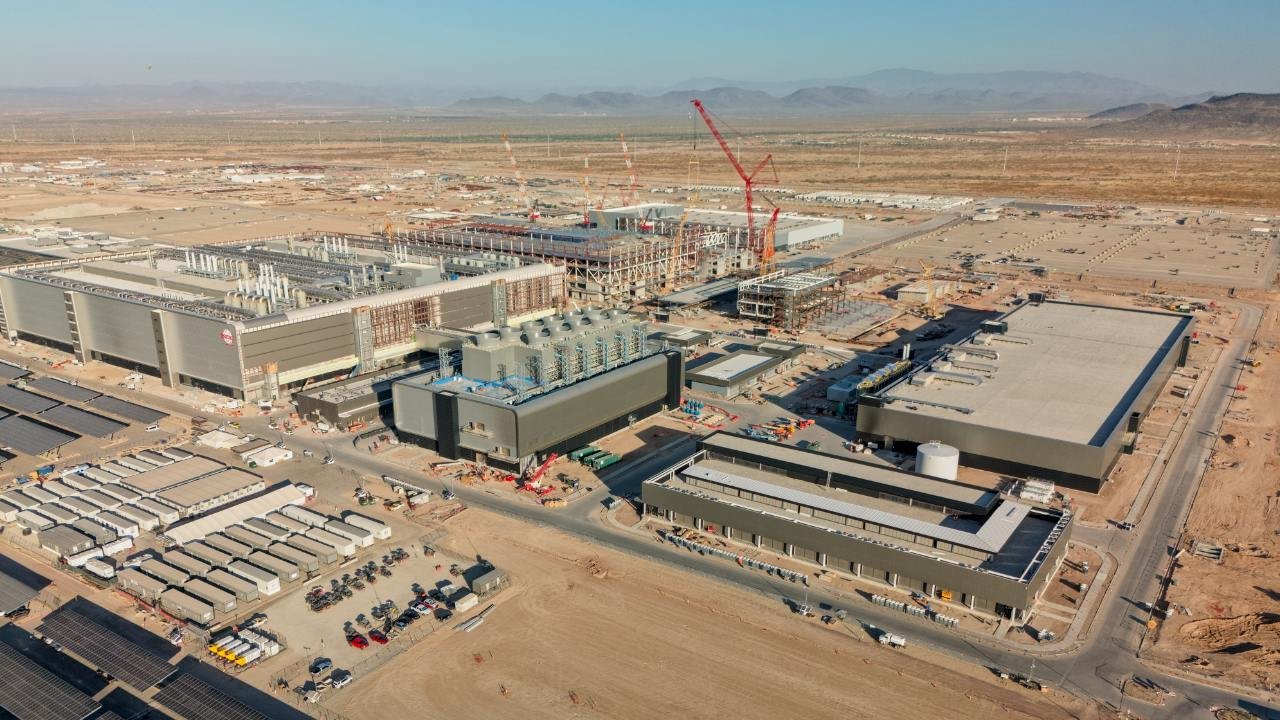
New Inside Elon Musk’s $119 Billion TERAFAB, Amazing Progress: The global race for artificial intelligence is entering a new era, and Elon Musk’s Terrafab project could become one of the most ambitious semiconductor manufacturing initiatives ever envisioned. Designed to address the growing shortage of advanced computing hardware, Terrafab aims to create a powerful manufacturing ecosystem capable of supplying next-generation chips for Tesla, SpaceX, autonomous vehicles, humanoid robots, and space-based AI infrastructure.
With a potential long-term investment of up to $119 billion, Terrafab represents a bold step toward bringing semiconductor design, manufacturing, memory production, advanced packaging, and testing under one industrial umbrella.
The project’s proposed scale is extraordinary. Plans described for Terrafab envision a facility spanning approximately 100 million square feet, with an eventual production target of up to one million silicon wafers per month. However, these figures represent ambitious projections rather than completed construction or verified production capabilities.
If successfully developed, Terrafab could reshape how Musk’s companies secure the computing power needed for their future technologies.
Terrafab’s Massive Scale Could Transform Chip Manufacturing
Terrafab is envisioned as a semiconductor mega-facility that would dwarf many existing industrial complexes. For comparison, Tesla’s Gigafactory Texas in Austin already occupies an enormous footprint, supporting vehicle manufacturing, battery-related operations, and other advanced production activities.
The proposed Terrafab footprint of 100 million square feet would be nearly ten times the approximately 10-million-square-foot comparison used in the project’s planning narrative.
The objective goes beyond constructing a large building. Terrafab is intended to integrate several stages of semiconductor production into one coordinated industrial system.
Key Terrafab Project Specifications
The following figures describe the ambitious targets outlined for the project.
| Project Feature | Proposed Target |
|---|---|
| Total planned footprint | Approximately 100 million square feet |
| Potential long-term investment | Up to $119 billion |
| Initial Grimes County investment | Approximately $16.8 billion |
| Monthly wafer processing | Up to 1 million wafers |
| Long-term computing output | More than 1 terawatt annually |
| Planned power capacity | Approximately 2 gigawatts |
| Initial experimental chips | Targeted for 2027 |
| Commercial production | Targeted for late 2028 |
These numbers illustrate the project’s potential scale, but they should be treated as proposed targets rather than confirmed operational results.
Why Elon Musk Wants Terrafab
The primary motivation behind Terrafab is the growing demand for advanced AI computing hardware. Tesla is developing autonomous driving systems, robotaxis, and humanoid robots, while SpaceX is exploring increasingly sophisticated space infrastructure.
All these technologies require powerful processors capable of handling enormous amounts of data.
Today, semiconductor manufacturing relies on a complex international supply chain. Chip designers, foundries, memory manufacturers, packaging facilities, and equipment suppliers often operate across different countries. This structure creates opportunities for collaboration but can also expose companies to production delays, geopolitical risks, and limited manufacturing capacity.
Terrafab aims to reduce these dependencies through vertical integration.
Supporting Tesla’s Artificial Intelligence Ambitions
Tesla’s future plans depend heavily on custom AI processors. Its Full Self-Driving technology must interpret camera feeds, recognize objects, predict road behavior, and make driving decisions in real time.
The proposed Terrafab ecosystem could help support future generations of Tesla AI5 and AI6 processors, subject to final manufacturing and design decisions.
These chips could serve applications including:
- Full Self-Driving systems in Tesla vehicles.
- Cybercab robotaxis designed for autonomous transportation.
- Optimus humanoid robots performing industrial and everyday tasks.
- Large-scale AI training and inference infrastructure.
If Tesla expands autonomous vehicle and robotics production significantly, dependable access to advanced processors could become an important competitive advantage.
SpaceX and the Future of Space-Based Computing
Terrafab’s potential applications extend beyond the automotive industry. SpaceX is pursuing ambitious space transportation goals, and the broader concept of orbital data centers has attracted growing interest across the technology sector.
The project description identifies a proposed D3 chip family for demanding space-computing applications. Such processors would need to withstand environmental challenges that conventional terrestrial chips do not routinely encounter.
Why Space AI Chips Are Different
Computing hardware operating in space must contend with radiation exposure, temperature extremes, limited maintenance opportunities, and strict power constraints.
Specialized chip designs may require radiation-tolerant components, thermal management systems, and extensive reliability testing.
If Terrafab eventually manufactures processors for orbital computing, it could help Musk’s companies explore new ways of processing data beyond traditional ground-based data centers. Nevertheless, the proposed D3 architecture and its manufacturing plans should not be confused with an already operational space-chip production line.
Terrafab’s Two-Phase Development Strategy
Building an advanced semiconductor fabrication facility is considerably more complicated than constructing a conventional factory. Fabs require specialized cleanrooms, sophisticated lithography equipment, carefully controlled environments, and lengthy process qualification.
The Terrafab development concept therefore describes a phased approach.
Phase One — Research and Development in Austin
The initial phase is expected to focus on experimental manufacturing and process development at a specialized facility associated with Gigafactory Texas.
Engineers would work on refining fabrication processes, checking transistor performance, measuring defects, and determining whether manufacturing methods can achieve reliable yields.
An early milestone outlined in the project narrative is an experimental SRAM (Static Random-Access Memory) chip, targeted for 2027.
SRAM testing could help engineers evaluate process stability and manufacturing consistency before attempting more complex production tasks.
Phase Two — Industrial Production in Grimes County
The larger proposed manufacturing operation is associated with Grimes County, Texas, near the former Gibbons Creek Power Plant site.
The initial investment described for this phase is approximately $16.8 billion, with plans associated with creating more than 3,000 jobs.
The project narrative targets commercial production in the second half of 2028. Reaching that milestone would require substantial construction, equipment installation, workforce development, and manufacturing qualification.
The timeline remains ambitious, and actual progress will depend on engineering results, construction schedules, and equipment availability.
Intel, TSMC, and Advanced Semiconductor Technology
Even companies with extensive chip-design experience face a significant challenge when entering advanced semiconductor manufacturing. Designing a processor and operating a high-volume foundry require different technical capabilities.
Terrafab’s proposed ecosystem would need expertise in process integration, advanced packaging, yield optimization, and precision equipment operation.
The Importance of Industry Partnerships
Intel could provide valuable expertise in semiconductor fabrication and manufacturing processes. Its advanced process technologies may be relevant to discussions about future production, although a specific Terrafab manufacturing arrangement must be confirmed through reliable announcements.
TSMC, the world’s leading contract chip manufacturer, represents another important industry reference point. Its experience demonstrates the complexity of operating advanced foundries at commercial scale.
Terrafab would also depend on specialized equipment suppliers, including ASML for extreme ultraviolet lithography and companies such as Applied Materials and Lam Research for semiconductor manufacturing systems.
Advanced packaging would be equally important because modern AI processors often combine multiple components to improve performance, bandwidth, and efficiency.
Power and Water Requirements for a Semiconductor Mega-Factory
A facility processing up to one million 300-millimeter wafers monthly would require extraordinary utility infrastructure. Semiconductor production depends on stable electricity, highly purified water, tightly controlled temperatures, and extremely clean manufacturing environments.
A Proposed Two-Gigawatt Power System
The project description outlines a potential power system involving approximately 40 natural gas turbines, with combined capacity approaching two gigawatts.
Large-scale Tesla Megapack battery installations could potentially help stabilize the local electrical system and provide short-duration backup support.
However, batteries cannot automatically replace every form of backup generation or guarantee uninterrupted operation. A reliable facility would require carefully engineered power distribution, redundancy, monitoring, and emergency procedures.
Water management would be another major challenge. Semiconductor fabrication uses ultrapure water for cleaning and processing silicon wafers. The proposed infrastructure includes reservoir access, wastewater treatment, and water-recycling systems to reduce freshwater demand.
Environmental permitting, water availability, emissions management, and community impact would all be important considerations.
Can Terrafab Deliver on Its $119 Billion Vision?
The potential benefits of Terrafab are substantial. Bringing more semiconductor operations together could improve supply-chain coordination, increase access to custom processors, and support the development of autonomous vehicles and advanced robotics.
However, the project faces serious challenges. Advanced fabs require highly specialized workers, expensive equipment, extensive testing, and consistently high manufacturing yields. Even a technically successful production line may need years of optimization before reaching its intended capacity.
The projected $119 billion investment also represents a major financial commitment. Achieving the proposed scale would require sustained funding, careful execution, and strong demand for the chips produced.
It is therefore important to distinguish the project’s long-term ambition from what has already been built, tested, or placed into commercial operation.
Conclusion: Terrafab Could Redefine AI Hardware Manufacturing
Elon Musk’s Terrafab vision represents a significant potential shift toward greater control over the semiconductor supply chain. By combining logic chips, memory, advanced packaging, and testing within a single industrial ecosystem, the project could help support Tesla’s autonomous driving ambitions, Optimus robotics, and future SpaceX computing applications.
Its proposed 100-million-square-foot footprint, multibillion-dollar investment, and ambitious production targets make it one of the most striking manufacturing concepts associated with the AI boom.
Nevertheless, the ultimate outcome will depend on practical engineering achievements, manufacturing yields, infrastructure development, and financial execution.
If Terrafab reaches even a substantial portion of its stated goals, it could become an important part of the next generation of AI hardware. For now, its progress will need to be measured through verified construction milestones, working prototype chips, demonstrated production capacity, and confirmed commercial operations.
FAQs
1. What Is Elon Musk’s Terrafab Project?
Terrafab is an ambitious semiconductor manufacturing project envisioned to produce advanced AI chips for Tesla, SpaceX, autonomous vehicles, humanoid robots, and future computing infrastructure. Its goal is to strengthen control over the semiconductor supply chain.
2. How Much Will Elon Musk’s Terrafab Cost?
The proposed long-term investment could reach $119 billion. An initial investment of approximately $16.8 billion has been associated with the proposed Grimes County, Texas, manufacturing phase. These figures represent project targets and should not be confused with total spending already completed.
3. Where Will Terrafab Be Located?
The proposed large-scale manufacturing facility is associated with Grimes County, Texas, near the former Gibbons Creek Power Plant site. An initial research and development phase is also described at a specialized facility connected with Gigafactory Texas in Austin.
4. How Big Will the Terrafab Facility Be?
Terrafab is projected to span approximately 100 million square feet at full scale. This would make it an enormous industrial complex, potentially around ten times the footprint of the approximately 10-million-square-foot comparison used for Gigafactory Texas.
5. When Will Terrafab Begin Production?
The project timeline outlined in the provided information targets experimental chip production in May or June 2027, followed by potential commercial production in the second half of 2028. These dates are targets, not guarantees, and may change as construction and engineering progress.
6. What Types of Chips Will Terrafab Manufacture?
The proposed chip families include AI5, AI6, and D3. AI5 and AI6 are associated with future AI computing applications, including autonomous vehicles and robotics, while D3 is described as a potential chip family for demanding space-computing applications.
7. What Is the Purpose of Tesla AI5 and AI6 Chips?
The proposed AI5 and AI6 processors are intended to support advanced artificial intelligence workloads. Potential applications include Full Self-Driving, Cybercab robotaxis, Optimus humanoid robots, and AI inference systems. Their eventual manufacturing arrangements and production specifications depend on future technical decisions.
8. What Is the D3 Chip Family Designed For?
The proposed D3 chip family is associated with space-based computing. Processors designed for space applications may need additional protection against radiation, extreme temperatures, and harsh environmental conditions. The specific D3 design and production status require further confirmation.
9. Why Does Elon Musk Want to Build Terrafab?
The main objective is to address the growing demand for advanced computing hardware across Musk’s businesses. By developing greater in-house manufacturing capacity, Tesla and SpaceX could reduce dependence on external semiconductor suppliers, improve supply-chain coordination, and support future AI and robotics projects.
10. Will Intel and TSMC Help Build Terrafab?
Intel and TSMC are relevant to discussions about semiconductor manufacturing expertise and potential industry relationships. However, their precise roles, contractual commitments, and technology contributions should be confirmed through official announcements. Building an advanced foundry requires specialized knowledge, equipment, and extensive process development.
11. What Is the First Chip Expected From Terrafab?
The initial experimental chip described in the project plans is an SRAM (Static Random-Access Memory) chip. It is intended to help engineers test manufacturing stability, process geometries, defect levels, and production consistency before scaling more advanced manufacturing operations.
12. How Many Chips Will Terrafab Produce?
The project description proposes processing up to one million 300-millimeter silicon wafers per month at full scale. This is an ambitious target rather than a verified production figure. The number of finished chips produced per wafer would depend on chip size, manufacturing yields, and the specific designs being manufactured.
13. How Much Electricity Will Terrafab Require?
The proposed facility could require approximately 2 gigawatts of power capacity. The outlined infrastructure includes natural gas turbines and potential Tesla Megapack battery systems to support grid stability. Actual requirements would depend on the final facility design, production capacity, and operating conditions.
14. Will Terrafab Help Tesla Build More Optimus Robots?
Terrafab could potentially support Tesla Optimus production by improving access to AI processors needed for perception, planning, and robotic control. Reliable chip supplies could become increasingly important if Tesla expands humanoid robot manufacturing. However, Terrafab alone would not guarantee higher robot production, which also depends on other components, assembly capacity, and software development.
15. Can Terrafab Become One of the World’s Most Important Semiconductor Facilities?
Terrafab could become a significant semiconductor manufacturing complex if it achieves its proposed scale and production goals. Its planned integration of logic manufacturing, memory production, advanced packaging, and testing could offer strategic advantages. However, its long-term success will depend on funding, equipment availability, technical expertise, manufacturing yields, and the ability to meet ambitious development targets.
Read More:
- Tesla shows what Roadster drivers will see on screen before thruster activation
- Vast Space Announced Plan to Build Moon Base with SpaceX Shocked NASA
- Tesla Bot Gen 3 JUST Got A NEW Look! 2027 Version
- ELON MUSK Announces 100 $7,999 Tesla Tiny House Finally SHIPPING | Free Bill Tax, Inside COOL
- BIG UPDATE! 2026 Tesla Bot Gen 3 Finally Get NEW OLED Face & Double Tasks! Clean House IMPRESSIVE