
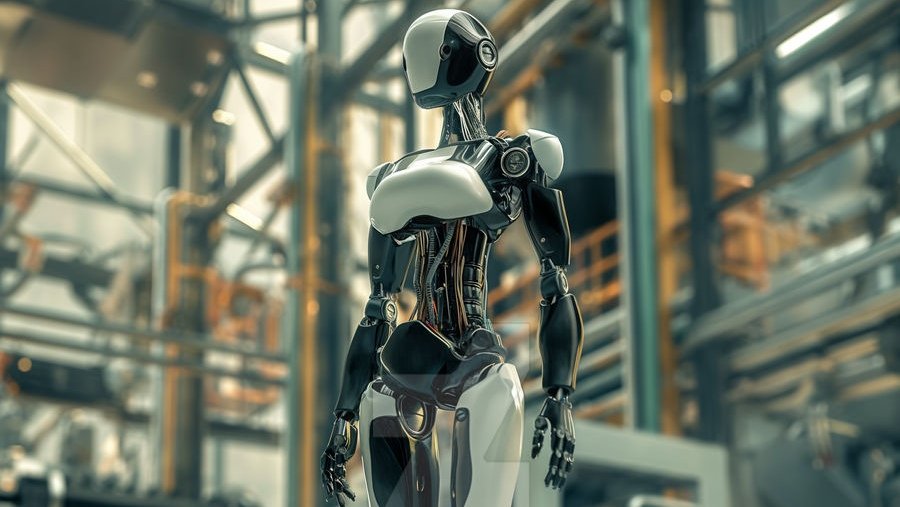
Tesla Bot Gen 3 Is Coming, Clean, Cooking & Amazing Tasks: Tesla is pushing the boundaries of robotics and artificial intelligence with its ambitious Optimus humanoid robot program. The next-generation Tesla Bot Gen 3 concept highlights a future in which humanoid robots could help with household chores, cleaning, cooking, manufacturing, and other repetitive tasks. By combining advanced AI computing, human-like hand movements, and a redesigned mechanical structure, Tesla aims to develop robots that can operate in environments originally designed for people.
The vision behind Tesla Optimus Gen 3 extends beyond industrial automation. A capable humanoid robot could eventually assist with everyday activities, reduce repetitive workloads, and help businesses improve productivity. However, the specifications and capabilities described in current discussions should be treated as reported or projected details unless Tesla officially confirms them.
What Makes Tesla Bot Gen 3 Different?
A Cleaner and More Advanced Humanoid Design
One of the most noticeable changes described for Tesla Bot Gen 3 is its streamlined exterior. Earlier Optimus prototypes featured visible mechanical components, exposed wiring, and skeletal structures. While these designs helped engineers test movement and functionality, a commercial robot needs a more refined and durable appearance.
The proposed Gen 3 design features a fully enclosed body, flexible protective covers, and a more integrated torso. These changes could help protect internal components from dust, reduce exposed pinch points, and make the robot better suited to homes, warehouses, and factories.
The redesigned structure also focuses on weight distribution. By reducing unnecessary mass around the lower legs, wrists, and extremities, engineers could improve balance and movement efficiency. A lighter-feeling design may allow the robot to walk, turn, reach, and handle objects more naturally.
Better Movement and Human-Like Coordination
A useful household robot must do more than stand upright. It needs to navigate narrow spaces, avoid furniture, recognize objects, and coordinate its hands with its movements.
Tesla Optimus Gen 3 is envisioned as a system that combines cameras, onboard computing, joint control, and real-time spatial perception. These technologies could help it understand its surroundings and perform tasks that require several coordinated actions.
For example, cleaning a room might involve identifying clutter, picking up objects, moving around furniture, and operating cleaning equipment. Each step requires the robot to interpret visual information and adjust its movements accordingly.
Tesla Bot Gen 3 Could Clean Your Home
Automated Cleaning and Household Assistance
Cleaning is one of the most promising potential uses for a humanoid robot. Unlike machines designed for a single purpose, a general-purpose robot could eventually handle different household activities using the same body and hands.
Potential tasks could include:
- Picking up clutter and returning objects to designated locations.
- Wiping surfaces such as tables and kitchen counters.
- Collecting laundry and carrying clothes between rooms.
- Emptying small waste containers and organizing household supplies.
- Using cleaning tools while navigating around furniture and people.
These activities require object recognition, safe grip control, and careful movement. A robot must distinguish between fragile objects and heavy items, understand where objects belong, and avoid damaging its surroundings.
Although these applications are technically plausible, reliable, fully autonomous household cleaning remains a major engineering challenge. Real homes contain unpredictable obstacles, delicate objects, pets, children, and changing layouts. The robot would need to handle these situations safely before it could become a dependable everyday assistant.
Can Tesla Bot Gen 3 Cook Food?
AI-Powered Kitchen Assistance
Cooking is another exciting possibility for future humanoid robots. Kitchens contain many objects that require different handling techniques, including utensils, containers, ingredients, and fragile dishes.
A capable robot could potentially assist with basic food preparation, organize ingredients, retrieve utensils, move cookware, and help clean the kitchen after a meal. More advanced systems might eventually follow recipes and coordinate several steps in a cooking process.
However, cooking is significantly more complicated than simply moving objects from one location to another. A robot must understand quantities, recognize food ingredients, manage timing, and respond to unexpected conditions. Handling sharp knives, hot pans, boiling liquids, and open flames introduces additional safety concerns.
The proposed improvements in Optimus Gen 3’s hands could help address some of these challenges, but they do not automatically mean the robot can independently prepare complete meals. Cooking should be considered a potential future application, not a confirmed Gen 3 capability.
The 22-DoF Hand: A Major Robotics Advancement
Tendon-Driven Fingers and Precision Grip
According to the technical description in the supplied source, one of the most important proposed improvements is a 22-degrees-of-freedom hand system. Degrees of freedom describe the independent ways a mechanical system can move. More carefully coordinated movements can help a robot manipulate objects with greater flexibility.
The described architecture relocates finger actuators into the forearms and uses flexible, tendon-like cables to transmit force to the fingers. This approach takes inspiration from human anatomy and could reduce the amount of bulky hardware required inside the palm and wrist.
The proposed hands also incorporate tactile sensors that measure contact forces. Such feedback could help the robot adjust its grip when handling fragile objects such as eggs, glassware, or delicate household items.
For household work, this matters enormously. A robot that can lift a heavy box but cannot safely hold a thin glass would have limited practical value. Combining force sensing with precise finger control could make a wider range of everyday tasks possible.
These specifications remain subject to official confirmation and real-world testing.
Tesla AI5 Processor and Intelligent Robotics
A Powerful Onboard Computing System
Humanoid robots need substantial computing resources to interpret camera data, plan movements, maintain balance, and react to their surroundings. The supplied source describes a proposed dual-chip AI5 computing system for Optimus Gen 3.
This architecture is presented as an upgrade intended to increase processing performance, memory capacity, and bandwidth. If implemented as described, additional computing capability could support more sophisticated perception and movement planning.
An advanced onboard system could help a robot recognize objects, estimate distances, select actions, and adjust its movements without depending on a constant cloud connection for every decision.
AI models could also make human-robot interaction more natural. A person might give a verbal instruction such as “clean the kitchen counter” or “bring the laundry basket.” Turning that request into a reliable sequence of physical actions, however, requires much more than understanding language. The robot must interpret the environment, determine what is safe, and verify that the task has been completed correctly.
Battery Life and Autonomous Charging
How Long Could Optimus Work?
The source describes a proposed 2.3 kWh battery integrated into the robot’s structure. It estimates six to eight hours of operation during light-to-moderate duties, approximately five hours during continuous heavy work, and longer periods in standby mode.
These figures should be treated as reported estimates rather than independently verified performance measurements.
Battery life will depend on the task, walking distance, payload, computing demand, and operating environment. Carrying heavy objects or repeatedly climbing stairs would likely consume more energy than standing still or performing light tasks.
The source also describes autonomous docking, in which the robot uses its vision system to return to a charging station when its battery level becomes low. If reliable, this feature could reduce the need for people to supervise charging.
For commercial deployment, battery efficiency, charging time, durability, and uptime will be important factors in determining whether Optimus can deliver practical value.
Tesla Optimus Gen 3 in Factories and Businesses
From Household Helper to Industrial Worker
Tesla’s robotics ambitions also focus on repetitive and physically demanding industrial work. In factories and warehouses, humanoid robots could potentially move components, transport materials, organize supplies, and assist with routine handling tasks.
Such work can be attractive for automation because tasks may be repetitive and take place in relatively structured environments. A robot could also help reduce human exposure to certain hazardous activities, provided it meets appropriate safety requirements.
The larger challenge is scaling production while maintaining reliability. A robot that works well during a demonstration must also perform consistently over thousands of operating hours. Businesses will need to evaluate maintenance costs, task accuracy, safety, and the expense of integrating robots into existing workflows.
Tesla Bot Gen 3 vs. Traditional Robots
Traditional industrial robots are often designed for specific jobs, such as welding, painting, or moving products along a production line. Humanoid robots pursue a different approach: using a human-like body to perform a broader range of tasks in spaces already designed for people.
This flexibility could reduce the need to redesign every workplace around specialized machinery. However, a humanoid robot may be less efficient than a purpose-built machine for a narrow, repetitive task.
The strongest use cases will depend on whether a general-purpose robot can perform multiple activities accurately and economically.
The Future of Tesla Bot Gen 3
The prospect of a robot that can clean, cook, organize objects, and assist with everyday responsibilities is exciting. Tesla’s broader approach combines robotics, AI computing, battery engineering, and large-scale manufacturing in an effort to make general-purpose automation commercially viable.
Still, mass production, affordability, safe operation, and dependable real-world performance will determine whether these ambitions translate into everyday products. Announced goals and proposed specifications should not be confused with independently demonstrated capabilities.
If Tesla can overcome these challenges, Optimus could eventually become an important tool in factories, warehouses, and potentially homes. For now, the most meaningful milestones will be verified demonstrations of practical tasks, improvements in reliability, and evidence that the robot can deliver useful work at a competitive cost.
Conclusion
Tesla Bot Gen 3 represents an ambitious vision for the future of humanoid robotics. Its proposed enclosed design, dexterous hands, onboard AI, and autonomous charging system point toward a machine intended to perform more than a single repetitive task.
From cleaning homes and assisting with food preparation to supporting industrial operations, the potential applications are extensive. Yet the difference between an impressive prototype and a dependable household robot remains significant. Tesla’s progress will ultimately be measured not by futuristic promises, but by how safely, consistently, and affordably its robots perform useful tasks in the real world.
FAQs
1. What is Tesla Bot Gen 3?
Tesla Bot Gen 3, also known as Optimus Gen 3, is a proposed next-generation humanoid robot designed to perform tasks in homes, factories, and warehouses. Its potential applications include cleaning, cooking assistance, object handling, and repetitive industrial work.
2. What household tasks could Tesla Optimus Gen 3 perform?
Tesla Optimus Gen 3 could potentially help with cleaning, picking up objects, organizing household items, carrying laundry, and assisting with basic food preparation. Its actual capabilities will depend on software development and real-world testing.
3. Can Tesla Bot Gen 3 clean a house automatically?
The robot is envisioned as a potential household assistant that could pick up clutter, wipe surfaces, and use cleaning tools. However, fully autonomous home cleaning requires reliable navigation, object recognition, and safe handling of unpredictable situations.
4. Will Tesla Bot Gen 3 be able to cook food?
Optimus Gen 3 could eventually assist with retrieving ingredients, organizing utensils, and performing basic food-preparation tasks. Independently cooking complete meals has not been established as a confirmed capability.
5. What are the main features of Tesla Bot Gen 3?
The supplied technical description highlights a streamlined enclosed body, tendon-driven hands, tactile sensors, onboard AI computing, an integrated battery, and autonomous charging as proposed features of Optimus Gen 3.
6. What is special about the Tesla Optimus Gen 3 hands?
The described hand design uses tendon-like cables to transmit movement from actuators located in the forearms to the fingers. This arrangement could improve dexterity and leave more room in the palm and wrist for flexible movement.
7. What does 22 degrees of freedom mean in Tesla Bot Gen 3?
22 degrees of freedom (DoF) refers to the independent movements available within a mechanical system. In the proposed hand design, these movements could help the robot grasp, rotate, and manipulate objects with greater precision.
8. How do tactile sensors help Tesla Optimus Gen 3?
Tactile sensors could help the robot detect contact and measure grip forces. This feedback may allow it to handle delicate objects, such as glassware, more carefully while applying greater force when lifting heavier items.
9. Which AI processor is described for Tesla Bot Gen 3?
The supplied source describes a proposed dual-chip Tesla AI5 computing system. It is intended to support visual perception, balance control, movement planning, and other demanding robotics tasks. The configuration and performance claims require official confirmation.
10. What battery capacity is described for Tesla Optimus Gen 3?
The source describes an integrated 2.3 kWh battery module using technology associated with Tesla’s battery systems. This figure should be treated as a reported specification rather than an independently verified production specification.
11. How long could Tesla Bot Gen 3 operate on one charge?
The supplied source estimates approximately six to eight hours of light-to-moderate work and around five hours of continuous heavy material handling. Actual operating time would depend on workload, movement, computing demand, and battery performance.
12. Can Tesla Bot Gen 3 recharge itself?
The described system includes autonomous docking, allowing the robot to navigate backward toward a designated charging station when its battery becomes low. The source estimates a recharge time of one to two hours, but this requires verification under real operating conditions.
13. How could Tesla Optimus Gen 3 be used in factories?
The robot could potentially transport components, handle materials, organize supplies, and perform repetitive tasks. These applications may help businesses automate physically demanding work and improve productivity when robots can operate safely and reliably.
14. What could Tesla Bot Gen 3 cost?
The supplied source mentions a potential target cost of $20,000–$30,000 per unit, while also referencing a higher industry estimate. These figures are estimates, not a confirmed retail price announced by Tesla. The eventual price would depend on manufacturing scale, components, maintenance, and product configuration.
15. When will Tesla Bot Gen 3 be available to the public?
A confirmed public release date for Tesla Bot Gen 3 is not established by the supplied source. Availability will depend on development progress, manufacturing readiness, safety validation, and Tesla’s official product announcements.
Read More:
- Tesla makes good on its Cybercab promise in just two weeks
- All the Most Advanced Flying Cars Coming to Market in 2027
- New Inside Elon Musk’s $119 Billion TERAFAB, Amazing Progress
- Tesla Semi 2026: Major Updates and Features You Need to Know
- Elon Musk Revealed Breakthrough Goals for Starship V4 & Raptor 4 Stunned the whole Rocket industry
1 thought on “Tesla Bot Gen 3 Is Coming, Clean, Cooking & Amazing Tasks”