
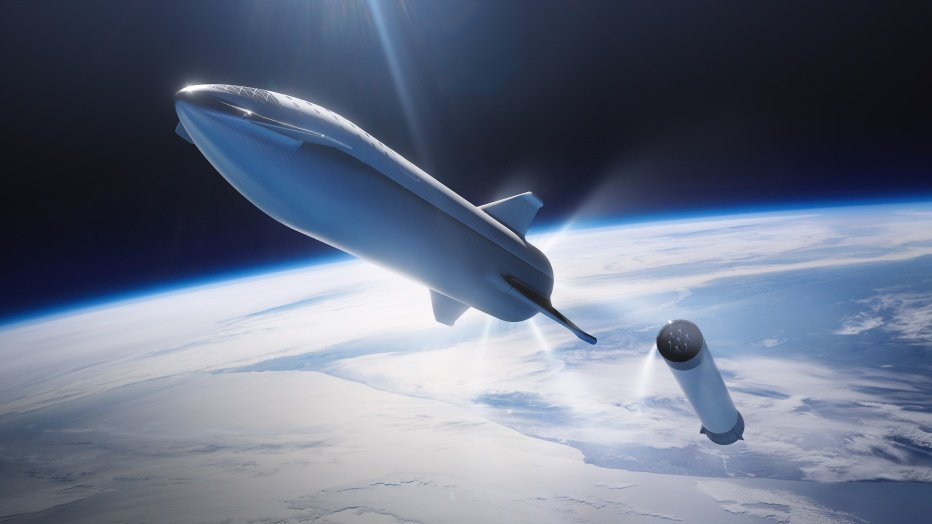
FAA Just Delayed Starship Flight 15 despite Tests Completed, Why? No Launch Until: The aerospace industry is experiencing several major developments as SpaceX, the Federal Aviation Administration (FAA), the U.S. military, and NASA reach important milestones. While SpaceX is preparing for another historic Starship launch, a change in the regulatory schedule has pushed back the highly anticipated Starship Flight 15 mission. Meanwhile, a new re-entry capsule has successfully completed a military logistics experiment, and NASA’s legendary Swift Space Telescope has officially reached the end of its remarkable mission.
These developments highlight how rapidly space technology is evolving, from reusable rockets and military cargo transportation to groundbreaking astronomical research.
FAA Delays Starship Flight 15: Why Is the Launch Date Changing?
Expectations were building at SpaceX Starbase in Texas after the company completed an intensive series of static fire tests over three consecutive days. These tests represented an important step toward preparing the next-generation Starship vehicle for flight.
However, despite the successful completion of these tests, the FAA adjusted the target launch date for Starship Flight 15 to November 12, 2026. This represents a four-day shift compared with the previously anticipated schedule.
The adjustment raises an important question: why does SpaceX need additional time when the major engine tests have already been completed?
The answer involves several important preparations that must happen before a rocket can safely leave the launchpad.
Post-Static Fire Inspections Are Still Required
Completing static fire tests does not automatically mean that a rocket is ready for launch. Following these tests, SpaceX engineers must carefully inspect both the Starship upper stage and Super Heavy booster.
These inspections help identify potential hardware issues, evaluate engine performance, and confirm that critical systems remain ready for flight.
SpaceX must also complete several additional preparations, including:
- Hardware inspections: Engineers examine the ship and booster following their static fire campaigns.
- Flight termination systems: Required safety equipment must be installed and verified.
- Payload integration: The mission’s payload-related preparations must be completed.
- Final launch checks: Teams must verify that essential vehicle and ground systems are ready.
Even when testing goes according to plan, these procedures require time. SpaceX must ensure that every major component is ready before attempting another orbital flight.
A 45-Day Gap Between Starship Flight 14 and Flight 15
Another interesting detail is the turnaround time between consecutive Starship missions.
According to the supplied mission update, the interval between Flight 14 and Flight 15 is expected to reach approximately 45 days.
Although SpaceX continues working toward faster launch operations, vehicle inspections, hardware preparation, and regulatory requirements remain important parts of the process.
The company’s long-term objective is to develop a highly reusable launch system capable of flying repeatedly with minimal turnaround time.
Reducing the time between launches could eventually allow SpaceX to increase its flight frequency and support more ambitious missions.
Starship Flight 15 Could Attempt a Historic Double Catch
One of the most important objectives of Starship Flight 15 is its ambitious recovery demonstration.
SpaceX wants to demonstrate the ability to recover both major stages of its fully reusable launch system during the same orbital mission.
This means attempting to catch the Super Heavy booster and the Starship upper stage using the launch tower’s enormous mechanical arms, popularly known as Mechazilla chopsticks.
How the Mechazilla Catch System Works
The Mechazilla system uses two massive mechanical arms attached to the launch tower. These arms are designed to capture returning rocket stages and hold them above the launch infrastructure.
For the Super Heavy booster, SpaceX has already demonstrated successful tower catches during previous flights.
However, catching Starship itself represents another level of technical difficulty.
The upper stage must complete its flight, re-enter Earth’s atmosphere, manage intense heating, and perform a controlled return toward the launch site.
Successfully recovering both vehicles during one mission would represent an important milestone for fully reusable orbital transportation.
Why a Successful Double Catch Matters
Recovering both stages could significantly change how SpaceX operates its launch system.
Instead of rebuilding or extensively refurbishing expensive rocket hardware after every mission, SpaceX could potentially reuse major components repeatedly.
The potential advantages include:
- Lower launch costs through hardware reuse.
- Faster turnaround times between missions.
- Higher launch frequency for commercial and government customers.
- Improved manufacturing efficiency through repeated vehicle operations.
- Greater support for future Moon and Mars missions.
However, the dual-catch objective remains a challenging demonstration, and its success will depend on vehicle performance, recovery conditions, and regulatory authorization.
SpaceX Starfall Capsule Completes Important Military Cargo Test
While Starship attracts attention with its massive reusable architecture, SpaceX is also exploring another important area of aerospace technology: rapid point-to-point cargo transportation.
The company’s uncrewed Starfall re-entry capsule recently completed a significant milestone connected to an experimental program supported by the U.S. Air Force Research Laboratory (AFRL).
The capsule flew during the Bandwagon 5 rideshare mission, launched aboard a Falcon 9 rocket in October 2026.
Its objective was to demonstrate technologies that could eventually support the transportation of cargo across extremely long distances.
Successful Starfall Capsule Recovery
Following its mission in space, Starfall returned through Earth’s atmosphere and completed a successful splashdown in the Pacific Ocean.
The capsule and its internal experimental cargo pods were subsequently recovered.
This recovery was particularly important because the experiment involved testing how sensitive supplies and equipment perform during the demanding conditions of a spaceflight and atmospheric return.
The experimental pods contained several monitoring instruments designed to measure:
- Temperature changes during the mission.
- Shock levels experienced during transportation.
- Vibration affecting the cargo.
- Conditions that could influence the safety of transported supplies.
The cargo also included practical emergency equipment such as medical kits, food rations, batteries, and a life raft.
These supplies helped demonstrate how future rocket-based transportation systems might support emergency response and military logistics.
Starfall Could Help Shape Future Starship Cargo Missions
The Starfall capsule measures approximately 10.2 feet across and has a reported cargo return capacity of around 2,200 pounds.
Although relatively small compared with Starship, its successful recovery provides valuable experience with re-entry technology and cargo protection.
The broader vision involves using rocket transportation to move essential supplies between distant locations in a fraction of the time required by conventional transportation methods.
For example, a future operational system could potentially deliver emergency equipment, medical supplies, or critical military cargo across continents.
Scaling this concept toward SpaceX Starship could create opportunities for transporting much larger payloads.
However, substantial development, testing, and operational validation would still be necessary before such a system could become a routine transportation service.
NASA Swift Space Telescope Mission Officially Ends After 20 Years
Another major development involves NASA’s legendary Swift Space Telescope, which has officially concluded its remarkable scientific mission.
Launched in November 2004, Swift was originally designed for a mission lasting approximately two years.
Instead, the observatory continued operating for more than 20 years, delivering important discoveries about some of the most energetic events in the universe.
Its research focused on phenomena including gamma-ray bursts, supernovae, and black holes.
Swift Delivered Decades of Scientific Discoveries
Swift became particularly important because of its ability to rapidly detect and study gamma-ray bursts (GRBs).
These extraordinary cosmic explosions release enormous amounts of energy and can provide valuable information about the formation of black holes and the evolution of massive stars.
The telescope helped scientists investigate these events by observing them across multiple wavelengths.
Over its operational lifetime, Swift contributed to approximately 7,000 published research papers, demonstrating its enormous scientific impact.
Its observations also helped astronomers understand how high-energy cosmic events develop and how they influence the surrounding universe.
NASA Attempted to Rescue the Aging Telescope
As Swift continued operating, atmospheric drag gradually lowered its orbit around Earth.
Because the observatory lacked its own propulsion capability for maintaining its original orbit, its long-term future became increasingly uncertain.
In 2025, NASA contracted Catalyst Space Technologies to attempt an orbital rescue using its proposed Link spacecraft.
The mission aimed to approach Swift and perform the complicated operations necessary to stabilize or capture the aging observatory.
However, the rescue attempt encountered technical challenges.
Why the Swift Telescope Rescue Failed
The Link spacecraft successfully approached Swift to within approximately 7.5 to 9.3 miles and captured photographs of the observatory.
This was an important proximity-operation milestone.
However, unexpected issues involving propulsion and reaction wheels prevented the spacecraft from completing a safe capture.
Consequently, the attempt could not restore Swift to its previous operational condition.
Although the physical mission has ended, its scientific contribution is far from over.
Swift’s enormous archive of astronomical observations will remain available to researchers, allowing scientists to continue studying its discoveries for many years.
Three Major Aerospace Developments Shaping the Future
The latest developments demonstrate how different areas of aerospace technology are progressing simultaneously.
| Development | Major Milestone | Potential Impact |
|---|---|---|
| SpaceX Starship Flight 15 | Target launch shifted to November 12, 2026 | Testing advanced rocket recovery and reusability |
| SpaceX Starfall Capsule | Successful Pacific Ocean recovery | Supporting future point-to-point cargo transportation |
| NASA Swift Telescope | Mission concluded after more than 20 years | Preserving decades of astronomical research |
Conclusion: SpaceX and NASA Enter New Chapters in Aerospace History
The delay of Starship Flight 15 demonstrates that successful rocket testing is only one part of preparing for an orbital mission. Additional inspections, safety procedures, and recovery preparations remain essential before launch.
At the same time, the successful recovery of the Starfall capsule highlights the potential of rocket technology beyond conventional satellite launches. Its military cargo experiment could contribute to future research into rapid global transportation.
Meanwhile, NASA’s Swift Space Telescope leaves behind an extraordinary scientific legacy after more than two decades of observations.
Together, these developments illustrate three important directions for the aerospace industry: fully reusable rockets, advanced space-based logistics, and long-term scientific exploration. As SpaceX prepares for its next Starship milestone and NASA continues building on Swift’s discoveries, the future of space technology remains full of possibilities.
FAQs
16 Frequently Asked Questions (FAQs)
1. Why Was Starship Flight 15 Delayed?
Starship Flight 15 was delayed because additional pre-launch preparations and regulatory scheduling requirements remained after SpaceX completed its static fire tests. The FAA adjusted the target launch date to November 12, 2026, representing a four-day shift.
2. When Is SpaceX Starship Flight 15 Expected to Launch?
According to the supplied update, Starship Flight 15 is targeting November 12, 2026. The actual launch will depend on final inspections, safety procedures, vehicle readiness, and regulatory authorization.
3. Did SpaceX Complete Static Fire Tests for Starship Flight 15?
Yes. SpaceX reportedly completed an intensive series of static fire tests over three consecutive days at Starbase, Texas. These tests were an important part of preparing the Starship vehicle for its next flight.
4. What Preparations Are Required Before Starship Flight 15?
SpaceX must complete comprehensive hardware inspections, install and verify flight termination systems, integrate the payload, and conduct final checks of the rocket and ground infrastructure before launch.
5. What Is the Main Objective of Starship Flight 15?
One of the biggest objectives is demonstrating an ambitious dual-catch recovery attempt, targeting the recovery of both the Super Heavy booster and Starship upper stage using the Mechazilla launch tower.
6. What Is the Mechazilla Chopsticks System?
The Mechazilla chopsticks are two enormous mechanical arms attached to SpaceX’s launch tower. They are designed to catch returning rocket stages, allowing SpaceX to recover and potentially reuse expensive hardware.
7. Will SpaceX Attempt to Catch Both Starship Stages During Flight 15?
The mission’s ambitious recovery objective is to attempt to catch both the Super Heavy booster and Starship upper stage during the same mission. This would represent a significant step toward fully reusable rocket operations.
8. How Long Is the Gap Between Starship Flight 14 and Flight 15?
The expected turnaround gap is approximately 45 days, according to the supplied update. This period includes vehicle preparation, inspections, testing, and other pre-launch requirements.
9. What Is SpaceX’s Starfall Re-Entry Capsule?
Starfall is an uncrewed re-entry capsule designed to demonstrate technologies for returning cargo from space to Earth. It is also connected to experimental research into rapid point-to-point transportation.
10. What Was the Bandwagon 5 Mission?
The Bandwagon 5 mission was an October 2026 rideshare flight launched aboard a SpaceX Falcon 9 rocket. It carried the experimental Starfall capsule and AFRL Agile cargo pods for testing space-based cargo transportation technologies.
11. Was the SpaceX Starfall Capsule Successfully Recovered?
Yes. The Starfall capsule successfully splashed down in the Pacific Ocean, and the capsule and its experimental cargo pods were recovered for further evaluation.
12. What Equipment Did Starfall Carry During Its Military Cargo Experiment?
The experimental cargo included sensors for monitoring temperature, shock, and vibration. It also carried emergency supplies such as medical kits, food rations, batteries, and a life raft.
13. What Are the Specifications of the Starfall Capsule?
According to the supplied information, Starfall measures approximately 10.2 feet across and has a reported cargo return capacity of around 2,200 pounds.
14. How Could Starfall Technology Help Future Starship Missions?
Starfall could help validate re-entry, cargo protection, and recovery technologies. Further development could allow these capabilities to scale toward Starship, potentially supporting larger cargo transportation missions.
15. Why Did NASA’s Swift Space Telescope Mission End?
NASA’s Swift Space Telescope mission concluded after more than 20 years of scientific operations. Its aging orbital condition and the unsuccessful attempt to capture and rescue the observatory contributed to the end of its operational mission.
16. What Happened During NASA’s Attempt to Rescue the Swift Space Telescope?
NASA contracted Catalyst Space Technologies in 2025 to attempt a rescue using its Link spacecraft. Link approached Swift to approximately 7.5 to 9.3 miles and photographed the observatory, but propulsion and reaction wheel problems prevented a safe capture. Swift’s scientific data archive will continue supporting astronomical research for years to come.
Read More:
- 2027 Tesla Bot Gen 3 LEARNS 500 INSANE Tasks! AMAZING Upgrade
- Tesla made napping in a Robotaxi easier with its latest update
- Tesla Full Self-Driving becomes main pillar of new Referral Program
- Tesla’s All-New Interior Permanent Magnet Synchronous Reluctance Motor
- Elon Musk Confirms All Tesla Model Q Details Coming in April Company Update