
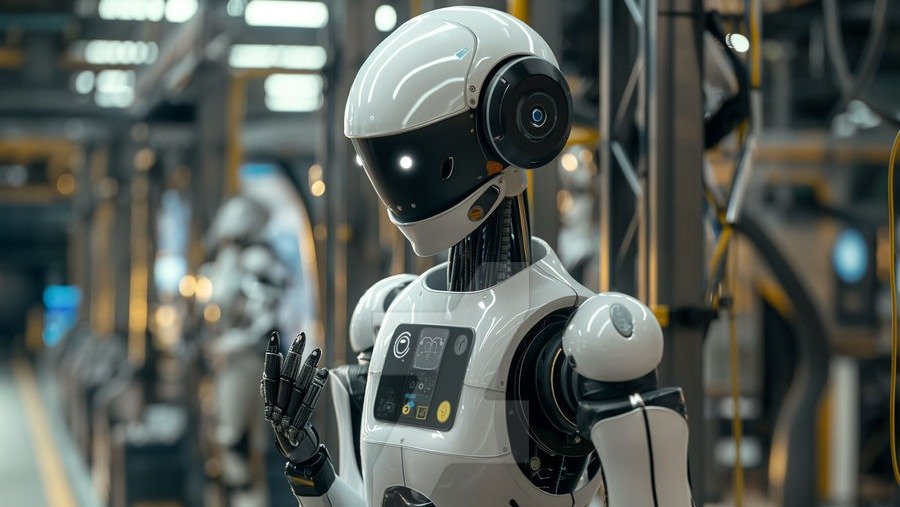
2027 Tesla Bot Gen 3 LEARNS 500 INSANE Tasks! AMAZING Upgrade: The future of humanoid robotics is approaching faster than ever, and Tesla Optimus Gen 3 could become one of the most significant technological breakthroughs of 2027. With Elon Musk pushing toward large-scale robot manufacturing, Tesla is preparing to transform its humanoid robot from an impressive experimental machine into a practical assistant capable of performing hundreds of real-world tasks.
The anticipated Tesla Optimus Gen 3 production rollout in Fremont, California, by late 2027 could mark a major milestone for the robotics industry. Tesla’s ambitious target reportedly includes manufacturing approximately 20,000 robots per week, supported by major improvements in artificial intelligence, computing power, mechanical engineering, and robotic dexterity.
One of the most exciting developments is the expected integration of the AI5 chip around April 2027. This next-generation computing platform is anticipated to deliver approximately 10 times the computing power of AI4, potentially allowing Optimus to understand its surroundings, process information, and perform complicated tasks more efficiently.
However, building a humanoid robot that can walk is only the beginning. The real challenge is creating a machine that can reliably work in factories, clean homes, handle fragile objects, and respond intelligently to unexpected situations.
Tesla Optimus Gen 3: A Massive Upgrade for 2027
Tesla’s third-generation humanoid robot is expected to introduce significant improvements across its hardware and software systems. Unlike earlier prototypes focused primarily on basic movement and demonstrations, Optimus Gen 3 is expected to prioritize practical applications.
The objective is to develop a robot that can perform complex tasks with minimal human supervision.
From organizing household items to handling industrial equipment, Tesla wants Optimus to become a versatile machine capable of adapting to different environments.
The expected AI5 processor could play an important role in achieving this ambition. More computing capacity could help the robot process visual information, understand instructions, recognize objects, and make decisions in real time.
Nevertheless, computing power alone cannot solve every robotics challenge. Tesla must combine advanced AI with reliable motors, sensors, actuators, and highly capable robotic hands.
Inside Tesla’s Robot University: How Optimus Learns Hundreds of Tasks
One of the most interesting parts of Tesla’s robotics strategy is its extensive human data collection program.
At its Palo Alto research facility and Texas operations, Tesla reportedly uses specialized sensor-equipped suits to record human movements. This training initiative has been informally described as a Robot University.
The idea is straightforward: if Tesla wants Optimus to perform human tasks, it needs extensive examples of how humans perform those activities.
40 Cameras and Advanced Sensor Technology
The reported training suits weigh approximately 25 pounds and feature as many as 40 cameras, alongside advanced 3D sensors.
These systems capture detailed information about human movements, hand positions, object interactions, and spatial environments.
The collected information can help Tesla develop AI models that understand how people manipulate objects and complete everyday activities.
For comparison, Tesla vehicles typically use nine cameras, highlighting the substantial amount of visual information involved in humanoid robot training.
Learning Household and Industrial Activities
Tesla’s data collection reportedly covers a wide variety of activities.
Workers record themselves performing tasks such as:
- Preparing sandwiches and handling kitchen equipment.
- Picking up objects and organizing household items.
- Cleaning tables and arranging furniture.
- Installing HVAC components inside vehicles.
- Handling tools and performing repetitive industrial activities.
These examples are important because real-world environments are unpredictable.
A robot must understand more than individual movements. It needs to recognize objects, follow instructions, complete multiple steps, and adjust its behavior when something unexpected happens.
Tesla Optimus Gen 3 Could Perform 500 Different Tasks
The biggest opportunity for Optimus Gen 3 is its potential ability to perform hundreds of different activities using a combination of advanced AI and improved mechanical systems.
Imagine a humanoid robot entering a house and spending an hour cleaning, organizing, and completing everyday chores.
It could collect toys, clear kitchen tables, load dishwashers, fold laundry, and organize household supplies.
However, these activities require much more sophisticated capabilities than simply walking or moving an object.
Advanced Robotic Hands and Human-Like Dexterity
The hands could become one of the most important improvements in Tesla Optimus Gen 3.
A household assistant must understand how much pressure to apply when handling different objects.
For example, picking up a plastic toy requires a different grip from holding a delicate drinking glass.
Similarly, folding clothes requires flexible finger movements, while loading a dishwasher requires careful object positioning.
Tesla must develop hands capable of combining precision, flexibility, and durability.
Advanced tactile sensors could help Optimus understand whether an object is slipping, whether it is holding something securely, and how much pressure is necessary.
Learning From Mistakes and Unexpected Situations
Another important challenge is error recovery.
Imagine Optimus accidentally dropping a cup while cleaning a kitchen.
A genuinely intelligent robot should recognize that something went wrong, understand the situation, and respond appropriately.
If liquid spills onto the floor, it should identify the spill, locate a suitable cleaning tool, and clean the area without creating additional hazards.
These capabilities require sophisticated environmental understanding and decision-making.
The goal is not simply to make a robot perform a task once. It is to create a machine that can complete the task reliably under different circumstances.
How Tesla Will Measure Optimus Gen 3 Performance
Impressive demonstrations are exciting, but actual performance will determine whether Optimus becomes commercially successful.
Several important measurements can help evaluate its progress.
Successful Tasks Per Hour
The number of completed tasks per hour can reveal how productive a robot is compared with a human worker or earlier robotic systems.
First-Attempt Success Rate
A robot that completes tasks correctly on its first attempt requires less supervision and fewer repeated actions.
Human Intervention Requirements
The number of times a human must correct, restart, or assist the robot is another important measurement.
Ultimately, reliability and productivity will matter more than impressive demonstration videos.
Tesla’s 20,000 Robots Per Week Manufacturing Ambition
Tesla’s manufacturing ambitions for Optimus are enormous.
The anticipated Fremont production line has been described as having a theoretical capacity of approximately 1 million robots annually, equivalent to roughly 19,200 robots per week.
This is remarkably close to the company’s ambitious target of 20,000 robots per week.
Tesla has also discussed a future manufacturing line in Texas with a long-term capacity target of approximately 10 million robots annually.
However, production capacity and actual manufacturing output are two different things.
Thousands of Components Must Work Together
A humanoid robot contains thousands of interconnected components, including:
- Custom electric motors and actuators.
- Precision gears and mechanical joints.
- Advanced wiring systems.
- Tactile sensors and cameras.
- Computing hardware and batteries.
- Specialized robotic hands.
Every component must operate consistently.
If one critical part fails, the entire production process can slow down.
This makes manufacturing reliability one of Tesla’s biggest challenges.
Why Robotic Hands Remain a Major Challenge
The hands are particularly difficult to manufacture because they combine numerous small mechanical components with sensitive electronics.
They must be strong enough for repetitive industrial activities while remaining precise enough to handle delicate objects.
Mechanical friction, inconsistent sensor readings, and component wear can all affect performance.
Tesla will need strict quality inspections and reliable suppliers to achieve consistent production at scale.
Can Tesla Really Produce 20,000 Optimus Robots Every Week by 2027?
Tesla’s manufacturing target is ambitious, but reaching it will require major improvements in production efficiency, supply chain management, and component reliability.
Early production reportedly reached several hundred robots per week by mid-2026. Increasing that output to approximately 20,000 units weekly would represent an extraordinary manufacturing expansion.
The company must also ensure that every robot meets demanding performance and safety requirements.
Mass production will only become commercially meaningful when Optimus can operate reliably outside controlled factory demonstrations.
Conclusion: Tesla Optimus Gen 3 Could Change the Future of Robotics
The anticipated 2027 Tesla Optimus Gen 3 represents an ambitious combination of artificial intelligence, advanced robotic hardware, human movement training, and large-scale manufacturing.
With the potential integration of the AI5 chip, extensive human demonstration data, upgraded robotic hands, and a manufacturing target of 20,000 robots per week, Tesla is attempting to move humanoid robotics toward practical commercial applications.
The first major opportunities could involve dangerous, repetitive, and physically demanding industrial activities. Household assistance could eventually become another important application as the technology improves.
However, the biggest question remains whether Tesla can transform its ambitious demonstrations into dependable real-world performance.
If Tesla successfully solves the challenges of dexterity, autonomous decision-making, reliability, and mass production, Optimus Gen 3 could become one of the most important humanoid robotics platforms of the coming decade.
FAQs
1. What is Tesla Optimus Gen 3?
Tesla Optimus Gen 3 is the anticipated third-generation humanoid robot developed by Tesla. It is designed to perform household chores, industrial tasks, object handling, and other activities using advanced artificial intelligence and robotics.
2. When will Tesla Optimus Gen 3 enter production?
According to the supplied information, Tesla Optimus Gen 3 is expected to enter production in Fremont, California, by late 2027.
3. How many robots does Tesla plan to manufacture per week?
Tesla’s ambitious manufacturing target is approximately 20,000 Optimus robots per week. Achieving this goal will require major improvements in manufacturing efficiency and component reliability.
4. What is the AI5 chip in Tesla Optimus Gen 3?
The AI5 chip is an anticipated next-generation computing platform expected to power advanced AI capabilities. The supplied source suggests it could deliver approximately 10 times the computing power of AI4.
5. When could Tesla integrate the AI5 chip into Optimus?
The supplied information points to an expected integration timeline around April 2027, although the final schedule has not been independently confirmed.
6. How will Tesla Optimus Gen 3 learn different tasks?
Optimus is expected to learn through extensive human demonstration data, AI training, and real-world testing. Workers reportedly use specialized sensor-equipped suits to record human movements and activities.
7. What is Tesla’s Robot University?
The term Robot University informally describes Tesla’s human data collection and training program. It involves recording human activities to help Optimus learn how to perform household and industrial tasks.
8. How many cameras are used in Tesla’s robot training suits?
According to the supplied source, Tesla’s specialized training suits can feature up to 40 cameras, along with 3D sensors, to capture detailed human movements and interactions.
9. Can Tesla Optimus Gen 3 perform household chores?
The anticipated capabilities include folding laundry, collecting toys, clearing tables, loading dishwashers, organizing household items, and cleaning surfaces. However, dependable autonomous household performance still needs to be demonstrated.
10. Will Tesla Optimus Gen 3 have improved robotic hands?
Yes, upgraded hands are expected to be a major development. They will need advanced tactile sensors, precise finger movements, and adjustable grip strength to handle both delicate and heavy objects.
11. Can Tesla Optimus Gen 3 recognize and recover from mistakes?
One of the major development goals is error recovery. Optimus must recognize problems such as slipping objects or spilled liquids and determine appropriate corrective actions without requiring constant human assistance.
12. How many Optimus robots can Tesla manufacture annually?
The anticipated Fremont production line has a theoretical capacity of approximately 1 million robots annually. A future Texas manufacturing line has a longer-term target of approximately 10 million robots per year.
13. Why is mass-producing Tesla Optimus Gen 3 so difficult?
Mass production requires thousands of components, including motors, actuators, gears, sensors, wiring, and robotic hands, to work consistently. Supply chain stability, quality control, and component reliability are major challenges.
14. What will be the first major applications of Tesla Optimus Gen 3?
Initial applications are expected to focus on industrial automation, particularly dangerous, repetitive, and physically demanding activities. Household assistance could become another important application as the technology develops.
15. Could Tesla Optimus Gen 3 change the future of humanoid robotics?
Yes. If Tesla successfully achieves its AI, hardware, reliability, and manufacturing goals, Optimus Gen 3 could transform industrial automation and eventually everyday household assistance. Its real-world performance and commercial success will determine its long-term impact.
Read More:
- Tesla made napping in a Robotaxi easier with its latest update
- Tesla Full Self-Driving becomes main pillar of new Referral Program
- Tesla’s All-New Interior Permanent Magnet Synchronous Reluctance Motor
- Elon Musk Confirms All Tesla Model Q Details Coming in April Company Update
- SpaceX Reveals “Florida to Starbase” Landing Plan Stunned the Industry
1 thought on “2027 Tesla Bot Gen 3 LEARNS 500 INSANE Tasks! AMAZING Upgrade”