
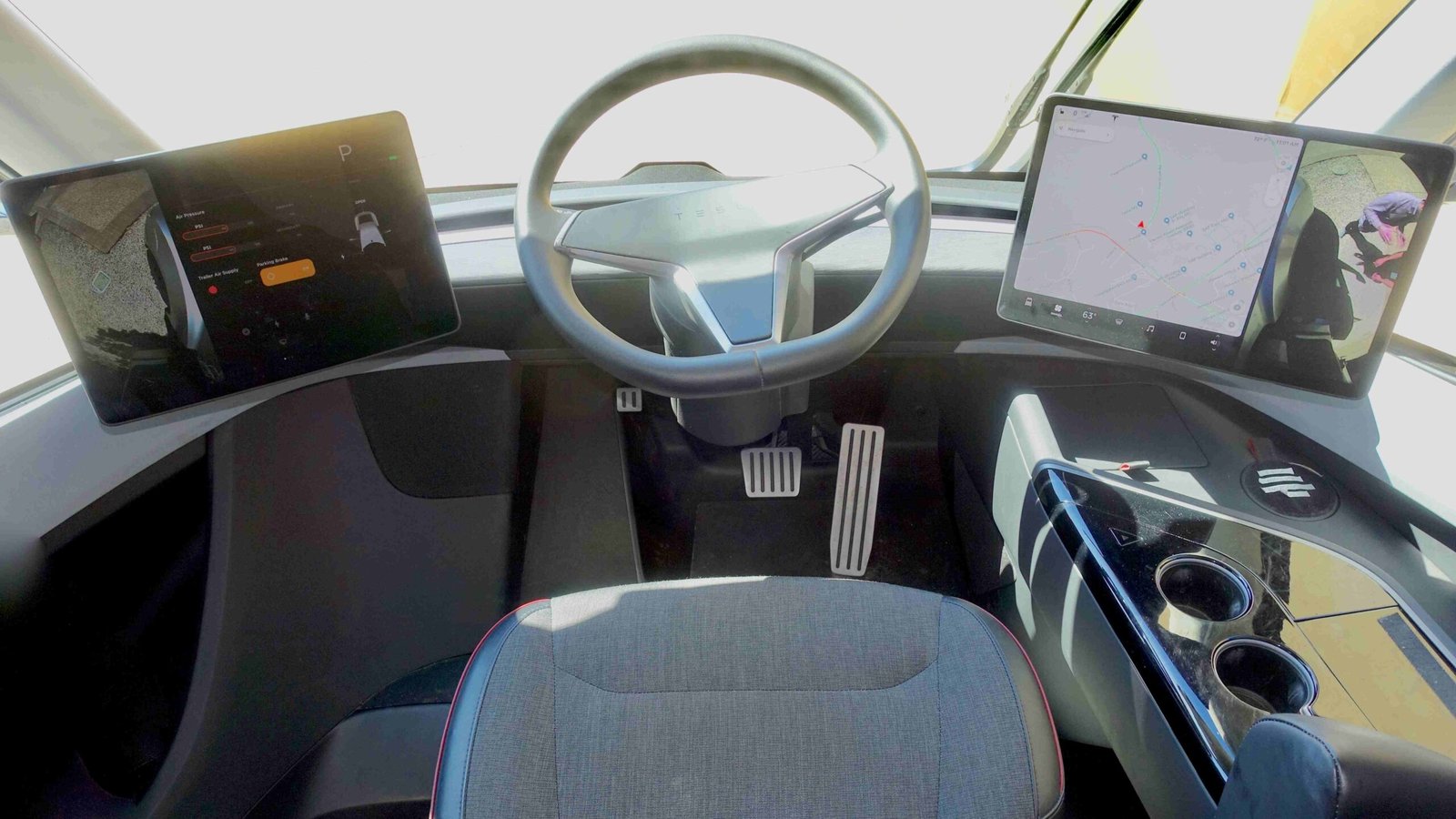
Elon Musk’s Tesla Semi 2.0 Massive UPDATE | Nearly 1,000 Trucks: Tesla is entering a transformative era in the global transportation industry, with two major projects positioning the company for significant long-term growth: the Tesla Semi 2.0 electric heavy-duty truck and the revolutionary CyberCab autonomous robotaxi. While Tesla’s passenger vehicles continue attracting worldwide attention, these next-generation programs could fundamentally change how goods are transported and how people travel in urban environments.
Recent developments across Nevada, Texas, and Chicago highlight Tesla’s growing commercial ambitions. From major fleet orders and improved battery technology to innovative manufacturing processes, the company is moving closer to making electric freight transportation and autonomous mobility mainstream.
The latest Tesla Semi developments are particularly significant, with major commercial commitments pointing toward hundreds and potentially thousands of electric trucks entering real-world operations.
Tesla Semi 2.0: Massive Fleet Deployments Signal a New Era
Tesla has confirmed that its first major shipment of 50 Tesla Semi trucks destined for Chicago is underway. This represents an important milestone for the company’s heavy-duty electric vehicle program.
The development is especially significant because Tesla has historically provided limited information about exact Semi delivery numbers. Its dedicated Nevada manufacturing facility is ultimately designed to support annual production capacity of approximately 50,000 trucks.
With commercial demand increasing, Tesla appears to be transitioning from limited fleet testing toward larger-scale manufacturing and deployment.
HMD Trucking Partnership Brings 50 Tesla Semis to Chicago
One of the most important developments involves HMD Trucking, a family-owned transportation company established in 1998.
The company operates more than 650 diesel trucks and placed an order for 50 Tesla Semis following Tesla’s production announcement. Its first vehicle was officially registered in Illinois.
The Chicago deployment will provide an important real-world testing opportunity. Unlike California and other warmer regions, Chicago experiences extremely cold winters, snow, freezing temperatures, and challenging road conditions.
These environmental conditions will help demonstrate whether the Tesla Semi 2.0 can consistently deliver reliable performance throughout the year.
HMD Trucking is also developing its own dedicated charging infrastructure because Tesla’s high-powered Megacharger network remains concentrated primarily along western highway corridors, including I-5 and I-10.
The company plans to use the electric trucks primarily for regional transportation around Chicago.
Tesla Semi Efficiency Impresses During Long-Distance Testing
Tesla’s internal testing has also produced encouraging efficiency figures.
During a summer endurance test covering more than 4,000 miles, the Tesla Semi reportedly averaged approximately 1.74 kWh per mile.
This figure comes remarkably close to Tesla’s advertised efficiency target of 1.7 kWh per mile.
Efficiency is one of the most important factors determining whether electric semi-trucks can compete economically with traditional diesel-powered transportation.
Lower energy consumption means reduced operating expenses, potentially allowing fleet operators to achieve substantial savings over the lifetime of their vehicles.
Companies such as Paper Transport have also been gathering real-world operational data through their Tesla Semi deployments in the Chicago market.
Tesla Semi Orders Approach Massive Commercial Scale
HMD Trucking is not the only company showing interest in Tesla’s electric freight platform. Several major commercial agreements indicate growing demand for heavy-duty electric trucks.
Major Tesla Semi Fleet Commitments
The reported commercial commitments include:
- Einride: 500 electric semi-trucks.
- WIV: 370 Tesla Semi units.
- IMC Logistics: 50 trucks for West Coast operations.
- Zetscale Alliance: A major 2,500-truck supply agreement.
These commitments demonstrate the potential scale of Tesla’s commercial transportation business.
If these orders translate into completed deliveries, Tesla could establish itself as a major supplier in the emerging electric heavy-duty trucking market.
Giga Texas Begins Using Tesla Semi 2.0 Internally
Another interesting development has emerged from Giga Texas, where at least three redesigned Tesla Semis have reportedly been spotted hauling vehicle transport trailers around the Austin manufacturing facility.
This suggests Tesla is beginning to use its own electric trucks for internal logistics operations.
The strategy is important because Tesla can collect valuable performance data while reducing dependence on conventional transportation equipment.
Internal deployments also allow engineers to identify potential improvements in vehicle reliability, charging performance, maintenance requirements, and operating efficiency.
Tesla Semi Pricing Reflects Premium Electric Technology
The financial details surrounding HMD Trucking’s order also provide insight into the commercial market.
Company owner Henry Malucas reportedly revealed that the 50-truck agreement is worth approximately $15 million.
That translates to roughly $300,000 per truck.
Although this is considerably higher than the original $180,000 price discussed during the Tesla Semi’s 2017 unveiling, it is relatively close to the approximately $290,000 long-range production pricing discussed in earlier plans.
For commercial operators, the purchase price is only one part of the equation. Electricity costs, maintenance, battery durability, charging infrastructure, and vehicle uptime will ultimately determine profitability.
Battery Technology: Tesla Faces the Fast-Charging Versus Swapping Battle
The future of electric freight transportation depends heavily on battery innovation.
Heavy-duty trucks require enormous energy capacity because they transport substantial cargo over long distances. Consequently, improvements in battery density, charging speed, durability, and manufacturing costs could determine which companies dominate the industry.
Falling Battery Prices Could Accelerate Electric Truck Adoption
According to the International Energy Agency, commercial vehicle battery prices have declined significantly since 2020.
Further reductions could make electric heavy-duty trucks more affordable over the coming years.
Industry projections suggest that heavy-duty electric truck purchase prices could decrease by approximately 15% to 35% over the next five years.
Lower battery costs would give manufacturers greater flexibility to reduce vehicle prices while maintaining competitive driving ranges.
Battery Durability Becomes a Critical Advantage
Battery lifespan is equally important for commercial transportation companies.
For example, CATL’s Tekktrans 2 commercial battery platform has been presented with ambitious durability targets, including up to 12 years or 1.5 million kilometers of service life.
The platform is also associated with retaining approximately 70% of its original capacity and reaching energy density figures of 170 Wh/kg.
These developments demonstrate how aggressively battery manufacturers are competing to improve commercial vehicle technology.
Battery Swapping Challenges Tesla Megacharging
One of the biggest technological debates in electric trucking involves ultra-fast charging versus battery swapping.
Tesla’s approach focuses on high-powered charging infrastructure designed to replenish large battery packs during scheduled stops.
Meanwhile, competing companies are developing battery-swapping stations that can replace depleted heavy-truck battery packs in approximately five minutes.
Battery swapping could be particularly attractive for transportation businesses operating around the clock.
However, fast charging offers advantages for predictable regional routes and dedicated depot operations.
Tesla’s long-term success will depend on demonstrating that its Megacharger ecosystem provides competitive total cost of ownership (TCO) while maintaining high vehicle availability.
Tesla CyberCab: Elon Musk’s Vision for Driverless Urban Transportation
While the Tesla Semi focuses on commercial freight, the Tesla CyberCab represents an entirely different transportation opportunity.
The CyberCab is designed specifically for autonomous passenger transportation rather than traditional individual vehicle ownership.
Looking toward 2027, Tesla aims to develop a dedicated robotaxi platform capable of operating within a driverless transportation network.
A Radical Two-Seat Design Without Traditional Controls
Unlike conventional passenger vehicles, the CyberCab features a completely different interior philosophy.
Its proposed design eliminates traditional driving controls, including the steering wheel and conventional driver-focused dashboard.
Instead, the vehicle is designed as a two-seat autonomous transportation pod optimized for short urban journeys.
This simplified configuration could help Tesla reduce manufacturing complexity while maximizing passenger transportation efficiency.
Unboxed Manufacturing Could Transform CyberCab Production
Tesla’s innovative unboxed manufacturing process is another important part of the CyberCab strategy.
Traditional vehicle manufacturing generally follows a sequential assembly process in which the vehicle moves through different production stages.
Tesla’s unboxed approach aims to manufacture separate vehicle sections simultaneously before combining them during final assembly.
This could reduce factory floor requirements, simplify production operations, and improve manufacturing throughput.
If successfully implemented at scale, the approach could provide Tesla with a major manufacturing advantage.
Fleet-Based Economics Could Make Robotaxis More Affordable
The CyberCab is designed around a fleet-based business model.
Instead of producing vehicles for millions of individual customers with different preferences, Tesla can focus on standardized vehicles optimized for frequent passenger transportation.
Higher utilization could allow robotaxi operators to distribute vehicle ownership, maintenance, charging, and insurance expenses across more passenger journeys.
However, the economics will depend heavily on autonomous driving reliability, regulatory approval, maintenance costs, and passenger demand.
Tesla’s 2027 Roadmap: Production, Autonomy, and Commercial Expansion
As Tesla approaches 2027, the company’s biggest challenge will be transforming promising engineering programs into reliable, scalable commercial businesses.
Tesla Semi Production Must Scale Rapidly
For the Semi program, the priority is expanding production capacity at Nevada and fulfilling commercial fleet commitments.
Tesla must also demonstrate that its trucks can operate reliably across different climates, transportation routes, and charging environments.
Successful deployments with companies such as HMD Trucking could provide valuable evidence of the Semi’s commercial potential.
CyberCab Must Prove Autonomous Reliability
The CyberCab faces a different set of challenges.
Tesla must synchronize manufacturing capacity with autonomous driving software development, regulatory approvals, and fleet management infrastructure.
A successful robotaxi network requires much more than producing autonomous vehicles.
It also needs efficient routing, cleaning, charging, maintenance, passenger support, and continuous software improvements.
These systems must operate together to deliver dependable transportation without human drivers.
Conclusion: Tesla Semi 2.0 and CyberCab Could Redefine Transportation
Tesla’s Semi 2.0 and CyberCab represent two major opportunities to expand beyond traditional passenger vehicle manufacturing.
The Semi is targeting the enormous commercial freight market through improved efficiency, large fleet commitments, and dedicated charging infrastructure. Meanwhile, the CyberCab could introduce a new transportation model built around autonomous vehicles and high-utilization robotaxi networks.
The reported commercial orders, internal factory deployments, and battery technology improvements suggest that Tesla’s ambitions extend far beyond manufacturing electric cars.
However, execution will determine the ultimate outcome. Tesla must prove its ability to scale production, deliver reliable autonomous technology, and establish economically sustainable transportation networks.
If these programs reach their intended potential, the Tesla Semi could transform long-distance freight transportation, while the CyberCab could reshape urban mobility for millions of passengers.
FAQs
1. What is the Tesla Semi 2.0?
The Tesla Semi 2.0 is Tesla’s next-generation heavy-duty electric truck designed to transform commercial freight transportation. It focuses on improved efficiency, long-distance performance, advanced battery technology, and lower operating costs.
2. How many Tesla Semi trucks are being delivered to Chicago?
Tesla has confirmed that its first major batch of 50 Tesla Semi trucks destined for Chicago is underway. The shipment is associated with HMD Trucking, which plans to use the electric trucks for regional transportation operations.
3. What is HMD Trucking’s Tesla Semi order worth?
HMD Trucking’s reported order for 50 Tesla Semis is valued at approximately $15 million, placing the estimated cost at around $300,000 per truck.
4. How efficient is the Tesla Semi 2.0?
During a summer endurance test covering more than 4,000 miles, the Tesla Semi reportedly averaged approximately 1.74 kWh per mile, approaching Tesla’s advertised efficiency target of 1.7 kWh per mile.
5. What companies have placed large Tesla Semi orders?
Several commercial operators have reportedly committed to Tesla Semi purchases, including Einride with 500 trucks, WIV with 370 trucks, IMC Logistics with 50 trucks, and the Zetscale Alliance with a 2,500-truck agreement.
6. What is Tesla’s planned annual Semi production capacity?
Tesla’s dedicated Nevada Semi manufacturing facility is engineered to eventually support annual production of approximately 50,000 electric trucks, although reaching this capacity will depend on manufacturing expansion and production ramp-up.
7. Why is HMD Trucking testing Tesla Semis in Chicago?
Chicago provides challenging operating conditions, including freezing winter temperatures, snow, and demanding regional transportation routes. Testing in this environment will help demonstrate the Tesla Semi’s reliability and performance in different weather conditions.
8. How much does a Tesla Semi cost?
The reported HMD Trucking agreement suggests an estimated price of approximately $300,000 per Tesla Semi. This is higher than the original $180,000 price discussed in 2017 but relatively close to the previously discussed $290,000 long-range pricing.
9. What is the Tesla Megacharger network?
The Tesla Megacharger network is a high-powered charging infrastructure designed specifically for heavy-duty electric trucks. It enables Tesla Semi operators to recharge large battery packs during transportation stops and scheduled depot charging.
10. What is the difference between battery swapping and Megacharging?
Battery swapping replaces a depleted battery pack with a fully charged one, potentially within five minutes. Megacharging replenishes the existing battery pack using high-powered charging equipment. Swapping can benefit continuous operations, while charging works well for predictable routes and scheduled stops.
11. What is CATL’s Tekktrans 2 battery platform?
CATL’s Tekktrans 2 is a commercial battery platform designed for heavy-duty transportation. Its reported specifications include up to 12 years or 1.5 million kilometers of service life, approximately 70% capacity retention, and energy density reaching 170 Wh/kg.
12. What is the Tesla CyberCab?
The Tesla CyberCab is an upcoming autonomous electric robotaxi designed specifically for driverless passenger transportation. Unlike conventional passenger cars, it features a dedicated two-seat configuration intended for urban journeys and high-utilization robotaxi fleets.
13. Does the Tesla CyberCab have a steering wheel?
The proposed Tesla CyberCab design does not include a traditional steering wheel or conventional driving controls. Its cabin is designed around autonomous transportation rather than manual driving.
14. What is Tesla’s unboxed manufacturing process?
Tesla’s unboxed manufacturing process is an innovative production approach that involves assembling different vehicle sections simultaneously before combining them during final assembly. The objective is to reduce manufacturing complexity, factory space requirements, and production costs.
15. When could Tesla CyberCab production and deployment expand?
Tesla’s broader CyberCab ambitions extend toward 2027 and beyond. However, large-scale deployment will depend on manufacturing readiness, autonomous driving reliability, regulatory approvals, and the development of supporting robotaxi infrastructure.
16. How could Tesla Semi 2.0 and CyberCab transform transportation?
The Tesla Semi 2.0 could reduce freight transportation emissions and operating expenses through electric trucking, while the CyberCab could introduce a new model of autonomous urban mobility. Together, these programs could help Tesla expand beyond passenger vehicles into commercial logistics and driverless transportation networks.
Read More:
- FAA turned down free Starlink offer before nationwide ground stop, Elon Musk says
- Your Tesla could be in the Robotaxi fleet next month, Elon Musk claims
- Tesla tuner pleading to save Cybertruck also wants to build CyberSUV
- Tesla just doubled its Miami Robotaxi geofence
- It’s mind-blowing! What SpaceX Starship Flight 15 just Did Shocked whole Industry
1 thought on “Elon Musk’s Tesla Semi 2.0 Massive UPDATE | Nearly 1,000 Trucks”