
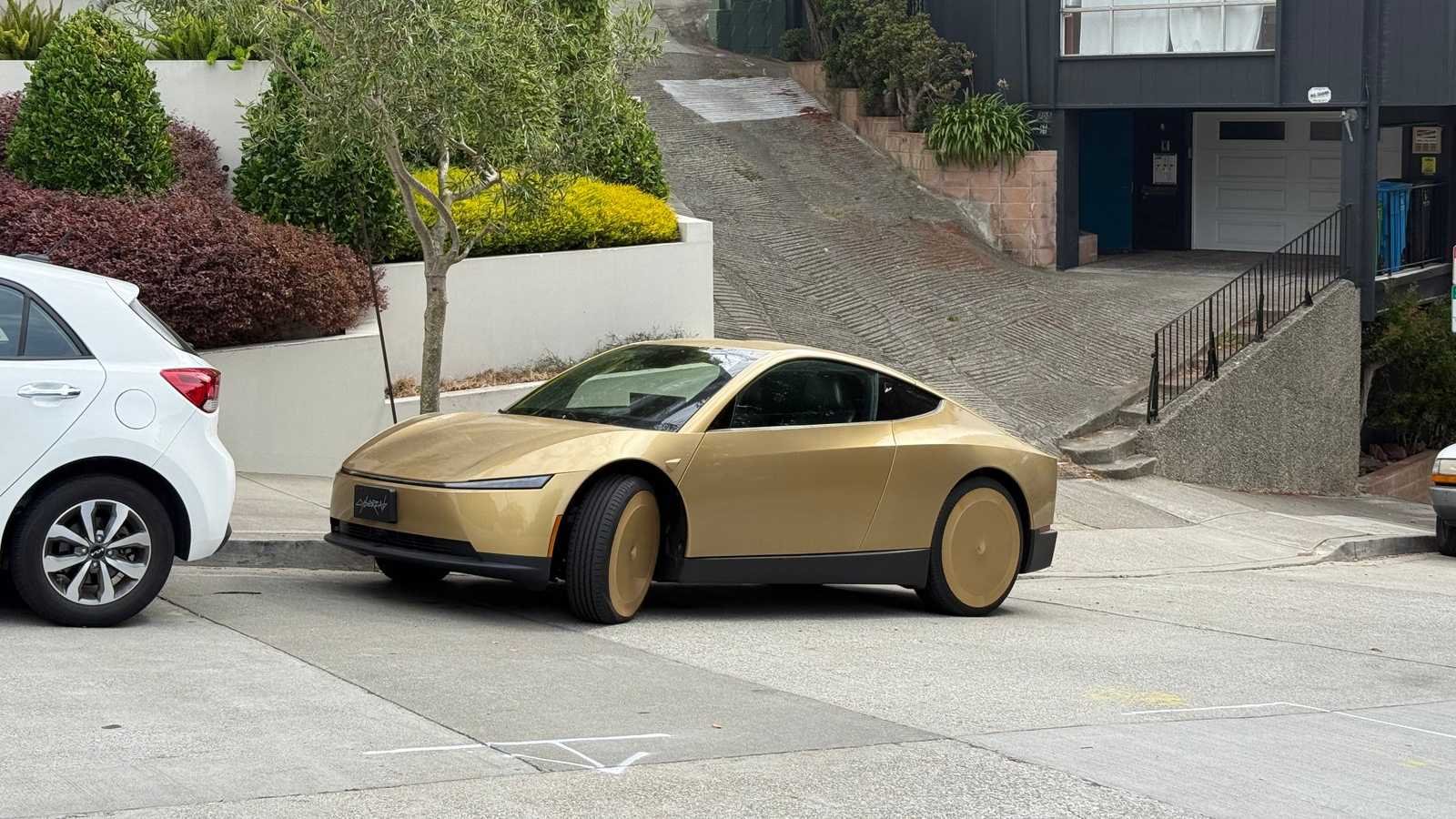
Tesla Cybercab Massive Update Ever, Goes on Sale, New Version & More: Tesla Cybercab is entering an important new phase as Tesla moves closer to making its autonomous transportation vision a reality. After years of development, testing, and manufacturing preparation, the company has reportedly started offering limited individual sales of its futuristic two-seat robotaxi. At the same time, Tesla is expanding its commercial Robotaxi network, preparing an updated Cybercab version, and increasing production capacity at its Texas factory.
These developments represent a major step in Tesla’s strategy to transform transportation through fully autonomous electric vehicles. With an estimated starting price of $29,990, a new liquid silver exterior, a smaller battery option, and round-the-clock robotaxi operations, the Cybercab is becoming one of the company’s most closely watched projects.
However, its unusual ownership model, mandatory autonomy subscription, and operating restrictions raise important questions for potential buyers.
Tesla Cybercab Goes on Sale With Limited Individual Invitations
One of the biggest developments is Tesla’s decision to begin offering the Cybercab to selected individual customers. Instead of opening sales to everyone immediately, the company has reportedly started sending purchase invitations to a limited group of potential buyers.
According to the reported details, the Tesla Cybercab price is approximately $29,990 before taxes, making it one of the company’s most affordable vehicles. Interested customers are required to place a $1,000 non-refundable deposit, while initial deliveries are targeted for December.
This limited purchasing approach suggests Tesla wants to gradually introduce private ownership while continuing to develop its commercial robotaxi operations.
The $299 Monthly Autonomy Subscription
The most unusual part of the Cybercab ownership experience is its subscription-based autonomous driving system.
Customers purchase the physical vehicle, but accessing its autonomous driving capabilities reportedly requires a separate monthly subscription costing $299.
The first month is reportedly included with the initial purchase package. After that, owners must maintain an active subscription to continue using the autonomous functionality.
If the subscription expires or is canceled, the vehicle’s autonomous operation becomes unavailable under the reported terms.
Interestingly, Elon Musk has publicly suggested that $299 per month is too expensive and indicated that a price closer to $115 per month could be more appropriate. However, this suggestion does not represent a confirmed subscription price reduction.
Consequently, early buyers may face a relatively affordable purchase price but significantly higher long-term ownership costs.
Tesla Cybercab Ownership Rules and Restrictions
Although the Cybercab is becoming available to selected individual customers, owning one reportedly comes with several restrictions.
Unlike traditional Tesla vehicles, the Cybercab is designed around a controlled autonomous transportation ecosystem.
Personal Use Only
Individual owners cannot independently add their Cybercab to Tesla’s commercial robotaxi network.
They also cannot use it for commercial transportation services, including Uber, DoorDash, or third-party rental operations, without future authorization from Tesla.
This restriction separates private Cybercab ownership from Tesla’s commercial robotaxi business.
Geofenced Operating Areas
Another important limitation involves geographic restrictions.
The Cybercab’s operation is reportedly limited to supported service areas, initially connected to Tesla’s active robotaxi markets in Texas.
Software-based geofencing can restrict where the vehicle operates, and Tesla may modify these boundaries as its autonomous network expands.
Limited Customization Options
Tesla is also reportedly restricting certain aftermarket modifications.
Exterior wraps, decals, modified window tint, and aftermarket wheels may not be permitted under the current ownership conditions.
These limitations allow Tesla to maintain consistent vehicle configurations across its autonomous fleet and privately owned Cybercabs.
Two-Seat Interior Design
The Cybercab features a dedicated two-seat configuration, making it very different from conventional family vehicles.
Children under 13 reportedly require an accompanying adult and appropriate safety equipment.
As a result, the Cybercab is primarily designed for individual passengers and couples rather than larger families.
Tesla Cybercab Specifications: Range, Weight, Motor, and Technology
The Cybercab has been engineered around efficiency, simplicity, and autonomous transportation.
Its lightweight construction and aerodynamic design are intended to reduce energy consumption while supporting frequent urban journeys.
According to the specifications discussed in the report, the vehicle offers several notable features.
Key Tesla Cybercab Specifications
| Specification | Reported Details |
|---|---|
| Estimated Starting Price | $29,990 |
| Reservation Deposit | $1,000 |
| Estimated Driving Range | 290 miles |
| Battery Configuration | Approximately 48 kWh |
| Vehicle Weight | Around 3,113 lbs |
| Length | 175 inches |
| Height | Approximately 55.4 inches |
| Width | 69 inches |
| Electric Motor | Single permanent magnet motor |
| Motor Output | Approximately 219 horsepower |
| Drivetrain | Front-wheel drive |
| Seating Capacity | Two passengers |
| Cargo Capacity | 20.2 cubic feet |
| Maximum Cargo Payload | 100 kg |
One particularly interesting feature is the Cybercab’s automatic butterfly doors, which are designed to open through phone recognition.
The vehicle also includes a rear cargo compartment with approximately 20.2 cubic feet of storage space. Unlike several traditional Tesla models, it reportedly does not feature a front trunk.
Advanced Cameras and Electronic Braking
The Cybercab reportedly uses nine cameras, including eight exterior-facing cameras and one interior camera.
An interior radar system helps classify occupants and support airbag-related safety functions.
Another important engineering feature is its fluidless electronic brake-by-wire system. This technology replaces conventional hydraulic braking arrangements with electronically controlled braking components.
Together, these systems support Tesla’s broader goal of developing a vehicle specifically optimized for autonomous transportation.
New Tesla Cybercab Liquid Silver Version Coming
Tesla is reportedly preparing another Cybercab version featuring a Liquid Silver exterior finish.
Since its original unveiling, the Cybercab has been closely associated with its distinctive yellow appearance. However, as production increases and more vehicles enter service, Tesla appears interested in introducing additional exterior colors.
Elon Musk has indicated that greater color variety can help prevent visual monotony across large robotaxi fleets.
Why Liquid Silver Matters
The upcoming finish could also provide manufacturing advantages.
Tesla has been developing production methods that use pre-colored body panels, reducing dependence on traditional paint-shop processes.
This approach could simplify manufacturing, reduce production complexity, and help Tesla increase vehicle output.
The Cybercab’s front RGB lighting strip could provide another way to distinguish individual vehicles at passenger pickup locations.
Although the Liquid Silver version has been discussed, an official launch date has not been confirmed.
Smaller 40 kWh Battery Could Reduce Cybercab Costs
Another major development involves the Cybercab’s battery configuration.
The current version has been reported to use an approximately 48 kWh battery pack featuring Tesla’s 4680 cells.
However, Elon Musk has indicated that Tesla is considering a smaller battery of approximately 40 kWh.
That would represent a reduction of roughly 16%.
A smaller battery could help Tesla reduce vehicle weight, battery material requirements, and manufacturing expenses.
Based on the reported figures, the theoretical driving range could fall from approximately 290 miles to around 246 miles if efficiency remained unchanged.
However, a smaller battery does not necessarily mean a less capable commercial vehicle.
Robotaxis are primarily designed for repeated urban journeys, where vehicles can return to charging facilities between operating periods.
LFP Battery Chemistry and 500,000-Mile Durability
The report also highlights Lithium Iron Phosphate (LFP) battery technology as an important consideration for Cybercab fleet operations.
LFP batteries generally offer several advantages:
- Lower material and manufacturing costs.
- Strong thermal stability.
- High charging-cycle durability.
- Reduced dependence on certain expensive battery materials.
- Potentially lower long-term fleet operating costs.
Tesla’s reported target of approximately 500,000 miles of vehicle service life makes battery durability particularly important.
For a commercial robotaxi operating for extended periods every day, long battery life could significantly improve its overall economics.
Tesla Robotaxi Service Expands to 24/7 Operations
Tesla is also increasing the operating hours of its robotaxi network.
According to the report, the company has moved from approximately 16 hours of daily operation to 21 hours before transitioning toward 24/7 robotaxi availability across active markets.
The expansion includes several cities in Texas and Florida.
Reported locations include:
- Austin, Texas
- San Antonio, Texas
- Houston, Texas
- Fort Worth, Texas
- Dallas, Texas
- Miami, Florida
- Orlando, Florida
- Tampa, Florida
Both Model Y robotaxis and Cybercabs are part of Tesla’s expanding transportation strategy, although Cybercabs are reportedly concentrated primarily in Austin.
Operating vehicles around the clock could increase fleet utilization and help Tesla generate more transportation revenue from its existing vehicles.
However, actual availability, geographic coverage, and autonomous operating conditions may vary between markets.
Tesla Texas Factory Targets One Cybercab Every 10 Seconds
Manufacturing capacity is another major part of the Cybercab expansion.
Tesla’s Texas production line has reportedly been engineered to manufacture a vehicle approximately every 10 seconds.
The manufacturing system includes around 25 final-assembly stations and approximately 78% overall automation.
Even more impressive, structural body assembly reportedly reaches 100% automation.
The factory’s designed annual production capacity exceeds 125,000 Cybercabs.
Such production targets highlight Tesla’s intention to manufacture autonomous vehicles at a scale that could support a large commercial transportation network.
Cybercab Registration Numbers Show Growing Activity
The report also highlights Texas registration figures showing approximately 544 Cybercabs and 57 Model Y robotaxis, although the combined total cited in the video does not match those individual figures.
It also describes an increase of more than 200 registered Cybercabs within a single week.
Not every registered vehicle necessarily represents an active commercial robotaxi, as some vehicles may still be undergoing testing, preparation, or regulatory processes.
Nevertheless, these figures illustrate the growing manufacturing and deployment activity surrounding Tesla’s autonomous vehicle program.
Tesla Cybercab Could Transform the Company’s Future
The Cybercab is becoming more than another electric vehicle in Tesla’s lineup.
Its combination of autonomous driving technology, subscription-based software, lightweight engineering, and high-volume manufacturing represents a different approach to vehicle ownership and transportation.
Limited individual sales could introduce a new category of Tesla customers, while commercial robotaxi operations provide another potential source of long-term revenue.
The upcoming Liquid Silver version, smaller battery configuration, and LFP durability strategy could further improve the vehicle’s manufacturing and operating economics.
Tesla is also balancing its engineering resources, factory capacity, and workforce around its broader autonomous transportation ambitions.
Elon Musk has repeatedly described Cybercab and Optimus as potentially enormous future product categories for the company.
Conclusion
The latest Tesla Cybercab update highlights several important developments: limited individual sales, a reported $29,990 starting price, a mandatory $299 monthly autonomy subscription, new exterior styling, and a possible 40 kWh battery configuration.
At the same time, Tesla is expanding robotaxi operations toward 24/7 availability and preparing its Texas factory for large-scale production.
Although important questions remain about subscription pricing, operating restrictions, autonomous driving availability, and final production specifications, the Cybercab represents a significant step in Tesla’s transportation strategy.
If Tesla successfully combines affordable manufacturing with reliable autonomous technology and long vehicle service life, the Cybercab could become a central part of its future mobility ecosystem.
FAQs
1. What is the Tesla Cybercab?
The Tesla Cybercab is a fully autonomous electric robotaxi designed by Tesla for driverless transportation. It features a two-seat interior, futuristic butterfly doors, advanced cameras, and an electric powertrain optimized for efficiency.
2. What is the expected price of the Tesla Cybercab?
The reported starting price of the Tesla Cybercab is approximately $29,990 before taxes. Selected individual buyers are reportedly being invited to purchase the vehicle through a limited sales program.
3. How much deposit is required to purchase the Tesla Cybercab?
Interested buyers reportedly need to pay a $1,000 non-refundable deposit to secure their Cybercab purchase invitation.
4. When will Tesla Cybercab deliveries begin?
According to the reported update, initial Tesla Cybercab deliveries are targeted for December, although the exact delivery schedule may depend on production and customer availability.
5. Does the Tesla Cybercab require a monthly subscription?
Yes. The reported ownership terms require a mandatory $299 monthly autonomy subscription to access the vehicle’s autonomous driving functionality after the included first month.
6. Could Tesla reduce the Cybercab autonomy subscription price?
Elon Musk has suggested that the $299 monthly subscription is too expensive and indicated that a price closer to $115 per month could be more reasonable. However, no confirmed price reduction has been announced in the reported update.
7. Can Cybercab owners use their vehicles as commercial robotaxis?
No. Under the reported individual ownership conditions, owners cannot independently enroll their Cybercabs in Tesla’s robotaxi network or use them for commercial services without Tesla’s future authorization.
8. How many passengers can the Tesla Cybercab carry?
The Tesla Cybercab features a two-seat configuration, making it suitable primarily for individual passengers and couples rather than larger families.
9. What is the estimated driving range of the Tesla Cybercab?
The current reported configuration offers approximately 290 miles of driving range on a full charge. A smaller battery version could potentially reduce the theoretical range to around 246 miles.
10. What are the main specifications of the Tesla Cybercab?
The reported specifications include a 219-horsepower permanent magnet motor, front-wheel drive, approximately 3,113 pounds of vehicle weight, nine cameras, and 20.2 cubic feet of rear cargo capacity.
11. What is special about the new Tesla Cybercab Liquid Silver version?
The upcoming Liquid Silver version is expected to introduce a new exterior color instead of the original yellow appearance. Tesla’s pre-colored body panel manufacturing approach could also simplify production and reduce reliance on traditional paint-shop processes.
12. Will Tesla Cybercab receive a smaller 40 kWh battery?
Tesla has reportedly discussed a smaller battery configuration of approximately 40 kWh, compared with the current reported 48 kWh battery. The smaller pack could reduce vehicle weight, battery costs, and material requirements.
13. Why is LFP battery technology important for Tesla Cybercab?
Lithium Iron Phosphate (LFP) batteries offer lower costs, strong thermal stability, and high cycle durability. These characteristics could make them suitable for robotaxis that operate frequently and require long-term battery reliability.
14. Is Tesla expanding Cybercab robotaxi operations to 24/7 service?
Yes. According to the report, Tesla is moving toward 24/7 robotaxi operations across active markets, including Austin, Dallas, Houston, San Antonio, Fort Worth, Miami, Orlando, and Tampa.
15. How many Tesla Cybercabs can the Texas factory produce annually?
Tesla’s Texas Cybercab production line has a reported designed capacity of more than 125,000 vehicles per year. The facility targets a production cycle of approximately one vehicle every 10 seconds, supported by extensive factory automation.
Read More:
- Elon Musk makes surprise stop at Giga Shanghai with a message for Tesla’s China team
- Elon Musk reveals Tesla’s next vehicle without a steering wheel
- Tesla Cybercab’s ‘Autonomy Subscription’ covers all bases for a self-driving car
- Tesla Assisted Driving (TAD) lands approval in Italy, its 12th EU country
- Elon Musk’s $179 Wheelchair FINALLY HIT The Market 2027
2 thoughts on “Tesla Cybercab Massive Update Ever, Goes on Sale, New Version & More”