
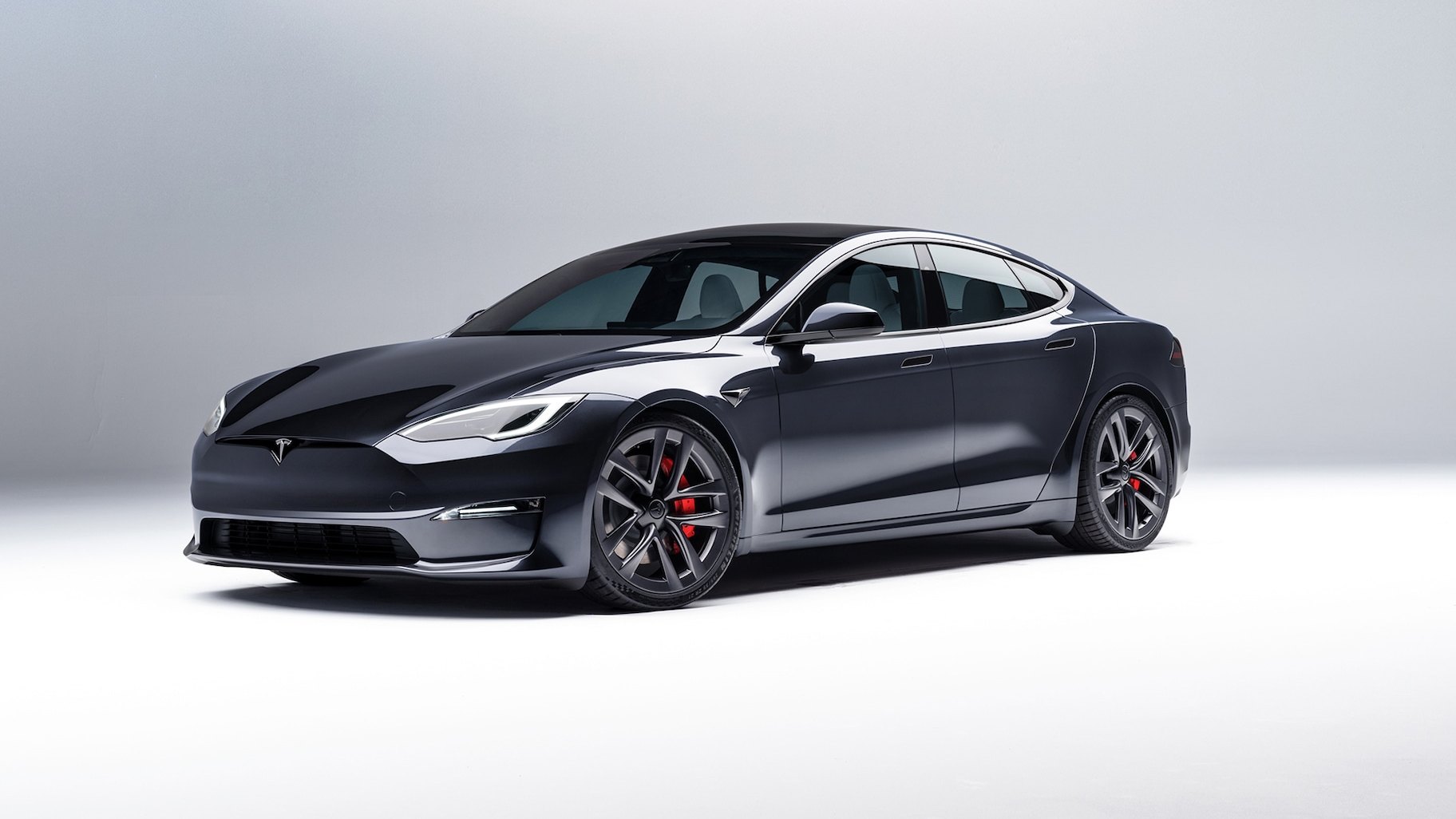
Model 2 The Truth Behind Tesla’s $25,000 EV: Tesla has long been known for disrupting the automotive industry with groundbreaking electric vehicles (EVs) and bold innovations. For years, one of the company’s most anticipated projects was the $25,000 Tesla, popularly referred to as the Tesla Model 2. Elon Musk repeatedly hinted that an affordable, mass-market EV was on the way, creating excitement among consumers and investors alike.
However, despite years of speculation, the Model 2 never entered production. Instead of launching a budget-friendly electric car, Tesla shifted its focus toward artificial intelligence (AI), autonomous driving, and robotics. This strategic decision marks one of the biggest transformations in Tesla’s history.
Tesla’s Original Master Plan
To understand why the Tesla Model 2 mattered so much, it’s important to revisit Elon Musk’s original Master Plan, introduced in 2006. The strategy was simple yet ambitious:
Step 1: Build an Expensive Sports Car
Tesla began with the Tesla Roadster, a premium electric sports car designed to prove that EVs could be exciting, fast, and desirable.
Step 2: Expand into Premium Vehicles
The profits from the Roadster funded the development of the Model S and Model X, which established Tesla as a premium electric vehicle manufacturer.
Step 3: Create Affordable Mass-Market EVs
The next phase introduced the Model 3 and Model Y, making Tesla vehicles accessible to a much wider audience. The strategy proved highly successful, with the Model Y becoming one of the world’s best-selling vehicles.
The logical next step was expected to be the Tesla Model 2, a compact electric car priced around $25,000, making EV ownership affordable for millions.
Why Everyone Expected the Tesla Model 2
Tesla fueled expectations by discussing a next-generation vehicle platform designed to reduce manufacturing costs by nearly 50%. The company also showcased its innovative unboxed manufacturing process, promising faster and cheaper vehicle production.
Investors believed the new platform would power a smaller hatchback or compact sedan that could compete directly with affordable gasoline vehicles while accelerating global EV adoption.
For several years, quarterly earnings calls consistently featured questions about the progress of the $25,000 Tesla.
Why Tesla Cancelled the Model 2
Everything changed in 2024 when reports suggested Tesla had stopped developing its dedicated Model 2.
Instead of continuing work on an entry-level consumer vehicle, Tesla redirected resources toward several ambitious projects, including:
- Full Self-Driving (FSD) technology
- Tesla Cortex Supercomputer
- Tesla Optimus humanoid robot
- CyberCab autonomous Robotaxi
This wasn’t a sign of engineering failure. Instead, it reflected a deliberate business decision to prioritize technologies with significantly higher long-term revenue potential.
Rather than reducing research spending, Tesla actually increased investments in AI infrastructure, machine learning, and robotics, signaling a dramatic shift in company strategy.
The Business Case: Robotaxis vs. Affordable EVs
One of the biggest reasons behind the cancellation of the Tesla Model 2 comes down to economics.
Selling Cars Generates One-Time Revenue
A traditional vehicle sale generates revenue only once. Even if Tesla sold one million Model 2 vehicles at $25,000 each, the profit margins would remain relatively small because affordable cars face intense pricing competition and rising material costs.
Robotaxis Generate Recurring Income
A fully autonomous CyberCab creates a completely different business model.
Instead of selling a vehicle to a customer, Tesla can operate an autonomous transportation network where each vehicle earns money throughout its lifetime.
A Robotaxi operating 15 to 20 hours per day could generate recurring passenger revenue for years, making the software powering the vehicle far more valuable than the vehicle itself.
This shift transforms Tesla from a traditional automaker into a technology platform company, where recurring software income becomes the primary growth engine.
The Growing Threat from Chinese EV Manufacturers
Another major factor influencing Tesla’s decision was the rapid rise of Chinese electric vehicle manufacturers.
Companies like BYD dramatically expanded production while vertically integrating battery manufacturing and raw material sourcing.
As a result, Chinese automakers began producing highly capable electric vehicles at incredibly low prices.
Vehicles such as the BYD Seagull, priced close to $10,000 in China, completely changed consumer expectations regarding affordable EVs.
Competing directly in this market would likely have forced Tesla into aggressive price wars with shrinking profit margins.
Instead of battling Chinese manufacturers solely on manufacturing costs, Tesla decided to compete where it believes it has the strongest advantage:
- Artificial Intelligence
- Neural Networks
- Autonomous Driving
- Self-Driving Software
These technologies create significantly higher barriers to entry than simply manufacturing affordable vehicles.
Is the Dream of a $25,000 Tesla Really Dead?
Although the dedicated Tesla Model 2 appears to be cancelled, Tesla has not abandoned the goal of making its vehicles more affordable.
Rather than investing billions in developing an entirely new consumer vehicle platform, Tesla has focused on reducing manufacturing costs for existing models like the Model 3 and Model Y.
Through continuous engineering improvements, simplified production techniques, and manufacturing efficiencies, Tesla continues introducing lower-cost variants without creating an entirely separate product line.
This approach reduces financial risk while still expanding access to electric vehicles.
Could the CyberCab Become the New Model 2?
Interestingly, the technology originally intended for the next-generation affordable platform hasn’t disappeared.
Instead, it now serves as the foundation for the Tesla CyberCab, an autonomous vehicle designed without a steering wheel or pedals.
Elon Musk has hinted that this platform could eventually evolve into an affordable consumer vehicle once autonomous driving regulations mature and production costs decline.
If Tesla achieves widespread approval for Full Self-Driving, the CyberCab may ultimately deliver what the Model 2 originally promised: affordable, large-scale electric mobility.
The difference is that affordability may come through shared autonomous transportation instead of personal vehicle ownership.
Tesla’s Transformation Into an AI Company
The cancellation of the Tesla Model 2 highlights a much larger corporate transformation.
Tesla is no longer positioning itself solely as an electric vehicle manufacturer.
Instead, the company is increasingly investing in:
Artificial Intelligence
Tesla’s neural networks continuously improve autonomous driving capabilities using billions of miles of real-world driving data.
Robotics
The Tesla Optimus humanoid robot represents another major growth opportunity beyond automobiles.
Autonomous Transportation
The CyberCab Robotaxi network has the potential to create recurring software-based revenue rather than relying exclusively on vehicle sales.
This evolution places Tesla closer to an AI and robotics company than a conventional automaker.
Conclusion
The story of the Tesla Model 2 is not simply about a cancelled $25,000 electric car. It reflects Tesla’s willingness to adapt its long-term strategy as global competition and technology rapidly evolve.
Rather than entering an increasingly competitive low-cost EV market dominated by Chinese manufacturers, Tesla has chosen to invest heavily in AI, autonomous driving, and robotics. The company’s focus has shifted from maximizing vehicle sales to building an intelligent transportation ecosystem powered by software.
While the original Model 2 may never reach showrooms, its vision lives on through Tesla’s next-generation manufacturing platform and the CyberCab. If autonomous technology achieves widespread adoption, Tesla could still deliver affordable transportation—but in a way that completely redefines how people think about owning and using cars.
FAQs
1. What is the Tesla Model 2?
The Tesla Model 2 is the unofficial name given to Tesla’s rumored $25,000 electric vehicle. Although widely discussed by Elon Musk and investors, Tesla has never officially launched a vehicle under the Model 2 name.
2. Did Tesla cancel the $25,000 Model 2?
Yes, reports indicate that Tesla discontinued the development of a dedicated $25,000 consumer EV and shifted its focus toward autonomous vehicles, artificial intelligence, and robotics.
3. Why did Tesla cancel the Model 2?
Tesla reportedly redirected its engineering resources to projects such as the CyberCab Robotaxi, Full Self-Driving (FSD) technology, the Cortex Supercomputer, and the Optimus humanoid robot, which offer greater long-term revenue potential.
4. Will Tesla ever release a $25,000 electric car?
While the original Model 2 appears to be canceled, Tesla has stated that it continues working on making EVs more affordable through lower-cost versions of existing models and future vehicle platforms.
5. What price was the Tesla Model 2 expected to have?
The rumored Tesla Model 2 was expected to start at approximately $25,000, making it Tesla’s most affordable electric vehicle.
6. What is Tesla’s CyberCab?
The CyberCab is Tesla’s upcoming fully autonomous Robotaxi designed without a steering wheel or pedals. It is intended to operate as part of an autonomous ride-hailing network.
7. How is the CyberCab different from the Model 2?
The Model 2 was expected to be a traditional consumer-owned electric vehicle, while the CyberCab is designed primarily for autonomous transportation services and recurring revenue generation.
8. Why is Tesla focusing on AI instead of affordable cars?
Tesla believes that artificial intelligence, autonomous driving software, and robotics will generate higher long-term profits than selling low-margin entry-level vehicles.
9. How does Full Self-Driving (FSD) fit into Tesla’s future?
Tesla views Full Self-Driving (FSD) as a core technology for its Robotaxi network, enabling vehicles to operate autonomously and generate recurring income through transportation services.
10. Who are Tesla’s biggest competitors in the affordable EV market?
Chinese manufacturers such as BYD have become major competitors by producing affordable electric vehicles at significantly lower prices than many global automakers.
11. Why is BYD considered a challenge for Tesla?
BYD has vertically integrated its battery production and supply chain, allowing it to manufacture electric vehicles at lower costs while maintaining strong production volumes.
12. Will the technology developed for the Model 2 still be used?
Yes. Tesla’s next-generation manufacturing platform is expected to be used for the CyberCab and could support future affordable vehicles if market conditions and regulations permit.
13. Is Tesla still making affordable versions of the Model 3 and Model Y?
Yes. Tesla continues improving manufacturing efficiency and introducing lower-cost configurations of the Model 3 and Model Y to make EV ownership more accessible.
14. Could the CyberCab eventually be sold to consumers?
Elon Musk has suggested that the CyberCab could eventually become available for personal ownership once autonomous driving technology matures and regulatory approval expands.
15. What does the cancellation of the Model 2 mean for Tesla’s future?
The decision signals Tesla’s transformation from a traditional automaker into an AI, robotics, and autonomous transportation company, focusing on software-driven recurring revenue rather than only vehicle sales.
Read More:
- Tesla makes the cut on California’s newest EV Rebate program
- Tesla Full Self-Driving v14.3.5 Early Impressions: new features and early performance
- Tesla owner attempts resale of Model S Signature Edition for over $260k
- Lucid denies rumors of bankruptcy after over 40% stock drop
- Elon Musk Confirms 3 NEW Teslas Models For 2026
1 thought on “Model 2 The Truth Behind Tesla’s $25,000 EV”