
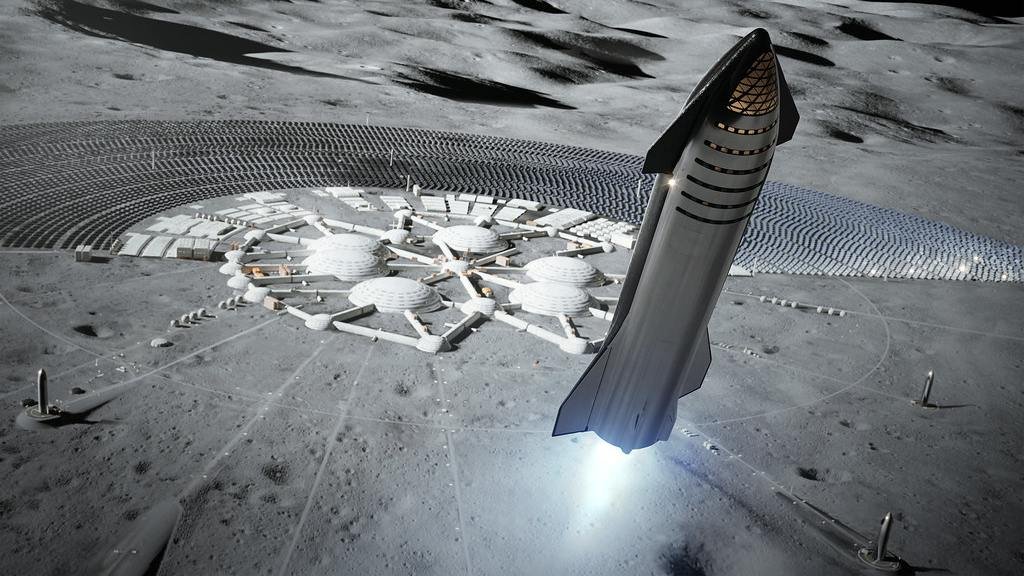
There’s a Crazy Plan in Starship Flight 16 – The Whole Industry Needs It: SpaceX is approaching another major milestone in its ambitious Starship development program, with Flight 16 potentially setting the direction for the company’s next generation of reusable spaceflight operations. Following the historic achievements of Flight 15, including the successful return and tower catch of an orbital-class Starship upper stage, attention is now shifting toward booster recovery, Florida launch operations, orbital refueling, and the race toward NASA’s Artemis 3 mission.
According to the latest analysis from GREAT SPACE, SpaceX could be preparing an ambitious strategy that involves connecting its Texas and Florida launch facilities. Although the company has not officially confirmed the Flight 16 launch date or mission profile, the possibilities highlight how quickly Starship’s operational capabilities are developing.
The next few flights could determine whether SpaceX can move beyond experimental testing and establish a reliable, reusable transportation system for missions to the Moon and eventually Mars.
Flight 15 Changed the Future of Starship Recovery
Flight 15 represented an important achievement for SpaceX. For the first time, an orbital-class Starship upper stage, Ship 42 (S42), successfully returned to the launch site and was caught by the massive robotic arms of the Mechazilla launch tower.
This achievement demonstrated that SpaceX’s recovery technology could potentially support the full reuse of Starship vehicles.
However, the mission did not achieve its complete recovery objective. SpaceX also attempted to catch the Super Heavy booster, but technical complications forced the company to cancel the operation.
Booster B-22 was redirected toward the ocean, where its flight termination system was activated.
Why the Super Heavy Catch Matters
Recovering both Starship stages is essential to SpaceX’s long-term strategy. The company wants to make its spacecraft reusable in a manner similar to commercial aircraft, reducing manufacturing expenses and increasing launch frequency.
Flight 15 revealed two important technical areas that need additional attention:
- Guidance, Navigation, and Control (GNC): A technical issue affected the booster recovery attempt, making improvements to guidance and landing reliability a priority.
- Engine Reignition: One of B-22’s outer-ring engines failed to reignite during boostback. SpaceX must investigate the issue and ensure reliable engine performance throughout the recovery sequence.
Solving these problems could help SpaceX return to routine Super Heavy booster catches.
Starship Flight 16: Florida or Starbase Texas?
One of the biggest questions surrounding Flight 16 is whether SpaceX will conduct another mission from Starbase or attempt the first Starship launch from Florida.
Both possibilities offer important advantages, and the decision could influence the company’s launch schedule for the rest of the year.
Scenario 1: Starship’s First Florida Launch
The first possibility is that SpaceX will use Flight 16 to demonstrate its new Florida launch infrastructure.
This would represent a major expansion of the Starship program, allowing the company to operate from multiple launch locations.
SpaceX has previously discussed an ambitious mission concept known as Florida to Starbase.
Under this approach:
- The Super Heavy booster would launch from Florida.
- The booster would return to Florida and be caught by its launch tower.
- The Starship upper stage would continue into orbit.
- The spacecraft would eventually return to Starbase in Texas.
This strategy would demonstrate cross-site recovery operations without requiring both stages to return to the same launch facility.
However, preparing this mission requires significant logistical work.
Transporting B-23 and S43 to Florida
The vehicles associated with the potential mission include Super Heavy booster B-23 and Starship S43.
Both vehicles reportedly completed cryogenic testing in October, an important step before additional testing and integration.
SpaceX would need to transport the hardware using a specialized barge, potentially named You’ll Thank Me Later. The journey could take approximately one to two weeks, followed by preparation and testing at the Florida facility.
Because of these requirements, a late-December launch could be more realistic than an early-December attempt, depending on hardware readiness.
Scenario 2: Another Recovery Attempt at Starbase
The second possibility is that SpaceX keeps Flight 16 at Starbase.
This approach would allow engineers to concentrate on resolving the problems discovered during Flight 15 without introducing additional transportation challenges.
A successful mission could involve another attempt to catch both the Super Heavy booster and Starship upper stage.
There are several reasons why this strategy makes sense:
- Faster preparation: Vehicles would remain closer to existing testing and integration facilities.
- Improved recovery reliability: Engineers could focus on correcting the GNC and engine reignition issues.
- Hardware inventory: Successfully recovering additional vehicles would help build a reusable fleet.
- Higher launch cadence: Fewer transportation requirements could simplify mission preparation.
The analysis from GREAT SPACE considers another Starbase recovery attempt a plausible option for Flight 16, although SpaceX has not confirmed its decision.
Starship Heat Shield: Important Lessons From Ship 42
Another major development from Flight 15 involves the performance of Starship’s thermal protection system.
Ship 42 successfully returned through Earth’s atmosphere and reached the launch site for its historic catch. This provided SpaceX with valuable information about how the heat shield performs during an actual orbital-class mission.
However, post-flight inspections revealed areas requiring improvement.
Heat Shield Tile Damage
One of the inspected tiles appeared to be completely broken, with visible damage extending toward the underlying material.
Orange-brown discoloration was also observed, potentially indicating oxidation or other thermal damage.
These findings demonstrate why SpaceX continues to inspect recovered vehicles carefully after every mission.
Possible Coolant Residue Near the Nose Cone
Another observation involved white stains around the nose cone.
The residue appeared similar to coolant-related material, although its exact origin requires further investigation.
These details may appear relatively small, but they matter enormously when the ultimate objective is rapid spacecraft reuse.
Moving Toward Aircraft-Like Reusability
Elon Musk has described Ship 42 as delivering a significant amount of valuable engineering data.
The next challenge is turning that information into practical improvements that reduce refurbishment requirements.
SpaceX ultimately wants Starship to operate with minimal maintenance between flights, potentially reaching a launch frequency of once per week by 2027.
Recovering more Starship vehicles, including a successful S43 recovery, could help the company build a larger reusable fleet and reduce pressure on new vehicle production.
Orbital Refueling Could Unlock Moon and Mars Missions
Beyond launch and recovery operations, orbital propellant transfer remains one of the most important technologies in the Starship development program.
For Starship to travel beyond Earth orbit with substantial payloads, it needs the ability to receive additional propellant from another spacecraft.
This requires at least two Starships:
- A tanker Starship carrying additional propellant.
- A receiving Starship that collects the transferred fuel.
Multiple launches may be necessary to demonstrate and establish this capability.
Flights 16, 17, 18, and 19 could potentially contribute to the broader testing program, although the exact sequence has not been officially announced.
Successful orbital refueling would transform Starship’s capabilities by supporting longer-distance missions and enabling the spacecraft to carry out more demanding lunar and interplanetary operations.
It is also a critical requirement for the Starship Human Landing System (HLS) being developed for NASA’s Artemis program.
SpaceX Is Racing Toward NASA’s Artemis 3 Mission
The broader Starship development schedule is closely connected to NASA’s Artemis 3 mission, which has been targeted for 2027.
The mission requires SpaceX to develop a specialized lunar landing version of Starship capable of transporting astronauts between lunar orbit and the Moon’s surface.
Achieving this objective requires progress across three major areas.
1. Increasing Starship Production
SpaceX needs to manufacture more Starship upper stages and Super Heavy boosters.
Facilities such as Starfactory and Gigabay are important to this effort because the company needs sufficient hardware for regular test flights, tanker missions, and specialized lunar spacecraft.
Higher production capacity will also help SpaceX build a larger inventory of reusable vehicles.
2. Expanding Launch Infrastructure
Launch infrastructure is another major priority.
SpaceX is developing additional capabilities in Florida, including improvements associated with Launch Complex 39A and SLC-37.
Work at other supporting locations, including Louisiana, also forms part of the company’s broader expansion strategy.
Operating multiple launch facilities could increase flexibility and help support a more demanding Starship launch schedule.
3. Developing Dedicated Lunar Hardware
The lunar Starship requires several specialized systems that differ from the standard orbital vehicle.
These include:
- Crew cabin systems designed for astronaut operations.
- Docking equipment for connecting with other spacecraft.
- Landing legs capable of supporting lunar surface operations.
- Airlock systems for astronaut movement between the vehicle and the lunar environment.
- Cabin 1 testing facilities for realistic crew-system evaluations.
These technologies must work together before Starship can safely support crewed lunar missions.
What Could Happen After Starship Flight 16?
The next several Starship flights could establish an important foundation for SpaceX’s future operations.
The GREAT SPACE analysis suggests a possible sequence involving another recovery attempt at Starbase for Flight 16, a potential first Florida launch around Flight 17 in early 2027, and orbital refueling demonstrations around Flights 18 and 19.
However, this remains an informed assessment rather than an officially confirmed SpaceX flight schedule.
The most important objective is proving that Starship can repeatedly launch, return, and reuse its hardware while developing the technologies needed for orbital refueling and lunar transportation.
Conclusion: Starship Flight 16 Could Shape the Future of Spaceflight
Starship Flight 16 represents more than another test launch. It could become an important step toward reliable booster recovery, expanded Florida operations, improved heat shield technology, and the development of orbital refueling capabilities.
Whether SpaceX chooses another dual-stage catch attempt at Starbase or moves toward its ambitious Florida-to-Starbase concept, the next mission will provide valuable information for the company’s long-term strategy.
The aerospace industry needs reliable, reusable launch systems capable of dramatically reducing the cost of reaching space. Starship is designed to pursue exactly that objective.
With Artemis 3, lunar exploration, and eventually Mars missions on the horizon, SpaceX has several major challenges ahead. Flight 16 may not solve every problem, but its results could help determine how quickly the company moves toward a new era of reusable space transportation.
FAQs
1. What is SpaceX Starship Flight 16?
Starship Flight 16 is an upcoming test mission in SpaceX’s Starship development program. It is expected to focus on improving vehicle recovery, booster performance, reusability, and preparations for future orbital and lunar missions.
2. When is SpaceX Starship Flight 16 expected to launch?
SpaceX has not officially announced a launch date for Flight 16. Based on the scheduling information discussed by GREAT SPACE, a December 2026 launch could be possible, depending on vehicle readiness and launch preparations.
3. What happened during Starship Flight 15?
During Flight 15, Ship 42 successfully returned from its mission and was caught by the Mechazilla launch tower. However, SpaceX had to cancel the Super Heavy booster catch attempt because of technical complications.
4. Why did SpaceX cancel the Super Heavy booster catch during Flight 15?
A guidance, navigation, and control (GNC) issue, along with other complications, affected the booster recovery attempt. SpaceX redirected Booster B-22 toward the ocean and activated its flight termination system.
5. Will Starship Flight 16 launch from Florida or Starbase Texas?
There are two possible scenarios. SpaceX could launch Flight 16 from Starbase Texas to attempt another dual-stage recovery, or it could use the mission to demonstrate its new Florida launch infrastructure. The company has not confirmed the launch location.
6. What is the Florida-to-Starbase Starship mission concept?
The Florida-to-Starbase concept involves launching Starship from Florida, catching the Super Heavy booster at the Florida launch tower, and returning the Starship upper stage to Starbase in Texas after its orbital mission.
7. What are Super Heavy booster B-23 and Starship S43?
B-23 and S43 are vehicles associated with SpaceX’s upcoming Starship testing activities. According to the supplied analysis, both completed cryogenic testing in October 2026, preparing them for additional testing and potential future missions.
8. How will SpaceX transport Starship vehicles to Florida?
SpaceX is expected to use a specialized barge to transport Starship hardware from Texas to Florida. The water journey could take approximately one to two weeks, followed by additional preparation and testing.
9. What improvements does SpaceX need to make after Flight 15?
SpaceX needs to investigate the booster GNC issue, understand the engine reignition failure, improve recovery reliability, and continue upgrading Starship’s heat shield to support more frequent reuse.
10. What problems were discovered on Ship 42’s heat shield?
Post-flight inspections revealed a damaged heat shield tile, discoloration near the underlying material, and white residue around the nose cone. These observations provide valuable information for future thermal protection system improvements.
11. Why is Starship reusability important for SpaceX?
Reusability can reduce manufacturing costs, minimize refurbishment requirements, increase launch frequency, and allow SpaceX to operate a larger fleet of spacecraft and boosters without building an entirely new vehicle for every mission.
12. Does SpaceX want to launch Starship once per week?
Yes. Elon Musk has discussed the ambition of reaching approximately weekly Starship launches in 2027. Achieving this goal will require reliable recovery systems, faster refurbishment, improved production, and additional launch infrastructure.
13. What is orbital propellant transfer, and why does Starship need it?
Orbital propellant transfer is the process of moving fuel between two spacecraft in orbit. A tanker Starship would transfer propellant to another Starship, allowing the receiving vehicle to travel farther and support demanding lunar and Mars missions.
14. How many Starship flights could be required to demonstrate orbital refueling?
Multiple missions could be involved in demonstrating orbital refueling. The GREAT SPACE analysis discusses Flights 18 and 19 as possible opportunities, but SpaceX has not officially confirmed this flight sequence.
15. How is Starship connected to NASA’s Artemis 3 mission?
SpaceX is developing a specialized Starship Human Landing System (HLS) to transport astronauts between lunar orbit and the Moon’s surface. Artemis 3 requires important technologies, including docking systems, crew cabins, landing legs, airlocks, and orbital refueling capabilities.
16. Why is Starship Flight 16 important for the future of the aerospace industry?
Flight 16 could help SpaceX improve booster recovery, demonstrate reusable spacecraft operations, expand launch capabilities, and prepare for orbital refueling. These developments are important steps toward making space transportation more affordable and supporting future Moon and Mars exploration.
Read More:
- Tesla Cybercab Massive Update Ever, Goes on Sale, New Version & More
- Elon Musk makes surprise stop at Giga Shanghai with a message for Tesla’s China team
- Elon Musk reveals Tesla’s next vehicle without a steering wheel
- Tesla Cybercab’s ‘Autonomy Subscription’ covers all bases for a self-driving car
- Tesla Assisted Driving (TAD) lands approval in Italy, its 12th EU country
2 thoughts on “There’s a Crazy Plan in Starship Flight 16 – The Whole Industry Needs It”