
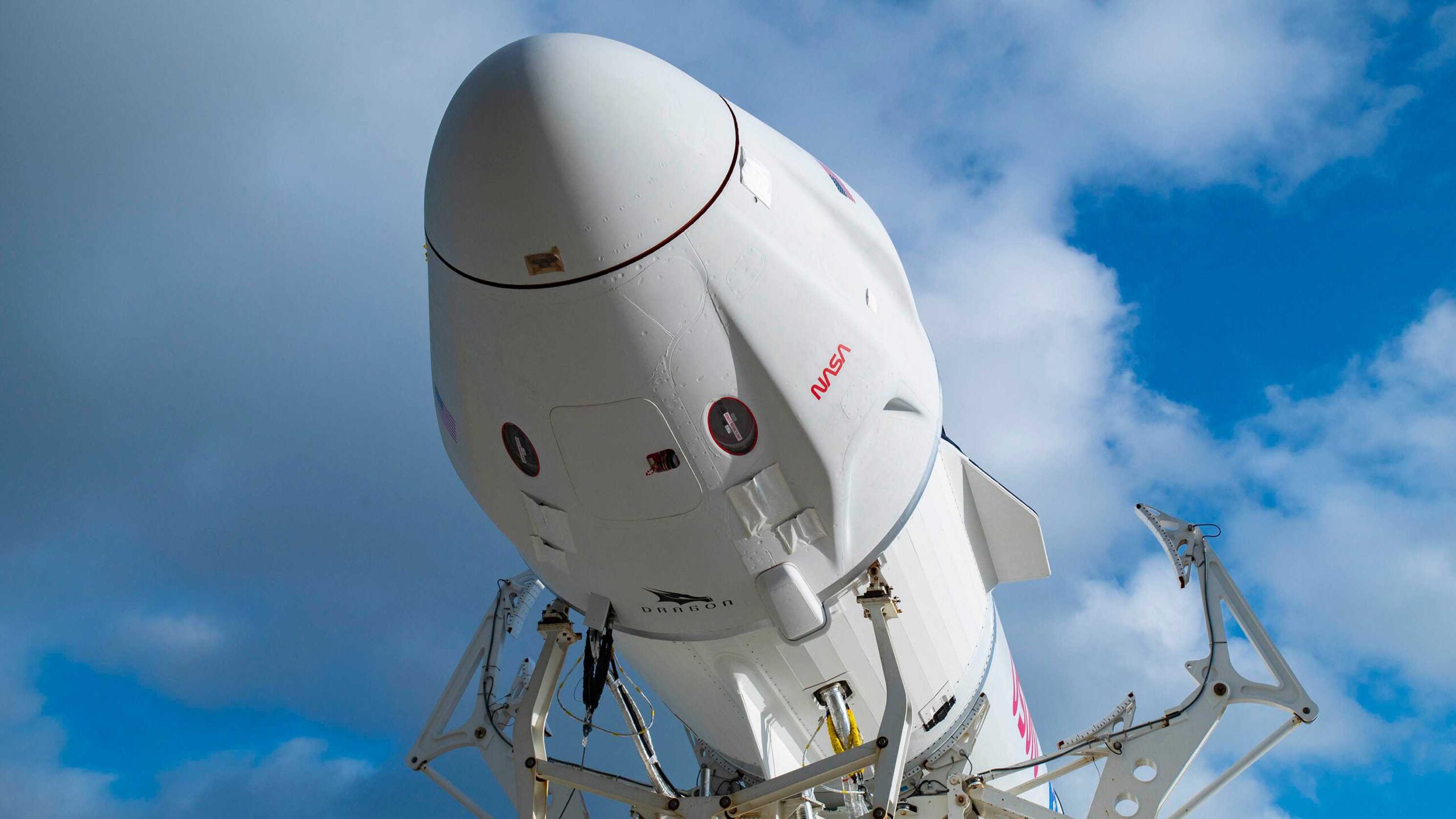
NASA’s Orion spacecraft, one of the most expensive and ambitious space programs ever, is slowly fading into the background, much like the legendary Space Shuttle once did. Powerful, impressive, and reliable, Orion was designed to be America’s next-generation spacecraft, capable of transporting astronauts to the International Space Station (ISS), the Moon, and even Mars.
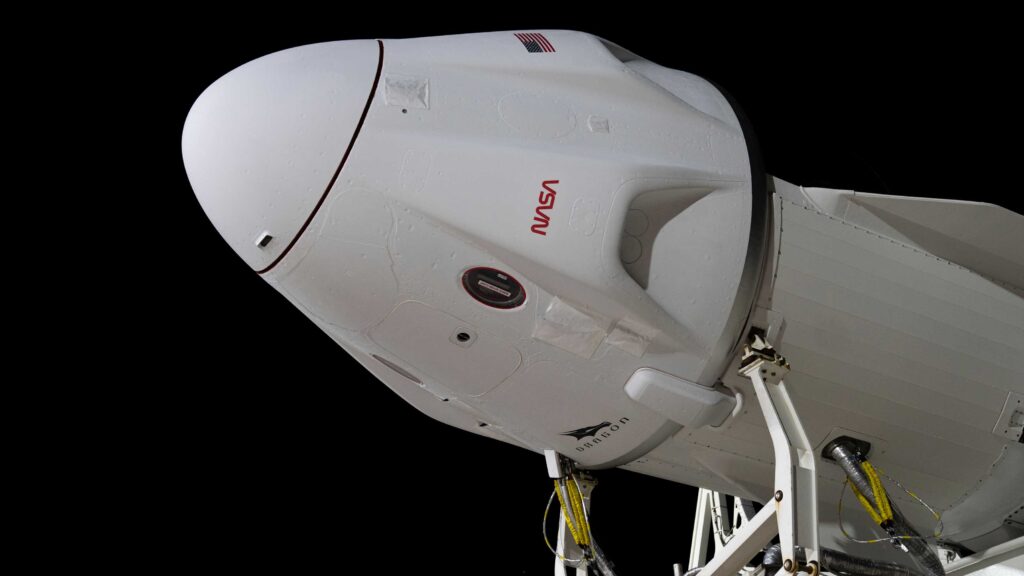
Yet, despite its capabilities, Orion represents an aging technology increasingly overshadowed by newer, more cost-effective systems. This raises a pressing question: if Orion is canceled, what could take its place in future lunar missions? Surprisingly, the answer could be SpaceX’s Crew Dragon, a spacecraft originally designed for low Earth orbit (LEO) missions to the ISS but now emerging as a serious contender for lunar missions.
Let’s explore how this ambitious idea might actually work and why SpaceX could eclipse Orion’s $20.4 billion legacy.
The Rise and Struggles of Orion
Orion’s history is a story of ambition, setbacks, and astronomical costs. The spacecraft originated from the Constellation Program, launched in 2005 under President George W. Bush, with the bold goal of restoring America’s leadership in space exploration. Orion was paired with advanced rockets like the Ares I and Ares V, designed for long-duration missions to the Moon, Mars, and beyond.
The plan was audacious: create a multi-purpose spacecraft similar to SpaceX’s Starship today. But early enthusiasm quickly collided with reality. By 2010, the program faced cancellation under President Barack Obama due to:
- Enormous projected costs exceeding $100 billion
- Slow progress and repeated technical challenges
- Concerns from the Congressional Budget Office about cost-effectiveness
Despite billions already spent, Orion survived thanks to Congressional support to maintain domestic crewed spaceflight capability. For perspective, the $100 billion price tag was still half the cost of the Space Shuttle program, which totaled roughly $200 billion.
Orion’s Restructuring and Achievements
After nearly being scrapped, Orion underwent major restructuring starting in 2010. It became part of NASA’s Space Launch System (SLS) and the Artemis program, focusing on crewed lunar missions.
Orion finally took flight in 2014, performing an uncrewed test flight atop a Delta IV Heavy rocket. The mission successfully:
- Tested its heat shield under extreme re-entry conditions
- Evaluated its parachute landing system
- Reached altitudes of 5,800 km above Earth
These milestones set the stage for Artemis I in 2022, which marked a resounding success. Orion proved itself powerful, reliable, and capable. Yet, its greatest obstacle has always been the astronomical cost.
Since 2006, Orion has consumed $20.4 billion, averaging over $1.1 billion per year, driven largely by technical challenges and redesigns after the Constellation collapse.
The Push for Commercial Alternatives
Cost pressures on NASA continue. In recent budget proposals, there has been a shift toward cheaper commercial spacecraft, emphasizing private sector competition over expensive government programs.
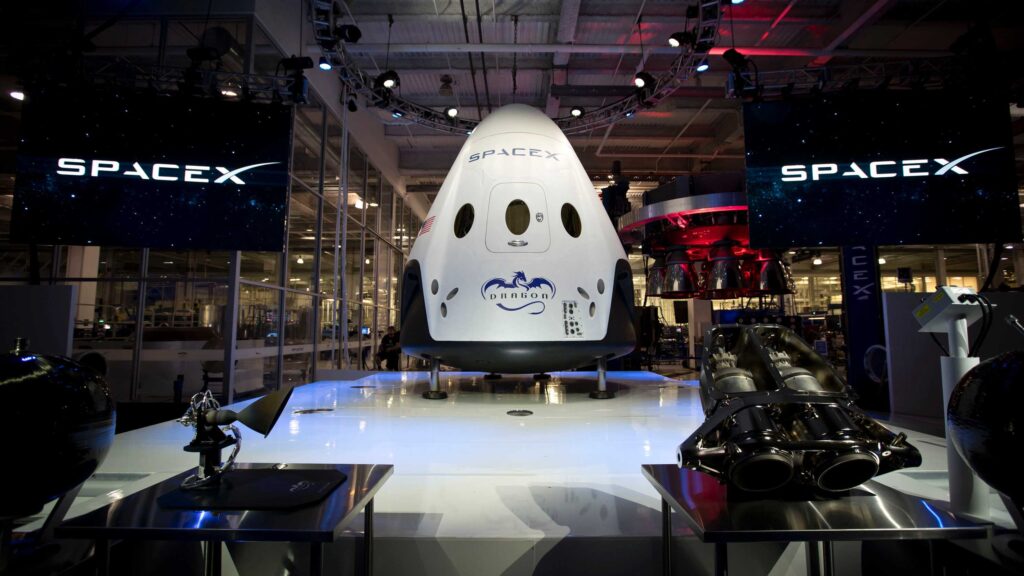
Enter SpaceX and its Crew Dragon spacecraft. Originally designed to ferry astronauts to the ISS, Dragon has already demonstrated:
- Over 50 successful missions since 2020
- A 99% success rate for both crew and cargo missions
- Significant cost efficiency, with total development costs of $3.2 billion, $2.6 billion funded by NASA
By comparison, every Orion launch burns through billions, making Crew Dragon an obvious alternative from a cost perspective.
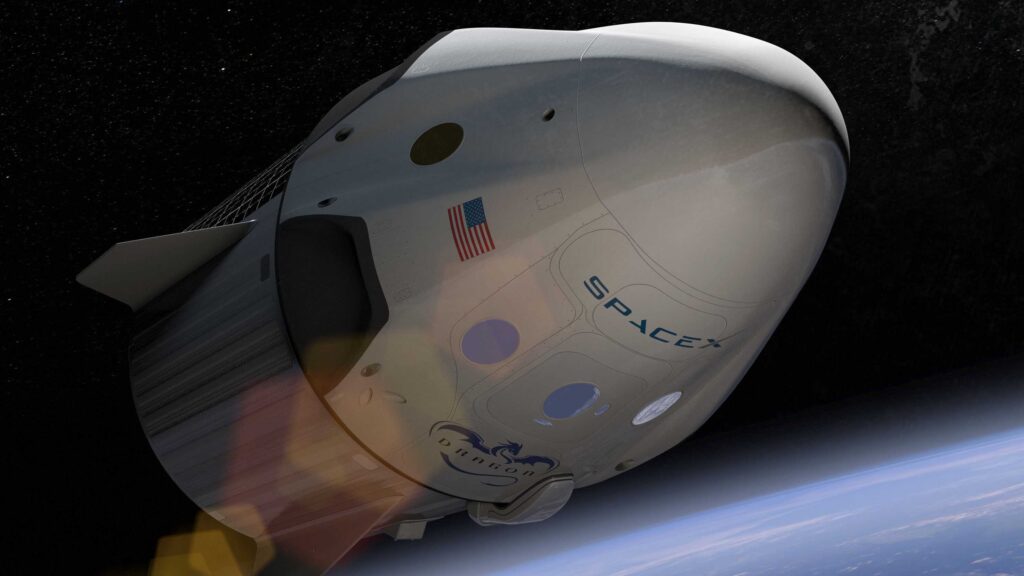
Can Crew Dragon Handle Lunar Missions?
Transitioning Crew Dragon from LEO to lunar missions is not trivial. Flying to the Moon requires much higher delta-V (change in velocity) than LEO missions. Specifically:
- Round trip to the Moon: ~6 km/s delta-V
- Crew Dragon Draco thrusters: ~2.5 km/s delta-V
This means propulsion upgrades are necessary. But there’s good news:
- Heat shield: Dragon’s PICA-X shield is designed for re-entry speeds of 11 km/s, lighter and reusable up to 3–5 missions, compared to Orion’s older Apollo-derived shield
- Life support: Dragon currently supports 4 crew members for 7–10 days, similar to early Apollo missions, but would need expansion for full lunar missions
Optimizing Dragon for two astronauts on a lunar mission could solve life support and space limitations, leaving room for supplies and critical systems.
Launching Dragon to the Moon
If Orion were canceled, Crew Dragon couldn’t rely on the SLS rocket. Instead, NASA could leverage SpaceX’s Falcon 9 or Falcon Heavy, with Falcon Heavy being the ideal choice:
- 27 Merlin engines generating 22 million newtons of thrust
- Capable of lifting 63 tons to LEO
- Fully loaded Dragon weighs less than 16 tons, leaving plenty of margin
Once in LEO, Falcon Heavy’s second stage could perform a trans-lunar injection (TLI) burn, accelerating Dragon from 7.8 km/s to 11 km/s, enough to escape Earth’s gravity and head to the Moon.
Dragon’s Draco thrusters would then handle orbital adjustments and lunar insertion, a process already well-tested in LEO operations.
Rendezvous with Starship HLS
For lunar surface missions, Dragon could dock with Starship HLS (Human Landing System) in lunar orbit. The process would involve:
- Performing fine orbit adjustments using Draco thrusters
- Utilizing laser radar, star tracker cameras, and relative navigation systems
- Docking autonomously through NASA’s NDS mechanism
Once docked, the crew would transfer to Starship HLS for moonwalks, sample collection, and technology tests. After the surface mission, Starship returns to Dragon for the trip back to Earth, with Dragon performing the re-entry and splashdown.
A Simpler Starship + Dragon Architecture
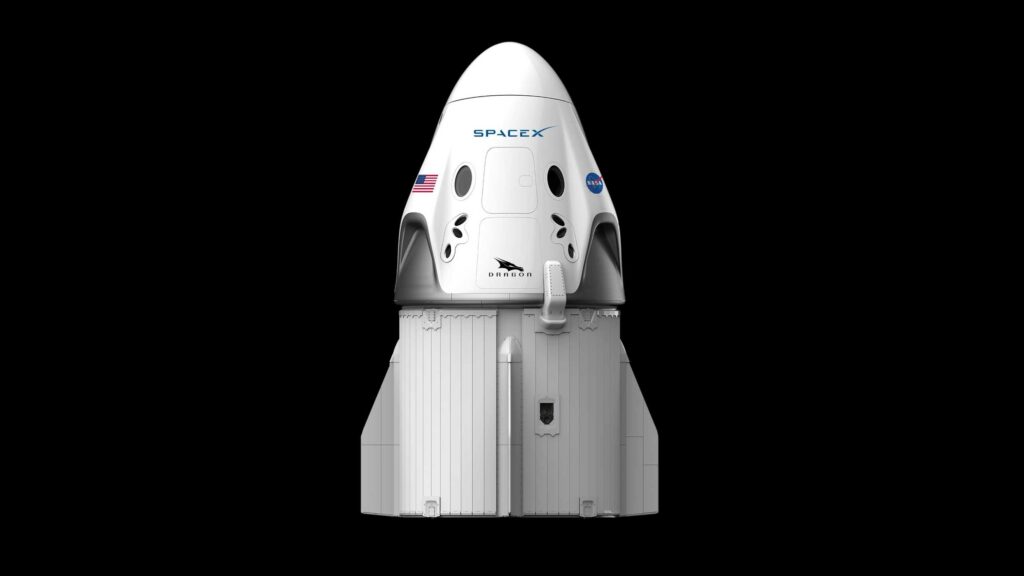
For even more efficiency, NASA could adopt a simplified Starship + Dragon setup:
- Starship launches Dragon mounted on its nose or in the cargo bay
- Starship carries fuel and surface equipment
- Upon reaching lunar orbit, Starship releases Dragon into parking orbit
- Crew remains on Starship for surface activities, then returns to Dragon for Earth re-entry
This approach reduces complexity, launch costs, and mission risk, while leveraging SpaceX’s proven launch architecture.
The Cost Advantage
The financial contrast is staggering:
- Orion: $20.4 billion spent, $1+ billion per year
- Crew Dragon: $3.2 billion total development, reusable, far lower per-launch cost
Using Crew Dragon for lunar missions could allow NASA to maximize resources, shorten timelines, and increase mission frequency, all while staying within budget constraints.
Technical Challenges to Overcome
Despite the promise, several technical challenges remain:
- Propulsion upgrade: Increasing delta-V to meet lunar mission requirements
- Life support expansion: Supporting a longer-duration lunar trip
- Docking interface adaptation: Crew Dragon must dock with Starship HLS and other lunar assets
- Orbital operations: Precise maneuvers in lunar orbit to conserve delta-V
Addressing these challenges is feasible, given SpaceX’s rapid development pace, but will require careful testing and validation.
Conclusion: Crew Dragon as the Lunar Future
While Orion has been a cornerstone of NASA’s Artemis program, its sky-high costs and aging design make it increasingly difficult to justify. Meanwhile, SpaceX’s Crew Dragon offers a cheaper, faster, and more flexible solution.
With:
- Proven flight history
- Advanced heat shield
- Scalable life support systems
- Reusable launch architecture
Crew Dragon could truly become a short-term lunar spacecraft, bridging the gap between Earth and the Moon while reducing reliance on billion-dollar, single-use vehicles.
In essence, the future of lunar missions may not belong to a $20.4 billion government spacecraft, but to a commercially optimized, reusable, and highly capable spacecraft designed by Elon Musk’s SpaceX.
FAQs
1. What is NASA’s Orion spacecraft?
Orion is NASA’s multi-purpose spacecraft designed for deep space missions, including trips to the Moon, Mars, and the ISS. It is part of the Artemis program and is capable of carrying astronauts on long-duration missions.
2. Why is Orion considered expensive?
Orion has cost over $20.4 billion since 2006 due to technical challenges, redesigns, and long development timelines, making it one of the most expensive spacecraft programs in history.
3. Can Orion travel to the Moon?
Yes, Orion was specifically designed for lunar missions as part of the Artemis program, capable of long-duration missions, advanced life support, and high-speed re-entry.
4. What challenges does Orion face?
Orion faces high costs, aging technology, and reliance on SLS rockets, which are expensive and less reusable compared to commercial alternatives like SpaceX.
5. What is SpaceX Crew Dragon?
Crew Dragon is a spacecraft developed by SpaceX to transport astronauts and cargo to the International Space Station. It is reusable, cost-effective, and has a 99% mission success rate.
6. Can Crew Dragon go to the Moon?
Crew Dragon was designed for low Earth orbit, but with upgrades to propulsion, life support, and docking systems, it could potentially support short lunar missions.
7. How does Crew Dragon compare to Orion?
Crew Dragon is cheaper, reusable, and proven in flight. Orion is more capable for long-duration missions, but its cost and complexity make it less flexible than Crew Dragon for certain lunar missions.
8. What is delta-V and why is it important?
Delta-V is the change in velocity needed for a spacecraft to complete a mission. Lunar missions require higher delta-V than LEO missions, meaning Crew Dragon needs propulsion upgrades to reach the Moon.
9. What heat shield does Crew Dragon use?
Crew Dragon uses PICA-X, a lightweight, reusable heat shield designed for re-entry speeds up to 11 km/s, outperforming Orion’s older Apollo-based shield.
10. How long can Crew Dragon support astronauts?
Currently, Crew Dragon can support four astronauts for 7–10 days. For lunar missions, life support systems may need expansion to support two astronauts longer.
11. What launch vehicles could send Crew Dragon to the Moon?
Crew Dragon could use Falcon Heavy, SpaceX’s heavy-lift rocket, capable of launching Dragon into lunar transfer orbit efficiently and cost-effectively.
12. How would Crew Dragon dock with the Moon lander?
Crew Dragon would perform orbital adjustments using Draco thrusters and dock autonomously with Starship HLS using NASA’s docking systems, similar to ISS docking procedures.
13. What are the advantages of using Crew Dragon over Orion?
Advantages include lower cost, reusable systems, proven technology, and faster development timelines, allowing more frequent lunar missions at reduced budget risk.
14. Could Crew Dragon replace Orion completely?
Crew Dragon could serve as a short-term lunar mission solution, especially when paired with Starship HLS, but Orion may still be needed for longer-duration or heavier payload missions.
15. What is Starship HLS?
Starship HLS is SpaceX’s lunar lander system designed to carry astronauts from lunar orbit to the Moon’s surface and back, working in tandem with Crew Dragon or Starship itself.
16. Why is NASA considering commercial spacecraft for lunar missions?
Commercial spacecraft like Crew Dragon are cheaper, reusable, and faster to deploy, allowing NASA to maximize mission efficiency and reduce reliance on high-cost government programs like Orion and SLS.
Read More:
- Luminar-Volvo breakdown deepens as lidar maker warns of potential bankruptcy
- Tesla celebrates 75k Superchargers, less than 5 months since 70k-stall milestone
- Tesla Full Self-Driving appears to be heading to Europe soon
- Tesla Model Y sold out in China for 2025
- Tesla adds new surprising fee to Robotaxi program
1 thought on “Break it! SpaceX Crew Dragon to the Moon Sooner instead of NASA’s “$20.4 billion” Spacecraft”