
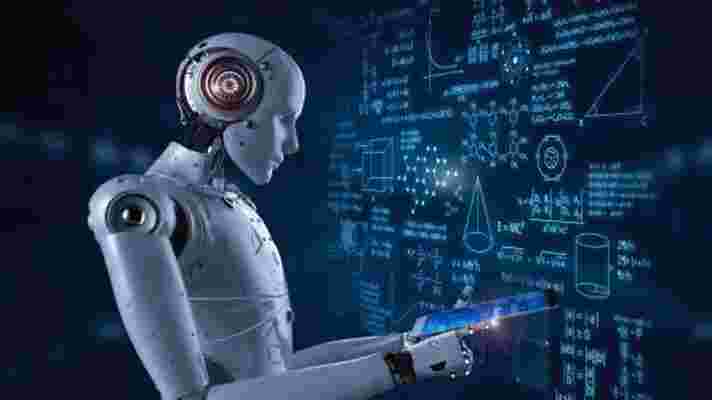
We once dreamed about this future in 1970s science fiction movies. Back then, humanoid robots were nothing more than cinematic special effects, imaginative props designed to make us wonder “what if?” Fast forward to today, and that future is no longer fiction. It’s unfolding right in front of us.
With Elon Musk’s Tesla Optimus and Boston Dynamics’ new Atlas, humanoid robots are stepping out of labs and onto factory floors, warehouses, and potentially into our homes. These machines are no longer just dancing, flipping, or posing for viral videos—they are being built to work, learn, and support humans in real-world environments.
In this in-depth comparison, we strip away the marketing hype and explore the real capabilities, designs, AI brains, costs, and future impact of these two revolutionary humanoid robots. The question is simple but powerful: Which robot is truly shaping the future of America—and beyond?
The Rise of AI and Humanoid Robots
From Computer Revolution to Robotic Reality
We’ve already lived through two massive technological waves:
- The computer revolution of the 1980s
- The internet boom of the 1990s
Today, we are riding a third wave—artificial intelligence and robotics. Every time a stunning image or video goes viral, people ask the same question:
“Is this AI?”
That reaction alone shows how astonishing modern AI has become. Naturally, the next step was inevitable: embedding AI into physical bodies. This ambition has fueled the rapid rise of humanoid robots, machines designed to move, work, and interact in spaces built for humans.
Boston Dynamics: The Pioneer of Humanoid Robotics
Decades Ahead of the Competition
For decades, Boston Dynamics has been the undisputed pioneer of humanoid robotics in the United States. Long before Tesla entered the conversation, Boston Dynamics was already redefining what robots could do—running, jumping, balancing, and navigating extreme terrain.
However, early versions of Atlas relied on hydraulic systems. While incredibly powerful, hydraulics are:
- Difficult to manufacture at scale
- Expensive
- Complex to maintain
This limitation made widespread commercialization nearly impossible.
The New Atlas: A Fully Electric Breakthrough
A Radical Redesign for the Real World
The newly unveiled fully electric Atlas changes everything.
Boston Dynamics completely abandoned the old hydraulic design and introduced a robot that is:
- 6’2” tall
- 198 pounds
- Built from aluminum and titanium alloys
Most impressively, every joint on Atlas can rotate 360 degrees. This gives it a level of flexibility never seen in biological organisms.
When Atlas stands up for the first time after powering on, the movement feels both impressive and uncanny—a clear sign that robotics has entered a new era.
Design Philosophy: Industrial, Not Human
Why Atlas Doesn’t Try to Look Like Us
Boston Dynamics made a deliberate design choice: Atlas should not look human.
Instead of a face, Atlas features a glowing circular display designed to communicate one thing clearly—it’s a tool, not a person.
“We want folks working with Atlas to know that Atlas is a helpful robot, not a person.”
The robot’s head acts as a sealed perception hub, housing vision and positioning sensors without unnecessary expressive features. This minimalist design:
- Protects internal components
- Reduces maintenance complexity
- Enhances durability
Every surface, panel, and joint is engineered for efficiency and longevity, making Atlas ideal for industrial environments.
Atlas in Action: Built for Heavy Work
Strength, Reach, and Precision
The new Atlas can:
- Lift up to 110 lbs
- Maintain a 66 lb sustained working load
- Reach heights of 7.5 feet
- Operate in tight, cluttered spaces
Thanks to its 56 degrees of freedom, Atlas can perform complex movements without rotating its entire body. This makes it exceptionally effective for warehouses and factory floors.
Tesla Optimus: A Completely Different Vision
Elon Musk’s Bet on AI and Mass Production
Unlike Boston Dynamics, Tesla is not trying to build an acrobat or showpiece robot.
Yes, Optimus can run, dance, and move fluidly, but that’s not the point. Tesla’s goal is far more ambitious:
👉 Create an affordable, mass-produced humanoid worker.
With Optimus Gen 3, Elon Musk wants a robot that:
- Helps with household chores
- Assists in factories
- Works alongside humans
- Costs less than a car
Optimus Design Evolution
From Prototype to Polished Humanoid
Optimus has evolved rapidly:
- 2021 prototype: Rough and mechanical
- Gen 1 & Gen 2: Improved proportions and movement
- Version 2.5: Sleeker design, fewer exposed cables, gold color scheme
Standing at 5’8” and weighing 125 lbs, Optimus has some of the most human-like proportions on the market. Many experts agree that Tesla currently leads in humanoid aesthetics and design refinement.
Elon Musk has teased that Optimus V3 will look so realistic that it may appear like “a person wearing a robot suit.”
Battery Life: Who Lasts Longer?
Tesla’s Battery Advantage
Tesla Optimus uses 4680 battery cells, the same advanced technology powering Tesla vehicles. Musk claims Optimus could eventually operate:
- All day
- With productivity 5x higher than a human
- Potentially tethered for continuous operation
While exact runtime hasn’t been confirmed, estimates suggest around 8 hours per charge, with massive room for improvement.
Atlas Battery System
Atlas currently operates for about 4 hours, but Boston Dynamics introduced a dual battery system with automatic swapping. When power runs low, Atlas:
- Returns to its station
- Swaps batteries autonomously
- Immediately resumes work
This ensures zero disruption on production lines.
Degrees of Freedom: Flexibility Matters
- Atlas: 56 degrees of freedom
- Optimus: Estimated 40–44 degrees of freedom
Atlas clearly wins in raw flexibility, but Optimus compensates with exceptional hand dexterity, which is crucial for tasks like:
- Folding clothes
- Handling tools
- Serving drinks
In fact, Optimus has already demonstrated real-world usefulness by serving popcorn and drinks at events.
AI Brains: Software vs Hardware Powerhouses
Atlas AI Capabilities
Atlas supports three control modes:
- Autonomous Mode
- Teleoperation
- Tablet-based control (Orbit software)
Powered by NVIDIA AI chips, Atlas can:
- Build real-time 3D maps
- Learn tasks using reinforcement learning
- Navigate obstacles independently
Once one Atlas learns a task, that knowledge can be instantly shared across the entire fleet.
Tesla Optimus AI
Optimus uses the same AI brain as Tesla vehicles. It is trained on:
- Billions of video frames
- Human demonstrations via motion capture suits
This allows Optimus to:
- Recognize objects
- Predict outcomes
- Perform delicate, complex tasks
Like Atlas, Optimus benefits from fleet learning, meaning one robot’s experience improves them all.
Teleoperation: The Truth Behind the Scenes
Both companies rely on teleoperation during training. Engineers control the robots using motion capture or VR systems to teach precise movements.
Tesla faced criticism when Optimus fell during a live event—later revealed to be teleoperated. However, this method is standard practice in robotics and essential for training advanced AI.
Cost and Mass Production: The Biggest Difference
Atlas Pricing Reality
- Spot robot sells for $75,000
- Atlas is expected to cost 2–3x more
- Likely over $200,000 per unit
Scaling production will be expensive for Hyundai and Boston Dynamics.
Tesla’s Aggressive Cost Strategy
Elon Musk claims that once Tesla produces 1 million Optimus units per year, the price could drop to:
👉 $20,000–$30,000
That’s half the price of a car.
Initially, Optimus may cost $80,000–$120,000, but Tesla’s unmatched manufacturing infrastructure gives it a massive advantage.
Impact on Jobs and Society
Robots are no longer entertainers—they are workers.
- Amazon reportedly expects robots to replace 600,000 jobs by 2033
- Hyundai’s $21B US investment aims to create 100,000+ jobs
Automation doesn’t just eliminate jobs—it reshapes the labor market.
The Future: Who Wins?
- Atlas excels in strength, flexibility, and industrial precision
- Optimus dominates in AI, affordability, and scalability
Ultimately, the winner may not be one robot—but a future where humans and humanoids work side by side.
Final Thoughts
The age of humanoid robots is no longer coming—it’s here.
Boston Dynamics Atlas represents engineering excellence and industrial strength.
Tesla Optimus represents AI-driven scalability and mass-market disruption.
Which one would you choose to help you at work—or even bring you a beer?
The future is watching.
FAQs
1. What is Tesla Optimus?
Tesla Optimus is a humanoid robot developed by Tesla and led by Elon Musk. It is designed to assist humans with everyday tasks, factory work, and household chores using advanced AI and mass-production techniques.
2. What is the new Atlas robot by Boston Dynamics?
The new Atlas is a fully electric humanoid robot created by Boston Dynamics, designed primarily for industrial tasks such as moving goods, working in warehouses, and operating on factory production lines.
3. How is Atlas different from older versions?
Unlike older hydraulic versions, the new Atlas is fully electric, more efficient, easier to maintain, and suitable for large-scale commercial deployment.
4. Which robot is stronger: Optimus or Atlas?
Atlas is significantly stronger, capable of lifting up to 110 lbs, while Optimus has demonstrated lighter lifting tasks so far.
5. Which robot is more human-like in design?
Tesla Optimus has a more human-like appearance, body proportions, and movement, especially with the upcoming Optimus V3, which Elon Musk says will look almost indistinguishable from a human in a robot suit.
6. How tall are Tesla Optimus and Atlas?
- Optimus: 5’8” (173 cm)
- Atlas: 6’2” (188 cm)
7. What powers Tesla Optimus?
Optimus uses Tesla’s 4680 battery cells, similar to those found in Tesla electric vehicles, combined with Tesla’s custom AI chips.
8. How long can Atlas operate on a single charge?
Atlas can operate for about 4 hours, but it features an automatic battery-swapping system, allowing continuous operation with minimal downtime.
9. What are “degrees of freedom” in robots?
Degrees of freedom refer to how many independent movements a robot can make.
- Atlas: 56 degrees of freedom
- Optimus: Estimated 40–44 degrees of freedom
More degrees generally mean greater flexibility.
10. Are these robots fully autonomous?
Not entirely. Both robots use a combination of:
- Autonomous AI
- Teleoperation (remote human control)
- Pre-programmed behaviors
Teleoperation is mainly used for training and complex tasks.
11. Can these robots learn new tasks?
Yes. Both Atlas and Optimus use machine learning and reinforcement learning, allowing them to learn tasks and share that knowledge across their entire robot fleets.
12. What AI hardware do these robots use?
- Atlas: NVIDIA AI chips
- Optimus: Tesla’s in-house AI hardware, similar to Tesla’s Full Self-Driving system
13. How much will Tesla Optimus cost?
Elon Musk estimates that with mass production, Optimus could cost $20,000–$30,000, though early versions are expected to be priced between $80,000–$120,000.
14. How much will Atlas cost?
Boston Dynamics has not announced an official price, but estimates suggest $150,000–$250,000 or more, based on current robotics pricing and complexity.
15. Will humanoid robots replace human jobs?
Some jobs will be automated, especially repetitive or dangerous tasks. However, experts believe robots will also create new jobs, reshaping rather than eliminating the workforce.
16. Which robot is better for homes: Optimus or Atlas?
Optimus is better suited for homes due to its human-like design, lower expected cost, and focus on household tasks. Atlas is currently optimized for industrial and factory environments.
Read More:
- Elon Musk officially announced NEW Starship prototype ‘Longer & Better’ will Blow your mind
- Tesla gets price target bump, citing growing lead in self-driving
- Elon Musk’s xAI closes upsized $20B Series E funding round
- Elon Musk confirms xAI’s purchase of five 380 MW natural gas turbines
- Nvidia CEO Jensen Huang explains difference between Tesla FSD and Alpamayo
- Tesla stands to win big from potential adjustment to autonomous vehicle limitations