
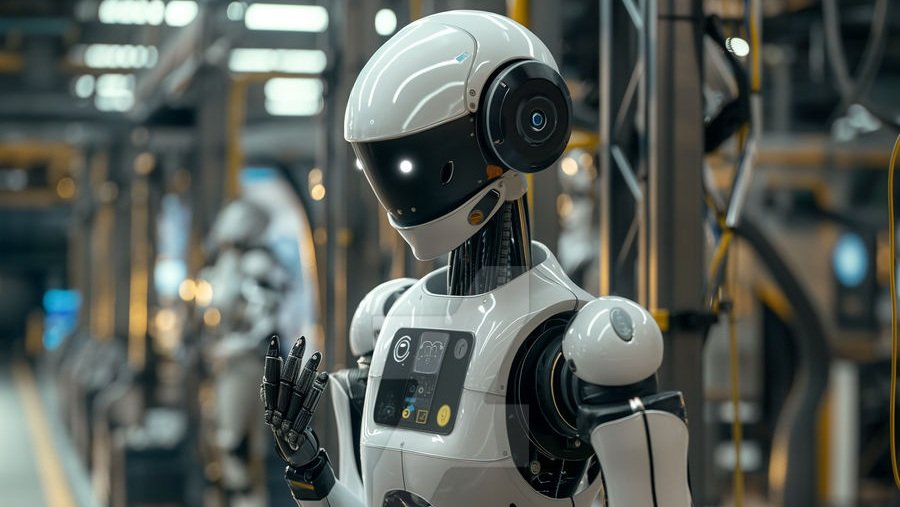
Tesla Bot Gen 3 REAL Demo In 1 Months! Elon Musk REVEALS ALL: The race to develop the world’s most advanced humanoid robot is entering an exciting new phase, and Tesla Optimus Gen 3 could be approaching one of its biggest milestones yet. Elon Musk has revealed that Tesla is preparing a genuine Optimus demonstration within the next one to two months, creating enormous anticipation around the company’s robotics program.
However, the biggest development is not simply about making a robot walk, wave, or perform impressive movements. Tesla is working toward something much more challenging: building a humanoid robot capable of performing useful physical tasks in unpredictable real-world environments.
Recent developments surrounding Optimus point toward major improvements in its robotic hands, finger articulation, precision gripping, and mechanical durability. At the same time, Tesla is reportedly increasing production at Fremont while constructing a massive dedicated manufacturing facility at Giga Texas.
Let’s explore everything happening with Tesla Optimus Gen 3, the latest hand technology, Elon Musk’s upcoming demonstration, and Tesla’s ambitious manufacturing plans.
1. Tesla Optimus Gen 3 Introduces a Major Robotic Hand Upgrade
One of the most interesting developments in Tesla’s latest Optimus updates involves the robot’s hands.
According to visual comparisons highlighted on November 18, 2026, Tesla’s newer Optimus design features a three-joint finger architecture, representing an important improvement over the simpler two-joint configuration seen on earlier Gen 2 units.
This change might appear relatively small, but it could significantly improve how the robot interacts with physical objects.
Why Three-Joint Fingers Matter
Human fingers contain multiple joints that allow them to adjust their shape depending on what they are holding.
For example, picking up a drinking glass requires a different gripping position than holding a screwdriver. A robot with limited finger movement may struggle to adapt to these differences.
With an additional joint, Optimus could gain:
- Improved gripping flexibility for objects with different shapes.
- Better contact with irregular surfaces.
- More natural finger movements.
- Greater control when handling delicate objects.
- Improved adaptability during complicated manufacturing tasks.
This development could make Optimus considerably more useful in factories, warehouses, and eventually households.
Instead of relying on a small collection of predetermined gripping positions, Tesla is moving toward a more adaptable robotic hand.
2. Tesla’s Tendon-Inspired Robotic Hand Patent Explained
Adding more finger joints creates another engineering challenge.
Every additional joint needs a reliable mechanism to move it. Installing separate motors for every moving section could increase the robot’s weight, complexity, cost, and maintenance requirements.
Tesla appears to be exploring a different approach through a tendon-inspired robotic hand design.
A patent application published on November 5, 2026, describes an underactuated robotic hand using internal cables to control multiple articulated finger sections.
How the Cable-Driven System Works
Rather than installing an independent motor for every joint, the proposed mechanism uses a cable connected to an actuator.
The cable can control two articulated sections of a finger simultaneously, allowing the mechanism to adapt when different parts of the finger contact an object.
This approach takes inspiration from the way human muscles and tendons coordinate finger movement.
Several technical features stand out.
Floating Fingertip Engagement
The patent describes an enlarged cable end that moves inside a dedicated cavity near the fingertip.
When tension is applied, the mechanism allows different finger sections to respond independently depending on physical contact.
This could help Optimus adjust its grip instead of forcing every finger joint into the same movement pattern.
Precision Sensors and Springs
The proposed design also incorporates torsion springs, magnets, and Hall effect sensors.
These components help manage finger movement, track joint positions, and return the fingers to their original positions.
Accurate sensing is particularly important when handling fragile objects or performing precision assembly work.
Reduced Mechanical Wear
Another important consideration is durability.
The patent describes internal cable routing designed to reduce sharp bending angles. This could minimize friction and mechanical fatigue over extended periods of operation.
For a robot expected to work continuously inside industrial facilities, reducing maintenance requirements is essential.
It is important to note that Tesla has not confirmed that this exact patented mechanism is installed in the newest Gen 3 hand. Nevertheless, the patent and visual hardware developments point toward a shared engineering goal: greater dexterity with manageable mechanical complexity.
3. Why Optimus Needs Human-Like Hands
Walking and balancing are important capabilities, but they do not automatically make a humanoid robot commercially useful.
The real challenge is manipulating objects reliably.
Consider a factory environment where components arrive on conveyor belts at slightly different angles. A robot must identify each component, pick it up, rotate it, align it, and position it correctly.
Even a small movement error could cause an assembly operation to fail.
Better Performance in Tesla Factories
Improved robotic hands could allow Optimus to perform tasks such as:
- Picking up small manufacturing components.
- Moving tools between workstations.
- Sorting different objects.
- Loading and unloading materials.
- Rotating and aligning components.
- Handling objects with different weights and shapes.
The robot must also maintain a stable grip while its wrist and arm move between different positions.
Tesla’s focus on adaptable gripping and reduced object displacement could help address these challenges.
Future Applications in Homes
The same technology could eventually become useful outside factories.
Household environments contain objects with different shapes, weights, and levels of fragility.
A commercially useful humanoid robot would need to pick up everyday items, organize objects, handle tools, and complete basic household activities without damaging anything.
Advanced robotic hands could become one of the most important technologies separating practical humanoid robots from impressive demonstrations.
4. Elon Musk Promises a Real Optimus Demonstration Within One to Two Months
Perhaps the most exciting development is Elon Musk’s latest comment about an upcoming Optimus demonstration.
In an interview shared on X by Sawyer Merritt, Musk indicated that Tesla expects to demonstrate Optimus within the next one to two months.
What makes this announcement particularly interesting is his emphasis on the word “real.”
Musk suggested that the upcoming demonstration would show what interacting with Optimus is genuinely like in everyday situations.
This creates a higher expectation than a conventional robotics presentation.
What Could a Real Demo Show?
A convincing demonstration would ideally show Optimus performing tasks without depending on tightly controlled conditions or hidden human intervention.
Important capabilities to watch include:
- Unscripted interactions: Responding to unexpected verbal instructions.
- Object manipulation: Picking up unfamiliar objects and handling them appropriately.
- Independent movement: Completing tasks without constant human control.
- Error recovery: Recovering from minor disruptions during physical activities.
- Task completion: Performing multiple steps from beginning to end.
These capabilities would provide a much clearer picture of Tesla’s progress toward practical humanoid robotics.
However, Musk has not publicly confirmed the exact demonstration date, location, or complete list of activities.
The distinction between a scripted demonstration and genuinely autonomous operation will be particularly important when evaluating the results.
5. Tesla Is Increasing Optimus Production at Fremont
While the upcoming demonstration is attracting attention, Tesla is also working to increase its internal Optimus production.
According to the supplied reporting, early production began at the Fremont facility during Q3 2026.
Production reportedly reached hundreds of robots per week, approximately ten times the output recorded during Q2 2026.
These robots are currently being used primarily inside Tesla facilities.
Their responsibilities include collecting operational data, supporting AI training, and performing selected factory activities.
Why Internal Deployment Matters
Using Optimus inside Tesla facilities gives the company an opportunity to collect real-world operating data.
Robots can encounter different objects, physical layouts, and repetitive tasks.
This information can help engineers improve:
- Robotic movement.
- Object recognition.
- Hand coordination.
- Task reliability.
- Autonomous decision-making.
Instead of developing a robot entirely in a laboratory, Tesla can gradually improve its technology through practical deployment.
6. Giga Texas Is Preparing for Massive Optimus Manufacturing
Tesla’s long-term robotics ambitions extend beyond Fremont.
The company is reportedly constructing a dedicated Optimus manufacturing facility at Giga Texas, covering more than seven million square feet.
By mid-November 2026, the building’s structural framework was reportedly around 65% complete.
The reported timeline points toward initial production in late 2026, followed by full-scale manufacturing by summer 2027.
Tesla’s Long-Term Manufacturing Strategy
A dedicated production facility could allow Tesla to move beyond small production runs and develop a more scalable manufacturing system.
Mass manufacturing is essential because even an extremely capable humanoid robot cannot transform industries if it remains too expensive or difficult to produce.
Tesla’s experience with automotive manufacturing, battery technology, electric motors, and artificial intelligence could provide important advantages.
However, reaching large-scale production will still depend on component reliability, manufacturing costs, software performance, and real-world customer demand.
7. Humanoid Summit 2026 Adds More Excitement
Another important upcoming event is the Humanoid Summit in San Mateo, California, scheduled for December 1–2, 2026.
Tesla is listed as a key partner for the event, adding further attention to its robotics developments.
With improvements in Optimus hardware, expanding manufacturing operations, and Musk’s promised real demonstration, the timing could become particularly interesting for the humanoid robotics industry.
The coming months may provide a clearer understanding of how quickly Tesla can transition Optimus from an engineering development program into a commercially useful machine.
Conclusion: Tesla Optimus Gen 3 Could Be Approaching Its Biggest Milestone
Tesla Optimus Gen 3 represents an important step in the company’s ambition to develop a general-purpose humanoid robot.
The move toward three-joint fingers, tendon-inspired mechanical designs, improved gripping capabilities, and better sensing technology highlights where Tesla is focusing its engineering efforts.
At the same time, Elon Musk’s promise of a genuine demonstration within one to two months raises expectations for the next stage of the program.
Tesla’s reported Fremont production progress and the massive Optimus facility under construction at Giga Texas also suggest that the company is preparing for much larger manufacturing ambitions.
Nevertheless, the biggest question remains whether Optimus can perform useful tasks reliably without constant human assistance.
If Tesla can demonstrate genuine autonomy, precise object manipulation, and dependable real-world performance, Optimus could become much more than an impressive humanoid robot.
It could represent a significant step toward bringing general-purpose robots into factories, businesses, and eventually everyday homes.
FAQs
1. What is Tesla Optimus Gen 3?
Tesla Optimus Gen 3 is the next-generation humanoid robot being developed by Tesla. It is designed to perform real-world tasks in factories, warehouses, businesses, and eventually homes using advanced artificial intelligence and robotic hardware.
2. When will Tesla demonstrate Optimus Gen 3?
Elon Musk indicated that Tesla is preparing a real Optimus demonstration within the next one to two months. However, an exact demonstration date has not yet been officially confirmed.
3. What makes Tesla Optimus Gen 3 different from Gen 2?
One major improvement is its reported three-joint finger architecture, replacing the simpler two-joint configuration found in earlier Gen 2 units. This could provide better finger movement, gripping flexibility, and object manipulation.
4. Why are three-joint fingers important for Tesla Optimus?
Three-joint fingers allow Optimus to adjust its grip more naturally around objects with different shapes and sizes. This could improve its ability to handle drinking glasses, tools, manufacturing components, and delicate household items.
5. What is Tesla’s tendon-inspired robotic hand technology?
Tesla’s patent describes an underactuated robotic hand that uses internal cables to control multiple finger joints. The design takes inspiration from biological tendons and aims to improve dexterity while reducing mechanical complexity.
6. When was Tesla’s robotic hand patent published?
The patent application discussed in the latest Optimus developments was published on November 5, 2026. It describes cable-driven finger mechanisms, springs, and sensing components.
7. How does Tesla Optimus detect finger movement?
The proposed robotic hand design uses magnets and Hall effect sensors to track finger positions. These components help the robot monitor joint movement and improve gripping precision.
8. Can Tesla Optimus Gen 3 perform tasks independently?
Tesla is working toward greater autonomous operation through artificial intelligence and improved hardware. However, the upcoming real demonstration will be important for evaluating how independently Optimus can complete practical tasks.
9. What tasks could Tesla Optimus Gen 3 perform in factories?
Optimus could potentially pick up manufacturing components, move tools, sort objects, load and unload materials, and assist with assembly operations. Its improved hands could make these tasks more reliable.
10. Is Tesla Optimus already being manufactured at Fremont?
According to the supplied reporting, early Optimus production began at Tesla’s Fremont facility in Q3 2026, reaching hundreds of units per week. These robots are primarily being used internally for data collection, AI training, and factory operations.
11. How large is Tesla’s new Optimus factory at Giga Texas?
Tesla’s planned dedicated Optimus manufacturing facility at Giga Texas reportedly covers more than 7 million square feet. It is intended to support the company’s long-term humanoid robot manufacturing ambitions.
12. When will Tesla begin mass-producing Optimus robots at Giga Texas?
The reported timeline points toward initial production in late 2026, with full-scale manufacturing targeted for summer 2027. Actual production progress will depend on construction and manufacturing readiness.
13. Will Tesla Optimus Gen 3 be useful in everyday homes?
Tesla ultimately aims to develop a general-purpose humanoid robot that can perform useful household activities. Potential applications include organizing objects, handling tools, and assisting with everyday tasks, although widespread home deployment has not been confirmed.
14. What makes Elon Musk’s upcoming Optimus demonstration important?
Musk’s emphasis on a real demonstration raises expectations beyond scripted movements. People will want to see whether Optimus can respond to instructions, manipulate unfamiliar objects, recover from disruptions, and complete tasks with minimal human intervention.
15. Could Tesla Optimus become a commercially successful humanoid robot?
Optimus has the potential to become a major robotics platform if Tesla can deliver reliable autonomous operation, precise gripping, affordable manufacturing, and long-term durability. Its success will ultimately depend on real-world performance and the ability to scale production.
Read More:
- Tesla Full Self-Driving v15 rollout begins: full release notes and improvements
- The Ultimate Guide to Tesla Heater: Everything You Need to Know
- Why Tesla’s Energy Business Will Dominate in 2027
- Elon Musk Just Revealed Starship V4, it’s MUCH Bigger Than Anyone Expected
- Elon Musk’s World’s First 1000GW Solar Factory SHOCKED Energy Industry
2 thoughts on “Tesla Bot Gen 3 REAL Demo In 1 Months! Elon Musk REVEALS ALL”