
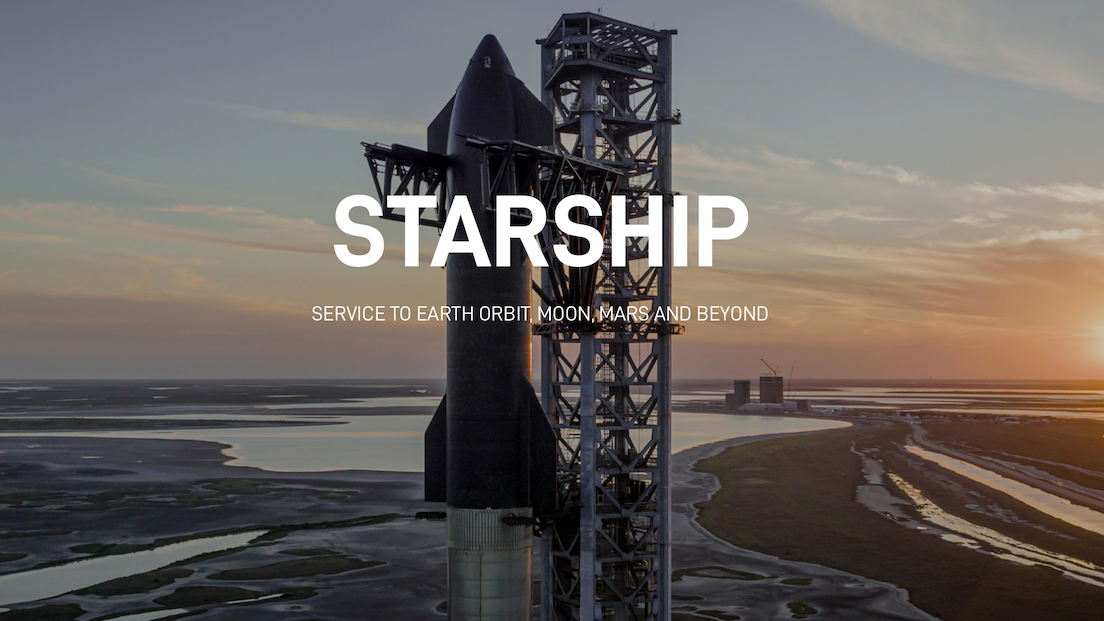
The pace at which SpaceX is advancing its Starship program is nothing short of extraordinary. While much of the aerospace world is still digesting the implications of Starship V3 and Raptor 3, Elon Musk has already pulled back the curtain on what comes next. Starship V4 and Raptor 4 are officially on the horizon, and the goals attached to them are so ambitious that they are redefining expectations across the entire rocket industry.
What makes this moment especially striking is that Starship V3 has only just reached its flight-readiness phase, yet SpaceX is already outlining a future vehicle capable of producing three times the thrust of the Saturn V, the legendary moon rocket that defined the Apollo era. This is not a distant concept or a vague roadmap—Musk has confirmed concrete numbers, timelines, and performance targets.
In this deep dive, we’ll explore what Elon Musk revealed, how powerful Starship V4 and Raptor 4 are expected to be, why simplification is the secret weapon behind these upgrades, and how this evolution could fundamentally reshape humanity’s future in space.
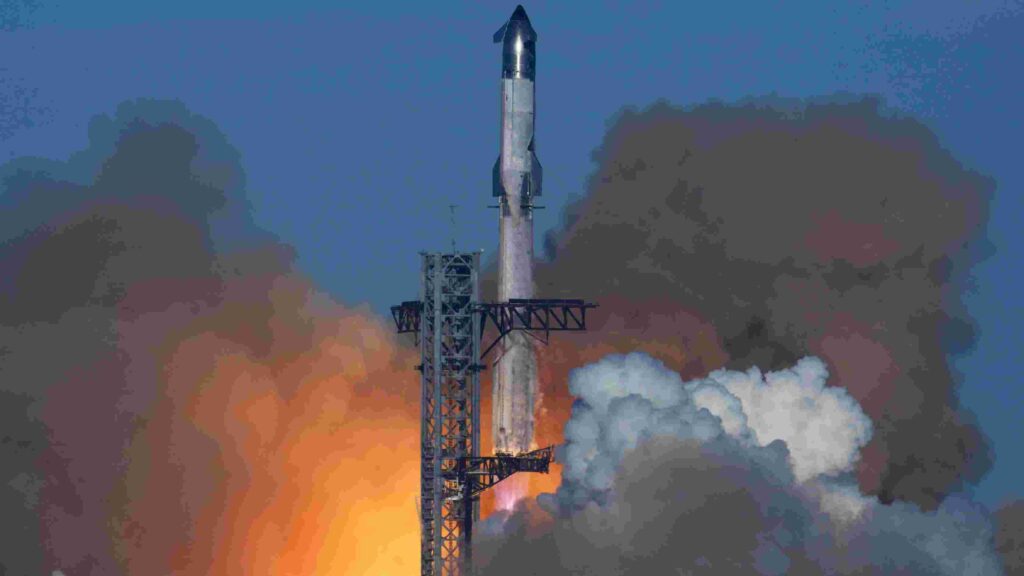
Starship V3 and Raptor 3: The Foundation of the Future
Before understanding where SpaceX is going, it’s crucial to understand where it is right now.
The First Flight of Starship V3 Is Approaching
SpaceX is currently moving steadily toward Flight 12, which is expected to be the first flight of Starship V3. Testing activities are now in full swing, and expectations are extremely high.
Starship V3 represents a major shift in design philosophy. Rather than chasing complexity, SpaceX has doubled down on simplification, focusing on reliability, manufacturability, and operational efficiency.
Raptor 3: Raw Power Meets Simplicity
Each Raptor 3 engine is designed to produce approximately 280 metric tons of thrust. When multiplied across the 33 engines of the Super Heavy booster, the result is staggering:
- Over 9,000 metric tons of liftoff thrust from the booster
- More than 1,700 metric tons of thrust from the Starship upper stage
This simplified design directly addresses challenges encountered during V2 operations in 2025, reducing failure points while increasing performance. The real goal of V3 is not just power—it’s proving Starship can operate repeatedly, reliably, and at scale.
Elon Musk Confirms Raptor 4: A Giant Leap Forward
While Starship V3 has yet to fly, Elon Musk has already confirmed the next milestone.
300 Metric Tons of Thrust Per Engine
In a post on X, Musk stated:
“Raptor V4 engines will need to deliver 300 metric tons of force for the 33 engines to generate a collective 10,000 tons of force.”
This was not an isolated comment. Just weeks earlier, Musk reiterated that Starship V4’s stretch goal is:
- 300 metric tons of thrust per engine
- 33 engines
- 10,000 metric tons of total thrust
To put that into perspective, this would make Starship V4 three times more powerful than the Saturn V.
No Raptor 3X—Straight to Raptor 4
These statements strongly suggest that SpaceX will move directly from Raptor 3 to Raptor 4, skipping any intermediate “Raptor 3X” focused solely on thrust increases. If any Raptor 3X variants exist, they would likely target efficiency, reliability, or reuse rather than raw power.
Once thrust increases by roughly 20 metric tons beyond Raptor 3, the engine officially enters fourth-generation territory.
Can Starship V4 Really Reach 10,000 Tons of Thrust?
At first glance, the math raises an interesting question.
The Thrust Gap Explained
If Raptor 4 delivers 300 metric tons per engine, then:
- 33 engines × 300 tons = 9,900 metric tons
That’s close—but not quite 10,000.
So how does SpaceX close the gap?
Two Possible Solutions
1. Even More Powerful Engines
Musk has previously discussed a future Raptor variant capable of producing 330 to 335 metric tons of thrust. At that level:
- 33 engines could generate 10,800–11,000 metric tons of thrust
This would comfortably exceed the stated goal.
2. More Engines
SpaceX has already discussed increasing engine count, particularly on the upper stage.
After the B19 roll test, Musk famously responded to a question about 42 engines by saying:
“The Starship V4 ship will have three more vacuum engines, making the total stack engine count 42—as foretold in the prophecy.”
Later, in August 2025, he confirmed that Starship V4 will have 42 engines, thanks to a longer upper stage with additional Raptors.
A More Powerful Upper Stage Than Most Rockets
Raptor 4 Vacuum Engines
Based on thrust ratios from Raptor 2 and 3:
- A Raptor 4 sea-level engine at 300 tons
- A Raptor 4 vacuum engine could reach ~320 metric tons
Upper Stage Thrust Scenarios
- Current configuration (3 sea-level + 3 vacuum)
→ ~1,860 metric tons of thrust - Upgraded configuration (6 vacuum engines)
→ ~2,820 metric tons of thrust
That means the Starship upper stage alone would out-thrust many complete launch vehicles in service today.
Why Raptor 4 Is About More Than Power
Raw thrust is only part of the story.
Further Simplification and Reusability
Raptor 4 is expected to feature:
- Fewer failure points
- Greater durability
- Faster refurbishment
- Lower production costs
- True rapid reusability
This aligns perfectly with SpaceX’s long-term vision: high flight cadence at dramatically reduced cost.
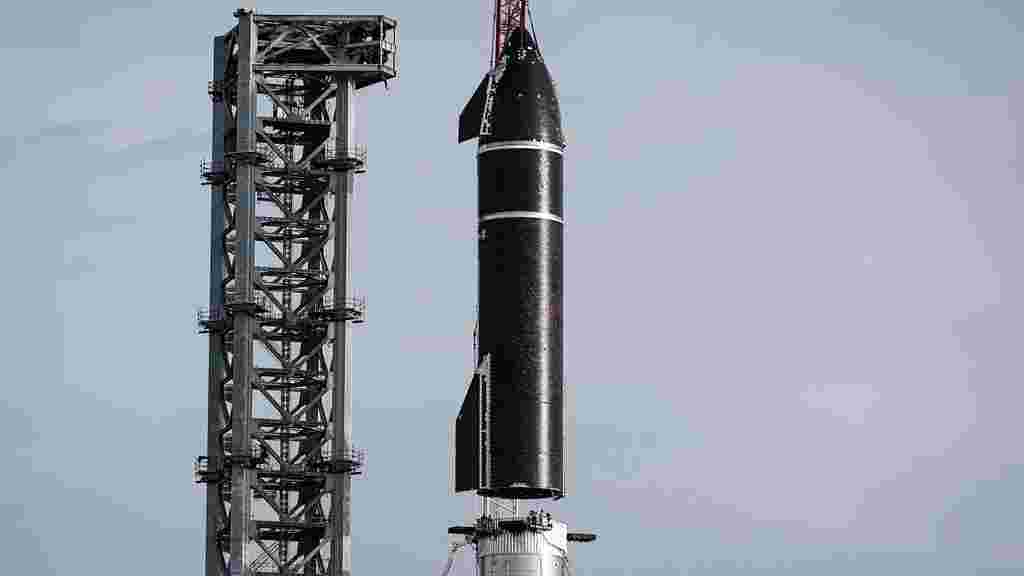
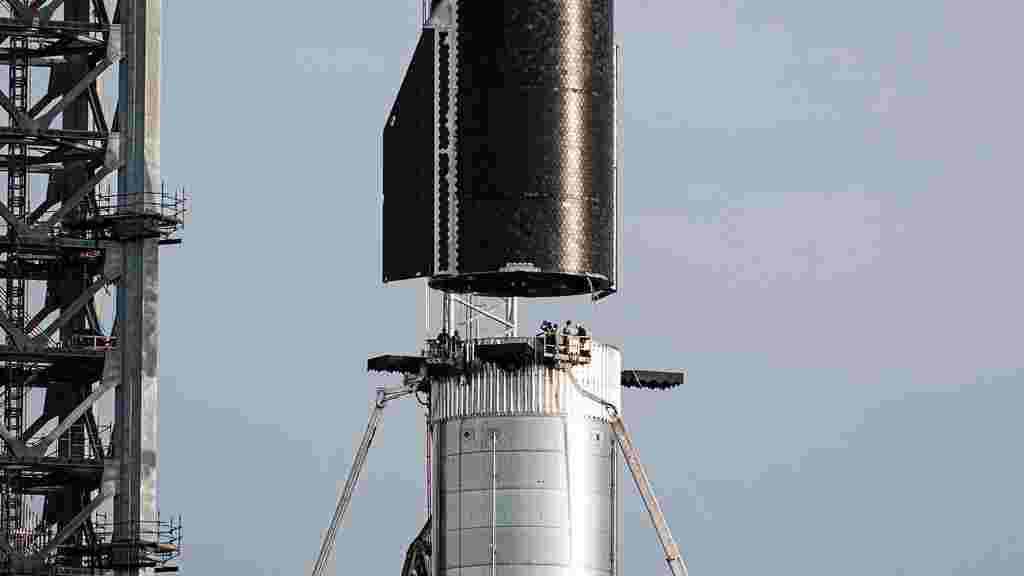
Starship V4: Bigger Than Anything Ever Built
Projected Dimensions
Starship V4 is expected to reach approximately:
- 142 meters tall
- 81 m Super Heavy booster
- 61 m Starship upper stage
There is even strong evidence SpaceX may push toward a 150-meter-tall vehicle, surpassing every rocket ever built.
For comparison, NASA’s Sea Dragon concept proposed a vehicle of similar scale—but it was never constructed. SpaceX now appears ready to make that vision real.
Mass and Payload Capacity
- Total mass: ~7,500 metric tons
- Payload to orbit:
- V3: just over 100 metric tons
- V4: 200+ metric tons
That level of performance would be unprecedented in orbital launch history.
When Will Starship V4 Fly?
According to Elon Musk’s August 2025 timeline update:
- 2025–2026: Starship V3 era
- 2027: Starship V4 enters service
That puts Starship V4 only about a year away, assuming development stays on track.
Why Starship V4 Matters for the Moon and Mars
Permanent Lunar Presence
Humanity’s return to the Moon is intended to be permanent, not symbolic. Sustained lunar bases require:
- Heavy equipment
- Large crews
- Continuous resupply
Traditional rockets simply cannot support that scale.
Mars and a City of One Million
Elon Musk has openly described plans for a self-sustaining city on Mars, capable of supporting up to 1 million people. Achieving that requires:
- Speed
- Massive payload capacity
- Low cost per ton
Starship V4 is designed specifically to meet those demands.
Transforming Orbital Infrastructure
Megaconstellations and Beyond
SpaceX has received approval concepts involving up to 1 million satellites. Deploying infrastructure on that scale is only realistic with Starship.
Space Stations Reimagined
A single Starship has more internal volume than the entire ISS. Multiple Starships could form:
- Commercial space stations
- Research hubs
- Industrial platforms
This is especially critical as the ISS approaches retirement.
Earth-to-Earth Transportation
Beyond space, Starship could revolutionize logistics on Earth:
- Ultra-fast cargo delivery
- Military and humanitarian applications
- Potential competition with long-haul aircraft
V3 Is the Crucial Test
Despite all the excitement surrounding V4, everything depends on Starship V3 succeeding first.
Key Objectives for V3
- Achieving stable orbital operations
- Deploying payloads
- Reliable two-stage landings
- Successful on-orbit refueling
Only by mastering these core capabilities can SpaceX safely advance to V4.
Final Thoughts: A Defining Moment for Spaceflight
Starship V4 and Raptor 4 are not just upgrades—they represent a fundamental shift in what rockets can be. The combination of unmatched power, radical reusability, and unprecedented payload capacity positions SpaceX far ahead of any competitor.
The challenge is immense, but history suggests SpaceX thrives under pressure. If V3 delivers on its promises, V4 could mark the beginning of a new era—one where humanity becomes a true spacefaring civilization.
The rocket industry has been stunned. And the sky, quite literally, is no longer the limit. 🚀
FAQs
1. What is Starship V4?
Starship V4 is the fourth major iteration of SpaceX’s fully reusable super heavy-lift rocket system. It is designed to be taller, more powerful, and capable of delivering over 200 metric tons to orbit, making it the most capable launch vehicle ever planned.
2. What makes Raptor 4 different from previous Raptor engines?
Raptor 4 is expected to deliver 300 metric tons of thrust per engine, alongside further simplification, improved durability, faster refurbishment, and lower production costs compared to Raptor 3.
3. Has SpaceX officially debuted Starship V3 and Raptor 3?
Yes. Starship V3 and Raptor 3 have officially debuted, with active testing underway ahead of their first integrated flight, currently targeted as Flight 12.
4. How powerful will Starship V4 be at liftoff?
With 33 Raptor 4 engines, Starship V4 is expected to generate around 10,000 metric tons of thrust, making it three times more powerful than NASA’s Saturn V rocket.
5. How tall will Starship V4 be?
Starship V4 is projected to reach approximately 142 meters in height, with the possibility of extending to 150 meters, making it the tallest rocket ever built.
6. How much payload can Starship V4 carry to orbit?
According to Elon Musk, Starship V4 will double the payload capacity of V3, potentially exceeding 200 metric tons to low Earth orbit, an unprecedented capability.
7. Why is engine simplification so important for SpaceX?
Simplification reduces failure points, increases reliability, enables rapid reuse, and significantly lowers operational costs—key requirements for high-frequency launches and deep-space missions.
8. Will Starship V4 have more engines than V3?
Yes. Starship V4 is expected to feature 42 total engines, including additional vacuum-optimized Raptors on the upper stage.
9. What is the difference between sea-level and vacuum Raptor engines?
Sea-level Raptors are optimized for atmospheric conditions during liftoff, while vacuum Raptors are designed for efficiency in space, producing higher thrust once outside Earth’s atmosphere.
10. When is Starship V4 expected to fly?
Elon Musk has indicated that Starship V4 is expected to fly in 2027, following the V3 operational phase in 2025 and 2026.
11. Why does SpaceX need 10,000 tons of thrust?
Extreme thrust is required to lift massive payloads, support full reusability, and enable missions to the Moon, Mars, and beyond without excessive staging or complexity.
12. How does Starship V4 compare to the Saturn V?
Starship V4 is expected to produce three times the thrust, carry far more payload, and be fully reusable, whereas Saturn V was expendable and flew only during the Apollo era.
13. How will Starship V4 support Mars colonization?
Starship V4’s massive payload capacity allows it to deliver large crews, heavy machinery, habitats, and infrastructure, making sustained human settlement on Mars feasible.
14. Can Starship be used as a space station?
Yes. A single Starship has more internal volume than the entire ISS, and multiple Starships could form modular, next-generation commercial space stations.
15. Why is Starship V3 critical before moving to V4?
Starship V3 must prove core capabilities, including orbital operations, payload deployment, reliable landings, and on-orbit refueling. These are essential before scaling up to Starship V4 and Raptor 4.
Read More:
- Tesla to a $100T market cap? Elon Musk’s response may shock you
- Where to Buy Tesla Optimus Robot 2026: Everything You Need to Know
- SpaceX’s xAI merger keeps legal liability and debt at arm’s length: report
- Celebrating SpaceX’s Falcon Heavy Tesla Roadster launch, seven years later (Op-Ed)
- Is the $5,983 Tesla House Real? The True Cost Over 10 Years
1 thought on “Elon Musk Revealed Breakthrough Goals for Starship V4 & Raptor 4 Stunned the whole Rocket industry”