
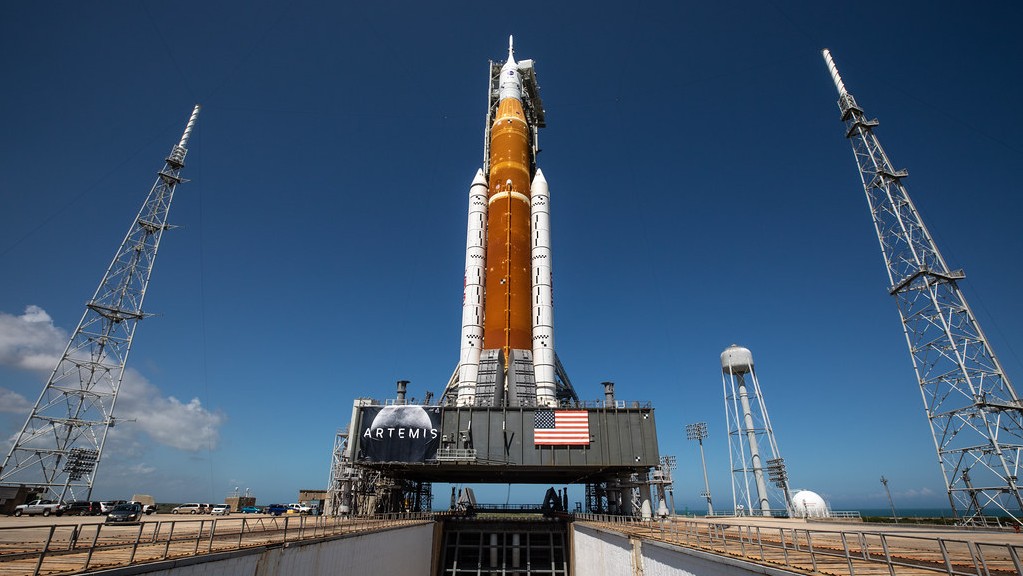
The future of humanity’s return to the Moon has taken an unexpected turn. NASA’s Artemis program, designed to land astronauts on the lunar surface for the first time since 1972, has recently undergone important changes. These adjustments have raised a major question across the space industry: Will SpaceX’s Starship actually fly on the Artemis 3 mission?
For years, SpaceX’s Starship Human Landing System (HLS) was expected to play a central role in the historic Artemis 3 lunar landing. However, recent revisions to NASA’s mission timeline have introduced uncertainty. Instead of a Moon landing in 2027, the mission may now serve primarily as a lunar orbit testing mission, leaving the final landing to later Artemis missions.
This shift has sparked intense debate among experts, analysts, and space enthusiasts. Could Starship miss its chance to participate in Artemis 3, or will SpaceX still secure its place in NASA’s lunar plans?
In this article, we explore why Starship’s role in Artemis 3 is uncertain, how NASA’s redesign of the Artemis program changed everything, and what SpaceX must do to remain a key player in the race back to the Moon.
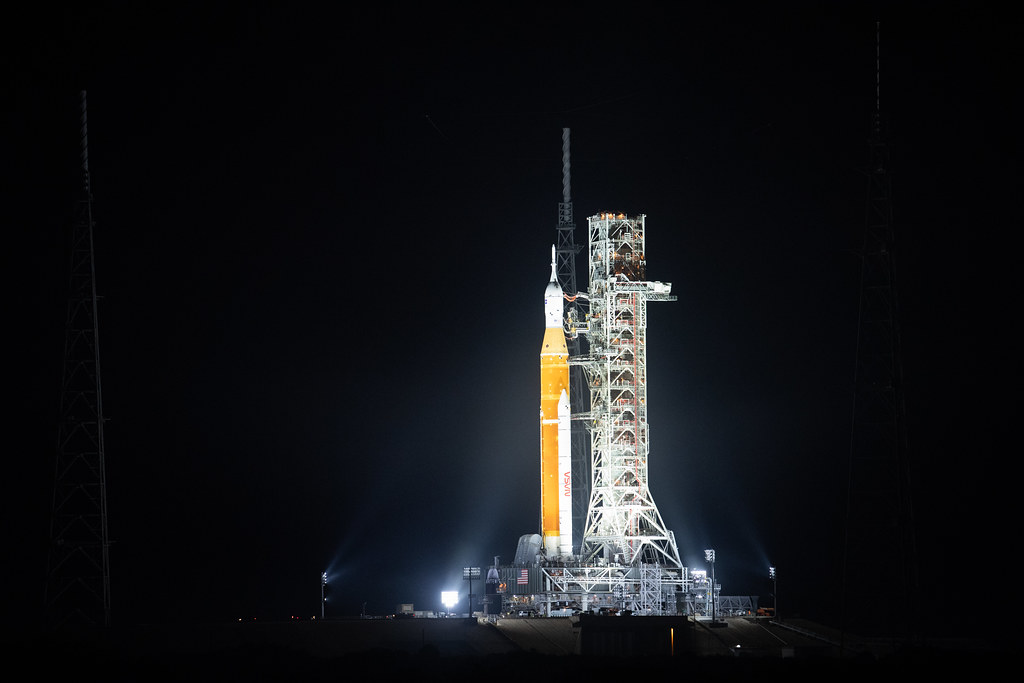
NASA’s Artemis Program: The Plan to Return Humans to the Moon
Before diving into the recent changes, it’s important to understand what the Artemis program is trying to achieve.
The Artemis program is NASA’s long-term initiative to establish a sustainable human presence on the Moon. It is designed to prepare humanity for future missions to Mars and deeper space exploration.
The program includes several major missions:
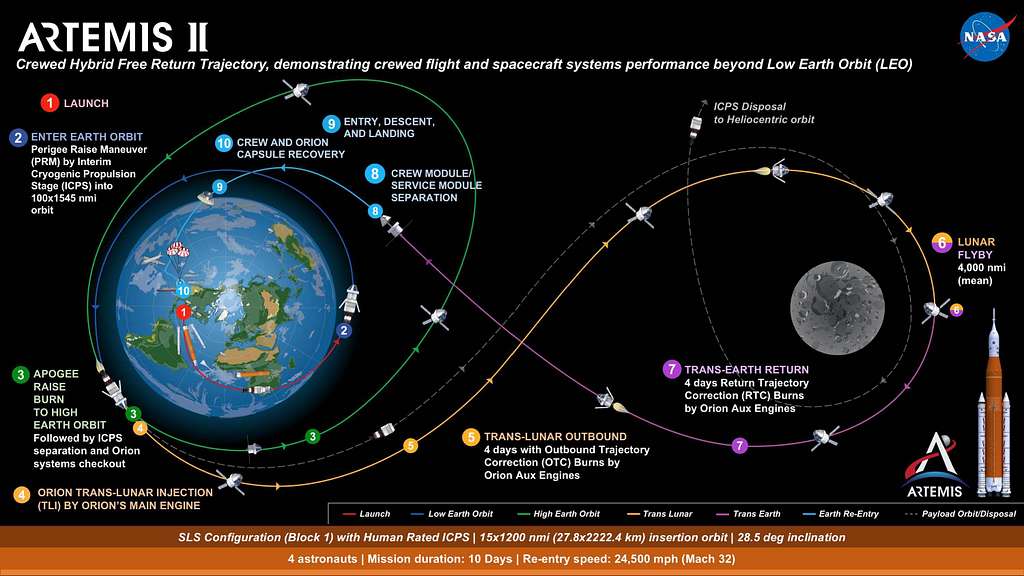
Artemis 1
An uncrewed test flight that sent the Orion spacecraft around the Moon to validate critical systems.
Artemis 2
A planned crewed mission that will take astronauts around the Moon without landing.
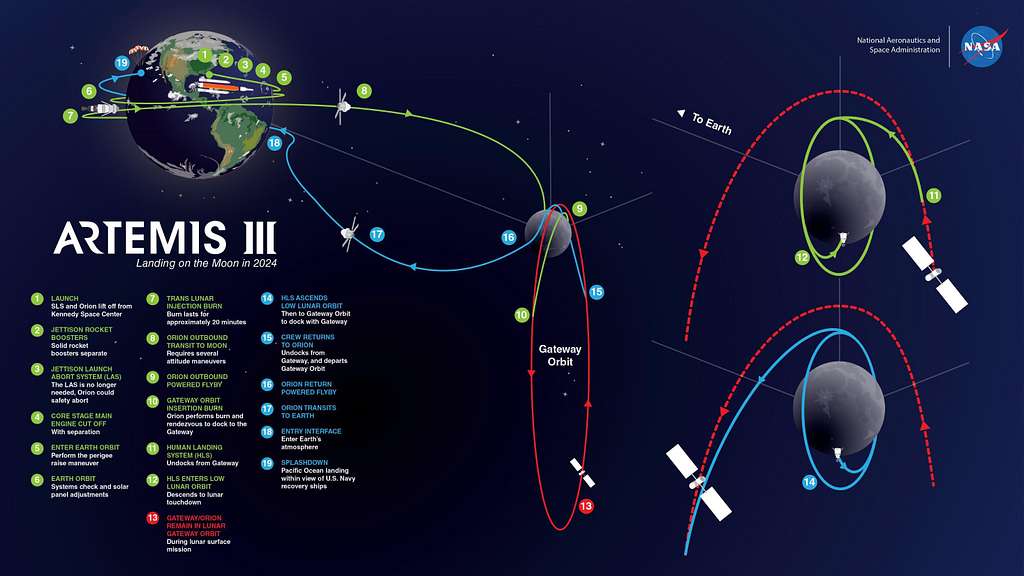
Artemis 3
Originally designed to land astronauts on the lunar surface, marking the first human Moon landing in more than five decades.
For Artemis 3, NASA selected SpaceX’s Starship HLS as the lunar lander that would carry astronauts from lunar orbit down to the surface of the Moon.
However, that plan may now be evolving.
Why NASA Redesigned the Artemis Timeline
Recently, NASA leadership made a strategic decision to adjust the timeline for future Artemis missions.
Under the revised plan:
- Artemis 3 (2027) will focus on lunar orbit testing
- Artemis 4 (2028) is expected to attempt the first crewed lunar landing
- Artemis 5 (2028) may follow soon after with additional lunar missions
This redesign significantly changes the role of Artemis 3.
Instead of landing astronauts on the Moon, the mission will now test docking procedures in lunar orbit between the Orion spacecraft and commercial lunar landers.
This change immediately introduced uncertainty about which lander systems will actually participate in the mission.
The Two Lunar Landers Competing for Artemis
NASA is currently supporting two commercial lunar lander systems for the Artemis program.
SpaceX Starship HLS
SpaceX developed a modified version of its massive Starship rocket called Starship HLS (Human Landing System).
Key characteristics include:
- Extremely large payload capacity
- Ability to transport large crews and cargo
- Fully reusable architecture in the long term
- Designed for lunar and deep-space missions
Starship HLS is far larger than traditional lunar landers, making it a bold and ambitious design.
Blue Origin Blue Moon
The second system is Blue Origin’s Blue Moon lander, developed by Jeff Bezos’ space company.
Blue Moon takes a more traditional approach:
- Smaller and more modular design
- Gradual development through cargo missions
- Compatibility with multiple launch vehicles
Blue Origin also plans to launch Blue Moon on its New Glenn rocket, which is currently under development.
Why Starship Might Not Fly on Artemis 3
The biggest clue that Starship’s participation is uncertain came from NASA’s official wording about the mission.
Instead of clearly stating that Orion will dock with Starship, NASA described the mission as testing docking with “one or both commercial landers.”
This phrasing suggests several possibilities.
Scenario 1: Both Landers Participate
In the most optimistic scenario, both landers take part in Artemis 3.
The mission could look like this:
- Orion launches aboard NASA’s Space Launch System.
- Starship HLS launches separately.
- Blue Moon launches on New Glenn.
- All vehicles meet in lunar orbit.
- Engineers conduct docking tests with Orion.
This would turn Artemis 3 into a full-scale rehearsal for future Moon landings.
Scenario 2: Only One Lander Flies
However, NASA’s wording also leaves open another possibility: only one lander participates in the mission.
If that happens, the probability changes dramatically.
Analysts estimate there could be roughly:
- 1/3 chance Starship does not participate
- 1/3 chance both landers fly
- 1/3 chance Starship flies alone
This means the outcome is still very uncertain.
Starship’s Biggest Challenge: Readiness
One of the reasons analysts believe Starship might miss Artemis 3 is development timing.
Despite winning the Human Landing System contract several years ago, SpaceX has not yet flown a dedicated Starship HLS prototype.
The system still requires several critical milestones:
- Reliable orbital launches
- Starship reentry and landing success
- Orbital refueling demonstrations
- Construction of a full HLS prototype
Each of these steps represents major technical challenges.
Meanwhile, time is running short.
Why Blue Origin Could Gain an Advantage
Blue Origin is pursuing a different development strategy.
The company plans to launch a cargo version of Blue Moon called Mark-1 before the crewed version is ready.
If this cargo lander successfully reaches space and performs well, it could provide early proof that the system works.
That could strengthen Blue Origin’s position in NASA’s selection process.
Unlike Starship’s giant architecture, Blue Moon’s smaller scale may allow faster testing and iteration.
The Importance of Starship Flight Tests
For SpaceX, the next few years will be critical.
Before Starship can support Artemis missions, the company must demonstrate several key capabilities.
Reliable Orbital Launches
The upgraded Starship V3 design must prove it can consistently reach orbit.
Successful Booster and Ship Landings
Both stages of the system must land safely after flight.
Payload Deployment
Starship must demonstrate that it can carry real cargo into orbit.
These achievements will show NASA that the system is mature enough for complex lunar operations.
Orbital Refueling: The Key Technology
One of the most important technologies required for the Starship HLS mission is orbital refueling.
Because Starship is extremely large, it requires multiple tanker launches to fill its fuel tanks in orbit before traveling to the Moon.
This process involves transferring massive amounts of propellant between spacecraft.
Until recently, orbital refueling was considered one of the most urgent milestones for the Artemis timeline.
However, the delay of the first lunar landing to 2028 gives SpaceX more time to develop the technology.
Starship Production Is Rapidly Expanding
Another important factor in Starship’s future is manufacturing capacity.
SpaceX has significantly increased production at Starbase in Texas.
Inside the massive Starfactory facility, engineers are building:
- Tank sections
- Structural components
- Multiple Starship prototypes
New infrastructure is also being built to support higher launch rates.
One major addition is the Gigabay facility, which will allow faster vehicle assembly and processing.
New Launchpads for the Starship Era
SpaceX is also expanding its launch infrastructure.
Currently, the company operates two Starship launch pads at Starbase.
However, several additional launch sites are under development.
Kennedy Space Center Launch Pad
A Starship launch tower is being prepared at Launch Complex 39A in Florida.
SLC-37 Development
Work has also begun at Space Launch Complex 37, where modules for another Starship launch tower are being installed.
These facilities will allow more frequent Starship launches, accelerating development.
The Missing Piece: Starship HLS Prototype
One of the biggest mysteries right now is the Starship Human Landing System prototype.
Despite years of development, the full vehicle has not yet been publicly revealed.
Observers have only seen:
- Small components
- Structural hints
- Engineering illustrations
If SpaceX wants to build confidence in its system, a public reveal of the Starship HLS prototype could be crucial.
Possible Future Tests for Starship HLS
Before astronauts land on the Moon, several tests may be required.
These could include:
Docking Demonstrations
Starship HLS docking with the Orion spacecraft in lunar orbit.
Uncrewed Lunar Landing
NASA may require a robotic demonstration landing before astronauts attempt the mission.
Multiple Prototype Vehicles
SpaceX may need several HLS prototypes for different tests.
These steps would ensure the system is safe and reliable before carrying humans.
What Happens If Starship Misses Artemis 3?
Even if Starship does not participate in Artemis 3, it does not mean SpaceX is out of the lunar program.
Later missions such as Artemis 4 and Artemis 5 could still rely heavily on Starship.
In fact, the redesigned timeline may actually give SpaceX more time to perfect its technology.
The real competition may begin when NASA decides which lander will perform the first crewed lunar landing.
The Future of the Artemis Moon Race
The coming years will be crucial for the future of lunar exploration.
Several major developments will determine the outcome:
- Starship flight test success
- Blue Moon cargo mission results
- Orbital refueling demonstrations
- Starship HLS prototype reveal
- Artemis 3 docking mission performance
Each milestone will influence which system NASA ultimately prioritizes for Moon landings.
Conclusion: A Critical Moment for SpaceX and Artemis
NASA’s redesign of the Artemis program has created a new reality for the Moon race.
While Artemis 3 was once expected to land astronauts, it will now likely serve as a crucial orbital test mission.
This shift introduces real uncertainty about whether SpaceX’s Starship HLS will participate in the mission.
However, the story is far from over.
If SpaceX successfully demonstrates Starship reliability, orbital refueling, and a working HLS prototype, the company could still play a dominant role in future Artemis landings.
The stakes are enormous. The technology proven in the next few years will shape human exploration of the Moon, Mars, and beyond.
One thing is certain: the race back to the Moon has never been more exciting. 🚀
FAQs
1. Why might SpaceX Starship not launch in Artemis 3?
SpaceX’s Starship Human Landing System (HLS) may not participate in Artemis 3 because NASA redesigned the mission timeline. Instead of a lunar landing, Artemis 3 will likely focus on testing docking operations in lunar orbit, and NASA may choose one or both commercial landers, meaning Starship is not guaranteed a slot.
2. What is the Artemis 3 mission?
Artemis 3 is part of NASA’s Artemis program, originally planned to return astronauts to the Moon. Under the revised plan, Artemis 3 is expected to test spacecraft docking and systems in lunar orbit, preparing for future Moon landings.
3. When will Artemis 3 launch?
NASA currently targets 2027 for Artemis 3, though the mission will likely serve as a test mission in lunar orbit rather than a full lunar landing.
4. Which spacecraft will be used for Artemis 3?
The mission will include NASA’s Orion spacecraft launched on the Space Launch System (SLS) rocket. Orion may dock with one or both commercial lunar landers, such as SpaceX Starship HLS or Blue Origin’s Blue Moon.
5. What is Starship HLS?
Starship HLS (Human Landing System) is a lunar lander version of SpaceX’s Starship rocket, designed to carry astronauts from lunar orbit to the Moon’s surface as part of NASA’s Artemis program.
6. Why did NASA change the Artemis mission timeline?
NASA adjusted the timeline due to technical challenges, development delays, and the need for more testing. Moving the first lunar landing to Artemis 4 in 2028 allows additional time to prepare the landing systems.
7. What is Blue Origin’s Blue Moon lander?
Blue Moon is a lunar lander developed by Blue Origin, designed to transport astronauts and cargo to the Moon. It is expected to launch on the New Glenn rocket and compete with SpaceX’s Starship HLS for Artemis missions.
8. Could both Starship and Blue Moon fly on Artemis 3?
Yes. One possible scenario is that both commercial landers participate, allowing NASA to test docking procedures and evaluate both systems in lunar orbit.
9. What are the chances Starship participates in Artemis 3?
Analysts estimate roughly a two-thirds chance Starship participates, either alone or alongside Blue Moon, and about a one-third chance it may not be included.
10. What challenges does Starship still need to overcome?
Before supporting lunar missions, Starship must prove several key technologies, including:
- Reliable orbital launches
- Booster and spacecraft recovery
- Orbital refueling
- Human-rated safety systems
11. What is orbital refueling and why is it important?
Orbital refueling involves transferring propellant between spacecraft in orbit. Starship HLS requires this process because it needs multiple fuel tanker launches to reach the Moon.
12. Will Artemis 4 land astronauts on the Moon?
Yes. Under the revised timeline, Artemis 4 in 2028 is expected to attempt the first crewed lunar landing of the Artemis program.
13. Where are SpaceX Starship rockets built and tested?
Starship rockets are primarily developed and tested at SpaceX’s Starbase facility in Texas, where the company builds prototypes and conducts launch tests.
14. Has Starship HLS been revealed yet?
No. While SpaceX has shown concept images and partial components, a full Starship HLS prototype has not yet been publicly unveiled, leading to speculation about its final design.
15. What does Artemis mean for the future of space exploration?
The Artemis program aims to establish a sustainable human presence on the Moon, develop technologies for deep-space travel, and prepare for future missions to Mars.
Read More:
- What is Digital Optimus? The new Tesla and xAI project explained
- Tesla Cybercab SPOTTED Insane Specs Before BIG April Event! Elon Musk UPDATED
- Something Weird Happened with Starship Flight 12 Rocket and Pad. No Static Fire until
- Lucid unveils Lunar Robotaxi in bid to challenge Tesla’s Cybercab in the autonomous ride hailing race
- Tesla finally brings a Robotaxi update that Android users will love
2 thoughts on “SpaceX Starship may NOT launch in Artemis 3 after NASA Redesigned Lunar Program! Why?”