
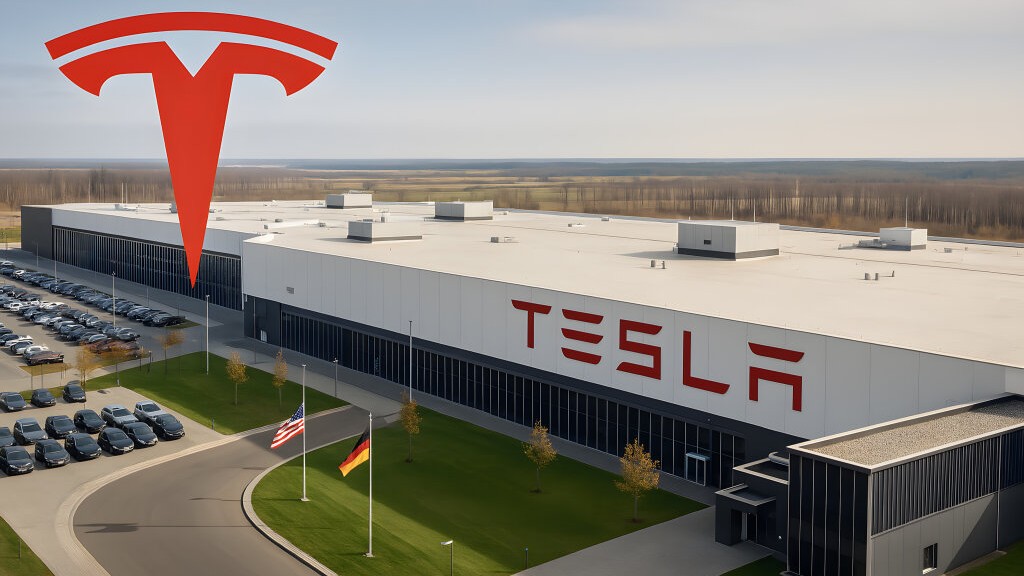
Tesla is no longer just a car company—it is rapidly transforming into a next-generation industrial powerhouse. By 2027, Tesla is placing a bold $25 billion bet on two groundbreaking facilities: the Tesla Semifactory in Nevada and the Terrafab AI chip plant in Texas. These factories are designed around a revolutionary concept: “the machine that builds the machine.”
This isn’t just about scaling production—it’s about reinventing manufacturing, reducing costs dramatically, and accelerating innovation at an unprecedented pace. Let’s take a deep dive into how these two factories will reshape not only Tesla’s future but the entire industrial landscape.
Part I: The Semifactory – Reimagining the Assembly Line
For over 100 years, automotive manufacturing has followed a predictable path—Henry Ford’s linear assembly line. Tesla is now completely rewriting that playbook with its Semifactory, introducing a futuristic system known as the 3D Modular Parallel Architecture.
The “Flying” Production Line
One of the most revolutionary aspects of the Semifactory is its ceiling-based production system.
Instead of vehicles moving along the ground, Tesla has literally lifted the production line into the air.
- Overhead carriers transport massive vehicle modules weighing over 10,000 lbs
- These carriers achieve extreme precision of ±0.5 mm
- Traditional forklifts and cranes are eliminated entirely
This results in a stunning innovation: vehicles are suspended mid-air, allowing full accessibility.
Why This Matters
With vehicles elevated:
- Workers and robots gain 360-degree access
- Assembly can happen simultaneously from all six directions
- Station productivity increases by up to 25%
This is not just an upgrade—it’s a complete redesign of industrial flow.
Parallel vs. Sequential Assembly
Traditional factories rely on a single sequential line, where one delay can halt the entire system.
Tesla’s Semifactory flips this into a parallel production model.
How It Works
Different parts of the vehicle are built simultaneously in separate zones:
- Cabin
- Chassis
- Drivetrain
- Battery system
These components only come together at the final integration point, often called the “marriage stage.”
Key Advantages
- Resilience: If one section fails, production reroutes automatically
- Efficiency: Eliminates bottlenecks
- Performance: Targets an impressive 90% Overall Equipment Effectiveness (OEE)
For comparison, most traditional factories operate between 75% and 85% OEE.
This means Tesla is aiming for near-perfect operational efficiency.
The Battery as the Architecture
Tesla is also redefining what a vehicle fundamentally is.
In the Tesla Semi, the battery is not just a component—it’s the structural core of the truck.
Key Innovations
- 4680 battery cells are produced on-site
- Eliminates supply chain delays
- Improves integration and durability
Megawatt Charging Capability
The Semi supports 1.2 megawatt charging, enabling:
- Charging from 5% to 70% in just 30 minutes
- Perfect alignment with mandatory driver rest breaks
Enhanced Safety
- Battery packs are positioned low between axles
- Reduces center of gravity by 20%
- Significantly lowers rollover risk
This design is not only efficient—it’s engineered for real-world heavy-duty reliability.
Part II: Terrafab – The Industrialization of Intelligence
While the Semifactory builds Tesla’s physical machines, Terrafab builds their intelligence.
Located in Texas, this facility is unlike any factory in the world—it produces no consumer goods. Instead, it manufactures pure artificial intelligence in the form of advanced silicon chips.
The 2-Nanometer Frontier
Terrafab operates at the cutting edge of semiconductor technology.
Ultra-Pure Silicon
- Silicon purity reaches 99.9999999% (9N level)
- Ensures maximum performance and reliability
EUV Lithography
- Uses advanced machines worth $200 million each
- Capable of producing chips at 2-nanometer scale
This level of miniaturization allows Tesla to pack unprecedented computing power into tiny chips.
Gate-All-Around (GAA) Transistors
Tesla is adopting GAA transistor architecture, which:
- Improves energy efficiency
- Reduces power consumption by 30%
- Enhances performance stability
Specialized Silicon – AI5 and Dojo
Tesla is moving away from general-purpose chips and embracing highly specialized silicon.
These chips are designed with one goal in mind: extreme AI performance.
AI5 Chip
- Delivers 8x more compute power than its predecessor
- Offers 5x more bandwidth
- Enables real-time processing of massive visual data
This is crucial for:
Dojo 3 Training System
Tesla’s Dojo system represents a breakthrough in AI training.
- Uses “System on Wafer” architecture
- Eliminates latency caused by traditional wiring
- Data transfer speeds reach 36 to 50 terabytes per second
This enables Tesla to train AI models faster than ever before, accelerating innovation cycles dramatically.
Thermal Management and Sustainability
High-performance AI computing generates enormous heat—and Tesla has engineered innovative solutions.
Liquid-to-Chip Cooling
- Coolant flows directly across the chip surface
- Removes heat instantly and efficiently
- Maintains optimal performance under heavy loads
Massive Power Consumption
- Terrafab consumes around 2 gigawatts of power
- Equivalent to powering a small city
Sustainable Innovations
Tesla is addressing this with:
- Recycling 13 million gallons of water daily
- Exploring reuse of waste heat
- Potential integration with nearby manufacturing facilities
This creates a circular economy model, where waste becomes a resource.
Part III: The Ultimate Goal – Crushing the “Silicon Tax”
At the heart of Tesla’s strategy is vertical integration.
Currently, advanced AI chips from third-party suppliers can cost between:
- $30,000 to $45,000 per unit
This creates a massive barrier to scaling AI-driven technologies.
Tesla’s Cost Revolution
By producing chips in-house at Terrafab, Tesla aims to reduce costs dramatically:
- Target cost per AI unit: $500 to $1,000
This is a game-changing reduction that could:
- Accelerate adoption of autonomous vehicles
- Make robotics economically viable
- Unlock entirely new industries
Universal AI Across Platforms
Tesla’s chips are not limited to cars.
They are being designed for multi-platform deployment, including:
- Autonomous vehicles
- Robotaxis
- Optimus humanoid robots
- Satellite systems
These chips are even being radiation-hardened for space applications, enabling integration into satellite networks.
This means Tesla is building a universal AI ecosystem powered by its own silicon.
Conclusion: The Machine That Builds the Machine
By 2027, Tesla plans to:
- Produce 50,000 Tesla Semi trucks annually
- Power a fleet of millions of autonomous systems
- Lead in both physical manufacturing and AI intelligence production
The Semifactory and Terrafab together represent something far bigger than factories.
They are:
- Industrial innovation engines
- AI production hubs
- Cost-collapse machines
Tesla is transitioning from a car manufacturer into an industrial refinery for autonomous intelligence.
Whether it’s a Tesla Semi hauling 40,000 lbs of cargo or a humanoid robot performing factory labor, every product will originate from:
- The 3D modular production lines of the Semifactory
- The advanced silicon wafers of Terrafab
Final Thoughts
Tesla’s 2027 vision is bold, disruptive, and highly ambitious.
If successful, it could:
- Redefine global manufacturing
- Collapse AI costs
- Accelerate the adoption of autonomous systems worldwide
The real story here isn’t just about cars or chips—it’s about building the infrastructure for an intelligent future.
And Tesla is positioning itself right at the center of it.
FAQs
1. What are the two new Tesla factories launching by 2027?
Tesla is developing two major facilities: the Tesla Semifactory in Nevada, focused on vehicle production, and the Terrafab AI chip plant in Texas, dedicated to manufacturing advanced artificial intelligence chips.
2. What makes the Tesla Semifactory different from traditional factories?
The Semifactory replaces the traditional linear assembly line with a 3D Modular Parallel Architecture, allowing multiple parts of a vehicle to be built simultaneously instead of sequentially.
3. What is the “flying” production line?
It’s a system where vehicle components are suspended in the air using overhead carriers, enabling 360-degree access for assembly and eliminating the need for ground-based transport like forklifts.
4. How does parallel assembly improve efficiency?
Parallel assembly allows different parts of the vehicle to be built at the same time. This reduces delays, avoids bottlenecks, and increases overall factory efficiency to around 90% OEE.
5. What is OEE and why is it important?
Overall Equipment Effectiveness (OEE) measures manufacturing productivity. Tesla’s target of 90% is significantly higher than the industry average of 75–85%, indicating superior efficiency.
6. What role does the battery play in the Tesla Semi?
In the Tesla Semi, the battery acts as the structural core of the vehicle, improving strength, efficiency, and overall design integration.
7. What are 4680 battery cells?
These are Tesla’s next-generation battery cells, designed for higher energy density, improved performance, and reduced manufacturing costs.
8. How fast can the Tesla Semi charge?
The Tesla Semi supports 1.2 megawatt charging, allowing it to charge from 5% to 70% in approximately 30 minutes.
9. What is Terrafab and what does it produce?
Terrafab is Tesla’s advanced chip manufacturing facility in Texas. It produces AI chips and computing systems, not consumer products.
10. What is special about the 2-nanometer chip technology?
The 2nm process allows for extremely small and powerful chips, delivering higher performance while consuming less energy.
11. What are AI5 chips?
AI5 chips are Tesla’s next-generation processors that offer 8x more computing power and 5x more bandwidth compared to previous versions.
12. What is the Dojo system?
Dojo is Tesla’s AI training supercomputer, designed to process massive datasets at ultra-high speeds for autonomous driving and robotics.
13. Why does Tesla want to manufacture its own chips?
By producing its own chips, Tesla aims to reduce costs drastically, cutting prices from $30,000–$45,000 down to around $500–$1,000 per unit.
14. What is the “Silicon Tax”?
The “Silicon Tax” refers to the high cost of advanced AI chips from third-party suppliers, which Tesla aims to eliminate through in-house production.
15. What is Tesla’s ultimate goal with these factories?
Tesla aims to become a fully vertically integrated company, producing both vehicles and the AI systems that power them, enabling a future of autonomous transport and intelligent robotics.
Read More:
- California hits Tesla Cybercab and Robotaxi driverless cars with new law
- NASA Artemis 3 Journey Begins! SpaceX & BO Speed up to Become First HLS
- SpaceX Found Something Weird in Starship Booster’s 33-Engine Static Fire test…No Launch in May
- Tesla Semi sends clear message to Diesel rivals with latest move
- Tesla Cybertruck’s head-scratching trim sold terribly, recall documents reveal
1 thought on “Exclusive First Look In 2 NEW Tesla INSANE FACTORY in 2027”