
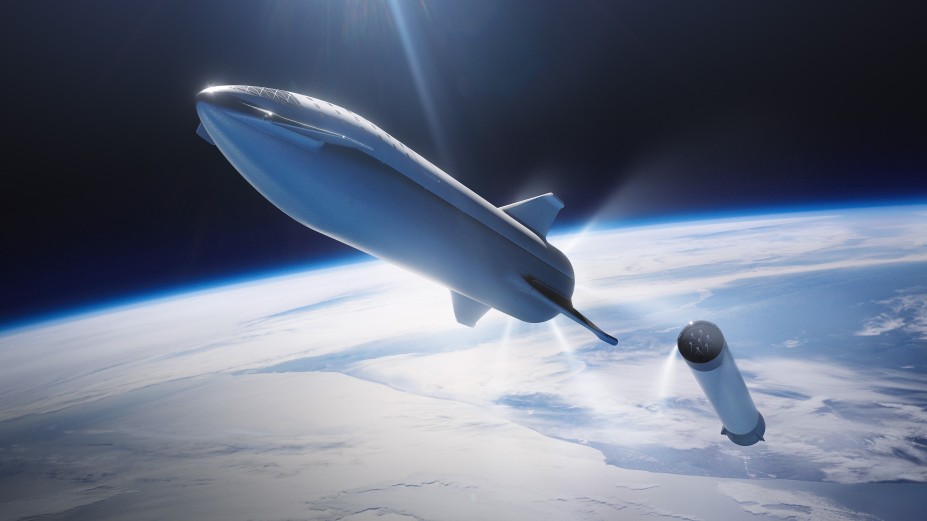
The world of technology is witnessing a dramatic transformation as Tesla and SpaceX push the boundaries of what’s possible. While SpaceX captures global attention with groundbreaking Starship developments, Tesla is quietly engineering a revolution of its own—one that could completely redefine manufacturing as we know it.
At the heart of this transformation lies Tesla’s bold new production strategy known as the Unboxed Process. Combined with massive factory expansions and a futuristic AI chip initiative, Tesla’s roadmap toward 2027 signals a shift from traditional car manufacturing to a fully integrated tech ecosystem.
This blog explores Tesla’s next-generation manufacturing, its global Gigafactory expansion, and the ambitious Terrafab project—all of which are shaping the future of automation, AI, and space technology.
The Unboxed Process – A Manufacturing Revolution
Breaking the 100-Year-Old Assembly Line Model
For over a century, car manufacturing has relied on a sequential assembly line. Vehicles move step-by-step while components are added in order. Tesla is now abandoning this outdated system in favor of a parallel manufacturing architecture.
The Unboxed Process introduces a radical shift: instead of building a car in one continuous line, Tesla divides it into independent modules that are constructed simultaneously.
This approach is designed to achieve:
- 50% reduction in production costs
- 40% smaller factory footprint
- Faster production cycles
- Greater operational flexibility
Simultaneous Sub-Assemblies Explained
In the Unboxed system, major vehicle components are built independently. These include:
- Front underbody
- Rear underbody
- Structural battery pack
- Cabin
- Doors
Each section is manufactured in separate zones at the same time.
Parallel Execution
Imagine this: while one team is casting and wiring the front section, another is installing seats directly onto the structural battery pack elsewhere in the factory. Everything happens at once instead of in sequence.
The “Marriage” Point
All components come together only at the final stage, known as the marriage point. This drastically reduces delays because issues in one section no longer halt the entire production line.
Efficiency Gains That Change Everything
The Unboxed Process isn’t just innovative—it’s incredibly efficient.
Faster Cycle Time
Tesla aims to produce one vehicle every 5 to 10 seconds, a pace that could redefine global manufacturing benchmarks.
Improved Labor Efficiency
Workers and robots operate on open sections instead of cramped car frames. This improves accessibility and reduces assembly time by up to 25%.
Revolutionary Paint Process
Instead of painting the entire vehicle body, Tesla paints only necessary panels. This leads to:
- Lower energy consumption
- Smaller paint shops
- Reduced environmental impact
Expanding the Gigafactory Network (2026–2027)
To support this manufacturing revolution, Tesla is rapidly expanding its global factory network. Each Gigafactory is being optimized for specific products and technologies.
Gigafactory Nevada – The Tesla Semi Hub
Tesla’s push into the commercial vehicle market is gaining serious momentum.
Mass Production Milestone
In March 2026, Tesla officially began volume production of the Tesla Semi at a massive new facility near Gigafactory Nevada.
Production Goals
- Target: 50,000 trucks per year by 2027
- Market impact: Nearly 20% of the U.S. Class 8 truck segment
Supply Chain Breakthrough
One of the biggest delays in the Semi program was battery logistics. Tesla solved this by placing the Semi factory next to its 4680 battery cell plant, eliminating transportation bottlenecks and boosting efficiency.
Gigafactory Texas – The AI and Cyber Hub
Gigafactory Texas is becoming the centerpiece of Tesla’s future.
Cybercab Robotaxi Production
This facility is the first to fully implement the Unboxed Process for high-volume production. The focus is Tesla’s autonomous Cybercab robotaxi, which represents the company’s vision for a driverless future.
Affordable Tesla – Project Redwood
Tesla is also preparing to launch a $25,000 next-generation vehicle, internally known as Project Redwood.
Key highlights:
- Scheduled for mid-2026 production
- Built using the same parallel assembly system
- Designed for mass adoption globally
This could be the turning point that makes electric vehicles accessible to millions more people.
Terrafab – The Future of AI and Chip Manufacturing
Tesla’s ambitions go far beyond cars. The company is now targeting one of the most critical industries in the world: semiconductor manufacturing.
What Is Terrafab?
Terrafab is a joint venture between Tesla, SpaceX, and xAI. Its mission is simple yet groundbreaking—eliminate dependence on external chip suppliers.
This initiative aims to bring the so-called “Silicon Tax” to zero by producing advanced chips entirely in-house.
The Next-Generation Chips – AI5 and D3
AI5 Chip
The AI5 chip is Tesla’s fifth-generation processor designed for:
- Full Self-Driving (FSD) systems
- Optimus humanoid robots
- Advanced AI workloads
Production is expected to scale in 2027, making Tesla fully self-reliant in AI hardware.
D3 Space Processor
The D3 chip is built specifically for space applications:
- Radiation-hardened design
- Optimized for orbital environments
- Primarily used in SpaceX’s space-based data systems
Interestingly, 80% of Terrafab’s output is expected to support space operations.
Orbital AI Strategy – Data Centers in Space
Tesla and SpaceX are not stopping at Earth-based innovation. Their next frontier is space-based computing.
AI Satellite Mini Constellation
The plan involves deploying a network of “AI Sat Minis”—massive satellites functioning as orbital data centers.
Each satellite:
- Measures approximately 170 meters in length
- Operates as a high-performance computing hub
Why Space-Based Computing?
Superior Solar Energy
Solar power in orbit is five times more intense than on Earth, providing a nearly unlimited energy source.
Natural Cooling System
Space offers a vacuum environment, which simplifies heat dissipation—a major challenge for traditional data centers.
Massive Compute Power Goals
Tesla and SpaceX aim to achieve:
- 1 terawatt of compute capacity per year
This would:
- Bypass global chip shortages
- Enable massive AI training workloads
- Power next-generation autonomous systems
Tesla’s 2027 Vision – A Fully Integrated Tech Giant
By 2027, Tesla’s strategy becomes clear: it is no longer just a car company.
Key Targets and Impact
- Unboxed Process
- 50% cost reduction
- 40% less factory space
- Tesla Semi Production
- 50,000 trucks annually
- AI5 Chips
- In-house silicon for AI systems
- Terrafab Facilities
- Advanced chip manufacturing and orbital computing
Vertical Integration at Its Peak
Tesla is building a system where it controls:
- Manufacturing processes
- Energy generation
- AI hardware
- Software ecosystems
- Space-based infrastructure
This level of integration is unprecedented in modern industry.
Conclusion: The Convergence of Manufacturing, AI, and Space
The combination of Tesla’s Unboxed Process, Gigafactory expansion, and Terrafab initiative represents one of the most ambitious technological transformations ever attempted.
At the same time, SpaceX’s advancements in Starship and orbital systems complement this vision, creating a unified ecosystem that spans Earth and space.
By 2027, we may witness:
- Cars built faster and cheaper than ever
- AI systems powered by in-house chips
- Data centers operating in orbit
- A seamless connection between transportation, energy, and computing
This isn’t just innovation—it’s a complete reimagining of how industries operate.
The future is being built in parallel, unboxed, and without limits.
FAQs
1. What is the Unboxed Process by Tesla?
The Unboxed Process is Tesla’s new manufacturing method that replaces the traditional assembly line with a parallel production system, where different parts of a car are built simultaneously.
2. How is the Unboxed Process different from traditional manufacturing?
Unlike the sequential assembly line, the Unboxed Process builds independent modules at the same time and combines them only at the final “marriage point.”
3. What are the main benefits of the Unboxed Process?
Key benefits include:
- 50% lower production costs
- 40% smaller factory footprint
- Faster production speed
- Improved efficiency and flexibility
4. What is the “marriage point” in Tesla manufacturing?
The marriage point is the final stage where all independently built sections of the vehicle come together into a complete car.
5. How fast can Tesla produce vehicles using this method?
Tesla aims to produce one vehicle every 5 to 10 seconds, making it one of the fastest production systems in the world.
6. What parts of the car are built separately?
Major components built independently include:
- Front and rear underbody
- Cabin
- Doors
- Structural battery pack
7. What is Tesla’s plan for Gigafactory Nevada?
Gigafactory Nevada is focused on Tesla Semi production, with a target of 50,000 trucks per year by 2027.
8. When did Tesla Semi production begin?
Mass production of the Tesla Semi began in March 2026 at a new facility near Gigafactory Nevada.
9. What is Gigafactory Texas used for?
Gigafactory Texas is Tesla’s AI and innovation hub, producing the Cybercab robotaxi and the upcoming affordable Tesla vehicle.
10. What is Project Redwood?
Project Redwood is Tesla’s planned $25,000 electric vehicle, expected to launch in mid-2026 using the Unboxed Process.
11. What is Terrafab?
Terrafab is a joint initiative by Tesla, SpaceX, and xAI to produce advanced AI chips in-house, reducing reliance on external suppliers.
12. What is the AI5 chip?
The AI5 chip is Tesla’s next-generation processor designed for Full Self-Driving (FSD), Optimus robots, and advanced AI applications.
13. What is the D3 space processor?
The D3 chip is a radiation-hardened processor designed for space-based computing and used in SpaceX’s orbital systems.
14. What are AI Sat Minis?
AI Sat Minis are large orbital satellites that function as data centers in space, enabling high-performance AI computing.
15. Why is space used for data centers?
Space offers:
- 5x stronger solar energy
- Natural cooling in vacuum
- Improved efficiency for large-scale computing
16. What is Tesla’s overall goal for 2027?
By 2027, Tesla aims to become a fully vertically integrated tech company, controlling its manufacturing, energy, AI chips, and space-based infrastructure.
Read More:
- Exclusive First Look In 2 NEW Tesla INSANE FACTORY in 2027
- California hits Tesla Cybercab and Robotaxi driverless cars with new law
- NASA Artemis 3 Journey Begins! SpaceX & BO Speed up to Become First HLS
- SpaceX Found Something Weird in Starship Booster’s 33-Engine Static Fire test…No Launch in May
- Tesla Semi sends clear message to Diesel rivals with latest move
2 thoughts on “SpaceX’s Bombshell Upgrade on 1st Starship RETURN Home! NEVER Seen Before”