
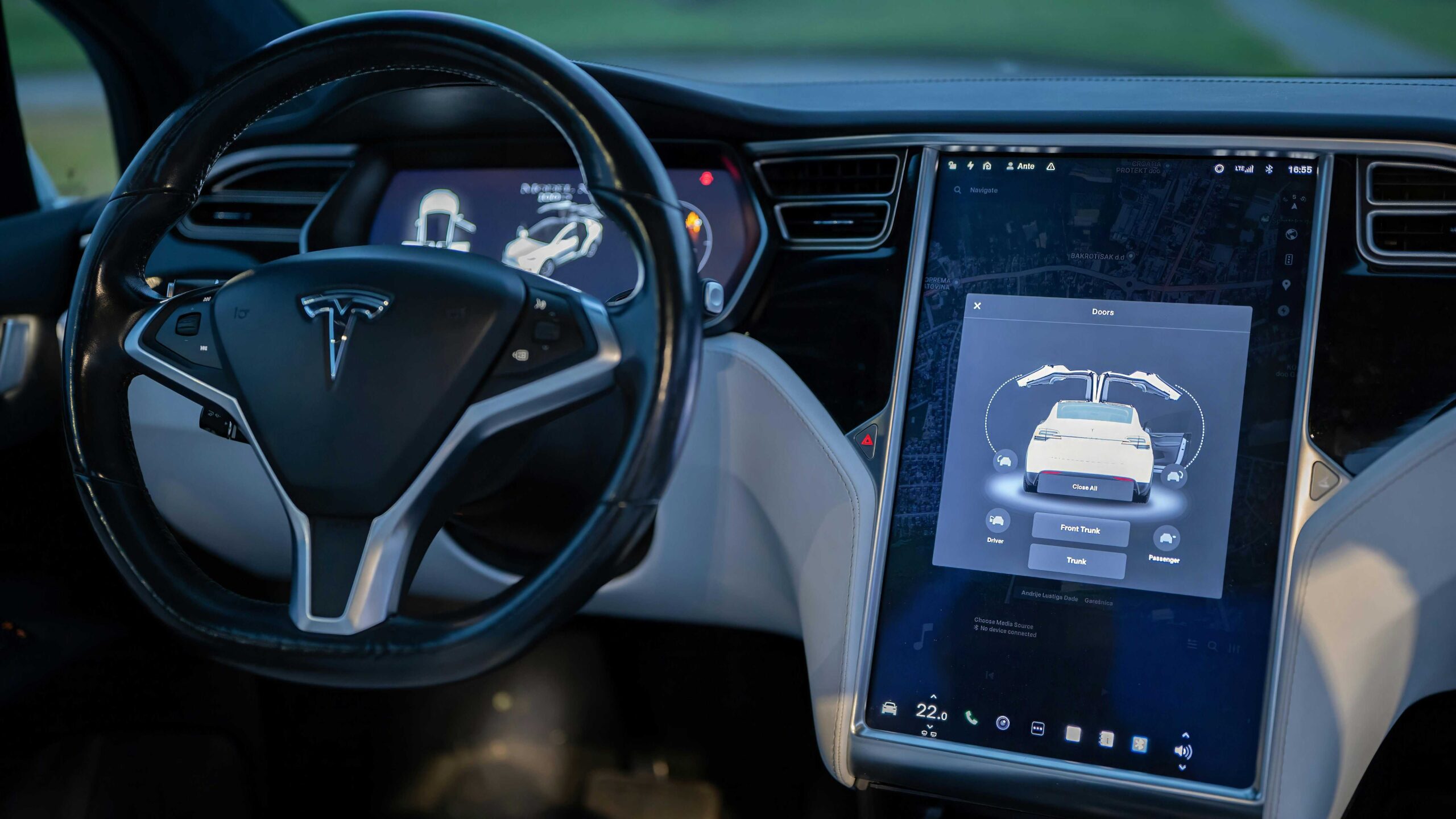
Elon Musk Shocked Everyone by Unveiling an AI Device to Control Tesla Cars: The future of technology is no longer about screens, apps, or endless notifications—it’s about intelligence working quietly in the background. When Elon Musk introduced Tesla’s vision for a new AI-powered personal controller, it signaled a dramatic shift not only for Tesla but for how humans interact with machines altogether.
This is not just another gadget. It’s the beginning of a fully integrated ecosystem where your car, your home, and even robotics operate as one intelligent system—anticipating your needs before you even express them.
The Evolution Beyond Electric Vehicles
For years, Tesla has been known as a leader in electric vehicles and autonomous driving. However, the company is now entering a completely new phase—one that goes far beyond cars.
This new phase is centered around artificial intelligence as the backbone of everyday life. Instead of treating the car as a standalone machine, Tesla is transforming it into the core of a unified digital environment.
In this ecosystem, the vehicle is no longer just transportation—it becomes a smart, responsive extension of your lifestyle.
What Is Tesla’s AI Personal Controller?
At the heart of this transformation is a revolutionary device: a personal AI controller.
Unlike smartphones, which are designed to grab your attention with apps, alerts, and content, Tesla’s AI device has a completely different purpose. It is designed to act, not distract.
Key Characteristics of the AI Controller
- It serves as a direct communication link between you and your Tesla.
- It executes commands instantly with minimal input.
- It operates quietly in the background without constant interaction.
- It prioritizes real-world actions over screen-based engagement.
This marks the emergence of what many experts call “invisible technology”—tools that work seamlessly without demanding your focus.
A Unified Digital Environment
From Car to Ecosystem
Tesla’s vision revolves around creating a connected system where every component works together harmoniously. The AI controller is always with the user, maintaining a constant link to the car and other Tesla systems.
This means your car is no longer an isolated machine. Instead, it becomes part of a larger intelligent network that understands context, not just commands.
Seamless Interaction: One Command, Multiple Actions
One of the most impressive aspects of this AI device is its ability to transform a simple instruction into a complex chain of actions.
Example: Calling Your Car
Imagine leaving a building and simply telling your AI controller to “come to me.”
Behind the scenes, the system instantly:
- Pinpoints your exact location
- Analyzes nearby roads and obstacles
- Evaluates pedestrian movement and traffic flow
- Identifies the safest and most convenient pickup point
All of this happens in seconds—without requiring you to open an app or adjust settings.
This is not automation as we know it. It’s intelligent orchestration of real-world events.
Automatic Adaptation: The Car That Knows You
Once you step into the vehicle, the experience becomes even more personalized.
No Manual Adjustments Needed
The AI controller immediately syncs with the car and adjusts:
- Cabin temperature
- Seat position
- Music preferences
- Navigation routes
This eliminates the need for repetitive manual configurations. Instead of adapting to the car, the car adapts to you.
Over time, this creates a deeply personalized and intuitive driving experience.
Intelligent Trip Management
Tesla’s AI doesn’t just plan routes—it understands journeys.
Real-Time Analysis
When you enter a destination, the system evaluates:
- Road conditions
- Traffic patterns
- Battery levels
- Charging station availability
This ensures that every trip is optimized for efficiency and convenience.
Proactive Decision-Making
If charging is required, the AI takes full control by:
- Selecting the best charging station
- Scheduling stops based on your routine
- Considering electricity pricing for cost efficiency
You don’t need to think about logistics—the system handles it all.
Predictive Behavior
Over time, the AI learns your habits and begins acting in advance.
For example:
- It prepares the cabin temperature before you leave
- It plans your route based on your usual departure time
- It adjusts recommendations based on your preferences
This predictive capability transforms the driving experience into something effortless and highly intelligent.
The Tesla Ecosystem: A Single Intelligent Organism
What makes Tesla’s approach unique is its control over the entire ecosystem.
Unlike traditional automakers, Tesla integrates:
- Vehicle hardware
- Software systems
- Charging infrastructure
- AI intelligence
This allows the AI controller to function as a central command system.
Transport Integration
The device manages everything related to driving, including advanced features like Full Self-Driving (FSD).
Home Energy Management
Tesla’s ecosystem extends beyond the car into your home. The AI can:
This creates a seamless link between mobility and energy consumption.
Robotics Integration
Looking ahead, Tesla’s plans include integration with Optimus robots.
Imagine this scenario:
- The robot prepares your belongings
- The car gets ready for departure
- The AI coordinates everything in perfect sync
This represents a future where machines collaborate intelligently to simplify human life.
A Revolution in Human-Technology Interaction
Tesla’s AI controller signals a shift away from screen-based interaction.
The End of Attention-Hungry Devices
Smartphones demand constant attention. Notifications, apps, and media compete for your focus throughout the day.
Tesla’s AI device takes the opposite approach:
- No distractions
- No unnecessary interfaces
- No endless scrolling
Instead, it works silently, handling tasks in the background.
The Rise of Invisible Technology
This concept of invisible technology is a major breakthrough.
It means:
- Technology fades into the background
- Users focus on life, not devices
- Systems operate seamlessly without interruption
This could redefine how we think about digital tools entirely.
Contextual Understanding: The Next Level of AI
One of the most powerful features of Tesla’s system is its ability to understand context.
Beyond Commands
Traditional systems respond to specific inputs. Tesla’s AI goes further by analyzing the broader situation.
For instance, if you have a meeting in another city, the system will:
- Check weather conditions
- Analyze traffic patterns
- Plan charging stops
- Adjust departure time
All of this happens before you even issue a command.
This level of contextual awareness transforms the AI from a tool into a proactive assistant.
Continuous Evolution Through Updates
Another key advantage of Tesla’s ecosystem is its use of over-the-air updates.
Always Improving
The AI controller is not static. It evolves continuously by:
- Learning user behavior
- Refining decision-making models
- Adding new features
This means the device becomes smarter over time without needing replacement.
Future-Proof Technology
Unlike traditional gadgets that become outdated, Tesla’s AI system is designed to grow and adapt continuously.
This ensures long-term value and relevance in a rapidly changing technological landscape.
Why This Matters for the Future
Tesla’s AI device is more than a product—it represents a fundamental shift in how technology integrates with daily life.
From Tools to Systems
We are moving from:
- Individual devices → Unified ecosystems
- Manual control → Autonomous intelligence
- Reactive technology → Predictive systems
This shift has the potential to impact multiple industries, including:
- Transportation
- Energy
- Robotics
- Urban planning
Challenges and Considerations
While the vision is ambitious, there are challenges to consider:
Privacy Concerns
A system that constantly analyzes behavior and context raises serious questions about data security and privacy.
Reliability
For such a system to work effectively, it must be highly reliable in all conditions.
Adoption Barriers
Users may take time to adapt to a world where technology operates invisibly rather than interactively.
Despite these challenges, the potential benefits are enormous and transformative.
Conclusion: The Background of Life
Tesla’s AI controller could redefine the role of technology in our lives.
Instead of being something we actively use, technology becomes something that works for us silently and intelligently.
Driving, energy management, and daily logistics will no longer require constant attention. They will simply happen—efficiently, seamlessly, and automatically.
In this future, the focus shifts away from devices and toward experiences. The power is no longer in the gadget you hold, but in the intelligence that surrounds you.
And if Elon Musk and Tesla succeed in bringing this vision to life, we may soon enter an era where technology truly becomes the invisible backbone of everyday life.
FAQs
1. What is Tesla’s new AI device?
Tesla’s new AI device is a personal controller designed to act as a direct interface between the user and their Tesla vehicle, enabling seamless, intelligent control without traditional apps or screens.
2. How is this AI device different from a smartphone?
Unlike smartphones that focus on apps and notifications, this device is built to act rather than distract, managing real-world tasks automatically in the background.
3. Who introduced this AI concept?
The concept was introduced by Elon Musk, who envisions a future of invisible, AI-driven technology ecosystems.
4. Does the device work only with Tesla cars?
Primarily, it is designed to integrate deeply with Tesla vehicles, but it also connects with home energy systems and future robotics.
5. What is meant by a “unified digital environment”?
It refers to a connected ecosystem where your car, home, and AI systems work together as one intelligent network.
6. Can the AI device control the car remotely?
Yes, it allows users to remotely summon and control their vehicle, including calling the car to their exact location.
7. How does the AI device handle trip planning?
It uses real-time data and predictive intelligence to optimize routes, manage battery levels, and schedule charging stops automatically.
8. Does the system learn user behavior over time?
Yes, it uses machine learning to understand habits, preferences, and routines, enabling predictive and personalized experiences.
9. What happens when you enter the car?
The system automatically adjusts temperature, seat position, music, and navigation, creating a fully personalized environment instantly.
10. Can it manage Tesla home energy systems?
Yes, it integrates with Tesla’s energy solutions like Powerwall, optimizing energy usage and charging schedules.
11. Will this device work with Tesla robots like Optimus?
Future integration is expected, allowing the AI to coordinate tasks between vehicles and robotics systems seamlessly.
12. Is the AI device always connected?
Yes, it maintains a constant connection with the Tesla ecosystem for real-time responsiveness and updates.
13. How does Tesla ensure the system improves over time?
Through over-the-air updates, the AI continuously evolves, becoming smarter and more efficient without hardware changes.
14. Is this technology fully autonomous?
It aims to provide high levels of autonomy, especially when combined with Tesla’s Full Self-Driving (FSD) capabilities.
15. Are there any privacy concerns with this AI system?
Yes, since it collects and analyzes user data, privacy and data security are important considerations.
16. What is the biggest advantage of this AI device?
The biggest advantage is its ability to make technology invisible, handling tasks automatically so users can focus on life rather than managing devices.
Read More:
- What is Actually Happening on Artemis 3
- Tesla Signature Model S, X owners get hit with crazy no-resale clause
- Tesla Cybertruck sales bolstered by bold Musk move, report claims
- Tesla is pushing Robotaxi features to owner cars with Spring Update
- Elon Musk Confirmed Starship Flight 12 Launch Schedule after Big WDR test! Countdown begins