
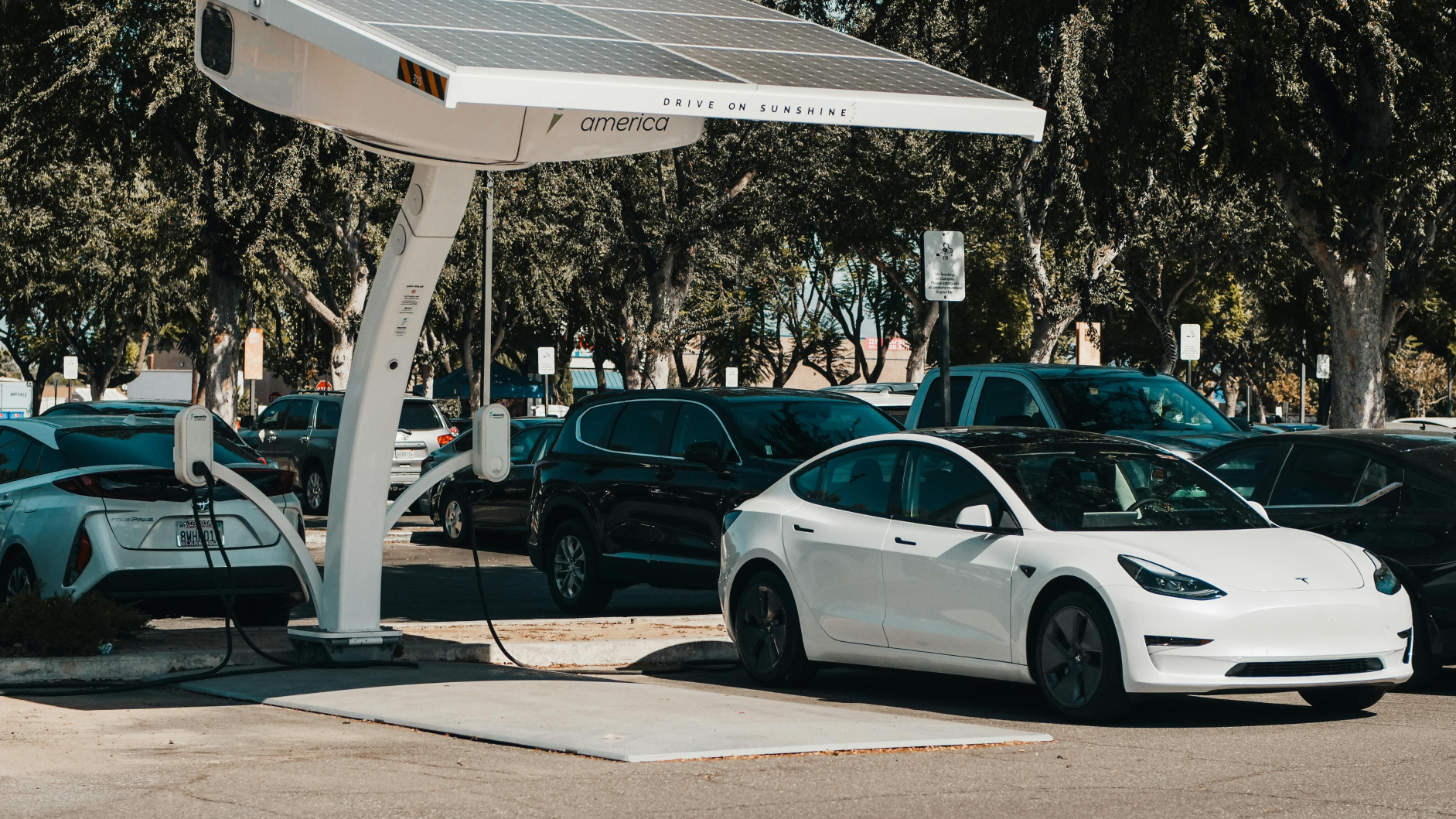
The electric vehicle industry is entering a new era, and Tesla is preparing to lead the next major transformation with its highly anticipated affordable EV, widely referred to as the “Model 2.” Expected to launch in late 2026 with a starting price near $25,000, this upcoming Tesla could completely reshape the global EV market.
For years, electric cars have remained out of reach for millions of consumers because of one major challenge: battery cost. Tesla’s latest strategy aims to solve that problem through revolutionary battery technology, strategic supplier partnerships, and vertical integration that could make affordable EV ownership a mainstream reality.
At the center of this transformation are next-generation Lithium Iron Phosphate (LFP) batteries, future Sodium-Ion battery development, and Tesla’s partnership with Chinese battery giant Sunwoda. Combined with Tesla’s own lithium refinery operations, these innovations could create one of the most durable and cost-efficient EV platforms ever built.
In this article, we explore how Tesla’s upcoming battery strategy may redefine affordable transportation, challenge competitors like BYD and CATL, and potentially create the first truly mass-market electric car.
Tesla’s $25,000 EV Vision Is Finally Becoming Reality
Tesla has spoken about producing an affordable electric vehicle for years. However, reducing EV prices has proven incredibly difficult for automakers across the world.
The biggest obstacle has always been the battery pack.
In most electric vehicles, the battery represents approximately 30% to 40% of the total production cost. For a car priced at $25,000, this means the battery alone could cost between $7,500 and $10,000 before manufacturers even add the motor, chassis, software, suspension, or interior components.
This is why many traditional automakers have struggled to build profitable low-cost EVs.
Tesla’s approach is different. Instead of simply cutting features, the company focused on redesigning battery economics from the ground up.
That strategy now appears to be paying off.
Why Battery Technology Determines EV Affordability
Electric vehicles are fundamentally different from gasoline-powered cars because the battery acts as both the fuel tank and the powertrain foundation.
Every improvement in battery chemistry directly impacts:
- Vehicle price
- Driving range
- Charging speed
- Long-term reliability
- Manufacturing efficiency
- Vehicle weight
- Profit margins
Tesla realized early that achieving a $25,000 price point would require a battery system optimized not only for performance but also for durability and scalability.
Instead of prioritizing extreme acceleration or luxury-focused specifications, Tesla’s affordable EV strategy centers around practical everyday ownership.
That means focusing on three critical goals:
1. Lower Battery Costs
Affordable EVs require lower-cost battery chemistry that can be mass-produced at scale.
2. Long Battery Lifespan
Consumers want confidence that the battery will last longer than the financing period.
3. Stable Supply Chains
Tesla must avoid raw material price volatility that could destroy profitability.
This is where Sunwoda enters the story.
Sunwoda’s Breakthrough Could Change the EV Industry
While companies like CATL and BYD dominate EV battery headlines, Sunwoda has quietly emerged as a serious technology player.
During a major battery presentation in Beijing, Sunwoda demonstrated an advanced LFP battery capable of charging from 5% to 95% in only 9 minutes.
That charging speed shocked industry observers.
The battery pack reportedly uses:
- 264 prismatic cells
- 98.8 kWh total capacity
- Peak power above 1,300 kW
To understand how impressive that is, Tesla’s current V3 Supercharger operates at a much lower peak power level.
This breakthrough signals that ultra-fast charging is becoming technically possible for affordable EV platforms.
However, Tesla appears to be taking a different approach for the Model 2.
Tesla Is Prioritizing Battery Longevity Over Extreme Charging
For luxury EV buyers, ultra-fast charging may be a major selling point.
But for mainstream consumers purchasing a $25,000 car, long-term reliability matters far more.
Tesla understands that affordable car buyers are highly sensitive to maintenance costs and battery replacement fears.
That is why Tesla is reportedly focusing on Sunwoda’s long-life LFP battery cells instead of prioritizing maximum charging speed.
These advanced LFP batteries are designed to deliver:
- 5,000 full charge cycles
- 90% battery capacity after 10 years
- Exceptional thermal stability
- Lower degradation rates
- Improved long-term safety
This changes the ownership equation dramatically.
What 5,000 Charge Cycles Actually Mean
Battery cycle life is one of the most important measurements in EV technology.
A “charge cycle” represents one full discharge and recharge of the battery.
Traditional EV batteries often degrade significantly after several thousand cycles. But Sunwoda’s new LFP chemistry could push battery durability to unprecedented levels.
Let’s put this into perspective.
If a driver charges their Tesla every single day:
- 365 charges per year
- 5,000 cycles equals nearly 14 years of daily charging
Even after a decade, the battery is expected to retain approximately 90% of its original capacity.
For consumers, this solves one of the biggest psychological barriers to EV adoption: fear of battery replacement costs.
Battery replacement expenses in current EVs can range from $10,000 to $16,000 or more.
Tesla’s long-life strategy could eliminate that concern almost entirely.
Why Tesla Chose a 400-Volt Architecture
Some EV manufacturers are aggressively moving toward 800-volt systems because they support ultra-fast charging.
So why is Tesla reportedly sticking with a 400-volt platform for its affordable EV?
The answer is simple: cost efficiency.
An 800-volt architecture requires expensive redesigns involving:
- Wiring systems
- Inverters
- Cooling systems
- Power electronics
- Charging infrastructure compatibility
For premium EVs, those costs may be justified.
For a $25,000 vehicle, they are not.
Tesla’s decision reflects a highly disciplined engineering philosophy focused on affordability without sacrificing reliability.
By retaining a 400-volt architecture while improving battery chemistry, Tesla can still offer practical charging speeds without dramatically increasing production costs.
This may prove to be one of the smartest decisions behind the Model 2 program.
The Advantages of Lithium Iron Phosphate (LFP) Batteries
LFP batteries have become increasingly popular in the EV industry for several important reasons.
1. Lower Cost
LFP batteries avoid expensive materials like nickel and cobalt.
2. Better Thermal Stability
They are less prone to overheating and thermal runaway.
3. Longer Lifespan
LFP chemistry naturally supports more charge cycles.
4. Improved Safety
These batteries are considered safer under stress conditions.
5. Better for Daily Charging
Frequent charging causes less degradation compared to traditional lithium-ion chemistries.
Tesla has already adopted LFP batteries in several vehicles globally, especially standard-range models.
The upcoming Model 2 could represent Tesla’s most optimized LFP implementation yet.
Tesla’s Lithium Refinery Gives It a Massive Competitive Advantage
Battery innovation alone is not enough.
Raw material costs remain one of the largest risks in EV manufacturing.
Lithium prices can fluctuate dramatically, impacting vehicle profitability overnight.
Tesla’s solution is vertical integration.
The company has invested heavily in building its own lithium refinery to gain more control over battery supply chains.
This strategy could become one of Tesla’s biggest long-term advantages.
How Tesla’s Lithium Refinery Works
Traditional lithium refining often relies on harsh acid-based chemical processing.
Tesla reportedly developed a cleaner “first principles” approach using:
- Closed-loop water systems
- Reduced chemical waste
- No traditional acid processing
- Improved environmental efficiency
By refining lithium internally, Tesla gains several key benefits:
Reduced Dependency on Suppliers
Tesla becomes less vulnerable to third-party pricing pressure.
Lower Long-Term Costs
Internal processing helps stabilize production expenses.
Improved Supply Security
Tesla can better manage future demand growth.
Stronger Profit Margins
Lower battery material costs support affordable vehicle pricing.
This vertical integration model resembles how some restaurants grow their own ingredients to control quality and pricing.
Most competitors simply do not have this level of supply chain integration.
Sodium-Ion Batteries Could Be the Next EV Revolution
Although the Model 2 is expected to use advanced LFP batteries initially, Tesla and Sunwoda are also exploring Sodium-Ion technology.
This could become the next major evolution in battery development.
Sodium-Ion batteries offer some remarkable advantages.
Most notably, Sunwoda claims these batteries could achieve up to:
- 20,000 charge cycles
- Potential lifespan of 25 to 30 years
- Extremely low degradation
- Lower raw material costs
- Improved sustainability
That kind of durability is extraordinary.
In theory, a Sodium-Ion battery could outlast the actual vehicle itself.
Why Tesla Isn’t Using Sodium-Ion Batteries Yet
Despite their impressive durability, Sodium-Ion batteries still face one major challenge: energy density.
Energy density measures how much energy a battery can store relative to its weight.
Currently:
- Sodium-Ion batteries achieve roughly 160 Wh/kg
- Modern LFP batteries reach approximately 190 Wh/kg
That difference may appear small, but it matters significantly in compact EV design.
Lower energy density means:
- Heavier battery packs
- Reduced driving range
- Larger physical battery size
- Less cabin space
- Increased manufacturing complexity
For an affordable compact Tesla, those trade-offs are not ideal.
Tesla appears to believe that advanced LFP chemistry currently offers the best balance between:
- Cost
- Weight
- Range
- Reliability
- Production scalability
However, Sodium-Ion technology could become extremely important later in the decade.
Tesla’s Multi-Supplier Strategy Creates Competitive Pressure
One of Tesla’s smartest business moves may be its supplier diversification strategy.
Rather than depending entirely on a single battery manufacturer, Tesla appears positioned to work with both:
- Sunwoda
- CATL
CATL already leads the industry in advanced charging technology with its Shenxing battery platform.
Some reports suggest CATL cells can charge from 10% to 80% in under four minutes under ideal conditions.
Tesla’s ability to source from multiple suppliers creates what analysts call “controlled tension.”
What Is Controlled Tension in Battery Negotiations?
Controlled tension occurs when a company uses competing suppliers against each other to achieve:
- Better pricing
- Faster innovation
- Higher production quality
- Improved contract terms
Tesla can use:
- Sunwoda’s battery longevity to pressure CATL
- CATL’s charging speed to pressure Sunwoda
This prevents overreliance on any single supplier while ensuring Tesla always gains access to cutting-edge battery technology.
Few automakers possess Tesla’s scale and negotiating leverage.
This could become another major advantage in the affordable EV race.
Why Competitors May Struggle to Copy Tesla’s Strategy
Many automakers are working on affordable EVs.
However, replicating Tesla’s complete ecosystem is incredibly difficult.
Companies like BYD have strong battery technology, including the highly respected Blade battery.
But Tesla combines several advantages simultaneously:
- Battery partnerships
- Proprietary software
- Massive production scale
- Vertical integration
- Internal lithium refining
- Global charging infrastructure
- Advanced manufacturing efficiency
Most competitors excel in only one or two of these areas.
Tesla’s strategy works because all components reinforce each other.
That interconnected ecosystem may be extremely difficult to duplicate quickly.
The Model 2 Could Accelerate Global EV Adoption
If Tesla successfully launches a compelling $25,000 EV with long-life batteries, the impact on the automotive market could be enormous.
The vehicle could appeal to:
- First-time EV buyers
- Budget-conscious consumers
- Urban commuters
- Younger drivers
- International markets
- Ride-sharing fleets
Battery longevity may become one of the strongest selling points.
Consumers increasingly care about total ownership cost, not just purchase price.
A battery capable of lasting more than a decade with minimal degradation changes the economics of EV ownership dramatically.
The Future of Tesla Batteries Beyond 2027
Tesla’s battery roadmap appears focused on continuous evolution rather than one single breakthrough.
The company may gradually transition through several phases:
Phase 1: Advanced LFP Dominance
Affordable, durable, scalable batteries for mass-market EVs.
Phase 2: Improved Fast Charging
Enhanced charging infrastructure and optimized cell chemistry.
Phase 3: Sodium-Ion Expansion
Ultra-long-life batteries for stationary storage and eventually vehicles.
Phase 4: Fully Integrated Energy Ecosystems
Vehicles, home batteries, solar systems, and grid storage operating together.
Tesla’s long-term vision extends far beyond automobiles.
The company appears focused on controlling the entire energy ecosystem.
Conclusion
Tesla’s upcoming affordable EV is far more than just another electric car.
It represents the culmination of years of engineering refinement, battery innovation, and supply chain strategy.
By partnering with Sunwoda, leveraging advanced long-life LFP batteries, investing in lithium refining, and preparing for future Sodium-Ion breakthroughs, Tesla may finally achieve what many automakers considered impossible: a truly affordable EV with long-term durability.
The combination of:
- 5,000 charge cycles
- 90% battery health after 10 years
- Potential 9-minute charging technology
- Vertical integration advantages
- Multi-supplier battery competition
could give Tesla a dominant position in the next generation of electric vehicles.
If the Model 2 launches successfully in late 2026, it may become one of the most important cars in automotive history—not because it is the fastest or most luxurious Tesla ever built, but because it could bring electric mobility to millions of new drivers worldwide.
The future of affordable electric transportation may finally be arriving.
FAQs
1. What is Tesla’s upcoming $25,000 car?
Tesla’s upcoming affordable EV, often referred to as the Model 2, is expected to launch in late 2026 with a starting price near $25,000. It is designed to make electric vehicles more accessible to mainstream buyers.
2. What type of battery will the Tesla Model 2 use?
The Tesla Model 2 is expected to use advanced Lithium Iron Phosphate (LFP) batteries supplied by Sunwoda and possibly other battery partners like CATL.
3. Why are LFP batteries important for affordable EVs?
LFP batteries are cheaper, safer, and longer-lasting than many traditional lithium-ion batteries because they avoid expensive materials like nickel and cobalt.
4. How fast can the new Tesla battery charge?
Sunwoda demonstrated an advanced battery capable of charging from 5% to 95% in just 9 minutes, although the production version for the Model 2 may prioritize battery longevity over maximum charging speed.
5. What does 5,000 charge cycles mean?
A battery with 5,000 charge cycles can be fully charged and discharged around 5,000 times before major degradation occurs. For most drivers, this could mean more than 10 to 14 years of daily use.
6. Will the Tesla Model 2 battery last 10 years?
Yes, Tesla’s planned long-life LFP battery is expected to retain approximately 90% battery capacity after 10 years of regular driving.
7. Why is battery longevity important for EV buyers?
Long battery life reduces concerns about expensive battery replacement costs, which can range from $10,000 to $16,000 in some electric vehicles.
8. What is Sodium-Ion battery technology?
Sodium-Ion batteries are a next-generation battery technology that uses sodium instead of lithium. They offer extremely long lifespan potential and lower material costs.
9. Why isn’t Tesla using Sodium-Ion batteries yet?
Currently, Sodium-Ion batteries have lower energy density than LFP batteries, meaning they are heavier and less efficient for compact electric cars like the Model 2.
10. What is Tesla’s lithium refinery?
Tesla has built its own lithium refinery to process lithium internally, helping the company reduce supply chain risks and lower long-term battery production costs.
11. How does Tesla’s vertical integration help reduce EV prices?
Through vertical integration, Tesla controls more of its supply chain, including lithium refining and battery sourcing, which helps reduce manufacturing costs and improve profitability.
12. Will the Tesla Model 2 use an 800-volt system?
No, Tesla is reportedly using a 400-volt architecture because it is more cost-effective and better suited for a $25,000 EV.
13. Who are Tesla’s battery partners?
Tesla works with major battery suppliers including Sunwoda and CATL, allowing the company to access advanced battery technologies while maintaining competitive pricing.
14. How could the Model 2 impact the EV market?
The affordable price, long battery life, and improved reliability of the Model 2 could accelerate global EV adoption and make electric cars accessible to millions of new buyers.
15. When will Tesla’s new battery technology become available?
Tesla’s next-generation affordable EV battery technology is expected to begin rolling out with the Model 2 launch in late 2026, with additional advancements continuing into 2027 and beyond.
Read More:
- Tesla gets a massive order for the Semi: 370 units and $100M
- Tesla Roadster gets an update, but not the one fans were looking for
- Tesla unveils mysterious prototype at Giga Texas: Is the Model Y L coming to America?
- SpaceXAI signs agreement with Anthropic for massive AI supercomputer access
- Elon Musk Confirms 3 NEW Teslas Models For 2026
1 thought on “New Tesla Battery 2027 Sodium-Ion 9-Min LFP, 5,000 Cycles, 90% After 10 Years”