
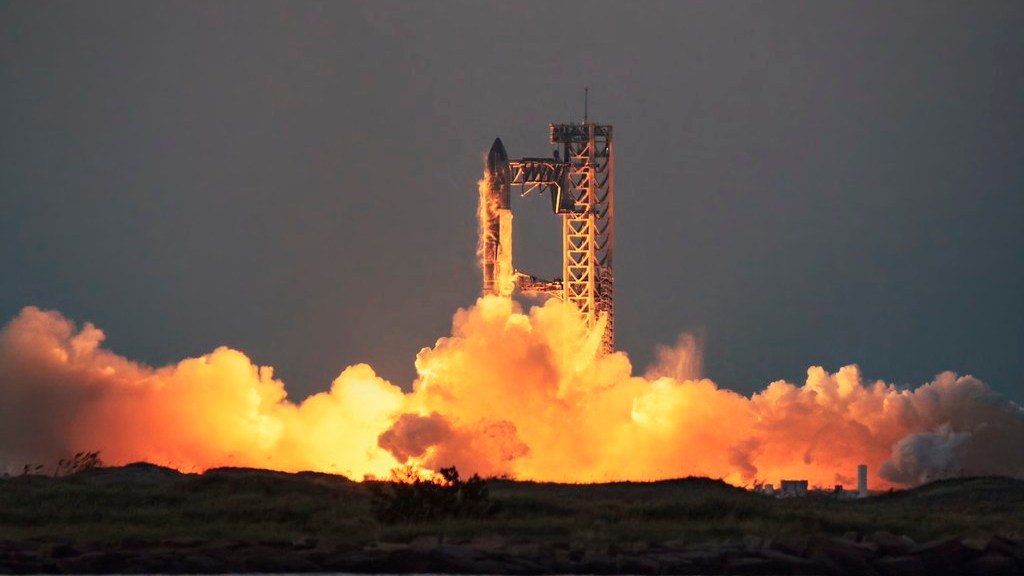
Space exploration fans and aerospace watchers have a new reason to update their calendars. The much-anticipated Starship Flight 12 from SpaceX has officially been rescheduled, and while the delay is minor, it has sparked widespread discussion across the space industry.
The mission, which will feature the first Version 3 (V3) Starship vehicle, is now targeting Tuesday, May 19, 2026, with a planned T-zero at 5:30 p.m. Central Time. For those planning to witness the launch near Starbase, Texas, this change is significant enough to require travel adjustments, but not alarming from an engineering standpoint.
In this SEO-optimized breakdown, we’ll explore the updated launch timeline, the reasons behind the delay, key pre-flight preparations, supporting space missions happening in parallel, and what this means for the future of reusable rockets.
🚀 What Changed in the Starship Flight 12 Launch Schedule?
The original expectation among space enthusiasts was a mid-May liftoff around May 15, 2026. However, SpaceX has officially pushed the mission to May 19, 2026.
This shift of approximately four days may seem small, but in aerospace operations, even a single day matters significantly.
Updated Launch Window Details
- Primary Launch Date: May 19, 2026
- Target Time: 5:30 p.m. CT
- Backup Windows: May 20–22 and May 26–28
These backup options ensure flexibility for weather conditions, technical readiness, and final safety validations.
The mission will lift off from Starbase, Texas, using the fully integrated Starship system, consisting of:
- Booster 19
- Ship 39 (Starship V3 prototype)
🧠 Why Was Starship Flight 12 Delayed?
The delay is not unusual in spaceflight operations, especially for a vehicle as complex as Starship.
Despite a successful Full Wet Dress Rehearsal (WDR), engineers opted for additional time before launch.
The “Measure Twice, Cut Once” Philosophy
In aerospace engineering, caution is not optional—it is essential. The decision to delay reflects a safety-first mindset rather than a technical failure.
After the WDR:
- The rocket stack was destacked
- Components were moved for inspection
- The launch pad was scheduled for maintenance
This approach ensures that every system is verified before committing to launch.
🏗️ Pre-Flight Preparations: Inside the “Destack and Check” Phase
Once the Wet Dress Rehearsal was completed, the hardware was moved into a detailed inspection phase. This process is crucial for identifying hidden stress or thermal effects.
🔧 Ship and Booster Relocation
- Ship 39 was moved to Mega Bay 2
- Booster 19 was moved to Mega Bay 1
These facilities allow engineers to conduct sensitive diagnostics away from the launch pad environment.
🔥 Engine and Tank Stability Checks
After exposure to extreme cryogenic temperatures during fueling tests, systems must be revalidated.
Key checks include:
- Raptor engine stability testing
- Liquid methane and oxygen tank inspection
- Verification of thermal contraction effects
The Raptor engines powering Starship are among the most advanced methane-fueled rocket engines ever built.
📦 Payload and Safety Systems Integration
Before launch, multiple critical systems are installed:
Starlink Simulators (“Pez Dispenser”)
These payload units simulate deployment of future satellites.
Flight Termination System (FTS)
A critical safety mechanism that can destroy the rocket if it deviates from its flight path.
Both stages—booster and ship—are equipped with this system to ensure public safety.
🧱 Heat Shield and Structural Inspections
The spacecraft undergoes a final detailed inspection of:
- Ceramic heat shield tiles
- Structural weld integrity
- Hot-staging ring alignment
These components are vital for atmospheric re-entry and stage separation.
🏭 Launchpad “TLC”: Why the Ground Matters Too
While rockets often steal the spotlight, the launch infrastructure is equally important. The Starbase launchpad endures extreme stress during testing.
🧪 Recent Issues Under Review
Engineers identified minor but important maintenance tasks:
- Sensor calibration in flame trench systems
- Venting tube adjustments on the launch tower
- Removal of debris from prior engine tests
These inspections ensure that the pad remains safe for repeated high-energy launches.
Without proper pad maintenance, even a fully prepared rocket cannot launch safely.
🌍 Broader Space Activity This Week
While Starship Flight 12 dominates attention, other major missions are unfolding in parallel across global space agencies.
📦 CRS-34 Mission to the ISS
The Dragon spacecraft launched as part of the CRS-34 resupply mission, operated by SpaceX in partnership with NASA.
Mission Highlights:
- Delivered cargo to the International Space Station
- Originally scheduled for May 12, 2026
- Delayed to May 13 due to weather conditions
- Docking occurred May 14 morning
This mission plays a critical role in keeping astronauts supplied with:
- Food
- Scientific equipment
- Essential station hardware
The ISS continues to serve as humanity’s primary orbital laboratory.
🪐 NASA’s Psyche Mars Flyby Mission
On May 15, 2026, another fascinating mission takes place in deep space.
The Psyche spacecraft, operated by NASA, is performing a gravity-assist flyby of Mars.
Key Details:
- Closest approach: 2,800 miles above Mars
- Speed boost: up to 12,000 mph
- Purpose: trajectory adjustment toward asteroid Psyche
This maneuver is essential for reaching its long-term destination: the metallic asteroid 16 Psyche, expected in 2029.
Why This Matters
Gravity assists allow spacecraft to:
- Save fuel
- Increase velocity
- Adjust interplanetary trajectories efficiently
This technique is a cornerstone of modern deep-space navigation.
📅 Complete Timeline of Upcoming Milestones
Here is a simplified breakdown of the most important upcoming events in spaceflight:
🚀 Key Space Events (May 2026)
🌌 NASA Psyche Mars Flyby
- Date: May 15, 2026
- Status: High-speed planetary gravity assist
🏗️ Starship Flight 12 Rollout
- Date: May 16–17, 2026
- Activity: Transport and final assembly checks
🚀 Starship Flight 12 Launch
- Date: May 19, 2026
- Time: 5:30 p.m. CT
- Vehicle: Starship (V3 prototype)
🔍 Why Starship Flight 12 Is So Important
This mission is not just another test flight—it represents a major milestone in reusable rocket development.
Key Objectives:
- First flight of Starship Version 3
- Validation of improved thermal protection systems
- Testing upgraded propulsion and structural design
- Evaluation of landing and recovery systems
For SpaceX, each Starship test brings the company closer to its long-term goals:
- Mars colonization
- Fully reusable orbital systems
- High-frequency satellite deployment
🌐 What This Means for the Future of Space Travel
The gradual but steady progress of Starship represents a shift in how humanity approaches spaceflight.
Instead of single-use rockets, the future is moving toward:
- Rapid reusability
- Lower launch costs
- Higher payload capacity
- Deep-space scalability
If Starship Flight 12 performs successfully, it could accelerate timelines for:
- Lunar missions
- Mars cargo delivery
- Commercial space infrastructure
🧭 Final Thoughts
The slight delay of Starship Flight 12 is not a setback—it is a reflection of the precision and caution required in modern aerospace engineering.
With a new target date of May 19, 2026, expectations remain high for what could be one of the most important test flights in the history of SpaceX.
Meanwhile, the global space community continues to stay active with missions like:
- ISS resupply operations via the Dragon spacecraft
- Deep-space exploration with the Psyche spacecraft
Together, these missions highlight a powerful truth: space exploration is accelerating, not slowing down.
As launch day approaches, all eyes will be on Starbase, where the next chapter of reusable spaceflight is about to unfold.
FAQs
1. What is Starship Flight 12?
Starship Flight 12 is a test mission of the next-generation reusable rocket system developed by SpaceX. It will be the first flight of the upgraded Version 3 (V3) Starship vehicle.
2. When is the new launch date for Starship Flight 12?
The launch is now scheduled for Tuesday, May 19, 2026, with a targeted liftoff time of 5:30 p.m. Central Time.
3. Why was the launch delayed?
The delay occurred after a successful Full Wet Dress Rehearsal (WDR). Engineers decided to take extra time for inspections, maintenance, and final system checks to ensure full readiness.
4. Is the delay a technical failure?
No. The delay is considered normal in aerospace operations and reflects a safety-first engineering approach, not a failure.
5. What is the backup launch schedule?
If May 19 is not possible, backup windows include:
- May 20–22, 2026
- May 26–28, 2026
6. Where will Starship Flight 12 launch from?
The mission will launch from Starbase, Texas, the primary testing and launch facility of SpaceX.
7. What rocket is being used for this mission?
The mission uses the Starship system, a fully reusable heavy-lift rocket developed by SpaceX.
8. What makes Starship Version 3 special?
Version 3 introduces upgraded:
- Structural design
- Heat shielding
- Propulsion systems
- Reusability improvements
It represents a major step forward in rocket engineering.
9. What is Booster 19?
Booster 19 is the first-stage rocket booster that provides initial thrust during liftoff before separating from the Starship upper stage.
10. What is Ship 39?
Ship 39 is the upper-stage Starship prototype that will attempt high-altitude flight and re-entry testing.
11. What is a Wet Dress Rehearsal (WDR)?
A Wet Dress Rehearsal is a full launch simulation where the rocket is fueled and all systems are tested without liftoff.
12. Why is engine testing important after fueling?
After exposure to cryogenic fuels like liquid methane and oxygen, engines must be checked for:
- Thermal stress
- Structural integrity
- Fuel system stability
This ensures safe launch conditions.
13. What is the Flight Termination System (FTS)?
The FTS is a safety system designed to destroy the rocket if it deviates from its intended flight path, ensuring public safety.
14. What is the “Pez dispenser” payload?
It refers to internal payload simulators used to mimic satellite deployment systems, helping test Starship’s cargo release mechanisms.
15. Why is the launchpad inspected so carefully?
The launchpad experiences extreme force from rocket engines. Regular checks ensure:
- Structural safety
- Sensor accuracy
- Removal of debris
- Proper venting system function
16. What other space missions are happening at the same time?
Two major missions include:
- CRS-34 resupply mission to the International Space Station using the Dragon spacecraft
- NASA’s Psyche spacecraft Mars flyby by NASA
17. Why is the Psyche Mars flyby important?
The Psyche spacecraft uses Mars’ gravity to gain speed and adjust its trajectory toward the asteroid 16 Psyche, which it will study to understand planetary cores.
Read More:
- Delta Airlines rejects Starlink, and the reason will probably shock you
- Honda gives up on all-EV future: ‘Not realistic’
- Tesla puts Giga Berlin in Plaid Mode with new massive investment
- Elon Musk Builds $119B “Terafab Sillicon Valley” Outchip Industry!
- Tesla Model 2 2026 Senior Edition: Real Usability, Emergency Handling, Weather Limits
1 thought on “SpaceX’s Unexpected Launch Date for Starship Flight 12 Revealed! Later than We thought, But”