
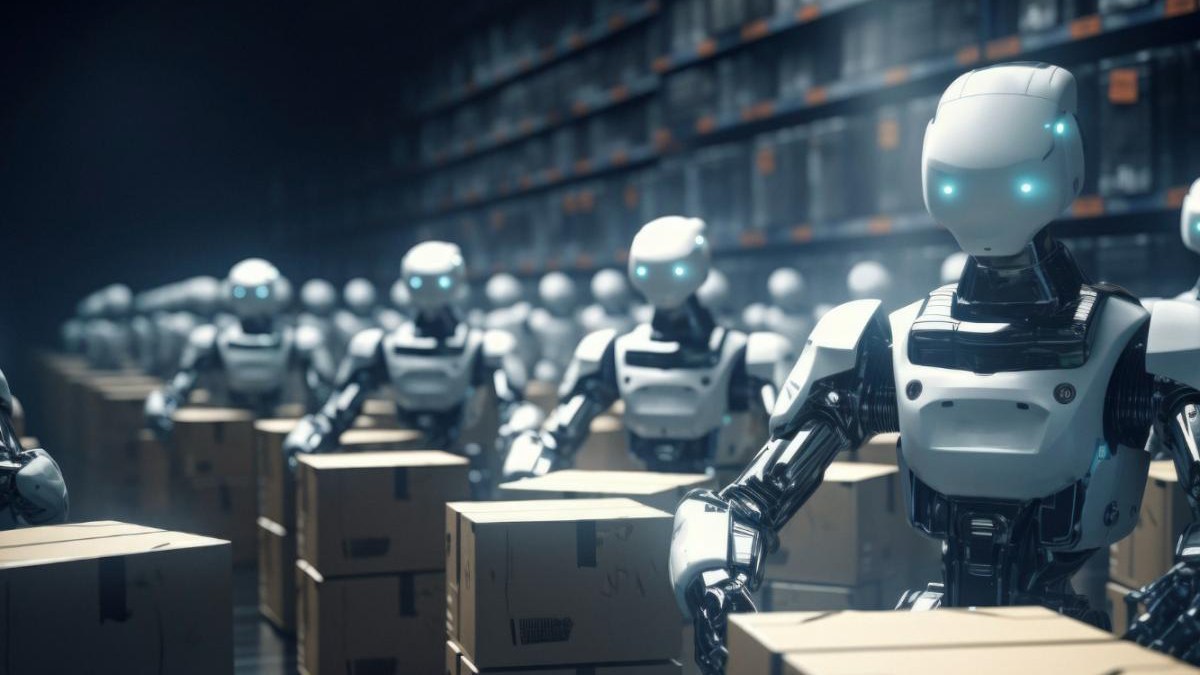
Elon Musk Sends Millions of Tesla Optimus AI Robots to Colonize Mars: The dream of colonizing Mars has long been associated with humanity’s most ambitious scientific and technological vision. For Elon Musk, this dream has never been just theoretical—it has been a lifelong mission. However, a dramatic shift is reshaping how this vision could actually become reality.
Instead of sending humans first into one of the most hostile environments imaginable, the strategy now leans toward deploying millions of autonomous AI robots to prepare Mars before human arrival. This approach marks a transition from a “human-first” model to a machine-first civilization buildout, where robots construct the foundations of an entire planetary society.
The centerpiece of this transformation is Tesla’s humanoid robot program, widely associated with Tesla Optimus, which is envisioned as the backbone workforce of extraterrestrial construction, maintenance, and survival operations.
Why Mars is Not Ready for Humans Yet: The Human Problem
Despite decades of research and space exploration progress, Mars remains extremely dangerous for human life. Several critical biological and logistical challenges make immediate colonization unrealistic.
1. Extreme Space Radiation
One of the most serious threats is cosmic radiation. During the 6–9 month journey to Mars, astronauts are exposed to high-energy particles that can penetrate spacecraft shielding.
This exposure leads to:
- Increased risk of cancer
- Potential brain damage
- Long-term neurological decline
On Mars itself, the thin atmosphere and lack of a global magnetic field offer minimal protection, making radiation a constant hazard.
2. Physical Deterioration in Low Gravity
Mars has only about 38% of Earth’s gravity. This leads to severe physiological consequences for humans, including:
- Muscle atrophy
- Bone density loss
- Cardiovascular weakening
Astronauts would need to perform hours of daily exercise just to slow down this deterioration. Even then, long-term health impacts are unavoidable.
3. Communication Delays and Isolation
Another major limitation is communication latency. Signals between Earth and Mars take up to 20 minutes one way, meaning:
- No real-time conversations
- No instant emergency response
- No immediate medical guidance
This delay creates a dangerous sense of complete operational isolation, especially in life-threatening situations.
The Robotic Solution: Why AI Robots Change Everything
The solution to these problems is not to push humans into harsher conditions—but to send machines that can survive where humans cannot.
This is where autonomous humanoid robots become essential.
Why Robots Are Ideal for Mars
Robots like Tesla Optimus are uniquely suited for planetary construction because they:
- Are immune to radiation exposure
- Do not require oxygen or food
- Can operate continuously without fatigue
- Are unaffected by psychological stress
- Can function in extreme temperatures and dust storms
This makes them perfect candidates for building the first off-world industrial civilization.
Biologically Inspired Design: Why Humanoid Robots Matter
One of the most important design choices in this strategy is the use of humanoid robot architecture.
Unlike traditional industrial machines, humanoid robots are designed with:
- Human-like arms and legs
- Dexterous hands
- Compatibility with Earth-based tools
Why This Matters
Because Mars colonization will rely heavily on pre-existing Earth technology, humanoid robots can:
- Use standard tools
- Operate human-designed machinery
- Build structures intended for human use
This eliminates the need for entirely new robotic ecosystems and allows robots to construct a human-compatible world from day one.
Specialized Martian Upgrades for Future Robots
To survive and operate effectively on Mars, future versions of humanoid robots will require advanced engineering enhancements.
1. Radiation-Shielded Internal Systems
Robots will likely feature advanced shielding materials designed to protect sensitive electronics from:
- Solar radiation storms
- Cosmic rays
- Long-term environmental degradation
This ensures long-term operational stability on the Martian surface.
2. Dust-Proof Mechanical Seals
Martian dust is extremely fine and abrasive. It can damage machinery by infiltrating joints and sensors.
To counter this, robots will include:
- Sealed actuators
- Self-cleaning joints
- Dust-repellent coatings
3. Autonomous Self-Repair Systems
One of the most revolutionary upgrades is robot-to-robot maintenance capability.
This includes:
- Self-diagnosis systems
- Modular replacement parts
- Peer repair networks
In essence, robots will form a self-sustaining repair ecosystem without human assistance.
Industrial Assault: Phase 1 of Martian Colonization
The first phase of colonization is not about human settlement—it is about industrial deployment at scale.
Step 1: Uncrewed Cargo Missions
Multiple Starship launches will transport:
- Thousands of humanoid robots
- Heavy industrial equipment
- Solar arrays and energy systems
- Construction materials
These missions will establish the first autonomous operational base on Mars.
Step 2: Infrastructure Deployment
Once landed, robots begin immediate large-scale construction:
- Unloading autonomous excavators
- Assembling modular habitats
- Deploying solar farms
- Building communication towers
This phase transforms raw Martian terrain into a structured industrial zone.
Step 3: In-Situ Resource Utilization (ISRU)
A key strategy for sustainability is using Martian resources directly.
Robots will:
- Extract water ice from underground
- Process Martian soil (regolith)
- 3D print construction materials
This enables the creation of:
- Radiation shelters
- Underground tunnels
- Protective habitats
Step 4: Autonomous Agriculture Systems
Food production is essential for human survival. Robots will establish sealed greenhouse environments featuring:
- Controlled oxygen levels
- AI-driven irrigation systems
- Automated nutrient balancing
Crops such as:
- Potatoes
- Tomatoes
- Soybeans
will be cultivated in controlled environments, ensuring future human settlers have sustainable food sources.
The Economy of a Machine Planet
The foundation of this entire strategy is radical cost reduction enabled by reusable space transport systems.
A machine-first Mars economy operates on four critical pillars:
Core Martian Infrastructure Model
| Asset | Role in Martian Civilization |
|---|---|
| Starship | Interplanetary cargo transport system |
| Optimus Robots | Universal labor force for construction and maintenance |
| Starlink Network | High-speed communication backbone for Mars-Earth coordination |
| Solar and Nuclear Power Systems | Continuous 24/7 energy supply |
Why This Model Works
This system eliminates traditional human limitations:
- No life support systems required for labor
- No safety restrictions for hazardous environments
- No biological downtime or recovery cycles
The result is a fully operational robotic civilization capable of building infrastructure at unprecedented speed.
The Rise of a Mechanical Civilization
As deployment scales, Mars will gradually transform from a barren planet into a structured, machine-managed world.
Robots will construct:
- Underground tunnel networks
- Energy distribution grids
- Atmospheric processing systems
- Automated manufacturing hubs
These systems will form the backbone of a self-sustaining industrial ecosystem long before humans arrive.
What Mars Will Look Like Before Humans Arrive
By the time the first human settlers land, Mars may already feature:
- Pressurized habitats ready for occupancy
- Oxygen generation systems
- Fully functional power grids
- Automated transportation corridors
- Climate-controlled living environments
Instead of arriving on a lifeless planet, humans would step into a pre-built industrial civilization designed for survival.
Conclusion: The Dawn of Machine-Built Worlds
The shift from human-first to robot-first planetary colonization represents one of the most significant changes in space exploration strategy ever conceived.
By deploying autonomous systems like humanoid AI robots at scale, the risks of Mars colonization are dramatically reduced while efficiency increases exponentially.
For Elon Musk, this approach aligns with a broader vision: transforming humanity into a multi-planetary species without exposing early settlers to unnecessary risk.
In this model, Mars is not conquered by humans—it is built by machines for humans.
And when the first astronauts finally step onto the red planet, they may not find a barren wasteland—but a functioning, mechanical world already waiting for them.
FAQs
1. Why is Mars colonization so difficult for humans?
Mars is extremely hostile due to radiation exposure, low gravity health effects, and communication delays with Earth, making long-term human survival very challenging.
2. What is Elon Musk’s main idea for Mars colonization?
The idea is to use autonomous AI robots first, especially humanoid robots like Tesla Optimus, to build infrastructure before humans arrive.
3. Why send robots before humans to Mars?
Robots can operate in dangerous environments without oxygen, food, or rest, making them ideal for preparing Mars safely and efficiently.
4. What role does Tesla Optimus play in Mars plans?
Tesla Optimus is expected to act as a universal workforce, handling construction, maintenance, and repairs on Mars.
5. How long does it take to travel from Earth to Mars?
A typical journey takes about 6 to 9 months, depending on planetary alignment and spacecraft speed.
6. What is the biggest health risk for astronauts going to Mars?
The biggest risk is cosmic radiation, which can increase cancer risk and potentially damage the brain and nervous system.
7. Can humans live normally in Mars gravity?
No. Mars has only 38% of Earth’s gravity, which leads to muscle loss and bone weakening over time.
8. Why is communication with Mars delayed?
Signals between Earth and Mars can take up to 20 minutes one way, making real-time communication impossible.
9. What makes robots better suited for Mars than humans?
Robots are unaffected by radiation, temperature extremes, fatigue, or psychological stress, making them ideal for continuous work.
10. What is In-Situ Resource Utilization (ISRU)?
ISRU is the process of using Martian resources like soil and ice to produce water, oxygen, and building materials locally.
11. How will robots build structures on Mars?
They will use 3D printing and autonomous construction systems to turn Martian soil into shelters and infrastructure.
12. Will robots be able to repair themselves on Mars?
Yes, future designs are expected to include autonomous self-repair systems where robots can diagnose and fix each other.
13. What is the purpose of Starship in this plan?
SpaceX Starship will act as a cargo transport system carrying robots, equipment, and supplies to Mars.
14. How will robots get power on Mars?
They will rely on a mix of solar energy and possibly nuclear power systems for continuous 24/7 operation.
15. What is the role of Starlink in Mars colonization?
Starlink will provide a communication backbone linking Mars robots and Earth-based control systems.
16. Can robots grow food on Mars?
Yes, robots will manage sealed greenhouse environments to grow crops like potatoes, tomatoes, and soybeans.
17. When will humans actually go to Mars?
There is no confirmed date, but estimates suggest humans may arrive after robotic infrastructure is well established, possibly in the 2030s or later.
18. What will Mars look like before humans arrive?
Mars may already have power grids, oxygen systems, tunnels, and industrial bases built entirely by robots before the first human landing.
Read More:
- SpaceX’s Unexpected Launch Date for Starship Flight 12 Revealed! Later than We thought, But
- Delta Airlines rejects Starlink, and the reason will probably shock you
- Honda gives up on all-EV future: ‘Not realistic’
- Tesla puts Giga Berlin in Plaid Mode with new massive investment
- Elon Musk Builds $119B “Terafab Sillicon Valley” Outchip Industry!
6 thoughts on “It Finally Happened: Elon Musk Sends Millions of Tesla Optimus AI Robots to Colonize Mars”