
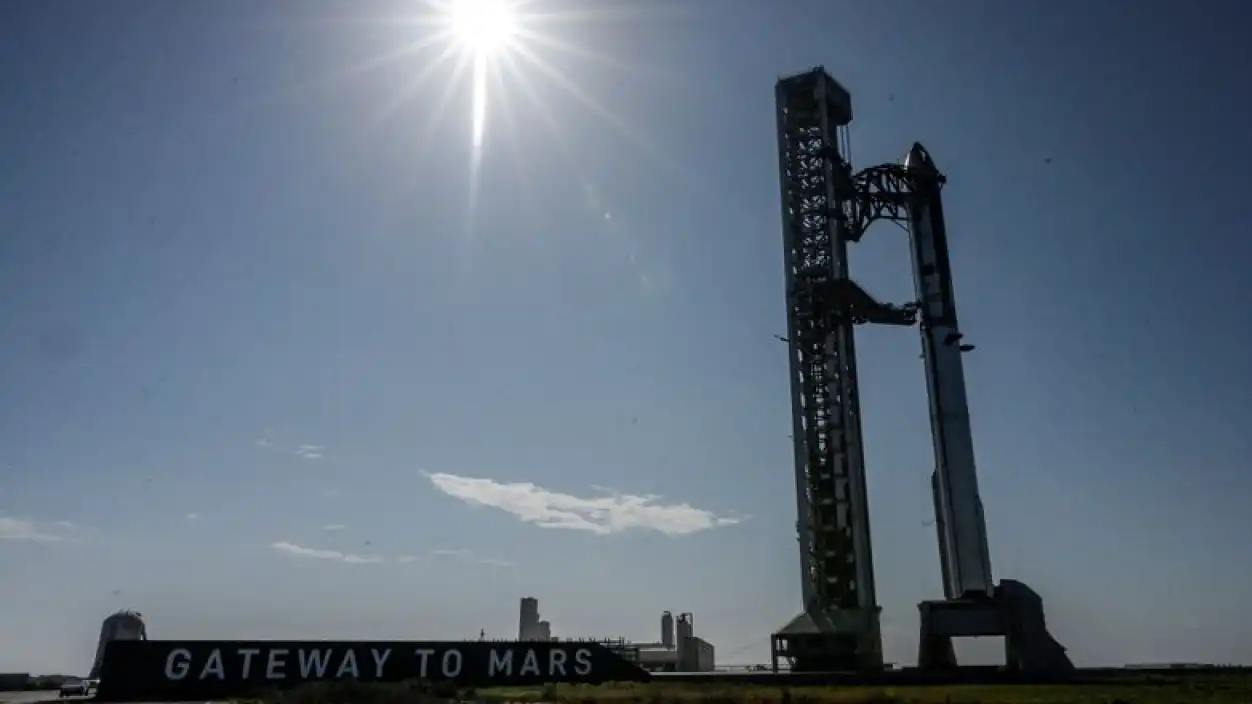
The modern space race is no longer defined by slow-moving government programs alone. Today, private aerospace giants, rapidly evolving rocket hardware, and aggressive geopolitical expansion are reshaping the future of humanity beyond Earth. At the center of this transformation stands SpaceX, whose ambitious Starship program is simultaneously pushing engineering boundaries and exposing the brutal realities of reusable heavy-lift rocketry.
Recent events have dramatically highlighted this reality. The catastrophic anomaly involving Starship Flight 12’s Super Heavy Booster V3, NASA’s increasing dependence on the Crew Dragon platform to sustain the International Space Station (ISS), and China’s rapidly advancing Shenzhou 23 mission collectively reveal how fragile — yet incredibly competitive — the global aerospace landscape has become.
In particular, SpaceX’s response to the Booster V3 failure may represent one of the most intelligent engineering pivots in modern aerospace history.
The Starship Flight 12 Disaster Explained
When Super Heavy Booster B19 launched during Starship Flight 12, engineers expected another major step toward full rocket reusability. Instead, the mission exposed dangerous vulnerabilities hidden deep within the rocket’s propulsion architecture.
Although the launch initially appeared nominal, the booster rapidly encountered cascading failures shortly after liftoff.
Early Raptor Engine Failure Triggered a Chain Reaction
The first critical issue emerged only minutes after launch when one of the primary Raptor 3 engines suddenly shut down completely.
This was not a simple throttle reduction or temporary telemetry interruption. The engine experienced a catastrophic failure, creating violent thermal and kinetic stress across neighboring engines inside the tightly packed engine bay.
Because the Raptor 3 architecture prioritizes extreme integration and compactness, even a single malfunction can rapidly spread throughout the propulsion cluster.
The consequences were immediate:
- Engine temperatures became unstable
- Thrust symmetry degraded
- Adjacent systems experienced thermal shock
- Flight software struggled to compensate dynamically
In modern reusable rocket systems, maintaining perfectly balanced thrust is essential. Once that symmetry collapses, the entire booster becomes increasingly difficult to control.
Why the Boostback Burn Became Dangerous
After stage separation, the Super Heavy booster attempted its boostback maneuver, which is designed to reverse trajectory and guide the rocket back toward the launch site for tower capture.
However, telemetry showed highly inconsistent engine relights.
Instead of a synchronized ignition sequence, the booster displayed chaotic relight behavior with engines igniting unpredictably. This indicated severe instability inside the propulsion system.
The result was devastating.
The Landing Burn Ignited Far Too Late
The final landing burn — the most important phase of any reusable rocket recovery — activated significantly later than planned.
At this point, gravity had already overwhelmed the descending booster.
Without enough counter-thrust, B19 descended uncontrollably toward the Gulf of Mexico at an astonishing speed of nearly 1,400 kilometers per hour during the final 100 meters of descent.
The impact completely destroyed the booster.
What makes this situation even more terrifying is what could have happened if the rocket had attempted a full tower catch.
SpaceX Narrowly Avoided a Massive Starbase Catastrophe
Had B19 returned directly toward the launch tower, the consequences could have been catastrophic for the entire Starship program.
A 70-meter-tall steel booster loaded with residual liquid oxygen and methane impacting the launch tower at 1,400 km/h would likely have:
- Destroyed the giant Mechazilla catch arms
- Severely damaged the launch infrastructure
- Crippled Starbase operations for months
- Delayed future Starship launches indefinitely
Since Pad 2 remains SpaceX’s only fully operational orbital launch facility, a direct collision could have frozen the company’s lunar and Mars ambitions for an extended period.
Ironically, the ocean impact may have saved the Starship program itself.
SpaceX’s Genius Solution to Prevent Another Booster Explosion
Rather than slowing development dramatically, SpaceX chose an aggressive engineering response focused on system isolation, thermal protection, and real-time anomaly detection.
This strategy is remarkably clever because it addresses the root causes of cascading failure without sacrificing the efficiency advantages of the Raptor 3 architecture.
The Biggest Problem: Over-Integrated Raptor Engines
The Raptor 3 engine was designed around several key objectives:
- Fewer parts
- Reduced plumbing complexity
- Lower manufacturing cost
- Higher thrust efficiency
- Faster production timelines
This ultra-integrated philosophy works brilliantly for manufacturing speed, but it creates a dangerous tradeoff.
When one component fails, neighboring systems become vulnerable almost instantly.
SpaceX Is Now Introducing Engine Isolation
To solve this issue, SpaceX engineers are redesigning the engine bay to create stronger separation between engines and critical support systems.
The goal is simple:
Prevent one exploding engine from damaging everything around it.
This includes isolating:
- Powerhead assemblies
- Propellant feed systems
- Electrical control lines
- Thermal pathways
- Sensor architecture
This approach allows neighboring engines to survive even if one engine catastrophically fails.
That single design philosophy could completely transform the reliability of Booster V3.
Advanced Thermal Protection Systems
One of the most important upgrades involves new heat-resistant coatings and thermal insulation systems.
Rocket engine bays experience extraordinary heat stress during ascent, boostback, and landing burns. Even minor heat-soak can weaken surrounding components over time.
To counter this, SpaceX is applying:
- Advanced thermal paint
- External heat-resistant coatings
- Improved insulation layers
- Better engine compartment shielding
These upgrades help contain localized heat damage before it spreads across the propulsion cluster.
In reusable rockets, thermal management is often just as important as propulsion itself.
Smart Sensors Could Save Future Starships
Another critical improvement is the installation of high-speed anomaly detection systems.
These internal sensor arrays monitor:
- Propellant leaks
- Pressure fluctuations
- Micro-temperature spikes
- Combustion instability
- Internal fires
The sensors operate millisecond-by-millisecond, giving onboard computers enough time to isolate failing systems before catastrophic escalation occurs.
This effectively turns the booster into a highly intelligent self-monitoring machine.
In many ways, modern rockets are becoming closer to autonomous flying data centers than traditional launch vehicles.
The Cryogenic Fuel Sloshing Problem
One of the least understood — but most dangerous — challenges facing reusable rockets is cryogenic propellant sloshing.
During aggressive maneuvers like boostback turns, thousands of tons of liquid methane and liquid oxygen violently shift inside the tanks.
This creates several major problems:
- The vehicle’s center of mass changes unpredictably
- Gas bubbles form inside feed lines
- Engine fuel delivery becomes inconsistent
- Relight reliability decreases dramatically
Even tiny fuel flow interruptions can stall engines during landing burns.
SpaceX’s Solution: Heavy-Duty Internal Tank Baffles
To stabilize propellant flow, SpaceX is installing upgraded internal tank baffles.
These structural dividers act like dampeners inside the tanks, reducing violent liquid movement during flight maneuvers.
The benefits are enormous:
- Smoother fuel delivery
- Reduced gas bubble formation
- Better engine relight consistency
- Improved flight stability
- More predictable landing performance
This may sound simple, but effective fluid dynamics management is one of the hardest engineering problems in aerospace.
COPVs Remain a Critical Risk Area
Another major focus involves Composite Overwrapped Pressure Vessels (COPVs).
These specialized tanks store high-pressure helium or nitrogen used for:
- Tank pressurization
- Control systems
- Pneumatic operations
COPVs operate under extreme pressure and temperature conditions, making them highly sensitive components.
SpaceX has reportedly intensified structural monitoring and stress testing after previous anomalies involving COPV systems.
Because pressure vessel failures can trigger catastrophic chain reactions, engineers are treating this area with extreme caution.
Flight 13 Could Define the Future of Starship
With Super Heavy Booster B20 now entering testing, all eyes are turning toward Starship Flight 13.
The mission is expected sometime in late June or early July 2026.
This flight will serve as a critical validation test for every major Booster V3 upgrade.
If successful, Flight 13 could prove that SpaceX has finally solved the largest obstacle preventing routine reusable super-heavy rocket operations.
If not, the company may face mounting regulatory and operational pressure.
Either way, the next launch could reshape the future of commercial spaceflight.
NASA Is Becoming Increasingly Dependent on SpaceX
While Starship continues evolving, SpaceX’s older hardware is quietly becoming indispensable to the United States space program.
NASA’s recent procurement filings reveal a startling reality:
Crew Dragon is now the backbone of American human spaceflight.
The ISS Transportation Crisis
The International Space Station is expected to retire around 2030 or 2031.
However, NASA’s transportation options have narrowed dramatically.
Soyuz Faces Geopolitical Constraints
Russia’s Soyuz system remains technically capable, but geopolitical tensions continue limiting long-term integration with Western space agencies.
Boeing Starliner Continues Struggling
Meanwhile, Boeing’s Starliner program remains trapped in delays, certification issues, and reliability concerns.
Following repeated setbacks, NASA and Boeing reduced planned Starliner missions from six down to four — and even those missions remain uncertain.
Dream Chaser Is Still Not Operational
Sierra Space’s Dream Chaser vehicle also remains years away from supporting crewed orbital operations.
As alternatives continue slipping behind schedule, NASA has little choice but to expand reliance on SpaceX.
NASA Extended SpaceX Contracts Again
NASA recently announced plans to extend SpaceX’s commercial crew missions through a sole-source contract expansion.
The agency added:
- Six additional Crew Dragon missions
- Immediate funding for three new flights
- Operational support through late 2030
This follows an earlier 2022 contract modification worth approximately $1.4 billion.
The implications are massive.
SpaceX is no longer just a contractor.
It has effectively become the operational foundation of America’s orbital astronaut transportation system.
China’s Shenzhou 23 Mission Signals a New Space Era
While the United States depends increasingly on commercial providers, China is rapidly scaling a highly structured state-driven orbital program.
The successful launch of Shenzhou 23 marks another major milestone for China’s expanding space ambitions.
The Crew of Shenzhou 23
The spacecraft launched aboard a Long March 2F rocket from the Jiuquan Satellite Launch Center.
The mission carried:
- Zu Yang
- Xu Jang
- Xi Yuen
- Li Kaing
Li Kaing also became the first astronaut from Hong Kong to reach orbit.
This mission demonstrates China’s growing emphasis on national unity and international prestige through human spaceflight.
China Is Preparing for One-Year Human Space Missions
The most important aspect of Shenzhou 23 is its role in China’s first planned 365-day continuous human spaceflight mission.
Later this year, Shenzhou 24 will bring a Pakistani astronaut to the Tiangong Space Station for a short-duration international mission.
To accommodate this plan:
- One current crew member will remain aboard Tiangong for a full year
- China will gather long-duration biological data
- The nation will prepare for future deep-space operations
This is a critical stepping stone toward lunar exploration and potentially future Mars missions.
The Global Space Race Is Becoming Bipolar
The modern space race is no longer a simple contest between nations.
Instead, two powerful systems are emerging:
1. The American Commercial Model
Led primarily by SpaceX, this model emphasizes:
- Rapid iteration
- Software-driven engineering
- Private-sector speed
- Reusability
- Commercial scalability
This approach enables astonishing innovation velocity but also introduces high operational risk.
2. The Chinese State-Driven Model
China’s program focuses on:
- Long-term planning
- Centralized coordination
- Stable launch cadence
- Strategic geopolitical expansion
- National infrastructure control
While slower-moving, this structure offers exceptional consistency and predictability.
The competition between these two systems may ultimately determine the future balance of power in orbit.
Final Thoughts
The destruction of Starship Booster B19 was not simply another rocket failure.
It exposed the brutal complexity of building fully reusable super-heavy launch systems at unprecedented scale.
Yet SpaceX’s response demonstrates why the company continues leading modern aerospace innovation.
Instead of abandoning ambitious engineering goals, SpaceX is aggressively redesigning its systems with:
- Better engine isolation
- Smarter thermal protection
- Real-time anomaly detection
- Improved fluid stabilization
- Enhanced pressure vessel oversight
These upgrades could fundamentally change the reliability of reusable orbital boosters.
At the same time, NASA’s growing dependence on Crew Dragon and China’s rapidly expanding Tiangong operations show that the global space race is accelerating into a new era.
The next few years will determine whether humanity’s future in orbit is shaped primarily by commercial innovation, state-controlled infrastructure, or a powerful combination of both.
One thing is certain:
The race to dominate low Earth orbit — and eventually the Moon and Mars — has only just begun.
FAQs
1. Why did Starship Flight 12’s Booster B19 fail?
The failure began with a catastrophic shutdown of a Raptor 3 engine shortly after liftoff. This triggered thermal and mechanical stress across nearby engines, eventually causing unstable boostback burns and a failed landing sequence.
2. What caused the late landing burn on Booster B19?
The booster experienced inconsistent engine relights during descent. Because sufficient thrust was not generated in time, the final landing burn ignited too late to slow the vehicle properly.
3. How fast was Booster B19 traveling before impact?
Telemetry indicated that the Super Heavy booster was descending at approximately 1,400 kilometers per hour during the final moments before crashing into the Gulf of Mexico.
4. Why was the Starship Flight 12 failure considered extremely dangerous?
If the booster had attempted a tower catch at Starbase while traveling at such high speed, it could have destroyed the Mechazilla catch arms, heavily damaged the launch tower, and halted the entire Starship program for months.
5. What is SpaceX doing to prevent future Starship booster explosions?
SpaceX is redesigning Booster V3 with:
- Better engine isolation
- Advanced thermal protection
- Faster anomaly detection sensors
- Improved tank baffles
- Enhanced COPV monitoring systems
6. What are Raptor 3 engines?
Raptor 3 engines are SpaceX’s next-generation methane-fueled rocket engines designed for the Starship system. They feature simplified plumbing, reduced part counts, and highly integrated architecture for improved efficiency and faster manufacturing.
7. Why is engine isolation important in Starship boosters?
Because the engines are tightly packed together, one engine failure can damage surrounding systems. Engine isolation helps prevent cascading failures by separating thermal, electrical, and propellant systems.
8. What is cryogenic fuel sloshing?
Cryogenic fuel sloshing occurs when liquid methane and liquid oxygen move violently inside rocket tanks during sharp maneuvers. This can destabilize the rocket and interrupt fuel delivery to engines.
9. How do tank baffles help Starship?
Tank baffles act as internal dividers that reduce fluid movement inside propellant tanks. This helps maintain stable fuel flow and prevents gas bubbles from entering engine feed lines.
10. What are COPVs in SpaceX rockets?
COPVs, or Composite Overwrapped Pressure Vessels, are high-pressure tanks used to store gases like helium and nitrogen for pressurization and control systems inside rockets.
11. When is Starship Flight 13 expected to launch?
Starship Flight 13 is currently projected for late June or early July 2026, depending on testing progress and regulatory approvals.
12. Why is NASA relying heavily on Crew Dragon?
NASA’s alternatives for astronaut transportation are limited due to:
- Delays in Boeing Starliner
- Geopolitical complications with Soyuz
- Slow development of Dream Chaser
As a result, Crew Dragon has become the primary US crew transport system.
13. What is the significance of NASA extending SpaceX contracts?
NASA extended SpaceX’s commercial crew missions to ensure uninterrupted astronaut transportation to the International Space Station through approximately 2030.
14. What is China’s Shenzhou 23 mission?
Shenzhou 23 is China’s latest crewed mission to the Tiangong Space Station. It marks the beginning of China’s first planned one-year continuous human spaceflight mission.
15. Why is China’s Tiangong program important?
China’s Tiangong program demonstrates growing expertise in:
- Long-duration human spaceflight
- Modular station operations
- International space partnerships
- Future lunar mission preparation
16. How is the modern space race changing?
The modern space race is shifting toward a dual competition between:
- Commercial aerospace companies like SpaceX
- State-driven programs like China’s national space agency
This competition will shape the future of low Earth orbit, lunar exploration, and eventually Mars missions.
Read More:
- Tesla Bot V2.5 Stunning Upgrade & Tesla’s 1M Line Finally Here
- NASA just gave SpaceX more crew missions because Boeing can’t certify
- Tesla unveils juicy new detail on the Roadster and hints at new unveil timeline
- Ferrari unveils its Luce EV, and its reception has been a disaster
- Tesla ships new feature that silences neighborhood Supercharger complaints
1 thought on “SpaceX’s Solution to Prevent Starship Booster V3 from Brutal Explosion is Actually Genius”