
Tesla Bot V2.5 Stunning Upgrade & Tesla’s 1M Line Finally Here: The age of humanoid robotics is no longer a distant science-fiction fantasy. At the 2026 Samson International Smart Mobility Summit, Elon Musk made one of the boldest predictions of the decade: the world will soon contain far more intelligent robots than humans.
That statement may sound extreme today, but Tesla’s latest advancements with the Optimus V2.5 humanoid robot and its revolutionary manufacturing architecture suggest that the future is arriving much faster than expected.
Unlike competitors that continue to treat humanoid robotics as a long-term research project, Tesla is approaching the challenge like an industrial-scale manufacturing problem. The company is no longer simply building robots in laboratories — it is building the systems required to mass-produce artificial labor at an unprecedented global scale.
With the unveiling of the Optimus V2.5 platform and the creation of a new pilot production line at the Fremont factory, Tesla has officially entered the next stage of the humanoid robotics revolution.
The Rise of Tesla Optimus V2.5
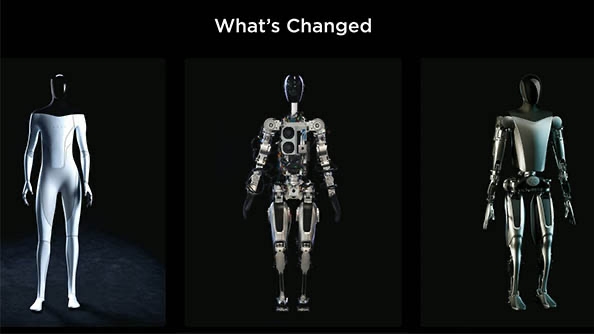
The evolution of Tesla’s humanoid robot has been shockingly fast. Early prototypes shown in 2023 displayed stiff movement, unstable walking patterns, and limited balance control. Fast forward to 2026, and Optimus V2.5 now demonstrates smooth, fluid, and highly humanlike locomotion.
This transformation didn’t happen through cosmetic upgrades alone. Tesla completely redesigned the robot’s mechanical structure, control systems, and production architecture.
The result is a humanoid machine engineered not just to impress audiences — but to work inside real factories for long periods efficiently.
Major Tesla Optimus V2.5 Upgrades
1. Lower Center of Gravity for Better Stability
One of the most important engineering upgrades in Optimus V2.5 is the relocation of heavy components from the upper torso into the pelvic structure.
Earlier versions placed batteries and computing systems high in the chest area, creating instability similar to balancing an inverted pendulum. Every movement required excessive actuator force just to prevent falling.
Tesla solved this by relocating the majority of the robot’s mass downward.
Key Benefits of Lower Mass Distribution
- Reduced torso inertia
- Improved balance control
- Lower energy consumption
- More natural walking movement
- Increased operational efficiency
As a result, Optimus V2.5 can now maintain a stable walking speed of 1.2 to 1.4 meters per second while reducing energy usage by nearly 20% compared to previous generations.
That improvement is critical for real industrial deployment because factory robots must operate continuously for hours without requiring constant charging or cooling cycles.
2. Advanced Four-Bar Linkage Knee System
Another major breakthrough comes from Tesla’s adoption of a four-bar linkage mechanism in the robot’s knee joints.
Traditional humanoid robots often rely on rigid, single-axis actuators that create unnatural robotic movement. Tesla instead borrowed biomechanical concepts commonly used in advanced prosthetics.
Why Four-Bar Linkages Matter
The four-bar linkage design allows:
- Smoother gait transitions
- Better force distribution
- Reduced actuator strain
- Humanlike walking mechanics
- Improved movement efficiency
Instead of awkward segmented motions, Optimus V2.5 transitions naturally from heel strike to toe-off, making movement far more fluid and stable.
This upgrade dramatically reduces mechanical stress while increasing agility inside tight industrial environments.
3. High-Frequency Torque Control System
Tesla also abandoned traditional position-based robotic control systems.
Optimus V2.5 now operates using a 1,000 Hz high-frequency torque control architecture. That means the robot evaluates and adjusts force dynamics every single millisecond.
What Makes This Important?
Older systems primarily tracked joint positions. Tesla’s new architecture instead focuses on:
- Joint torque
- Force feedback
- Surface pressure sensing
- Real-time environmental adaptation
The robot includes force sensors in both its ankles and knees, allowing it to instantly detect uneven surfaces, obstacles, or slips.
If one foot encounters debris or unstable ground, the robot can react almost instantly by adjusting balance and joint compliance.
This makes Optimus significantly safer and more capable in dynamic industrial spaces where conditions constantly change.
4. Humanlike Pelvic Motion & Camera Stabilization
Human walking involves far more than leg movement. Subtle hip rotation and lateral pelvic tilt help conserve momentum and stabilize upper-body motion.
Tesla integrated these biomechanics directly into Optimus V2.5.
Engineering Advantages
The robot now features:
- Natural pelvic rotation
- Lateral hip tilting
- Reduced vertical oscillation
- Enhanced movement smoothness
Tesla reduced upper-body bounce to under 1.5 centimeters, which has a major secondary benefit:
Stable AI Vision
The head-mounted camera arrays receive highly stable visual data with reduced motion blur.
This is incredibly important because Tesla’s AI systems rely heavily on real-time computer vision inference. Stable imagery improves object detection, spatial awareness, and navigation accuracy.
5. Dynamic Arm Counterbalancing
Humans naturally swing their arms while walking to counteract rotational forces generated by the legs.
Tesla implemented this same principle in Optimus V2.5.
Benefits of Out-of-Phase Arm Swinging
The robot can now:
- Make sharp 90-degree turns
- Navigate narrow hallways
- Maintain balance during rapid movement
- Reduce rotational instability
Tesla claims Optimus can operate inside industrial corridors as narrow as 80 centimeters wide without stopping to rebalance.
That level of maneuverability is a major milestone for humanoid robotics.
Tesla’s AI Vision Strategy
One of Tesla’s biggest differentiators is its rejection of expensive sensor-heavy robotic systems.
Many robotics companies depend on:
- LiDAR
- Radar
- Dense pre-mapped environments
- Specialized infrastructure
Tesla instead relies heavily on AI vision systems adapted from its Full Self-Driving technology.
Live 3D Spatial Reconstruction
As Optimus moves through a factory, camera systems continuously feed data into multiple neural networks.
These systems analyze:
- Spatial depth
- Surface geometry
- Object movement
- Floor conditions
- Obstacle trajectories
The robot then generates a live 3D occupancy model of its surroundings in real time.
This allows Optimus to actively interpret the environment rather than blindly executing pre-programmed scripts.
Adaptive Navigation in Dynamic Environments
Traditional factory robots operate in isolated zones protected by fences because they cannot safely adapt to unpredictability.
Humanoid robots must function alongside:
- Human workers
- Moving carts
- Shifting materials
- Unexpected obstacles
Tesla’s AI-driven spatial inference enables Optimus to dynamically calculate:
- Safe foot placement
- Collision avoidance paths
- Balance corrections
- Navigation adjustments
This marks a huge transition from static industrial automation toward fully adaptive autonomous robotics.
Tesla’s Revolutionary Fremont Production Line
Perhaps the most important announcement isn’t the robot itself — it’s the factory architecture behind it.
Tesla’s Fremont pilot production facility represents the beginning of mass-scale humanoid robot manufacturing.
This is where Tesla separates itself from competitors.
Repurposing Legacy Tesla Production Lines
Tesla used a highly aggressive capital efficiency strategy by repurposing former Model S and Model X production lines.
Instead of building entirely new facilities from scratch, Tesla converted existing automotive manufacturing infrastructure into a humanoid robot production system.
Advantages of Factory Repurposing
- Faster deployment
- Lower capital expenditure
- Reduced construction delays
- Immediate manufacturing scalability
Backed by more than $20 billion in investment, Tesla transformed historical automotive space into a robotics manufacturing hub.
Digital Cellular Manufacturing System
Traditional automotive assembly lines operate sequentially. If one station fails, the entire line stops.
Tesla replaced this with a digital cellular manufacturing architecture.
How It Works
The factory is divided into independent work cells responsible for specific robot components.
Each cell focuses on specialized modules such as:
- Dexterous hands
- Leg actuator systems
- AI processor integration
- Chassis assembly
- Sensor calibration
Because each cell operates independently, problems inside one section do not halt the entire production flow.
This massively improves scalability and fault tolerance.
Synchronized Manufacturing Cycle Times
Tesla standardized production timing across all cells using synchronized cycle monitoring systems.
Green signal lights above each station indicate that manufacturing variance has been normalized.
Why This Matters
Stable synchronized timing means:
- Predictable production flow
- Reduced bottlenecks
- Better inventory coordination
- Higher manufacturing efficiency
This is essential for scaling toward millions of units annually.
AGVs & Autonomous Factory Logistics
Tesla’s factory layout eliminates rigid conveyor infrastructure.
Instead, the company uses a flexible combination of:
- Automated Guided Vehicles (AGVs)
- Autonomous Mobile Robots (AMRs)
- Overhead crane systems
Two-Layer Logistics Architecture
Ceiling Layer
Heavy industrial cranes handle:
- Large material transfers
- Structural module movement
- Macro logistics operations
Floor Layer
AMRs dynamically transport:
- Sub-components
- Actuator assemblies
- Electronics
- Battery modules
This creates a frictionless and highly adaptable manufacturing environment.
Software-Defined Manufacturing
One of Tesla’s smartest innovations is making the factory itself software-driven.
Traditional factories become obsolete whenever hardware changes require physical line reconstruction.
Tesla avoids this bottleneck entirely.
Dynamic Production Reconfiguration
If engineers modify:
- Sensor architecture
- Joint systems
- Thermal management
- AI hardware layouts
Tesla can simply reroute AMRs using software updates instead of rebuilding assembly infrastructure.
Benefits of Software-Defined Factories
- Rapid iteration cycles
- Lower upgrade costs
- Faster deployment of improvements
- Scalable adaptability
This flexibility may become one of Tesla’s strongest competitive advantages.
Tesla Optimus Production Roadmap
Tesla’s manufacturing roadmap is built around aggressive exponential scaling.
Mid-2026 Pilot Production
Tesla expects Fremont’s pilot line to produce between:
- 50,000 to 100,000 Optimus robots
These robots will initially remain inside Tesla’s own ecosystem.
Early Deployment Areas
- Vehicle assembly plants
- Battery manufacturing
- Material logistics
- AI data centers
Tesla essentially plans to use robots internally before external commercial deployment.
Late-2026 High-Volume Scaling
Tesla’s larger-scale factory conversion is expected to push annual production capacity toward:
1 Million Units Per Year
This future facility will also serve as the blueprint for expansion into Gigafactory Texas and additional global production centers.
Long-Term Goal by 2030
Tesla aims to reduce Optimus pricing to approximately:
$30,000 Per Unit
The long-term deployment target is staggering:
10 Million Humanoid Robots
If successful, this could fundamentally reshape the global labor economy.
The Closed-Loop Manufacturing Flywheel
Tesla’s most powerful advantage may not be the robot itself.
It’s the self-reinforcing manufacturing ecosystem surrounding it.
Robots Building Future Robots
Tesla plans to deploy early Optimus units directly onto production lines.
These robots will help perform repetitive manufacturing tasks such as:
- Part handling
- Copper stator winding
- Component positioning
- Logistics operations
As robots help manufacture future robots, production costs decline further.
This creates a powerful self-assembly scaling loop.
The AI Data Feedback Loop
Every Optimus robot operating inside Tesla facilities continuously generates operational data.
Data Collected Includes
- Vision edge cases
- Joint torque behavior
- Navigation anomalies
- Surface interaction patterns
- Environmental conditions
This telemetry feeds directly back into Tesla’s neural network training infrastructure.
The result is continuous improvement across the entire robot fleet simultaneously.
Why Tesla Could Dominate the Humanoid Robotics Industry
Most competitors are still focused on creating impressive prototypes.
Tesla is focused on:
- Manufacturing scalability
- Supply chain optimization
- Software-defined production
- AI vision integration
- Industrial deployment economics
That distinction matters enormously.
The company is applying lessons learned from electric vehicle mass production directly into humanoid robotics.
If Tesla successfully scales Optimus production, it could create an entirely new global industrial category: mass-produced artificial labor.
The Future of Artificial Labor
The emergence of Optimus V2.5 represents more than just another technology launch.
It signals the beginning of a potentially transformative industrial era where humanoid robots become integrated into:
- Manufacturing
- Warehousing
- Logistics
- Construction
- Healthcare
- Infrastructure maintenance
For decades, robotics struggled with the gap between laboratory prototypes and scalable industrial deployment.
Tesla appears determined to close that gap faster than anyone expected.
Final Thoughts
The Tesla Optimus V2.5 platform and the company’s 1 million-unit manufacturing ambitions could mark one of the most significant industrial shifts since the rise of automation itself.
By combining:
- Advanced humanoid biomechanics
- AI-driven spatial intelligence
- Software-defined manufacturing
- Closed-loop production systems
Tesla is attempting to industrialize humanoid robotics at global scale.
Whether the company ultimately reaches its ambitious targets remains uncertain. However, one thing is now clear:
FAQs:
1. What is Tesla Optimus V2.5?
Tesla Optimus V2.5 is the latest generation of Tesla’s humanoid robot designed for industrial automation, factory work, logistics, and future general-purpose labor tasks.
2. What makes Optimus V2.5 different from earlier versions?
The new version includes better balance, smoother walking, AI vision upgrades, advanced torque control systems, and improved energy efficiency compared to earlier prototypes.
3. How fast can Tesla Optimus V2.5 walk?
Optimus V2.5 can maintain a stable walking speed of approximately 1.2 to 1.4 meters per second while remaining balanced and energy efficient.
4. Why did Tesla lower the robot’s center of gravity?
Tesla moved heavy components like batteries and computing systems into the pelvic area to improve stability, balance, and energy efficiency during movement.
5. What is the four-bar linkage knee system in Optimus?
The four-bar linkage mechanism helps the robot achieve more natural humanlike walking motion while reducing actuator strain and improving mechanical efficiency.
6. Does Tesla Optimus use LiDAR or radar?
No. Tesla primarily relies on AI vision systems and neural networks instead of expensive LiDAR and radar sensor setups.
7. How does Tesla Optimus navigate factory environments?
The robot uses real-time 3D spatial reconstruction powered by AI vision to detect obstacles, analyze surfaces, and dynamically adjust movement.
8. What is Tesla’s 1,000 Hz torque control system?
It is a high-frequency control architecture that allows Optimus to evaluate and adjust force and balance every millisecond for smoother and safer movement.
9. What is Tesla’s 1 million unit production line?
Tesla is building a large-scale humanoid robot manufacturing system capable of producing up to 1 million Optimus robots annually.
10. Where is Tesla manufacturing Optimus robots?
Tesla is currently developing the pilot production line at its Fremont factory and plans additional expansion at Gigafactory Texas.
11. What are AGVs and AMRs in Tesla factories?
Automated Guided Vehicles (AGVs) and Autonomous Mobile Robots (AMRs) transport robot components dynamically throughout Tesla’s flexible factory layout.
12. How much will Tesla Optimus cost in the future?
Tesla aims to reduce the long-term retail price of Optimus to around $30,000 per unit by 2030.
13. What jobs will Tesla Optimus perform initially?
Early Optimus robots are expected to handle:
- Factory assembly tasks
- Material logistics
- Battery manufacturing
- Warehouse operations
- AI data center support
14. Can Tesla robots eventually build other robots?
Yes. Tesla plans to create a closed-loop manufacturing system where Optimus robots help manufacture future generations of Optimus units.
15. Why is Tesla’s humanoid robot strategy important?
Tesla is not just building robots — it is building the infrastructure for mass-produced artificial labor, which could reshape global manufacturing and automation industries.
Read More:
- NASA just gave SpaceX more crew missions because Boeing can’t certify
- Tesla unveils juicy new detail on the Roadster and hints at new unveil timeline
- Ferrari unveils its Luce EV, and its reception has been a disaster
- Tesla ships new feature that silences neighborhood Supercharger complaints
- What FAA Announced about Starship B19 Explosion is UNUASUAL! Next Launch SOONER than Expected
2 thoughts on “Tesla Bot V2.5 Stunning Upgrade & Tesla’s 1M Line Finally Here”